
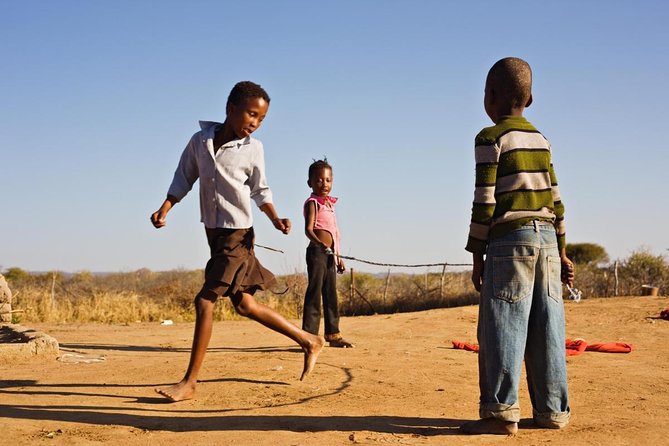
Reviewed · KIBERA COMMUNITY TOURS
Memorable Daily KIBERA Slums/Toi Market Tour with Locals (2 hours)
See Nairobi through local eyes. This two-hour walking experience takes you into Kibera with a youth guide who knows the community personally, rather than keeping you at a distant viewpoint. I like the focus on local guides such as Bramwel and Frederick, and I like that your $25 helps support youth employment and rural girl-child education. The main thing to consider is that Kibera is a real home, not a polished attraction, so you need respect, sturdy shoes, and the right expectations.
The tour includes a visit to Olympic Primary School, a look at local housing and small businesses, and discussion of projects working in education, health, and housing. I also appreciate the honest tone: the experience presents both community strength and serious hardship. One poor experience involved a pandemic-era closure and a long wait, but the operator states that the guest received a full refund.
In This Review
- Key points before you book
- Why a Kibera walking tour needs care
- Meeting at Olympic Primary School in Nairobi
- Walking Kibera with a guide from the community
- Seeing the informal economy at street level
- Community projects and the purpose behind DALA
- The Olympic school visit adds substance
- How much value do you get for $25?
- What to wear and how to behave
- Timing, group size, and communication
- Who will appreciate this experience most?
- Should you book the Kibera tour?
- FAQ
- Where does the Kibera tour start?
- Where does the tour end?
- How long does the experience last?
- What is included in the price?
- Is lunch included?
- What will I see during the walk?
- Who leads the tour?
- How large can the group be?
- Can I cancel for a full refund?
Key points before you book

- Local guides lead the walk: Bramwel and Frederick receive especially strong praise for their personal ties, friendly manner, and careful attention to comfort.
- Olympic Primary School is the finishing point: The school is described as Kenya’s largest public primary school and has played a major role in Kibera education.
- You see more than poverty: The tour explains local work, housing, schools, charities, and the informal economy.
- The tour lasts about two to three hours: The main Kibera visit is listed at two hours, with an additional hour connected to the provider’s community work.
- The meeting point is Olympic Primary School: Round-trip transfers from the designated meeting point are included.
- Bring practical clothing: Wear sturdy shoes that can handle wet or muddy ground, and treat the neighborhood as someone’s home.
Why a Kibera walking tour needs care
Kibera is one of Nairobi’s largest informal settlements. The supplied information estimates roughly one million residents living across about 2.5 square kilometers, with people drawn from across East Africa. Population figures for informal settlements can vary, but the key point is clear: this is a dense, working community, not a set built for sightseeing.
I like that the tour is framed around people and local projects rather than shock value. You learn how residents earn money, how families manage daily life, and how organizations try to improve housing, schools, and health care.
You should also think carefully about photography. One of the strongest pieces of advice from the experience is to put your camera away and remember that Kibera is home to real families. Ask before taking photos, follow your guide’s lead, and avoid turning private hardship into a souvenir.
That approach makes the walk more worthwhile. You are not simply collecting dramatic images. You are listening, asking questions, and seeing how a large community functions under difficult conditions.
More community tours:
- Nairobi: Explore Kibera Slum with Local Guides
★ 4.9 · 365 reviews - Kevins Kibera Slum Tours
★ 5.0 · 213 reviews - Nairobi: Kibera Slum storytelling tour with a Local
★ 5.0 · 185 reviews
Meeting at Olympic Primary School in Nairobi
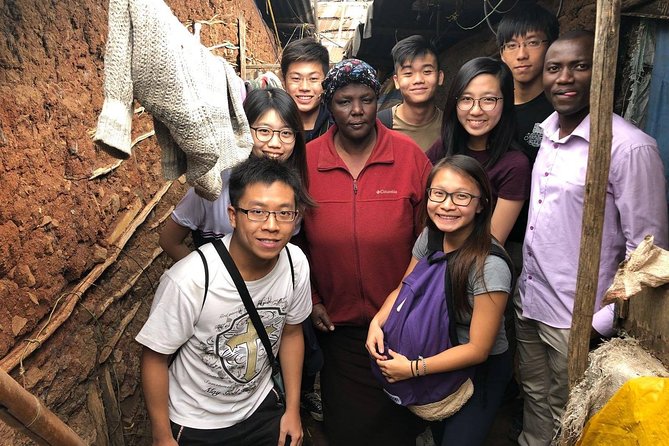
The stated start and end point is Olympic Primary School, listed at MQQH+3FJ, Nairobi. This matters because you have a clear fixed location rather than an uncertain street corner inside a crowded neighborhood.
Round-trip transfers from the designated meeting point are included, and the tour is near public transportation. The exact transfer arrangement should be confirmed when you book, especially if you are staying elsewhere in Nairobi.
The meeting point also gives the tour a useful frame. You begin and finish at an important local institution instead of treating Kibera as a quick walk-through. The school is described as Kenya’s largest public primary school and was once known for strong academic performance.
The school’s role goes beyond classrooms. It has helped families improve their prospects and has a long connection with efforts to reduce poverty in Kibera. Ending there gives you a better sense of how education can affect an entire household over time.
The booking information allows service animals, and most people can participate. There is no stated accessibility detail for the walking route itself, so anyone concerned about uneven, muddy, or crowded paths should ask the operator before booking.
Walking Kibera with a guide from the community
The best part of this experience is the guide. Several guides are named in the feedback, but Bramwel and Frederick receive the most consistent praise. Bramwel is described as having grown up in Kibera, living nearby, and playing for the Kibera football team. Frederick is praised for his friendly manner, clear explanations, and help supporting children’s education.
Those details matter. A guide with local connections can explain more than what you see from the path. You might hear why a building matters, how a family has managed difficult circumstances, or how an organization has affected a particular part of the neighborhood.
The operator’s founder, Erick, also has a personal connection to Kibera. He lived there while trying to establish his professional life and still has relatives in the community. That background helps explain why the company presents the walk as a locally run experience.
You should still remember that a personal guide cannot remove every concern. The tour may have a maximum of 50 people, which is a fairly large possible group for narrow residential paths. Ask about the expected group size if a quieter, more personal walk is important to you.
The feedback strongly praises guides for helping people feel safe and comfortable. That does not mean you should switch off your judgment. Stay with the group, follow local advice, and let the guide decide where it is suitable to stop or enter.
Seeing the informal economy at street level

Kibera is not only a place of need. It is also a place where people work, trade, repair, build, teach, and support one another. The tour explains this informal economy, giving you a fuller picture of how residents manage daily life without the formal systems many visitors take for granted.
I like this part because it shifts the focus from passive observation to practical understanding. You may see small businesses and local services, then hear how they fit into the wider community. The tour is short, so it cannot explain every part of Kibera, but a local guide can help you connect ordinary scenes with larger issues.
Housing is another central subject. The walk may show you the physical limits of the settlement, while the guide explains projects aimed at better housing and health. Some efforts succeed, while others face problems such as corruption or poor management.
That balance is important. You will hear about hope and resilience, but the experience does not pretend that outside projects solve everything. It gives you room to understand why some programs help and why others fall short.
More market tours:
- Traditional Kenyan Cooking Class & Local Market Tour
★ 5.0 · 129 reviews - Half-Day Nairobi National Park and Maasai Market with Pick up
★ 5.0 · 16 reviews - Authentic Kenyan Cooking Class & Market Tour in Nairobi
★ 5.0 · 12 reviews - Nairobi: Hop on Hop off and Maasai market Collections Visit
★ 3.5 · 10 reviews
Community projects and the purpose behind DALA

The tour provider says that bookings help employ local young people in a country where youth unemployment is very high. It also describes itself as a fully indigenous Kenyan company, with an emphasis on local leadership and personal connections.
Part of the company’s proceeds supports MAKLWETA, a charity founded to assist rural girl-child education. This gives the $25 price more meaning than a simple sightseeing fee, although you should not assume that every dollar goes directly to community programs.
The provider also works with partner schools and invites some visitors to consider teaching volunteer opportunities. That is a separate commitment, not part of the standard two-hour walk, so treat it as an optional follow-up rather than an included activity.
This social purpose is one reason I see the tour as better value than a generic city excursion. You get a local introduction to Nairobi, and your booking supports a company that says it employs young guides and funds education work.
Still, social-impact tours deserve scrutiny. A good visit should leave dignity with the people you meet. Listen carefully, do not pressure anyone to tell personal stories, and ask your guide how to contribute in a useful way rather than handing out random gifts.
The Olympic school visit adds substance
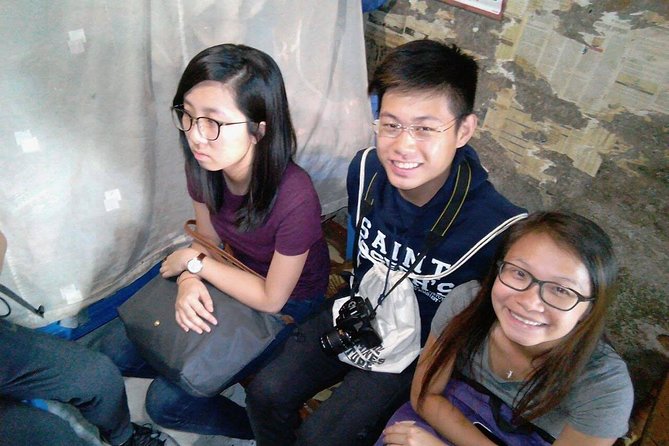
The school visit is a particularly useful part of the route. It gives you a chance to understand education as a practical tool, not just an abstract development topic.
The school is described as having a strong record and a history of helping families move out of poverty. That makes it more than a final stop for convenience. It helps explain why schools matter so much in a dense settlement with limited resources.
You should not expect a full school program or guaranteed access to classrooms. The supplied details only confirm that the tour ends with a visit to Olympic Primary School. Any special entry, interaction with pupils, or school schedule should be confirmed directly.
Even with those limits, the school gives the tour a constructive ending. After seeing difficult living conditions, you finish with an institution linked to opportunity and long-term change.
How much value do you get for $25?

At $25 per person, this is reasonably priced for a guided two-hour experience in Nairobi, especially with all fees and taxes included. The price also includes round-trip transfers from the designated meeting point, which makes the arrangement simpler.
The value depends on what you want. If you are looking for a comfortable sightseeing outing with grand views, this is the wrong choice. If you want context, personal contact, and a better understanding of Nairobi’s unequal urban life, the cost is modest.
Lunch and drinks are not included. You can request a visit to a local restaurant, but that will be optional and should be budgeted separately.
The tour is often booked around 11 days ahead, which suggests you should not leave it until the last minute if your Nairobi schedule is tight. The operator also states that it does not require advance payment and uses a pay-as-you-go approach, though you should follow the booking platform’s current payment instructions.
What to wear and how to behave
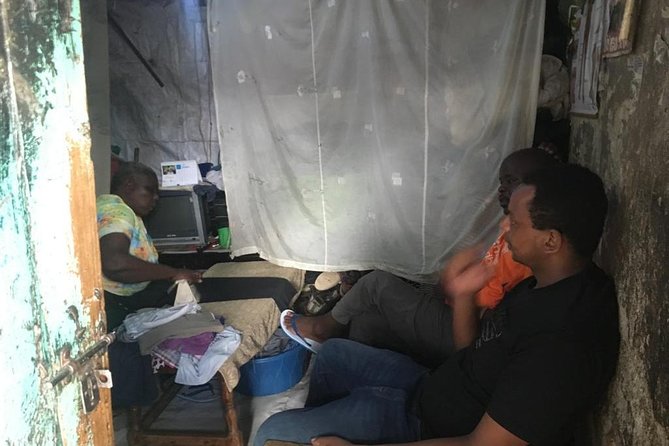
Wear sturdy walking shoes. Mud and wet ground are specifically mentioned, and ordinary city shoes may not be the best choice.
Choose comfortable clothing that is respectful for a residential community. Keep valuables secure, stay close to your guide, and avoid wandering off to chase a photograph.
The most important rule is simple: ask before taking pictures. Your guide can tell you when photography is acceptable and when it is not. In many cases, a conversation will mean more than a photograph.
Go with curiosity, not pity. Kibera includes hardship, but it also includes families, workers, students, business owners, and people who have no interest in being treated as scenery.
Timing, group size, and communication
The main walking portion is listed as two hours, while the full experience may run two to three hours. The separate information about DALA’s community purpose is listed as an additional hour, so clarify the exact schedule when you reserve.
A maximum of 50 people is stated. That is manageable for an organized operation, but it may feel large for a personal neighborhood walk. Bramwel and Frederick are praised for making the experience personal, yet the final feel will depend on your assigned guide and group size.
Communication appears to be an important practical issue. One serious complaint involved a guest waiting for more than 90 minutes during a Nairobi lockdown before learning that the tour was closed. The operator attributed it to pandemic miscommunication and said the money was refunded in full.
That incident is not a reason to reject the experience outright, but it is a reason to confirm the meeting time shortly before departure. Save the operator’s contact details and do not assume that a booking automatically means the guide is already waiting.
Free cancellation is available if you cancel at least 24 hours before the start time. Cancellations made within 24 hours are not refunded, and changes inside that period are not accepted.
Who will appreciate this experience most?
I would recommend this tour to you if you want a direct look at Nairobi beyond museums, hotels, and safari transfers. It suits people who enjoy asking questions, listening to local stories, and learning how communities organize daily life.
It is also a good match if you care about where your tourism money goes. The stated support for local youth employment and girl-child education adds a useful community benefit.
Families with older children may find the school and education themes meaningful, provided everyone understands the need for respectful behavior. It may be less suitable for very young children who could find the conditions upsetting or tiring.
You should skip it if you mainly want a relaxed outing or if you are uncomfortable walking through crowded residential areas. Kibera is not presented as easy or glamorous, and the experience can be emotionally heavy.
Should you book the Kibera tour?
Book it if you want a locally led, honest introduction to one of Nairobi’s most important communities. The strongest reasons are the personal guides, the focus on education and community projects, and the chance to understand work and family life rather than simply view poverty from a distance.
Bramwel and Frederick appear to be the guides most associated with the warmest praise, so you can request one of them, though availability is not guaranteed. Confirm the start time, expected group size, and meeting arrangements before you go.
For $25, this is a worthwhile choice for an open-minded visitor who wants context and human connection. Bring sturdy shoes, keep your camera secondary, and let respect guide the whole walk.
FAQ
Where does the Kibera tour start?
The tour starts at Olympic Primary School, MQQH+3FJ, Nairobi, Kenya.
Where does the tour end?
The tour ends at Olympic Primary School, the same location where it begins.
How long does the experience last?
The main Kibera walking tour lasts about two hours. The overall experience is listed as approximately two to three hours.
What is included in the price?
All fees and taxes are included. Round-trip transfers from the designated meeting point are also provided.
Is lunch included?
No. Lunch and drinks are not included, but a visit to a local restaurant can be arranged at your request.
What will I see during the walk?
You will learn about daily life in Kibera, the informal economy, housing, education, health projects, and NGO efforts. The experience also includes a visit to Olympic Primary School.
Who leads the tour?
The tour is led by local youth guides. Bramwel and Frederick are named guides associated with the experience, and Erick, the founder, has personal ties to Kibera.
How large can the group be?
The stated maximum is 50 people.
Can I cancel for a full refund?
Yes, if you cancel at least 24 hours before the scheduled start time. Cancellations made less than 24 hours before the experience are not refunded.
More Shopping Tours
- Nairobi souvenir Shopping and Historical Half day Tour
★ 5.0 · 61 reviews - Nairobi Cultural Shopping Experience
★ 5.0 · 21 reviews - Nairobi cultural souvenir shopping tour with a local
★ 5.0 · 12 reviews - Nairobi Guided Cultural Shopping Experience Day Tour
★ 4.0 · 12 reviews
Just added around Nairobi
- Nairobi: Giraffe Center, Elephant Orphanage and Bomas Tour★ 5.0 · 3 reviews
- Nairobi: Airport and Hotel Private Transfers.★ 4.0 · 3 reviews
- Kitengela Anselm Hot Glass tour★ 4.5 · 3 reviews
- 11-Days Best of Kenya & Tanzania Big 5 Safari on a 4×4 Jeep★ 5.0 · 3 reviews
- 12-Day Tsavo west Amboseli lake Nakuru Maasai Mara safari★ 5.0 · 3 reviews
- NAIROBI NATIONAL PARK AFTERNOON GAME DRIVE.★ 5.0 · 3 reviews
- Nairobi Down Town & Walking City Tour★ 4.8 · 3 reviews
- Carnivore Resturant Dinner Experience★ 4.0 · 3 reviews
Kibera Community Tours, compared.





Kibera Slum Tour with Local Social Entrepreneurs
Read our review →


Browse the lists this tour appears in