
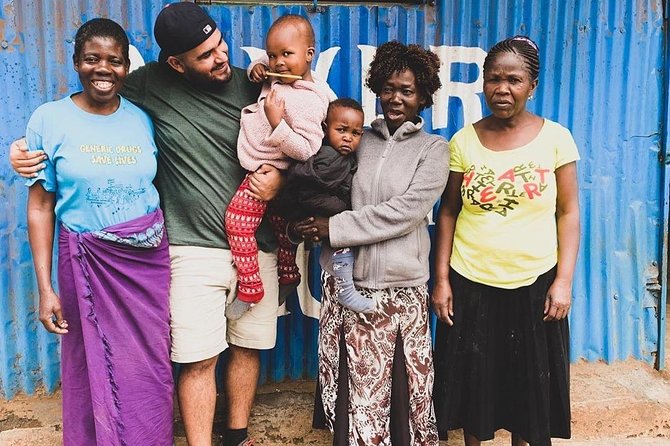
Reviewed · KIBERA COMMUNITY TOURS
Kibera Slum Tour with Lucas
Kibera changes your view of Nairobi. This private half-day walk brings you into East Africa’s largest informal settlement, where Lucas explains local history and introduces you to daily life beyond the usual tourist route. I like the personal scale of the tour, with only your group taking part, and I like the chance to visit a local home, Toi Market, and Hope and Shine Kibera Centre. The main consideration is that this is a real neighborhood, not a polished attraction, so narrow paths, uneven ground, mud, crowds, and poverty can feel confronting.
I also like that the tour puts local people at the center rather than treating Kibera as a backdrop for photographs. Past visitors have felt safe with Lucas and praised his care, patience, and ability to adjust the pace, though the experience can include donation requests and optional shopping. At $35 per person, it offers strong value if you want context, conversation, and a community connection rather than a quick drive past the settlement.
In This Review
- Key points to know before you go
- Why a Kibera walk is different from ordinary Nairobi sightseeing
- Meeting at Greenhouse Mall and entering Kibera
- Toi Market: the practical heart of the walk
- A local home and the human side of Kibera
- Hope and Shine Kibera Centre and the community projects
- What the guide adds to the experience
- Walking conditions, clothing, and photographs
- Is $35 a fair price?
- Safety and comfort during the visit
- Who will appreciate this Kibera experience?
- Should you book the Kibera Slum Tour with Lucas?
- FAQ
- How much does the Kibera Slum Tour with Lucas cost?
- How long does the tour last?
- Is this a private tour?
- Where does the tour begin?
- Where does the tour end?
- What places are visited during the tour?
- Do I need special clothing or shoes?
- Can I cancel for a refund?
Key points to know before you go

- A three-hour private walk: Your own group explores Kibera with a guide rather than joining a large coach tour.
- Lucas is the named guide: Some tour accounts also mention Elijah, so confirm who will lead your visit when booking.
- Toi Market adds everyday detail: The market shows how people buy, sell, work, and make a living within Kibera.
- Hope and Shine Kibera Centre gives the tour a wider purpose: The visit may include a school or community project, with donations welcomed.
- Expect rough walking: Proper shoes matter because some tracks can be muddy, slippery, or uneven.
- The tour ends at Equity Bank Kibera: It begins at Greenhouse Mall in Kilimani and does not finish where it starts.
Why a Kibera walk is different from ordinary Nairobi sightseeing
Many Nairobi visits focus on wildlife, museums, restaurants, and shopping malls. Kibera offers a very different lesson. You see how families, shopkeepers, artists, teachers, and community organizers manage everyday life in a dense settlement with limited formal infrastructure.
That contrast can be useful, but it requires respect. You are not entering a theme park. People live and work here, children attend school here, and small businesses serve local customers. The best way to approach the tour is to listen first, ask before taking pictures, and remember that the people you meet are residents, not scenery.
The nickname City of Hope points to the central idea of the experience. Kibera has serious hardships, but it is also a place where people create businesses, schools, workshops, support groups, and other local solutions. Lucas focuses on this resilience and ingenuity, which helps prevent the tour from becoming a simple poverty snapshot.
I find that balance important. You should leave with a clearer understanding of difficult living conditions, but also with a sense of the skills and determination found in the community.
More community tours:
- Nairobi: Explore Kibera Slum with Local Guides
★ 4.9 · 365 reviews - Kevins Kibera Slum Tours
★ 5.0 · 213 reviews - Nairobi: Kibera Slum storytelling tour with a Local
★ 5.0 · 185 reviews
Meeting at Greenhouse Mall and entering Kibera

The tour begins at Greenhouse Mall in Kilimani, near Ngong. That is a practical starting point because it gives you a recognizable meeting place before you move into a far less marked network of streets and alleys.
From there, you make your way toward Kibera and begin the walking portion. The exact route can vary, but the stated visit lasts roughly three to four hours, with about three hours focused on Kibera itself. One account describes an easier two-hour walk, so allow extra time for stops, conversations, and visits.
The private format matters here. With only your group participating, you can ask questions without competing with a busload of people. Lucas can also explain what you are seeing in plain terms, from the area’s development to the ways residents earn money and support their families.
Some people have used the tour during a short Nairobi airport stopover. That can work in principle, but you need to allow time for traffic, the meeting point, the walk, and the final drop-off at Equity Bank Kibera. I would not treat this as a rushed airport excursion unless your schedule has plenty of spare time.
Toi Market: the practical heart of the walk
Toi Market is one of the most useful stops because it shifts attention from housing conditions to local commerce. Markets show what people need, what they can afford, and how sellers create income in a place where formal opportunities may be limited.
You can expect to see stalls and local businesses as you walk through the area. The market is also one of the places where you may have a chance to buy something made or sold locally. A small purchase can be a more direct form of support than handing out items, provided you buy something you genuinely want.
One account describes an opportunity to visit a local workshop and shop for souvenirs without pressure. That is a good sign for visitors who dislike forced purchasing, but you should still carry some Kenyan shillings if you hope to buy something. The supplied price covers the tour, not personal purchases.
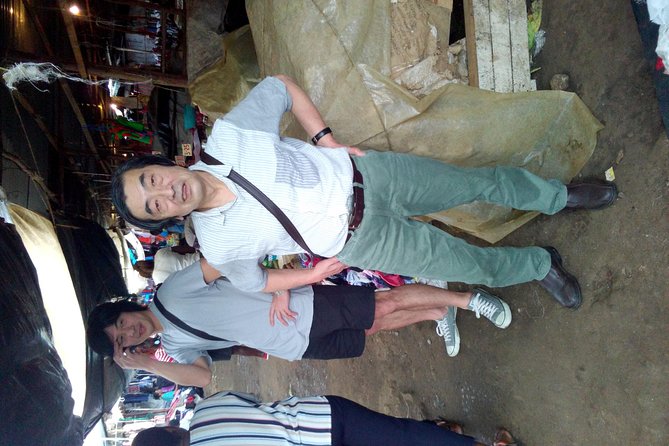
The market can also be busy and close-packed. Keep your belongings secure and stay close to your guide. The point is not to rush through with a camera raised. Pause, watch how people work, and let Lucas explain the scene.
A local home and the human side of Kibera

The home visit is likely to be the most personal part of the experience. You may enter a local house and see how ordinary life is arranged within a compact space. This can make the statistics and broad descriptions of informal settlements feel more real, but it also calls for extra sensitivity.
Treat the visit as an invitation, not an entitlement. Ask before photographing interiors or family members. Follow Lucas’s lead on where to sit, what to touch, and how long to stay.
One particularly personal account refers to a visit to Lucas’s mother’s home. That suggests the tour can carry a genuine family connection, though the exact home visit may depend on the day and the host. It is one reason a private tour can feel more meaningful than a standard sightseeing circuit.
You may also meet local residents during the walk. The amount of direct interaction can vary. Some visits include conversations and introductions, while another account describes the interaction as limited. Go in ready to listen, but do not expect every person you pass to want to speak with you.
A few more trips worth weighing up
- Nairobi National Park Half-Day Tour; Free Wi-Fi connection
★ 5.0 · 878 reviews - Nairobi: National Park & Optional Elephants & Giraffe Center
★ 4.8 · 874 reviews - NAI NAMI: Nairobi Storytelling Tour with Street Children
★ 5.0 · 792 reviews - Nairobi National Park Half-Day Game Drive
★ 4.5 · 738 reviews
Hope and Shine Kibera Centre and the community projects
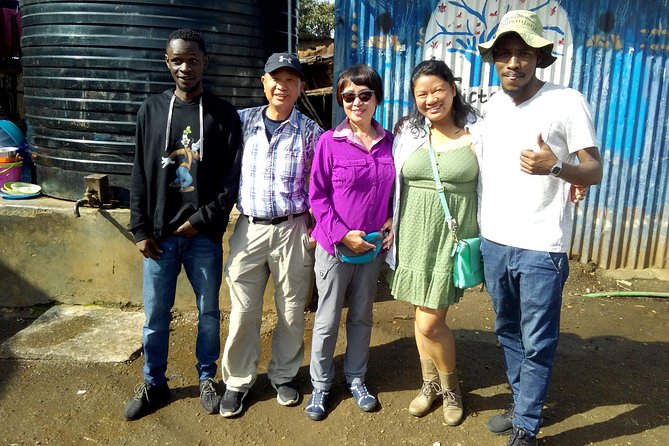
Hope and Shine Kibera Centre adds an education and community-support element. The stop may include a school project and an opportunity to see how local children are being taught and supported.
Several visitors valued the school visit, especially the chance to meet children and learn about the project. One account says that proceeds from the tour support a school, while another notes an invitation to sign a guest book and make a donation. The details of funding and donations should be explained clearly on the day.
You are not required to donate according to the supplied tour details, but you may wish to bring money if you want to contribute. Keep the choice voluntary and ask where funds go. A clear explanation helps you decide whether the project fits your values.
The school setting can be emotional. Children may be curious about visitors, and some may approach you. One past visitor suggested bringing bags of candy or lollipops, but I would be cautious about making sweets the default response. If you want to help, ask Lucas or the center what is most useful. Buying local goods or making a direct, informed donation may be more helpful than distributing treats.
The tour also refers to projects such as Power Women and Kibera Artist, including a private primary school. These examples show that the visit is not limited to housing and hardship. It also looks at education, creative work, and organized community action.
What the guide adds to the experience

A good local guide is essential in Kibera. The streets are often unmarked, and the meaning of what you see is not always obvious from the outside. Lucas is repeatedly praised for being welcoming, compassionate, well informed, and attentive to safety.
That personal care seems especially useful for older visitors or anyone who feels unsure in unfamiliar surroundings. One 75-year-old participant received help over uneven ground, with the pace adjusted to what she could manage. This is still a walking tour, but the guide appears willing to pay attention to individual ability.
Some accounts name Elijah rather than Lucas as the guide. Since the experience is promoted as Kibera Slum Tour with Lucas, this may reflect different guides working with the same provider or older bookings. If having Lucas specifically matters to you, confirm the guide’s name before setting out.
The most praised qualities are not flashy. They are the guide’s local standing, calm manner, clear explanations, and ability to make visitors feel safe. Those qualities matter more here than a tightly scripted sightseeing routine.
Walking conditions, clothing, and photographs
Wear sturdy closed shoes. Hiking boots are a sensible choice if rain has made the tracks muddy or slippery, while sandals and smooth-soled shoes are poor options for uneven paths.
The tour moves at a generally manageable pace, but the ground can still be difficult. If you have mobility concerns, tell the provider in advance and ask what route is planned. The general information says most people can participate, but it does not promise step-free access or a wheelchair-friendly route.
Photography is included as part of the experience, but taking pictures requires judgment. Ask permission before photographing people, homes, children, schools, or businesses. A camera can quickly change the tone of an encounter, especially in a community already photographed by outsiders.
I would keep your phone and camera discreet when walking through crowded areas. Focus on what Lucas is explaining rather than trying to document every corner. You will gain more from the experience by paying attention to people and context.
Is $35 a fair price?
At $35 per person, this is a reasonably priced private activity in Nairobi. The value comes from the guide’s local access, the small-group format, the time spent walking, and the range of stops. You are paying for interpretation and introductions, not for an expensive attraction with built facilities.
The price looks particularly good for solo visitors or couples who want a private experience. A larger private group may find the per-person cost even easier to justify, though the emotional and ethical questions remain the same regardless of group size.
Transport is where the cost can rise. The meeting point is Greenhouse Mall, and the tour ends at Equity Bank Kibera. A separate pick-up and drop-off arrangement may cost extra. One person paid $25 for transport and felt it was roughly twice the price of an Uber. If you are watching your budget, arrange your own ride or use a local taxi, and clarify transport costs before booking.
Donations and purchases are also separate. Carry some cash if you want to support the school, buy from a workshop, or make a purchase at Toi Market. None of these extras should be confused with the $35 tour price.
Safety and comfort during the visit
Safety is a major concern for anyone considering this experience. The strongest recurring praise is for the guide’s care and the feeling of security during the walk. Lucas is known in the area, and the tour takes place with a local guide who understands the streets and community.
That does not mean you should ignore normal city precautions. Keep valuables out of sight, avoid displaying large amounts of cash, and follow the guide’s instructions. Stay with your group, particularly in crowded market areas.
The tour is available near public transportation, though your own transport planning still matters because the start and end points differ. A boda motorcycle was used for one arranged pick-up, and the hotel gate staff found the arrangement unexpected. If you prefer a car, say so clearly when discussing transport.
Good weather is required. If rain or other poor conditions causes cancellation, you are offered another date or a full refund. Otherwise, you can cancel for a full refund up to 24 hours before the start time. Cancellations within 24 hours are not refunded.
Who will appreciate this Kibera experience?
I would recommend it to people who want to understand Nairobi through local voices and who can approach poverty tourism with humility. It suits visitors who prefer walking, conversation, and community projects over a polished attraction.
It is also useful for repeat visitors to Nairobi, students, families with mature children, photographers who practice careful consent, and people with a short but flexible stay. The private format makes it easier to ask direct questions and set a comfortable pace.
I would hesitate to recommend it to anyone expecting a light sightseeing stop, guaranteed shopping, or a fully comfortable route. The subject matter can be upsetting, and the physical setting is not easy. Children may approach you, donation requests may arise, and the visit can raise more questions than it answers.
That is not a flaw, but it is part of the bargain. You need to arrive ready for an honest encounter, not a feel-good photo opportunity.
Should you book the Kibera Slum Tour with Lucas?
Book it if you want a careful, locally guided look at Kibera’s daily life, community work, and resourcefulness. The strongest reasons are the private format, Lucas’s supportive guiding style, the home visit, Toi Market, and the connection with Hope and Shine Kibera Centre.
Before paying, confirm the guide, transport arrangements, meeting details, and what the school visit includes. Wear proper shoes, carry modest cash for optional purchases or donations, and ask permission before taking pictures.
Skip it if you dislike walking on rough ground or feel uncomfortable visiting a working residential community. For the right reader, though, this $35 tour offers something Nairobi’s polished attractions cannot: time to listen, ask questions, and see how people build ordinary lives under extraordinary pressure.
FAQ
How much does the Kibera Slum Tour with Lucas cost?
The tour costs $35 per person. Transport, personal purchases, and optional donations may cost extra.
How long does the tour last?
The experience lasts approximately three to four hours. The Kibera exploration itself is listed as about three hours.
Is this a private tour?
Yes. Only your group participates in the private activity.
Where does the tour begin?
The tour begins at Greenhouse Mall in Kilimani, near Ngong, Kenya.
Where does the tour end?
The tour ends at Equity Bank Kibera in Nairobi. The starting and ending points are different.
What places are visited during the tour?
The route includes Kibera, Toi Market, Hope and Shine Kibera Centre, a local home, and community or school projects when included in the visit.
Do I need special clothing or shoes?
Wear proper closed shoes because some paths may be uneven, muddy, or slippery. Hiking boots are advisable in wet conditions.
Can I cancel for a refund?
You can cancel at least 24 hours before the start time for a full refund. Cancellations or changes made within 24 hours are not refunded. If poor weather causes the tour to be canceled, you are offered another date or a full refund.
Just added around Nairobi
- Nairobi: Giraffe Center, Elephant Orphanage and Bomas Tour★ 5.0 · 3 reviews
- Nairobi: Airport and Hotel Private Transfers.★ 4.0 · 3 reviews
- 11-Days Best of Kenya & Tanzania Big 5 Safari on a 4×4 Jeep★ 5.0 · 3 reviews
- Kitengela Anselm Hot Glass tour★ 4.5 · 3 reviews
- 12-Day Tsavo west Amboseli lake Nakuru Maasai Mara safari★ 5.0 · 3 reviews
- NAIROBI NATIONAL PARK AFTERNOON GAME DRIVE.★ 5.0 · 3 reviews
- Nairobi Down Town & Walking City Tour★ 4.8 · 3 reviews
- Carnivore Resturant Dinner Experience★ 4.0 · 3 reviews
Kibera Community Tours, compared.




Kibera Slum Tour with Local Social Entrepreneurs
Read our review →



Browse the lists this tour appears in