
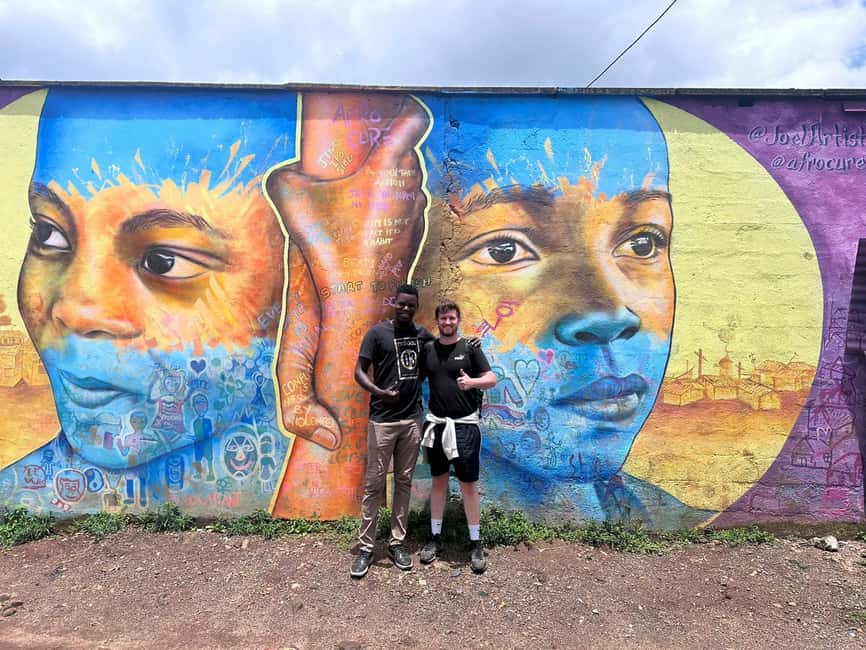
Reviewed · KIBERA COMMUNITY TOURS
Nairobi: Kibera Slum Tour with Local Social Entrepreneurs
Kibera is more than a headline. This three-hour walking tour gives you a personal look at daily life in one of Africa’s largest informal settlements, guided by Luke, who grew up there and still has close ties to the community. I like the local perspective and the chance to meet people through homes, schools, art centers, and small workshops rather than simply viewing Kibera from a vehicle. I also like that 30 percent of the tour revenue supports a children’s home and local school. The main consideration is emotional: visits to vulnerable children and very small homes require humility, good manners, and careful photography.
You begin at Greenhouse Mall near Adams Arcade, then walk through Toi Market and Kibera’s streets before visiting community projects and family spaces. The route is active, the footing can be uneven, and the experience is not polished for mass tourism. That is precisely its value, but you should come ready to listen rather than treat the neighborhood as a photo opportunity.
In This Review
- Key points to know before you go
- Why a local guide changes the experience
- Starting at Greenhouse Mall and entering Toi Market
- Meeting children at a local home
- Uweza Art Gallery and Kibera’s creative side
- The Kibera viewpoint near the old railway line
- Stepping inside a 4-by-4-meter home
- Fairview Academy and the work of education
- Victorious Bone Craft and recycling with a purpose
- Safety, comfort, and the pace of three hours
- Is $40 a fair price?
- Who should book this experience?
- Should you book the Kibera tour?
- FAQ
- Where does the Kibera tour begin?
- How long does the tour last?
- What places are included?
- Who guides the tour?
- What languages are available?
- Is bottled water included?
- Does part of the price support Kibera projects?
- Is the tour suitable for young children?
Key points to know before you go
- Luke’s personal connection: Your guide grew up in Kibera and brings first-hand stories about housing, water, electricity, schooling, waste, health, and work.
- Six major community stops: You may visit a children’s home, Uweza Art Gallery, a local home, Fairview Academy, Victorious Bone Craft, and a Kibera viewpoint.
- 30 percent supports local work: Part of your $40 fee goes toward a children’s home and school supplies.
- Toi Market adds economic context: The market shows how second-hand clothing from Europe, the UK, the United States, China, and elsewhere enters the local economy.
- Flexible arrangements: The guide communicates through WhatsApp and can adjust the schedule when practical.
- A walking tour with real conversations: You are likely to meet artists, teachers, caregivers, family members, and shopkeepers, not just hear a rehearsed speech.
Why a local guide changes the experience

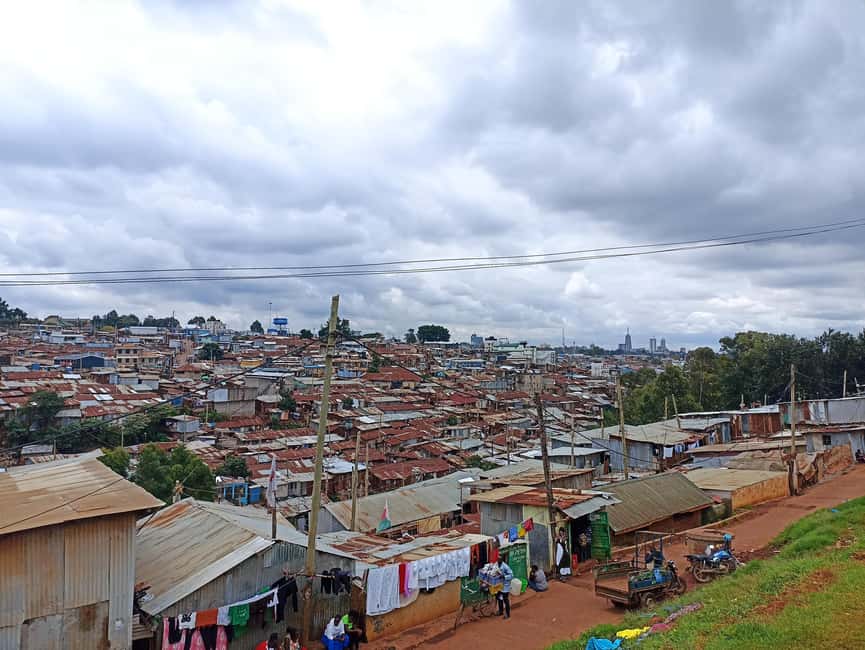
Kibera covers roughly three square kilometers and is located about seven kilometers from central Nairobi. The tour information places its population at more than 300,000 people. Those figures help explain the density, but numbers alone cannot show how people organize homes, businesses, schools, art projects, and support networks in a crowded setting.
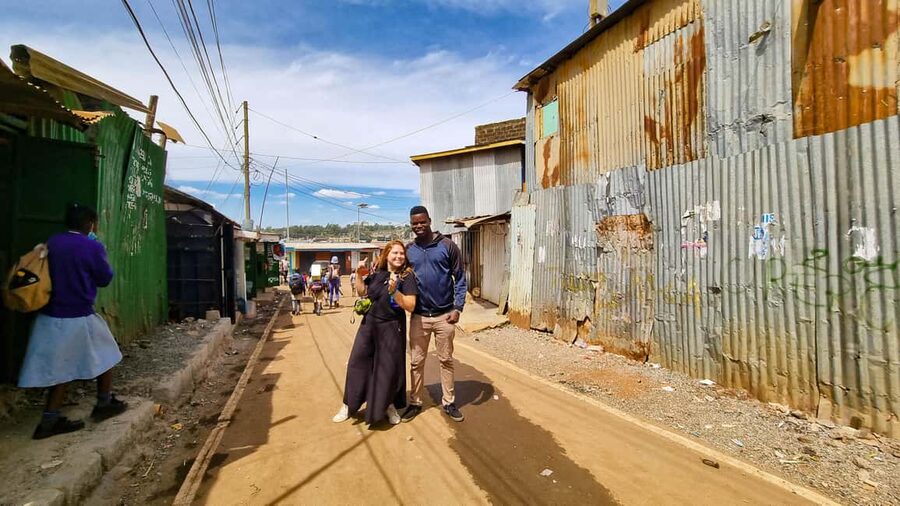
Luke’s main strength is his connection to the area. He knows the streets, understands local customs, and can introduce you to people in a natural way. Several guides may lead the experience, including Luke’s childhood friends and colleagues such as Samuel, Victor, Clement, or Sammy, but you should request Luke if his first-hand connection is important to you.
I like the way this setup changes the tone. You are not left to wander and guess what you are seeing. Luke can explain why a small house is arranged as it is, how local problems affect families, and how people find work with limited resources. He also speaks English and Swahili, and some visitors have enjoyed learning a few simple Swahili phrases along the way.
You should still remember that a guide’s local connection does not make every part of Kibera predictable. Keep your phone and valuables secure, follow the guide’s directions, and ask before taking photographs. The point is to meet people with dignity, not to collect images of hardship.
More community tours:
- Nairobi: Explore Kibera Slum with Local Guides
★ 4.9 · 365 reviews - Kevins Kibera Slum Tours
★ 5.0 · 213 reviews - Nairobi: Kibera Slum storytelling tour with a Local
★ 5.0 · 185 reviews
Starting at Greenhouse Mall and entering Toi Market
The meeting point is the entrance to Greenhouse Mall, off Ngong Road at Adams Arcade. You contact the guide on WhatsApp, then meet near the security checkpoint after entering the mall. This is a practical starting point because you can buy water or snacks and use an ATM before walking onward.
Toi Market is the first major stop. It is described as Nairobi’s second-largest open-air market and is known for second-hand clothing sold mainly to local residents, including people from Kibera. The clothing comes from places such as Europe, the UK, the United States, and China.
This stop gives you a useful way to think about trade and household budgets. The market is not simply a colorful shopping stop. It shows how imported used goods become affordable clothing and create income for sellers. You might find clothes, shoes, or other items worth buying, but purchases are optional and are not included in the $40 price.
The market can feel crowded and lively, so stay close to the guide. If you want to buy something, ask Luke about prices and suitable behavior before negotiating. Carry small amounts of Kenyan cash if you plan to shop, though you should not feel pressure to spend.
Meeting children at a local home
The children’s home is one of the most affecting stops. It supports vulnerable children from Kibera with food, shelter, and education. Some children are described as orphans, while others have been rescued from the streets or come from very difficult family situations.
You may meet a caregiver such as Mama Paschalia or Mama Mimi, who are connected with local children’s homes. One visit included a home caring for about 18 orphans. These encounters can be warm and hopeful, but they are also serious. You are seeing real children in a place that serves as their home, not attending a staged performance.
If you wish to bring something, coordinate with the guide first. Previous visitors have brought food such as maize flour, apples, and cookies, as well as stationery for the children. Do not assume that handing out sweets or money is appropriate. A useful donation should fit the home’s current needs, and Luke can help you understand what would be practical.
The tour’s revenue contribution matters here. Thirty percent goes back to support a children’s home and a local school, including stationery and other school items. That does not remove the need for respectful conduct, but it gives the fee a clear community purpose.
Uweza Art Gallery and Kibera’s creative side
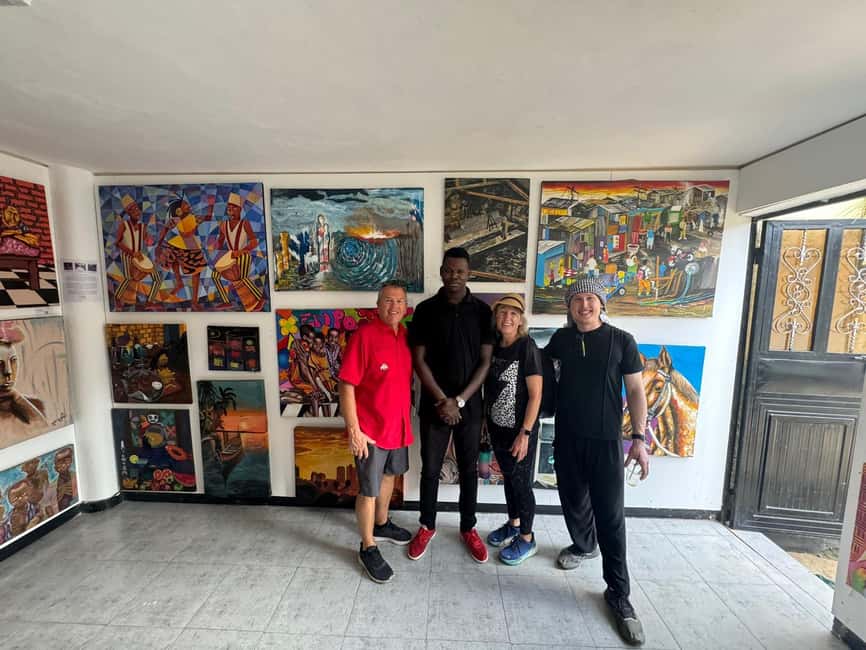
Uweza Art Gallery provides a welcome change of pace. The center offers children and artists from Kibera a place to develop and show their work. The art can be powerful, and Luke explains the ideas and local meaning behind the pieces.
I value this stop because it avoids presenting Kibera only through poverty. Art shows skill, imagination, and ambition. It also gives local artists a platform and may provide income. If you see a piece you like, you can ask about purchasing it, but products are extra and buying is never required.
Allow yourself time to look closely. The paintings may reflect family life, local struggles, hopes, or the wider community. Ask questions rather than trying to interpret everything from a quick glance. This is one of the stops where Luke’s personal explanations add real value.
A few more trips worth weighing up
- Nairobi National Park Half-Day Tour; Free Wi-Fi connection
★ 5.0 · 878 reviews - Nairobi: National Park & Optional Elephants & Giraffe Center
★ 4.8 · 874 reviews - NAI NAMI: Nairobi Storytelling Tour with Street Children
★ 5.0 · 792 reviews - Nairobi National Park Half-Day Game Drive
★ 4.5 · 738 reviews
The Kibera viewpoint near the old railway line
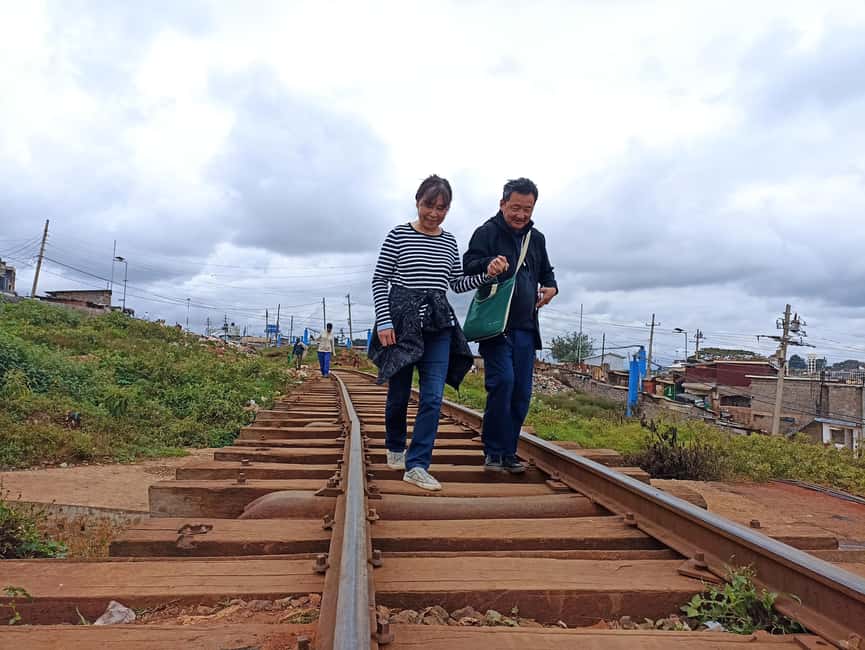
Near Kibera Town Centre, the route reaches an elevated viewpoint close to the old Kenya-Uganda Railway line. From here you can see part of the settlement from above.
The view helps you understand Kibera’s scale and density in a way that walking at street level cannot. It also offers a pause during the route, giving you time to absorb what you have seen. Your guide can place the streets, homes, markets, and public spaces in a wider setting.
This is likely to be one of the most photographed stops, so use restraint. Ask before photographing people, homes, or children. A wide view without identifiable individuals is generally less intrusive, but the guide’s advice should come first.
Stepping inside a 4-by-4-meter home
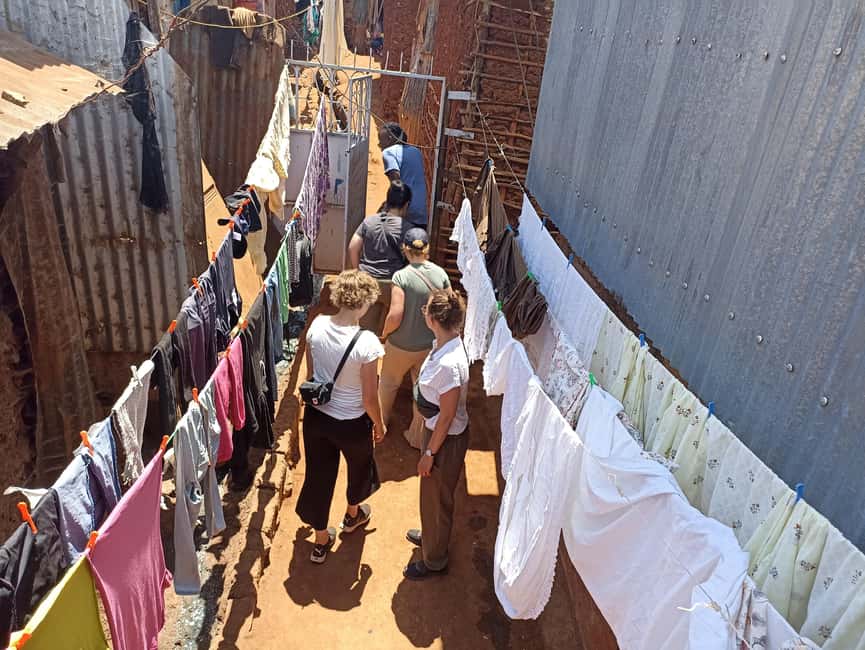
The local house visit is among the most unusual parts of the route. You may enter a home measuring about four meters by four meters and see how the space is arranged. You may also meet a family and hear about daily life directly.
This visit works best when you treat it as an invitation, not an entitlement. A home is private. Keep the group small and your questions polite. Avoid commenting on the size or condition of the room in a way that could embarrass the family.
Some visitors have been welcomed into Luke’s parents’ home. Meeting his family can make the experience more personal, but this is not a promise that every tour will include the same family visit. Ask Luke what is possible on your date.
For me, the value is practical understanding. A statistic about crowded housing is easy to forget. Seeing how one compact room is organized, and hearing how residents use it, gives that issue human scale.
Fairview Academy and the work of education
At Fairview Academy, you see children studying despite limited resources. The school represents the effort families and local educators make to keep education going under difficult conditions.
This stop is especially useful if you care about development, education, or community-led solutions. It also helps balance the children’s home visit. You are not only seeing need. You are seeing teachers, pupils, and local institutions working toward a better future.
Because this is an active school, behave as you would at any school visit. Ask about photography and avoid interrupting lessons. The $40 fee includes the school visit, while part of the tour income supports school stationery and other supplies.
Victorious Bone Craft and recycling with a purpose

Victorious Bone Craft is a small workshop that turns cow bones, cow horns, used brass padlocks, and camel bones into ornaments. The work creates jobs and keeps materials from adding to local pollution.
This stop gives you a close look at a practical form of recycling. You can see how discarded or leftover materials become decorative objects and a source of income. It also shows that environmental work and employment can connect in a place where both are important.
Products are not included in the tour price. You may buy an ornament if you want a tangible reminder of the visit, but there is no obligation. I appreciate that the workshop is part of the route because it lets you meet people making a living through skill rather than receiving charity.
The route can sometimes be adjusted. One visitor chose more time with children and volunteers, including playing football, instead of focusing on souvenirs. That kind of flexibility depends on the day and the guide, so discuss your interests early.
Safety, comfort, and the pace of three hours
Safety is the most common practical concern, especially for solo women and families. The route is led by local guides who know the neighborhood and its residents. Many people have felt comfortable throughout the visit, including solo female visitors and families with children.
That said, no urban walking tour can promise zero risk. Stay with the guide, avoid displaying expensive items, and let the guide handle unwanted attention. Wear comfortable shoes and clothing suited to walking. Bottled water is included, but you may want to carry extra water if you tend to drink often.
The age guidance says the experience is not suitable for children under seven, babies under one, or people over 95. The three-hour schedule may feel full, especially because several stops involve conversation rather than quick photo breaks. If you tire easily, tell the guide. One visitor appreciated being given time to rest.
The published route lists Olympic Estate as the final stop, where you can order an Uber or Bolt for your next destination. Other meeting information says the activity ends back at the meeting point, so confirm the exact finish point with Luke before you set up onward transport.
Is $40 a fair price?
At $40 per person, this is not the cheapest way to spend three hours in Nairobi. It is also more than a simple walk through a market. Your fee includes a local guide, bottled water, Toi Market, the children’s home, a private home visit, Uweza Art Gallery, the recycling workshop, Fairview Academy, and the Kibera viewpoint.
The strongest value comes from access and interpretation. You could pass through parts of Kibera on your own, but you would not have the same introductions or context. Luke’s personal links help you meet people in homes, schools, and community projects, and 30 percent of the revenue supports local children and education.
You should not book this expecting luxury, air conditioning, or a carefully staged attraction. Book it if you want time with local people and are prepared to listen. For many visitors, that makes the price reasonable, especially when the fee also supports community work.
Who should book this experience?
I would recommend it to adults, older children, students, photographers who work respectfully, and anyone who wants to understand Nairobi beyond its central districts and safari attractions. It can also suit solo visitors because the guide handles the route and helps you feel oriented.
It is a good fit for people interested in education, housing, informal economies, recycling, local art, and community support. Development studies students may find the school and children’s home especially useful, while families may appreciate the chance to discuss daily life with local residents.
I would think twice if you dislike walking, feel uncomfortable entering private homes, or want a purely lighthearted outing. The tour can be moving. You may leave thinking about inequality, resilience, and the limits of charitable tourism. That is not a flaw, but you should know what kind of experience you are choosing.
Booking is flexible, with reserve-now-and-pay-later availability and free cancellation up to 24 hours before the tour. Confirm the meeting and end points, request Luke if possible, and message him in advance about dietary needs, rest breaks, donations, or the parts of the route that matter most to you.
Should you book the Kibera tour?
Book this tour if you want a direct, carefully guided introduction to Kibera and are willing to approach it with respect. The best parts are Luke’s personal stories, the home and school visits, the local art, and the clear contribution to children’s support.
Do not book it simply to take dramatic photographs of poverty. You will get far more from the experience if you ask questions, listen to families and artists, and notice the work people are doing to support themselves and one another. At $40, it offers strong value for a personal, community-focused look at Nairobi.
FAQ
Where does the Kibera tour begin?
It begins at the entrance to Greenhouse Mall, off Ngong Road at Adams Arcade. You should contact the guide on WhatsApp after arriving near the security checkpoint.
How long does the tour last?
The planned tour lasts a maximum of three hours.
What places are included?
The route includes Toi Market, a local children’s home, Uweza Art Gallery, a Kibera viewpoint, a local home, Fairview Academy, and Victorious Bone Craft recycling workshop.
Who guides the tour?
The guide is a local social entrepreneur who grew up in Kibera. Luke is the main guide named in the experience information, and other local guides may sometimes assist.
What languages are available?
The tour is available in English and Swahili.
Is bottled water included?
Yes. Bottled water is included in the tour price.
Does part of the price support Kibera projects?
Yes. Thirty percent of the tour revenue supports a children’s home and a local school with stationery and other school items.
Is the tour suitable for young children?
It is not suitable for children under seven or babies under one. It is also not suitable for people over 95 years old.
Just added around Nairobi
- Nairobi: Giraffe Center, Elephant Orphanage and Bomas Tour★ 5.0 · 3 reviews
- Nairobi: Airport and Hotel Private Transfers.★ 4.0 · 3 reviews
- Kitengela Anselm Hot Glass tour★ 4.5 · 3 reviews
- 11-Days Best of Kenya & Tanzania Big 5 Safari on a 4×4 Jeep★ 5.0 · 3 reviews
- 12-Day Tsavo west Amboseli lake Nakuru Maasai Mara safari★ 5.0 · 3 reviews
- NAIROBI NATIONAL PARK AFTERNOON GAME DRIVE.★ 5.0 · 3 reviews
- Nairobi Down Town & Walking City Tour★ 4.8 · 3 reviews
- Carnivore Resturant Dinner Experience★ 4.0 · 3 reviews
Kibera Community Tours, compared.








Browse the lists this tour appears in