
Reviewed · KIBERA COMMUNITY TOURS
Private Tour in Kibera the Largest Slum
See Kibera through local eyes. This four-hour private tour offers a close look at daily life in Nairobi’s largest slum, from homes and schools to bone recycling, football, markets, and traditional dance. I like the small private format and the clear effort to support Agape Hope for Kibera school. I also like that guide Rally brings personal experience, having grown up in Kibera and later becoming a teacher.
The $15 price is remarkably low for a four-hour private experience with bottled water and admission included. My main consideration is that this is not a polished sightseeing outing. You will walk through poor urban conditions, enter a real household, and meet people whose lives are not arranged for tourism, so respect and an open mind matter.
In This Review
- Key points at a glance
- Why this Kibera tour feels different
- Starting at Olympic Primary School
- The old railway and Kibera’s sense of place
- Inside a real homestead
- Bone recycling and small-scale work
- Meeting children at the school
- Football with a local team
- Taking a matatu through Nairobi
- Traditional dance and the finish at Toi Main Market
- What the $15 price really offers
- Practical advice for a respectful visit
- Who should book this experience?
- Should you book the Kibera tour?
- FAQ
- How long does the Kibera tour last?
- How much does the tour cost?
- Is this a private tour?
- Where does the tour start and end?
- What is included in the price?
- Can children join the tour?
Key points at a glance
- A four-hour private visit: Your group participates alone, with a flexible pickup point agreed between you and the operator.
- Rally’s local connection: Rally grew up in Kibera, became a teacher, and helps run a school for children facing serious challenges.
- Real community stops: The route includes a household, an orphan school, a bone-recycling workshop, a football team, a matatu ride, and Toi Main Market.
- More than poverty stories: The tour focuses on work, education, creativity, culture, and the resilience of people living in Kibera.
- Edutainment with purpose: Traditional dancing from the school gives the visit a lively cultural element while supporting Agape Hope for Kibera.
- Excellent price, modest extras: At $15 per person, bottled water is included, but coffee and tea are not.
Why this Kibera tour feels different
Many city tours keep you on the main road and offer a quick photo stop. This one is designed to take you farther inside the community. You may visit a home, meet local people, see how ordinary materials are used, and learn how different cultural groups live alongside one another.
That access is the tour’s main strength, but it also creates a responsibility. Kibera is not a stage set. A household is someone’s home, and a school is a working place for children. I would approach every stop with permission, patience, and restraint with your camera.
The tour’s stated aim is not to display hardship for shock value. It highlights people creating work, raising children, teaching, making products, playing football, and keeping cultural traditions alive. That balance matters. You will still see difficult living conditions, but the experience tries to give those conditions human context instead of turning poverty into a spectacle.
The private setup helps. Your group does not have to follow a large crowd, and the pace can be more personal. Pickup is flexible for both sides, which is useful if you are staying somewhere in Nairobi and need to agree on a practical meeting arrangement.
More community tours:
- Nairobi: Explore Kibera Slum with Local Guides
★ 4.9 · 365 reviews - Kevins Kibera Slum Tours
★ 5.0 · 213 reviews - Nairobi: Kibera Slum storytelling tour with a Local
★ 5.0 · 185 reviews
Starting at Olympic Primary School

The tour begins at Olympic Primary School. This is more than a point on a map because education is central to the experience. The operator supports Agape Hope for Kibera, a school connected with children facing difficult circumstances.
You should expect the school visit to be one of the more serious parts of the morning. You may meet children at school and learn about the role education plays in the community. The traditional dance program adds a lighter element, and you may be invited to watch or take part.
That mix of learning and performance is what the operator calls edutainment. It can be enjoyable, but keep your expectations sensible. This is not a theater show built for tourists. It is a school-based cultural presentation tied to a community project.
The school connection also gives the tour a practical purpose. Your money is not simply paying for a guide to lead you through streets. It helps bring attention and support to a local education effort. The supplied information does not state exactly how much of your fee goes to the school, so I would not assume a fixed donation. Still, the connection is worth asking about when you book.
The old railway and Kibera’s sense of place
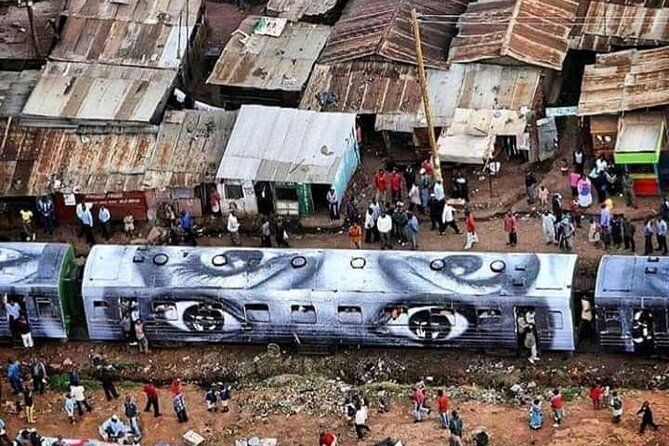
One early stop is the old railway, described as the oldest railway brought by the British in 1805. Here, your guide can place Kibera within Nairobi’s wider story and explain how transport, settlement, and urban growth shaped the area.
The railway stop is useful because it gives you a physical reference point before you enter the more intimate parts of the tour. Rather than hearing about Kibera as an isolated place, you see how it connects with the city around it.
I would treat the date and description as part of the tour’s local historical account, not as a full railway history lesson. The value lies in hearing how the guide connects this old route with present-day life. Rally’s background should make these explanations feel grounded in lived experience rather than copied from a guidebook.
Inside a real homestead
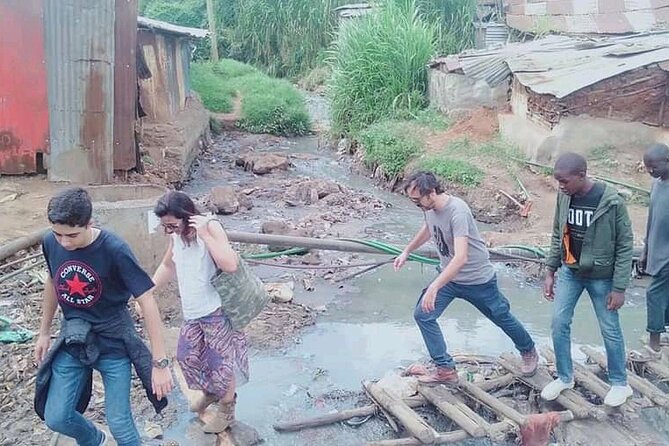
The homestead visit is among the most unusual parts of the route. You can interact with local people in their house and learn about the materials used in the home.
This is where the tour moves from general observation to direct human contact. You are not simply looking down a street from a vehicle. You may see the practical choices people make in a setting where space and resources are limited.
There is a clear line between meaningful contact and intrusion. Ask before taking photographs, listen when people explain their lives, and do not treat the home as a display. If you prefer strictly conventional sightseeing, this stop may feel uncomfortable. If you want a closer understanding of how people live, it can be one of the most valuable parts of the visit.
Because the tour is private, you can ask questions without holding up a large group. That makes the experience better for you and, ideally, less disruptive for the people you meet.
A few more trips worth weighing up
- Nairobi National Park Half-Day Tour; Free Wi-Fi connection
★ 5.0 · 878 reviews - Nairobi: National Park & Optional Elephants & Giraffe Center
★ 4.8 · 874 reviews - NAI NAMI: Nairobi Storytelling Tour with Street Children
★ 5.0 · 792 reviews - Nairobi National Park Half-Day Game Drive
★ 4.5 · 738 reviews
Bone recycling and small-scale work
The bone-recycling stop shows how discarded material can become useful. Bones are recycled into ornaments, creating products and employment within the community.
This is a good reminder that Kibera is not defined only by what it lacks. People find ways to make a living with available materials and practical skills. The stop also gives you something concrete to understand: how recycling can connect environmental concerns, craft, and income.
One review describes seeing a souvenir factory, which appears to fit this part of the route. You may have an opportunity to see how ornaments are made and perhaps purchase something, though the supplied details do not promise a shopping stop or specify prices.
I like this part of the route because it makes the idea of resilience tangible. You are not hearing a broad speech about determination. You are seeing a work process that turns waste into an item with value.
Meeting children at the school
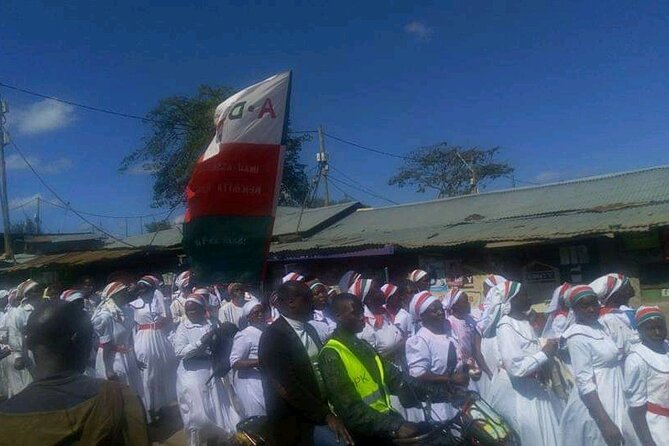
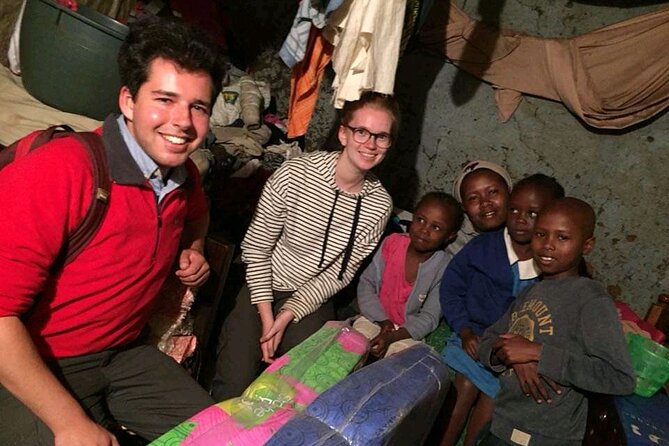
The school for orphans is another important stop. You can meet children while they are at school and learn more about the education project connected with the tour.
This can be moving, but it is also the point at which good conduct matters most. Children should not be treated as photo props or as a reason to feel temporarily virtuous. Follow the guide’s instructions, ask about photography, and focus on the school’s work rather than on individual children’s hardship.
The tour’s link to Agape Hope for Kibera gives this visit more substance than a quick walk past a classroom. Rally is described as someone who grew up in Kibera, became a teacher, and now helps run a school for children with challenges. That personal path is a major reason the tour receives such strong praise.
You may leave thinking less about a single dramatic story and more about the long work required to keep children learning. That is a worthwhile shift in perspective.
Football with a local team

The football stop brings energy and participation. You may play with a local football team, turning the tour from a guided walk into a shared activity.
This is likely to be one of the easiest ways to connect without relying on perfect language skills. A ball, a field, and a few minutes of play can create a natural exchange. It also shows another side of community life, where sport offers recreation, identity, and a way for people to spend time together.
The activity may not suit everyone. If you have mobility limitations, do not want physical activity, or are visiting in hot weather, you can ask the guide how much participation is expected. The tour information says most people can take part, and children from age five are accepted, but it does not give detailed accessibility information.
For families, this may be the most enjoyable stop. For adults, it is a chance to take part rather than simply observe.
Taking a matatu through Nairobi

The tour includes a matatu, the local form of public transportation. Using one gives you a small taste of how people move around Nairobi each day.
This is a practical feature, not just a novelty. Public transport helps you understand the links between neighborhoods and the daily rhythm of the city. It also keeps the tour tied to ordinary life instead of placing you in a private vehicle for every minute.
The information does not state the exact matatu route or whether you pay an extra fare, so clarify that before setting out. The tour does list bottled water as included, while coffee and tea are not included. Bring any snack or drink you may need, especially if you are traveling with a child.
As with the walking sections, stay close to your guide and follow local instructions. Rally’s role is especially important here, since he can explain what is happening and help your group move with confidence.
Traditional dance and the finish at Toi Main Market
The traditional dance is the tour’s cultural high point. You can watch and take part, with dances connected to the school. This adds music, movement, and local pride to an itinerary that otherwise deals with serious social subjects.
Participation is optional in spirit, even if the atmosphere encourages you to join. I would take part respectfully, follow the dancers’ lead, and avoid turning the moment into a performance about yourself.
The tour ends at Toi Main Market. This is a useful finish because you see goods sold within the community and get a sense of local commerce. It also gives you a chance to browse, though the tour does not promise specific products or shopping time.
Ending at a market rather than returning to the starting point is worth noting. You should plan your next step from Toi Main Market. The market is listed as open Monday through Sunday from 7:00 a.m. to 8:00 p.m., but the tour itself lasts about four hours, so your precise finish time will depend on the agreed start and the pace of your group.
What the $15 price really offers
At $15 per person, this is one of Nairobi’s least expensive guided community experiences. The value is strong if you want several hours with a local guide, a private group, admission to the planned stops, bottled water, and a chance to support a school-linked project.
The private format is especially important. A private tour at this price gives you room for questions and avoids the distance that often comes with a large coach group. The operator also reports that it is commonly booked about 17 days in advance, so I would reserve early if your Nairobi dates are fixed.
The low price does not mean every possible expense is covered. Coffee and tea are excluded, and you should not assume that purchases at the market, souvenirs, or any transport charge beyond the stated inclusions are covered. Ask about those points before the day begins.
The experience offers excellent value for an educational, human-centered tour. It is less suitable if you want luxury transport, a tightly scripted schedule, or a purely comfortable outing.
Practical advice for a respectful visit
Wear practical clothes and shoes suited to four hours of walking and activity. The tour requires good weather, and poor conditions can lead to a different date or a full refund.
Agree on the pickup location in advance. The listed starting point is Olympic Primary School, but pickup is flexible for both parties. The official end point is Toi Main Market, so do not assume you will finish where you started.
Keep your group together and listen to Rally or your assigned guide. A private tour does not remove the need for local guidance. It simply means the guidance is focused on your group.
I would also keep your camera away until you have permission. This is especially important in homes, schools, and around children. A respectful question and a few minutes of listening will do more for the quality of your visit than collecting photographs.
Free cancellation is available up to 24 hours before the start time. Inside that 24-hour period, the payment is not refunded and changes are not accepted. If poor weather cancels the activity, you are offered another date or a full refund.
Who should book this experience?
I would recommend it to you if you want to understand Nairobi through local people, community work, and ordinary daily activity. It suits curious adults, families with children aged five and older, and anyone who prefers a private guide to a large organized group.
It is particularly appealing if you value education projects and want your visit to connect with a school. Rally’s personal story adds depth, and the mix of a household, school, workshop, football, transport, dance, and market keeps the four hours varied.
I would hesitate to recommend it if you are uncomfortable entering a private home, meeting children in a school setting, walking through very poor urban conditions, or taking part in unscripted encounters. You should also choose another type of Nairobi activity if you want a polished cultural show with fixed seating and predictable facilities.
Should you book the Kibera tour?
Book it if you want a direct, personal look at Kibera and are prepared to meet the community with humility. The strongest reasons are the private format, the guide’s connection to the area, the support for Agape Hope for Kibera, and the unusually broad route for only $15.
Go with realistic expectations. This is not poverty theater, but neither is it a comfortable sightseeing bubble. You will see hardship alongside creativity, education, sport, trade, and culture. For many people, that honest mixture is exactly what makes the experience worth the time.
FAQ
How long does the Kibera tour last?
The tour lasts approximately four hours.
How much does the tour cost?
The listed price is $15 per person.
Is this a private tour?
Yes. Only your group participates in the activity.
Where does the tour start and end?
The listed starting point is Olympic Primary School in Nairobi. The tour ends at Toi Main Market.
What is included in the price?
Bottled water and admission to the included tour activities are provided. Coffee and tea are not included.
Can children join the tour?
Yes. Children from five years old can participate, and most people can take part in the activity.
Just added around Nairobi
- Nairobi: Giraffe Center, Elephant Orphanage and Bomas Tour★ 5.0 · 3 reviews
- Nairobi: Airport and Hotel Private Transfers.★ 4.0 · 3 reviews
- Kitengela Anselm Hot Glass tour★ 4.5 · 3 reviews
- 11-Days Best of Kenya & Tanzania Big 5 Safari on a 4×4 Jeep★ 5.0 · 3 reviews
- 12-Day Tsavo west Amboseli lake Nakuru Maasai Mara safari★ 5.0 · 3 reviews
- NAIROBI NATIONAL PARK AFTERNOON GAME DRIVE.★ 5.0 · 3 reviews
- Nairobi Down Town & Walking City Tour★ 4.8 · 3 reviews
- Carnivore Resturant Dinner Experience★ 4.0 · 3 reviews
Kibera Community Tours, compared.





Kibera Slum Tour with Local Social Entrepreneurs
Read our review →

Browse the lists this tour appears in