

Reviewed · KIBERA COMMUNITY TOURS
Kevins Kibera Slum Tours
Come ready to see Nairobi differently. Kevin’s Kibera Slum Tours takes you into Africa’s largest urban informal settlement with a guide who grew up there, rather than showing you the area from a passing vehicle. I like the personal access, especially the visit to Kevin’s family home, and I like the chance to see a local school, crafts workshop, market, and community life in one morning. The main drawback is the walking: paths can be uneven, muddy, narrow, and difficult after rain.
This is not a polished sightseeing route. It is a direct encounter with daily life, led by Kevin or his brother Ismael, both respected local figures. I also appreciate that the tour is private, includes hotel pickup and drop-off, and costs $65 per person. Still, you should book it only if you can manage a physically demanding walk and are prepared to approach Kibera with respect, patience, and an open mind.
In This Review
- Key Things to Know Before You Go
- Why a Local Guide Changes the Experience
- Hotel Pickup Starts the Morning
- Entering Kibera on Foot
- The Bone Workshop and Community Work
- A School, an Orphanage, and the Question of Education
- Kevin’s Home and the Family Visit
- The Landfill, Train Track, and Main Market
- What You Get for $65
- Who Should Book This Experience
- Practical Advice for a Respectful Visit
- Is Kevin’s Kibera Slum Tours Worth Booking?
- FAQ
- Where does Kevin’s Kibera Slum Tours take place?
- How long does the tour last?
- What time does the tour start?
- Is hotel pickup available?
- Is this a private tour?
- What places may I visit in Kibera?
- Is food included?
- What should I wear?
- Can I cancel for a full refund?
Key Things to Know Before You Go

- Local guides lead the way: Kevin and his brother Ismael grew up in Kibera and offer access to their homes and family connections.
- The walk goes beyond the main street: You may visit a school, orphanage, bone workshop, landfill, train track, family homes, and the main market.
- It is a private four-hour experience: Only your group takes part, with hotel pickup and drop-off in Nairobi.
- Good shoes matter: Wear closed-toe shoes that can get extremely dirty, especially if rain has passed through.
- The human contact is the heart of the tour: The strongest moments come from conversations, family hospitality, and seeing local projects at work.
- The price pays for more than transport: At $65, you are buying time with a local guide and a close look at community life, not a quick photo stop.
Why a Local Guide Changes the Experience
Kibera can be misunderstood when it is reduced to a place of poverty. Kevin’s Kibera Slum Tours gives you a person to listen to, not just a route to follow. Kevin and Ismael were raised in the community, still have family ties there, and know the streets and residents personally.
That local connection matters. You are not simply walking through an unfamiliar neighborhood with a guide who arrived recently. You are being introduced to places that mean something to the guide, including his own home and family home. That changes the tone from observation to personal hospitality.
Ismael receives especially strong praise for his warmth and attention. He has welcomed solo women, families with children, and quieter members of private groups. He also takes time to answer questions and involve everyone, which is useful on a tour dealing with poverty, education, family life, and public services.
You should still remember that this is someone’s home. Ask before taking photographs, listen when people speak, and avoid treating hardship as entertainment. The best approach is simple: remain curious, polite, and aware that you are being welcomed into a living community.
More community tours:
- Nairobi: Explore Kibera Slum with Local Guides
★ 4.9 · 365 reviews - Nairobi: Kibera Slum storytelling tour with a Local
★ 5.0 · 185 reviews - Kibera Slum Tour with Lucas
★ 5.0 · 119 reviews
Hotel Pickup Starts the Morning

The advertised start time is 8:00 am, with pickup offered from any hotel accommodation in Nairobi. Round-trip transfers make this easier than arranging your own way to Kibera, especially if this is your first morning in the city.
Allow some flexibility around the pickup time. One visitor reported being collected about an hour later than expected, so I would confirm the meeting details and keep your morning schedule loose. Nairobi traffic can also affect timing, though no specific transfer duration is provided.
The full experience lasts about four hours. The Kibera portion itself is listed at roughly three hours, with the remaining time likely allowing for hotel transfers and the transition into and out of the community. Since the tour is private, you do not have to wait for a large coach group or adjust your pace to strangers.
That private format is one of the better features here. You can ask more questions, slow down when something needs explanation, or keep moving if the conditions become uncomfortable. Families, couples, and solo participants all fit the format.
Entering Kibera on Foot
The tour gives you a close look at Kibera by walking through its streets and footpaths. This is where you need to be realistic. The ground can be precarious, with uneven surfaces and difficult footing. After rain, conditions may become much worse.
Wear closed-toe shoes with solid grip. Choose a pair you do not mind covering in mud or dust. Sandals, smooth-soled shoes, and anything precious should stay at the hotel.
The route may include narrow passages, rough ground, the train track, and areas near a landfill. These are not comfortable sightseeing conditions, but they help show the physical setting in which residents work, study, shop, and raise families. You will need to watch each step rather than stare at your phone.
The walk may not suit anyone with balance problems, limited mobility, or difficulty on uneven ground. One account specifically described the route as long and requiring agility. The tour is presented as suitable for most participants, but that should not replace your own judgment. If you are elderly or have walking concerns, ask the provider for a current assessment before booking.
Several solo women felt safe while accompanied by Ismael. That is encouraging, but no walking tour can remove every concern. Staying with your guide and following his instructions is essential.
The Bone Workshop and Community Work

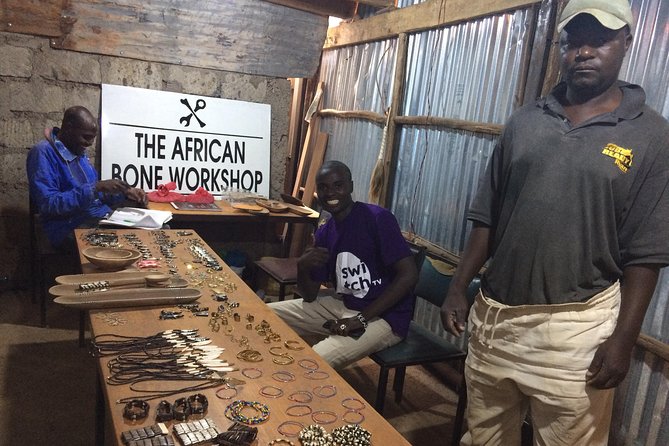
One of the most distinctive stops is an African bone workshop. Here, you may see how discarded animal bones are turned into jewelry or other crafts. The stop adds an economic side to the tour that can get lost when visitors focus only on housing conditions.
Craft work shows skill, effort, and a way to earn income from limited materials. It also gives you the chance to support a local maker if purchases are available. The supplied details do not confirm prices, payment methods, or whether buying is expected, so ask before assuming.
Some tours with Kevin or Ismael have also included a community empowerment bag-making project. This is worth asking about when you book, since the exact stops can vary. The important point is that Kibera is not presented only as a place needing help. You also see people creating work, teaching children, and trying to strengthen their own community.
A few more trips worth weighing up
- Nairobi National Park Half-Day Tour; Free Wi-Fi connection
★ 5.0 · 878 reviews - Nairobi: National Park & Optional Elephants & Giraffe Center
★ 4.8 · 874 reviews - NAI NAMI: Nairobi Storytelling Tour with Street Children
★ 5.0 · 792 reviews - Nairobi National Park Half-Day Game Drive
★ 4.5 · 738 reviews
A School, an Orphanage, and the Question of Education

The school and orphanage visit may be the most affecting part of the morning. You can see where children study and learn about local efforts to support orphans and help promising students continue their education.
The conditions may be difficult to absorb. Accounts describe makeshift or poorly funded schools, children living in very basic spaces, and local people working with limited resources. At the same time, the focus is not only on hardship. The people running these schools are trying to create practical opportunities, often with little funding.
This stop needs a respectful attitude. Children should not be treated as photo subjects, and you should follow the guide’s instructions about photography and interaction. If you want to bring donations, do not assume what is needed. Ask the operator directly before arriving.
For me, the value of this part is that it connects living conditions with opportunity. You see both the barriers and the effort to overcome them. That is more useful than leaving with a simple idea that Kibera is either hopeless or inspirational. It is both difficult and full of people working hard to improve life.
Kevin’s Home and the Family Visit

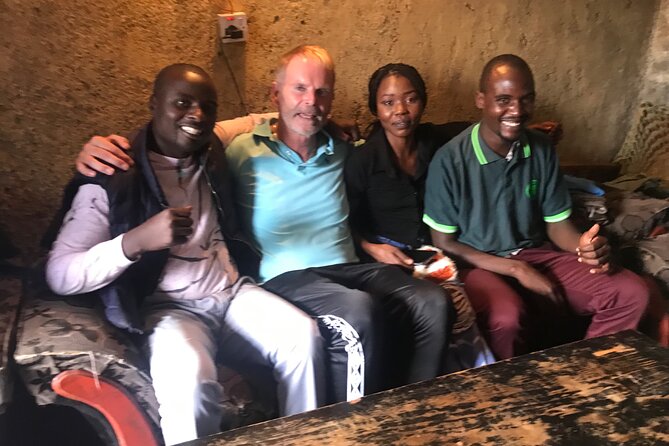
The visit to Kevin’s house and family is what makes this tour feel personal. Rather than looking at homes only from the outside, you may be invited into the guide’s family setting and see where he lives.
That invitation can be a powerful reminder that a family home is still a home, even when space and resources are limited. Families laugh, argue, welcome visitors, and carry on with ordinary routines. One family group described the visit as an especially meaningful part of the morning, while solo participants appreciated the warmth of the welcome.
This is also the point where good manners matter most. Keep your voice low, ask permission before photographing anyone, and do not assume that every room or personal detail is open to visitors. If you feel uncomfortable entering a private home, tell the guide.
The family visit is not a staged cultural show. Its value comes from the fact that Kevin and Ismael are sharing something personal. That makes the experience more memorable, but it also creates a greater responsibility for you to behave thoughtfully.
The Landfill, Train Track, and Main Market
The route may include a landfill, train track, and main street market. These stops help you understand the physical and commercial parts of Kibera.
The landfill can be confronting. It shows the problems created when basic public services do not keep pace with the needs of a large community. You may find this stop upsetting, but it is part of the tour’s honest look at local conditions.
The train track adds another practical detail to the route. It is not a scenic attraction, and footing may be difficult. Pay attention to the guide and do not wander away from the group.
At the main market, the tone may shift. You can see where residents shop and conduct business, with the sounds, movement, and everyday exchanges of a working neighborhood. The market is a useful counterweight to the more painful stops because it shows Kibera as a place of commerce and routine, not just deprivation.
Do not expect a market visit designed around souvenir shopping. The supplied information does not promise specific purchases or tastings. Food and drinks are not included, so plan accordingly.
What You Get for $65
At $65 per person, this is not the cheapest way to spend a morning in Nairobi. The value depends on what you want.
If you only want a quick look at Kibera, the price may feel high. If you want a private guide, hotel transfers, several hours on foot, and access to personal and community spaces, the cost is easier to justify.
Your fee includes the Kibera guide, but not food or drinks. The private format is important because the guide can explain the area in more detail and respond to your questions. You also avoid the awkwardness of joining a large group that may be rushed or distracted.
The strongest value comes from the local connection. Kevin and Ismael are not offering a distant overview. They are using their own experience and relationships to explain the community. The tour also appears to support their work with schools and community projects, although the exact financial arrangement is not provided, so I would not make assumptions about where every dollar goes.
For a four-hour private experience with pickup and drop-off, I consider the price fair for visitors who want a serious, people-focused look at Nairobi.
Who Should Book This Experience
I would recommend this tour to you if you want to understand Nairobi beyond museums, restaurants, and safari planning. It suits people who value conversation and local context more than comfort.
Families can take part, and one family completed the experience with children aged eight and nine. Still, parents should decide if their children can manage rough paths and emotionally difficult sights. The tour is not a light morning excursion.
Solo women have taken the tour and felt safe with Ismael, but you should stay with the guide and use normal city awareness. Couples and small private groups may appreciate the freedom to ask direct questions without an audience.
I would not choose this tour if you need smooth pavement, guaranteed timing, or a carefully controlled environment. I would also hesitate if your interest is mainly photography. The route may offer powerful images, but the people and homes you see deserve more respect than a camera-first visit allows.
Practical Advice for a Respectful Visit
Bring only what you need. Keep valuables secure and avoid displaying expensive equipment. Wear practical clothing and closed shoes that can handle dirt and mud.
Because food and drinks are not included, eat beforehand and carry water if the operator permits it. The available details do not specify restroom access, so ask about that before departure.
Rain matters. The experience requires good weather, and poor conditions may lead to a different date or a full refund. Even if the tour goes ahead after light rain, the walking can become harder, so check the forecast and wear suitable shoes.
Confirm the pickup time directly. You receive booking confirmation at the time of booking, but a reported delay makes it wise to clarify the exact hotel meeting point and expected collection window.
Cancellation is free up to 24 hours before the start time. Canceling or changing the booking less than 24 hours in advance does not qualify for a refund, and poor weather is handled with a new date or full refund.
Is Kevin’s Kibera Slum Tours Worth Booking?
Yes, if you want a personal and challenging view of Nairobi and can walk on rough ground. The family visit, local school, bone workshop, market, and conversations with Kevin or Ismael give the morning more substance than a drive-by look.
Book it for the human connection, not for comfort. You may leave moved, frustrated, grateful, or all three. That mixed reaction is part of the point.
Skip it if uneven paths, mud, difficult living conditions, or uncertain pickup timing would make you miserable. For everyone else, this is one of Nairobi’s most direct ways to meet a community through someone who knows it from the inside.
FAQ
Where does Kevin’s Kibera Slum Tours take place?
The tour takes place in Kibera, Nairobi, Kenya.
How long does the tour last?
The experience lasts approximately four hours. The Kibera walking portion is listed at about three hours.
What time does the tour start?
The stated start time is 8:00 am.
Is hotel pickup available?
Yes. Pickup and drop-off are offered from hotel accommodation in Nairobi.
Is this a private tour?
Yes. Only your group participates in the activity.
What places may I visit in Kibera?
The route may include an African bone workshop, an orphanage school, Kevin’s house and family, a landfill, the train track, and the main street market.
Is food included?
No. Food and drinks are not included.
What should I wear?
Wear closed-toe shoes that you do not mind getting very dirty. The walk includes uneven surfaces and may be harder after rain.
Can I cancel for a full refund?
Yes, if you cancel at least 24 hours before the experience starts. Cancellations made less than 24 hours in advance are not refunded. If poor weather causes the operator to cancel, you are offered another date or a full refund.
Just added around Nairobi
- Nairobi: Giraffe Center, Elephant Orphanage and Bomas Tour★ 5.0 · 3 reviews
- Nairobi: Airport and Hotel Private Transfers.★ 4.0 · 3 reviews
- 11-Days Best of Kenya & Tanzania Big 5 Safari on a 4×4 Jeep★ 5.0 · 3 reviews
- Kitengela Anselm Hot Glass tour★ 4.5 · 3 reviews
- NAIROBI NATIONAL PARK AFTERNOON GAME DRIVE.★ 5.0 · 3 reviews
- 12-Day Tsavo west Amboseli lake Nakuru Maasai Mara safari★ 5.0 · 3 reviews
- Nairobi Down Town & Walking City Tour★ 4.8 · 3 reviews
- Carnivore Resturant Dinner Experience★ 4.0 · 3 reviews
Kibera Community Tours, compared.




Kibera Slum Tour with Local Social Entrepreneurs
Read our review →



Browse the lists this tour appears in