
Reviewed · SHOPPING TOURS
Nairobi cultural souvenir shopping tour with a local
Start with the right shop. This six-hour Nairobi tour takes you by private vehicle to five established craft and jewelry stops, with a local guide to translate, carry purchases, and help you judge quality. I like the women-run Kobe Tough Beads and Leather workshop, and I like the chance to compare artwork, carvings, jewelry, and Kenyan gemstones in one day.
The main consideration is simple: this is a shopping-focused tour, not a broad Nairobi sightseeing trip. You will see some art and learn about local makers, but much of the day takes place in stores, and purchases are not included in the $60 price.
In This Review
- Key points to know before booking
- Why a local shopping guide helps in Nairobi
- Kobe Tough Beads and Leather: see the work before you shop
- Utamaduni Crafts Centre: a broad selection in a former Kikuyu house
- Golden Eagle Art Gallery: Kenyan work beyond the usual souvenir
- Aqeeq Galleria: a serious look at East African gemstones
- Matbronze Wildlife Art: bronze animals and a final meal option
- What the private transport adds to the six-hour schedule
- What is included, and what will cost extra
- Who will get the most from this Nairobi experience
- My call: book it for careful souvenir shopping
- FAQ
- How long does the Nairobi cultural souvenir shopping tour last?
- How much does the tour cost?
- Is hotel pickup included?
- Is the tour private?
- What shopping locations are included?
- Are meals included?
- Are purchases included in the tour price?
- Can I cancel for a full refund?
Key points to know before booking

- Kobe Tough Beads shows the making process: You can see pottery beads develop from raw material into finished pieces.
- Five stops cover several shopping styles: Expect beads, leather, African crafts, paintings, carvings, bronze, silver, and gemstones.
- A private vehicle keeps the day easy: Hotel or residence pickup and drop-off save you from arranging transport between widely separated shops.
- The guide adds practical help: Translation, purchase advice, and carrying heavier items are part of the experience.
- The gemstone stop is a major selling point: Aqeeq Galleria offers Tanzanite, garnet, amethyst, rubies, red garnets, and aquamarine.
- Lunch is flexible but extra: You can buy refreshments or lunch at Utamaduni Crafts Centre or Matbronze Wildlife Art.
Why a local shopping guide helps in Nairobi
Souvenir shopping in Nairobi can be rewarding, but it can also take patience. Open markets may offer good prices and lively bargaining, yet quality and pricing can be uneven. If you do not know the difference between a well-made carving and a hurried copy, the choice can become tiring.
This tour takes a different route. Your driver-guide handles the driving, helps with communication, and can offer an opinion when you are comparing items. That is useful when a purchase is expensive, fragile, or difficult to carry. It also lets you spend more time looking and less time working out how to get from one shop to the next.
The experience is private, so only your group takes part. That matters more than it may sound. You can linger over a piece of jewelry, skip an item that does not interest you, or ask for help packing a larger purchase without holding up a busload of people.
The listed price is $60 per person. For a private six-hour outing with transport, hotel pickup, a professional guide, and several carefully selected stops, that is a reasonable price if you plan to buy souvenirs anyway. It is less compelling if you prefer informal markets, want to bargain all day, or have only a short time in Nairobi.
The tour is often booked well ahead, with an average booking time of about 62 days. That suggests you should not leave it until the last minute if the date matters to you.
A few more trips worth weighing up
- Traditional Kenyan Cooking Class & Local Market Tour
★ 5.0 · 129 reviews - Nairobi souvenir Shopping and Historical Half day Tour
★ 5.0 · 61 reviews - Memorable Daily KIBERA Slums/Toi Market Tour with Locals (2 hours)
★ 5.0 · 29 reviews
Kobe Tough Beads and Leather: see the work before you shop
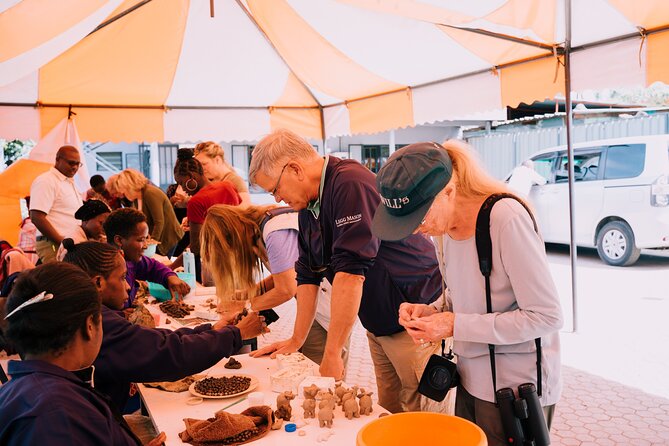
The first stop, Kobe Tough Beads and Leather, gives the day a useful start. This is not simply a room filled with finished products. You are shown the stages involved in making the pottery beads, from the beginning of the process through the finished item.
That demonstration gives you a better basis for buying. A necklace or bracelet has more meaning when you have seen how its beads are shaped and prepared. You can also ask your guide or the workshop staff about the materials and the work involved before deciding what seems worth the price.
The social purpose of the workshop adds another layer. Kobe Tough Beads was started by women who had previously worked at Kazuri Beads Factory, which closed during the pandemic. The workshop employs single mothers from a poor neighborhood, giving them a way to support their families.
I especially like this stop because the purchase is connected to a visible production process and a local employment effort. That does not mean you should buy something simply out of sympathy. Choose an item because you like it, then appreciate the extra context behind it.
Plan on about an hour here. The admission cost is included, but your purchases are not. If you are looking for small, packable gifts, beads and leather goods may be easier to manage than large art pieces later in the day.
Utamaduni Crafts Centre: a broad selection in a former Kikuyu house
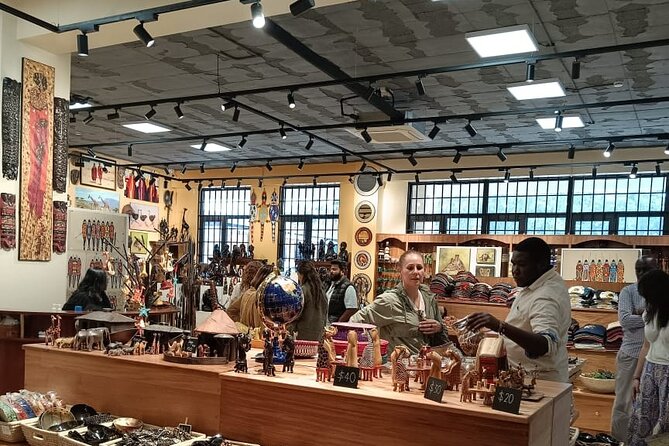
Utamaduni Crafts Centre is a good second stop because it widens the choice quickly. The shop occupies a converted Kikuyu house and contains 18 separate shops, with African crafts, antiques, and art under one roof.
You may find this more relaxed than shopping in an open market. Staff are available to help, and packing or shipping assistance is offered if you buy something that will not fit comfortably in your luggage. That option can make a difference when you find a larger carving, framed artwork, or several gifts for people at home.
The selection is broad, so it helps to arrive with a rough idea of what you want. You might look for textiles, carvings, small decorative pieces, or art, but the exact stock can vary. Take your time and compare prices and workmanship rather than buying at the first counter.
The setting is also part of the appeal. Utamaduni has a large garden restaurant where you can stop for refreshments or buy lunch. Since lunch is not included, this is a practical point to remember when planning the six-hour day.
The center is in the Karen and Langata area, known for green suburban surroundings and its connection to Karen Blixen’s former farm. The tour does not turn this into a full visit to that historic house, but the location helps place the shopping in one of Nairobi’s better-known areas.
Golden Eagle Art Gallery: Kenyan work beyond the usual souvenir
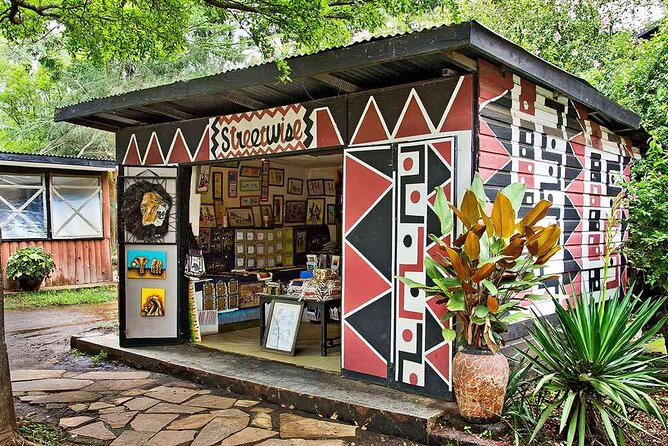
At Golden Eagle Art Gallery, the focus shifts from factory-style production to Kenyan community-based art. The aim is to support and encourage creative work, and the stock includes paintings, drawings, jewelry, African clothing, crafts, carvings, antiquities, malachite, and soapstone.
This is the stop for shoppers who want something more personal than a standard small gift. A painting or hand-carved piece can recall Nairobi more vividly than a generic memento, but it also requires more care. Check how you will pack it, especially if you are buying framed work or a fragile carving.
The range can make this stop feel less predictable than the bead workshop. You may find something that suits your taste immediately, or you may need to sort through many styles. The guide can help with communication and practical questions, while the gallery staff can explain the items available.
I would treat this as a place to browse slowly rather than a quick purchase stop. You have about an hour, which is enough time to look across several types of art without turning the visit into a rushed dash.
A completely different kind of day out from Nairobi:
- Nairobi National Park Half-Day Tour; Free Wi-Fi connection
★ 5.0 · 878 reviews - Nairobi: National Park & Optional Elephants & Giraffe Center
★ 4.8 · 874 reviews - NAI NAMI: Nairobi Storytelling Tour with Street Children
★ 5.0 · 792 reviews - Nairobi National Park Half-Day Game Drive
★ 4.5 · 738 reviews
Aqeeq Galleria: a serious look at East African gemstones
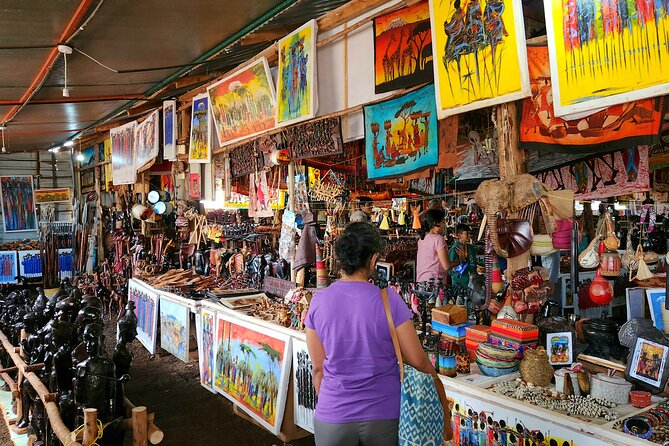
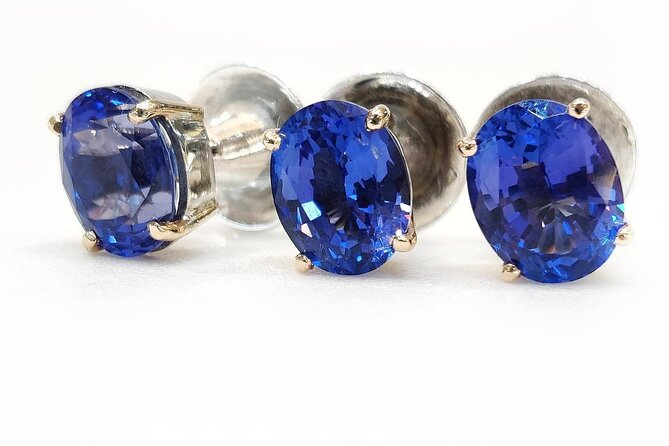
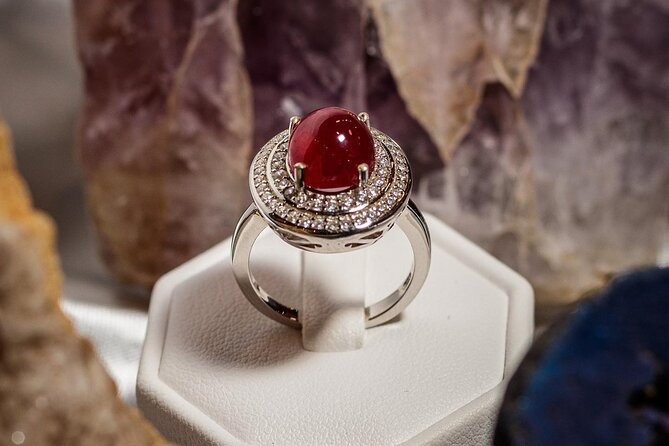
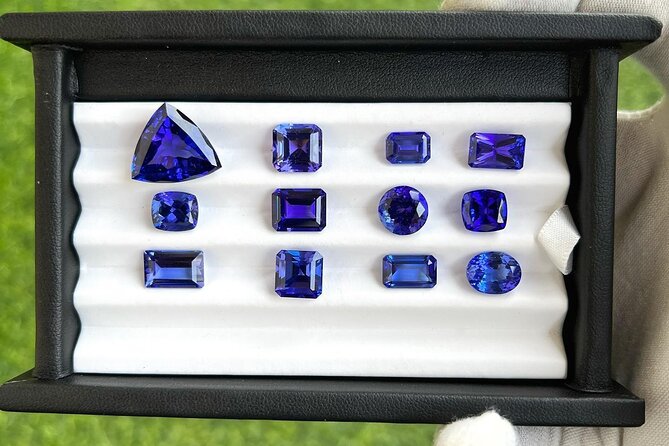
Aqeeq Galleria is the most specialized stop on the route. The store deals in precious and semi-precious gemstones and jewelry, with locations in Nairobi and Mombasa.
The listed stone selection includes Tanzanite, garnet, amethyst, rubies, red garnets, and aquamarine. The tour presents this visit as an opportunity to buy a precious stone sourced from Kenya or East Africa, so it may appeal to you if jewelry is more attractive than woodcarvings or textiles.
This is also where I would slow down and ask questions. If you are considering a costly stone, confirm what you are buying, where it was sourced, whether it has been treated, and what documentation comes with it. The guide can help with communication, but you should still make your own decision and avoid feeling pressured by the special nature of the stop.
A gemstone purchase can be compact and easy to pack, but it can also cost far more than the tour itself. The $60 fee does not include any jewelry or stones. Set your spending limit before you enter, and remember that a beautiful item is not automatically a good value.
You get roughly an hour at Aqeeq Galleria. That is enough for an introduction and some comparison, though a specialist who wants a full gem appraisal should not expect this shopping visit to replace independent professional advice.
Matbronze Wildlife Art: bronze animals and a final meal option
The final scheduled stop is Matbronze Wildlife Art, which brings a different look to the day. The gallery offers bronze work ranging from small jewelry pieces to very large sculptures. The work is handmade by founder and artist Denis Mathews.
This stop should appeal to you if Kenyan wildlife has been a major part of your trip. Small bronze pieces may work as gifts, while the larger sculptures are more suited to people with plenty of luggage space, a shipping plan, or a very patient household.
Matbronze also offers a silver jewelry range called SAFARIA, created by Denis Mathews’s daughter, Esenya. The collection includes handmade pure silver jewelry, along with bronze pieces that have a silver detail.
You can spend about an hour here, and there is a restaurant alongside the gallery and foundry. That gives you another place to buy food during a day when lunch is otherwise your responsibility. It also makes the last stop practical for anyone who wants a pause after several hours of shopping.
The drawback is the same as at other art-focused stops: large work can be difficult and expensive to transport. Before purchasing a sculpture, ask about packing and shipping rather than assuming it will fit into your suitcase.
What the private transport adds to the six-hour schedule
The tour includes pickup and drop-off at your hotel or residence, along with private transportation. That door-to-door arrangement is one of the strongest parts of the package.
Nairobi shopping stops are not necessarily close together, and moving between them on your own could mean arranging several rides, carrying purchases between vehicles, and working out directions. Here, the driver-guide manages that part of the day. You can keep purchases in the vehicle and continue shopping without hauling bags through the city.
The six-hour length gives each stop about one hour, but the exact rhythm can change with traffic and your group’s interests. Nairobi traffic can affect any city itinerary, so do not schedule a tight airport transfer or another fixed appointment immediately afterward.
The private format also lets you ask for more advice. If you are collecting small gifts, the guide may help you think through what is easy to pack. If you are considering a large carving or a gemstone, you can ask practical questions before committing.
The guide’s name Kelvin is associated with this experience. If having him matters to you, ask the operator whether he is available on your date rather than assuming every departure uses the same guide.
What is included, and what will cost extra
The $60 price includes:
- Hotel or residence pickup and drop-off
- Private transportation
- A professional tour guide
- Visits to the shopping and art stops
- Maasai Market collections in Karen
The tour does not include tips, gratuities, lunch, refreshments, or anything you purchase. The phrase Maasai Market collections in Karen suggests an additional collection of market-style items within the experience, but the supplied details do not specify a separate timed stop beyond the five main locations.
Budget for food and purchases on top of the tour price. If you are shopping for several people, the total can rise quickly. I would bring a spending plan and leave room for one special item rather than trying to buy something at every stop.
The price works best for a small private group that values convenience. Group discounts are offered, so larger parties should ask how the per-person rate changes. The private vehicle and guide are less valuable to someone who already has reliable transport and enjoys handling markets independently.
Who will get the most from this Nairobi experience
I would recommend this tour to you if you want meaningful souvenirs but do not want to spend the day negotiating in unregulated markets. It suits first-time visitors who want help with quality, communication, carrying purchases, and arranging transport.
It is also a good fit for people who enjoy seeing how products are made. Kobe Tough Beads offers the clearest production visit, while Golden Eagle and Matbronze give you a look at Kenyan art in different materials.
Jewelry shoppers have a strong reason to consider it because Aqeeq Galleria adds a dedicated gemstone stop. Just remember that buying a stone is optional, and the tour price does not include one.
Families and mixed-interest groups may appreciate the range. One person can look at beads, another can browse paintings, and someone else can focus on wildlife bronze or silver jewelry. Since the activity is private, the group can discuss purchases without a guide having to manage strangers.
I would be less likely to choose it if my main goal were Nairobi history, wildlife, food, or neighborhood life. The Karen and Langata setting adds some local context, but the schedule is built around shopping.
The experience is described as suitable for most people, and confirmation is provided at booking. The available details do not specify special arrangements for mobility needs, so contact the provider before booking if you require particular vehicle or shop access.
My call: book it for careful souvenir shopping
I would book this tour if I wanted a straightforward way to shop for Kenyan crafts, art, bronze, and gemstones without spending the day sorting out transport or negotiating alone. The best parts are the women-run bead workshop, the private guide, and the wide spread of shopping styles across five stops.
I would skip it if I wanted a bargain-hunting market adventure or a sightseeing-heavy day. You pay for convenience and guidance, not for included meals or discounted merchandise.
For the best value, decide what you want before pickup, set a separate purchase budget, and ask questions before buying expensive jewelry or large artwork. If you want a polished, practical souvenir day in Nairobi, this tour gives you a sensible route and useful help along the way.
FAQ
How long does the Nairobi cultural souvenir shopping tour last?
The tour lasts approximately six hours.
How much does the tour cost?
The listed price is $60 per person.
Is hotel pickup included?
Yes. Pickup and drop-off at your hotel or residence are included.
Is the tour private?
Yes. Only your group participates in the private activity.
What shopping locations are included?
The main stops are Kobe Tough Beads and Leather, Utamaduni Crafts Centre, Golden Eagle Art Gallery, Aqeeq Galleria, and Matbronze Wildlife Art.
Are meals included?
No. Lunch and refreshments are available for purchase, including at Utamaduni Crafts Centre and Matbronze Wildlife Art.
Are purchases included in the tour price?
No. The $60 covers the tour services, but souvenirs, artwork, jewelry, and gemstones cost extra.
Can I cancel for a full refund?
Yes, if you cancel at least 24 hours before the experience start time. Cancellations made within 24 hours are not refunded, and changes within that period are not accepted.
Just added around Nairobi
- Nairobi: Airport and Hotel Private Transfers.★ 4.0 · 3 reviews
- Nairobi: Giraffe Center, Elephant Orphanage and Bomas Tour★ 5.0 · 3 reviews
- 11-Days Best of Kenya & Tanzania Big 5 Safari on a 4×4 Jeep★ 5.0 · 3 reviews
- Kitengela Anselm Hot Glass tour★ 4.5 · 3 reviews
- NAIROBI NATIONAL PARK AFTERNOON GAME DRIVE.★ 5.0 · 3 reviews
- 12-Day Tsavo west Amboseli lake Nakuru Maasai Mara safari★ 5.0 · 3 reviews
- Nairobi Down Town & Walking City Tour★ 4.8 · 3 reviews
- Carnivore Resturant Dinner Experience★ 4.0 · 3 reviews
Shopping Tours, compared.

Traditional Kenyan Cooking Class & Local Market Tour
Read our review →
Nairobi souvenir Shopping and Historical Half day Tour
Read our review →
Memorable Daily KIBERA Slums/Toi Market Tour with Locals (2 hours)
Read our review →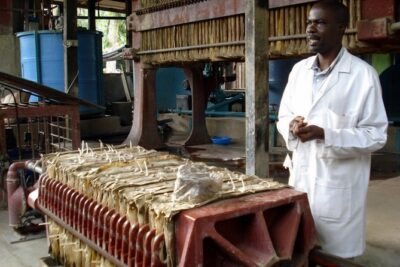
Mombasa City Tour,Fortjesus,Oldtown,Tusks and Spice Market.
Read our review →
Half-Day Nairobi National Park and Maasai Market with Pick up
Read our review →
Authentic Kenyan Cooking Class & Market Tour in Nairobi
Read our review →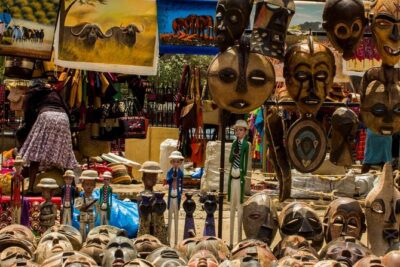
Nairobi Guided Cultural Shopping Experience Day Tour
Read our review →Browse the lists this tour appears in