

Reviewed · SHOPPING TOURS
Nairobi Guided Cultural Shopping Experience Day Tour
Nairobi rewards shoppers who know where to look. This eight-hour cultural shopping trip takes you from galleries and craft centers to factories and markets, with a guide helping you sort handmade Kenyan work from ordinary tourist goods. I like the door-to-door pickup and the chance to compare several kinds of shopping in one day. I also like the small-group format, with a maximum of seven people noted in the booking details.
The $90 price can make sense if you want transport, local help, and a full day of stops without arranging taxis yourself. Guides such as Stephen have been praised for patience, friendly service, and good restaurant advice. The main caution is that the day may not follow your preferred shopping list exactly. One disappointing experience involved missing the large Maasai Market and visiting other shops instead, so confirm the plan at the start.
In This Review
- Key points before you book
- Why this shopping day can work well in Nairobi
- African Heritage House and the African Trader Gallery
- Utamaduni Craft Centre puts many goods under one roof
- Kazuri Beads Factory is the strongest stop for handmade gifts
- City Market tests your bargaining skills
- The Maasai Market depends on the day
- A full day of shopping needs a little planning
- What the $90 price really buys
- The guide can make or break the day
- Who should book this Nairobi experience?
- Should you book the Nairobi cultural shopping tour?
- FAQ
- How long does the Nairobi shopping tour last?
- What time does the experience begin?
- Is hotel pickup and drop-off included?
- Is lunch included in the price?
- Is the Maasai Market guaranteed?
- What can I buy during the tour?
- How many people can join the tour?
- Can I cancel for a full refund?
Key points before you book
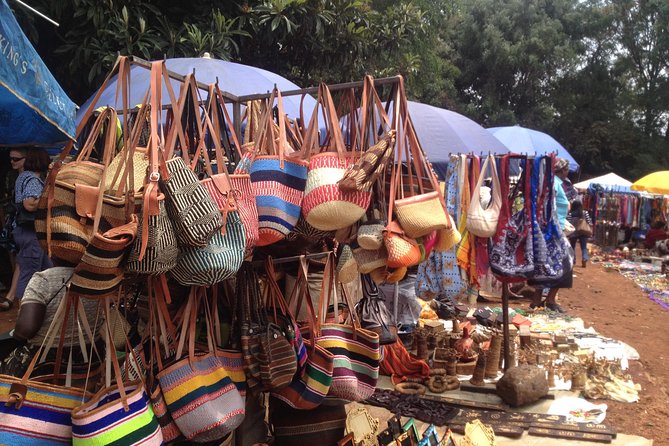
- Kazuri Beads Factory gives the day its clearest cultural focus: You can shop for handmade ceramic beads, jewelry, and pottery made at a well-known Nairobi workshop.
- The tour mixes fixed-price shops with bargaining markets: That makes it useful if you want to compare shopping styles and learn where careful negotiation matters.
- The Maasai Market is not guaranteed: It depends on the market day, so do not book this trip solely for that stop.
- Your guide can shape the quality of the day: Stephen receives especially strong praise for patience, professionalism, and finding a good meal.
- The itinerary covers a lot of ground: You visit five planned shopping areas, each allotted about an hour, with hotel transfers included.
- The $90 fee buys convenience more than bargains: You are paying for a full day of transport and assistance, not a promise that every item will be cheaper.
Why this shopping day can work well in Nairobi
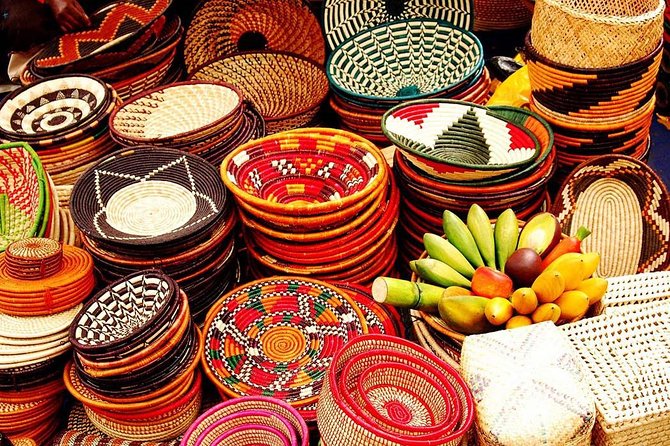
Shopping in Nairobi takes more judgment than simply walking into a store and picking a souvenir. Prices vary, quality varies, and the difference between a thoughtful handmade piece and a mass-produced trinket is not always clear at first glance.
This tour gives you a useful framework. You see a gallery, a large craft center, a bead factory, a traditional city market, and possibly the Maasai Market. That range matters because each place serves a different purpose. A gallery may offer better presentation and fixed prices. A market gives you more room to bargain. A factory connects the object to the people who make it.
I especially like the door-to-door setup. Nairobi traffic can eat up a good part of a day, and arranging several separate rides would add cost and hassle. With pickup at the start and return to your hotel, you can focus on comparing goods rather than watching the clock or finding the next address.
The format is also more personal than a large coach outing. The details allow a maximum of seven people, although another description gives a maximum of 15. Because those figures conflict, I would confirm the group size before booking. Either way, the smaller format should make it easier to ask about materials, prices, and fair bargaining.
A few more trips worth weighing up
- Traditional Kenyan Cooking Class & Local Market Tour
★ 5.0 · 129 reviews - Nairobi souvenir Shopping and Historical Half day Tour
★ 5.0 · 61 reviews - Memorable Daily KIBERA Slums/Toi Market Tour with Locals (2 hours)
★ 5.0 · 29 reviews
African Heritage House and the African Trader Gallery
The first stop is at the Carnivore grounds, where the African Heritage House includes the African Trader Gallery. You can expect textiles, sculpture, and African handicrafts in a setting designed for browsing rather than hurried market shopping.
This is a good opening stop because it gives you an early look at the kinds of design and materials you will see later. You might find textiles, carved objects, and decorative pieces that help you form a sense of what appeals to you before reaching the markets.
The gallery setting may also feel easier for first-time shoppers. Items are presented in a more orderly way, and you can look without immediately dealing with a hard sell. That said, a gallery is not the same as a street market. Prices may be less flexible, and the one-hour visit may feel short if you want to inspect larger furniture or many individual pieces.
I would use this stop to take notes mentally. Pay attention to colors, carving styles, beadwork, and fabric patterns. If you see a type of object you like, ask your guide where else you might find a similar piece at a different price.
Utamaduni Craft Centre puts many goods under one roof
Utamaduni Craft Centre is the broadest shopping stop in the day. Its selection includes African curios, masks, rugs, furniture, ebony furniture, antiques, jewelry, dolls, safari clothing, kikoy, sarongs, and beads.
That variety is both its strength and its weakness. You can shop for a small gift, a wearable item, or a substantial home decoration without changing locations. If you are buying for several people, this is the kind of stop that can save time.
It can also be a lot to take in. A one-hour visit will not allow a careful look at every category, so decide in advance what you most want. If you are after fabric, focus on kikoy and sarongs. If you want a lasting household item, spend your time on carvings, ceramics, or furniture rather than getting pulled into every display.
I would ask about materials and construction before buying. An attractive piece is not automatically a good piece, and the guide’s advice is one of the main reasons to choose an escorted shopping day. The center is presented as a place with sensible choices, but you should still compare prices and inspect the finish yourself.
Kazuri Beads Factory is the strongest stop for handmade gifts
Kazuri means small and beautiful in Swahili, and this Karen workshop specializes in handmade ceramic beads, jewelry, and pottery. The factory is on Mbagathi Ridge, near the Karen Blixen Museum, making it one of the more distinctive stops on the route.
I would give this visit special weight. Markets can blur together after a few hours, but a working craft center gives you a clearer connection between the item and its production. The handmade ceramic beads are easier to understand as a product of skill and labor, rather than just another souvenir on a shelf.
The selection should suit shoppers who want gifts that are light and easy to pack. Jewelry and beads are practical purchases for a return flight, while pottery may appeal if you have room and can protect it properly. You might also find a piece that feels more personal than a generic carved animal or printed shirt.
The factory visit is allotted one hour. That should be enough for a focused look, but you may want more time if you are buying several gifts or comparing pottery. Keep track of what you have already purchased, since a full day of shopping can leave you carrying more than expected.
A completely different kind of day out from Nairobi:
- Nairobi National Park Half-Day Tour; Free Wi-Fi connection
★ 5.0 · 878 reviews - Nairobi: National Park & Optional Elephants & Giraffe Center
★ 4.8 · 874 reviews - NAI NAMI: Nairobi Storytelling Tour with Street Children
★ 5.0 · 792 reviews - Nairobi National Park Half-Day Game Drive
★ 4.5 · 738 reviews
City Market tests your bargaining skills
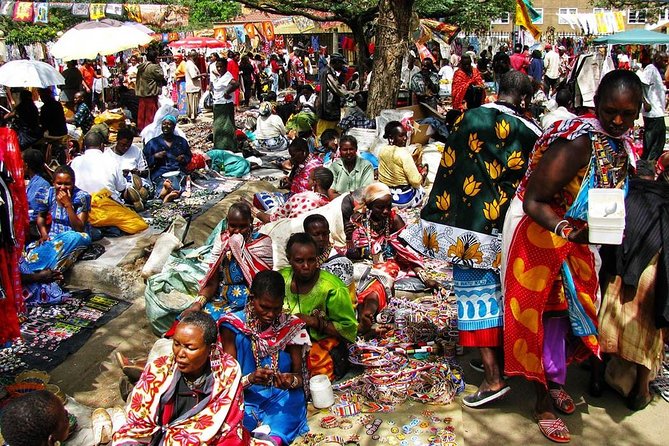
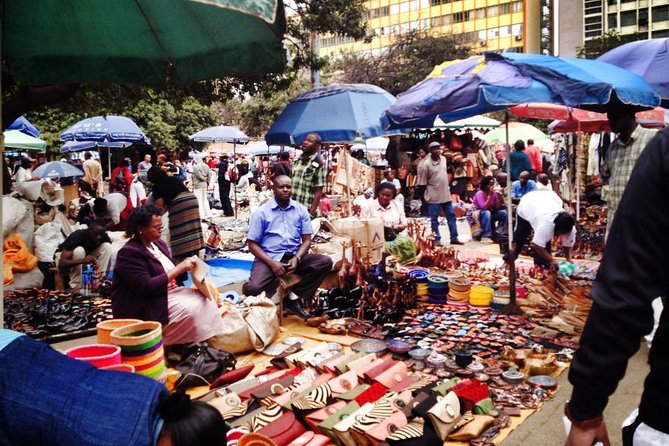
Nairobi City Market is on Muindi Mbingu Street and occupies a sprawling complex that began as an aircraft hangar. The market includes souvenir and curio stalls, along with food vendors, and bargaining is part of the experience.
This is where a guide can be most useful. The range of stalls may be wider and less predictable than at the earlier craft centers. You can look for masks, carvings, jewelry, and other small goods, but you will need to examine each item carefully.
Treat bargaining as a conversation, not a contest. Start by deciding what the item is worth to you. Ask the price, consider it, and make a lower offer that still feels fair. If the seller refuses, you can thank them and move on. A guide may help you understand when a price is reasonable, but you should remain part of the decision.
The market can also be the least predictable part of the day. It is not a polished gallery, and the food stalls may create a livelier setting. If you prefer quiet browsing and fixed prices, Utamaduni or Kazuri may suit you better.
The Maasai Market depends on the day
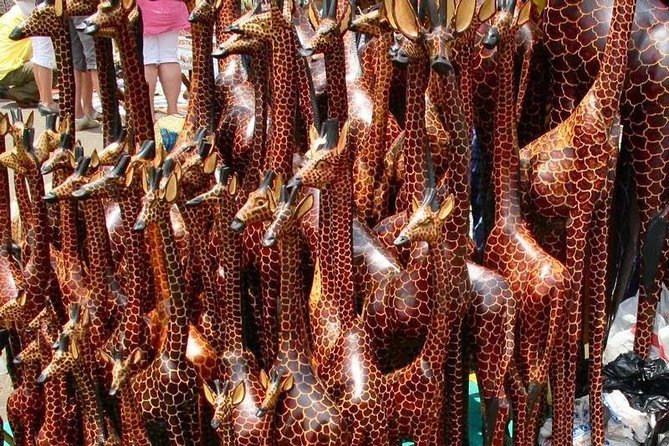
The final planned shopping stop is the Maasai Market, if it is open on the day of your visit. The market began with Maasai women selling directly to visitors and is known for arts and crafts, wooden carvings, and beadwork.
This could be the most enjoyable stop for someone who likes open-air market shopping and wants a wide choice of small gifts. You might find colorful beadwork, carved objects, and handmade items that are easy to carry home.
But the conditional wording matters. The market is not a guaranteed part of every departure. One account describes visiting three other stores instead of the large Maasai Market, even after making a clear request to see it. That does not mean the substitute stops will be poor, but it does mean you should not book this experience as a guaranteed Maasai Market tour.
Ask your guide at pickup which market is operating that day. If the Maasai Market is your priority, say so early and ask what alternatives are planned if it is closed. This simple conversation could prevent a frustrating mismatch.
A full day of shopping needs a little planning
The start time is 9:00 a.m., and the experience lasts about eight hours. Five stops are listed at roughly one hour each, but the remaining time goes to driving, traffic, and transitions.
You should wear comfortable clothes and shoes. This is not a museum day with long rests between visits. You will be comparing shelves, stalls, displays, and handmade goods, while also keeping track of purchases.
Lunch is not included. One highly praised day included a very good meal chosen with the guide’s help, but you should treat that as guide-dependent rather than part of the formal package. Bring money for lunch and ask early when the break will happen. A relaxed meal can make the afternoon much more pleasant.
The hotel pickup and drop-off are included, which is a real benefit in Nairobi. The convenience becomes more valuable if you are staying outside the main shopping areas or do not want to coordinate several rides. Mobile ticketing and confirmation at booking also make the practical side simple.
Children can participate, but they must be accompanied by an adult. Most people can take part, and no special physical requirement is stated. If you have a specific mobility need, ask the operator before paying because the available details do not explain vehicle access or walking distances.
What the $90 price really buys
At $90 per person, this is not a bargain-hunting promise. You may find lower prices by visiting one market independently, especially if you are comfortable using local transport and bargaining on your own.
The value comes from combining several stops in one day. You receive a professional guide, hotel transport in both directions, and help navigating a shopping system that can be confusing for a first-time visitor. You also save the effort of researching which places to visit and arranging a route between them.
I would consider the price fair for a solo visitor who wants structure and company. It can also work well for a small group that wants to shop without assigning one person to handle all the driving and navigation. Group discounts may be available, so larger parties should check the final price before booking.
The value is weaker if you have already chosen specific stores or if you mainly want the Maasai Market. The route may include replacement shops when the market is closed, and one poor experience involved a guide who asked intrusive questions about work and salaries. That is a reminder to set boundaries and state your shopping goals clearly.
The overall rating of 4.1 from 12 ratings suggests a generally positive but uneven experience. Praise centers on patient, friendly guiding, professional service, good galleries, fixed-price shopping, and a well-chosen meal. The negative side centers on the route not matching expectations and one experience that felt more like a shopping drive than cultural guidance.
The guide can make or break the day
A strong guide should help you understand what you are seeing, not simply take you from one shop to the next. Stephen receives especially warm praise for being patient with a solo guest, never rushing the shopping, and remaining pleasant and professional throughout the day.
That sort of patience matters. Shopping decisions take time, especially when you are comparing colors, sizes, materials, and prices. A guide who lets you browse at your own pace can turn a pressured outing into a pleasant one.
You should still take an active role. At the beginning, explain whether you want fixed-price galleries, bargaining markets, jewelry, clothing, homewares, or gifts. Also ask which stops are confirmed, which depend on opening days, and where lunch fits into the schedule.
If the conversation becomes too personal, you can politely redirect it. The report of intrusive questions about jobs and salaries is not something to ignore. A professional shopping guide should respect your privacy, and you should feel free to say that you prefer to focus on the day’s purchases.
Who should book this Nairobi experience?
I would recommend this tour to a first-time Nairobi visitor who wants to buy Kenyan crafts but does not know which shopping areas to trust. It also suits solo visitors who value hotel transport and company, and families who want a planned day rather than several separate errands.
It is a good fit if you want variety. The route covers gallery shopping, craft-center browsing, handmade beads, a city market, and a possible Maasai Market. That gives you a useful comparison of presentation, price, and atmosphere.
I would be more cautious if you dislike bargaining, want a guaranteed market visit, or expect a tightly controlled cultural tour at every stop. You may also prefer independent shopping if you already know exactly what you want and feel comfortable arranging transport.
Book at least a few weeks ahead if possible. The experience is commonly reserved about 28 days before the date, which suggests that popular departure days may fill early. Free cancellation is available if you cancel at least 24 hours before the 9:00 a.m. start. Cancellations inside that window are not refundable, and changes are not accepted within 24 hours.
Should you book the Nairobi cultural shopping tour?
Book it if you want a convenient, guided introduction to Nairobi’s craft scene and you value transport more than the lowest possible purchase price. The combination of Kazuri Beads Factory, Utamaduni Craft Centre, African Heritage House, and City Market gives you a fuller picture than a single market visit.
Before paying, confirm the group size, ask whether the Maasai Market is operating, and tell the guide what you want to buy. If you get a patient guide such as Stephen, the day can be relaxed, useful, and productive. If your only goal is the large Maasai Market, choose a plan that guarantees that stop instead.
FAQ
How long does the Nairobi shopping tour last?
The tour lasts approximately eight hours.
What time does the experience begin?
Pickup and the tour start at 9:00 a.m.
Is hotel pickup and drop-off included?
Yes. Professional hotel pickup and drop-off are included.
Is lunch included in the price?
No. Lunch is not included, so you should budget separately for your meal.
Is the Maasai Market guaranteed?
No. The Maasai Market is visited if it is open on the scheduled market day.
What can I buy during the tour?
You can look for beads, masks, ceramics, jewelry, textiles, rugs, clothing, sarongs, kikoy, wood carvings, furniture, dolls, antiques, and other African crafts.
How many people can join the tour?
The booking information states that the activity has a maximum of seven travelers. Another description refers to a group of no more than 15, so confirm the expected group size before booking.
Can I cancel for a full refund?
Yes. You can receive a full refund if you cancel at least 24 hours before the experience start time. Cancellations or changes made less than 24 hours before the start are not accepted for a refund.
Just added around Nairobi
- Nairobi: Giraffe Center, Elephant Orphanage and Bomas Tour★ 5.0 · 3 reviews
- Nairobi: Airport and Hotel Private Transfers.★ 4.0 · 3 reviews
- Kitengela Anselm Hot Glass tour★ 4.5 · 3 reviews
- 11-Days Best of Kenya & Tanzania Big 5 Safari on a 4×4 Jeep★ 5.0 · 3 reviews
- 12-Day Tsavo west Amboseli lake Nakuru Maasai Mara safari★ 5.0 · 3 reviews
- NAIROBI NATIONAL PARK AFTERNOON GAME DRIVE.★ 5.0 · 3 reviews
- Nairobi Down Town & Walking City Tour★ 4.8 · 3 reviews
- Carnivore Resturant Dinner Experience★ 4.0 · 3 reviews
Shopping Tours, compared.

Traditional Kenyan Cooking Class & Local Market Tour
Read our review →
Nairobi souvenir Shopping and Historical Half day Tour
Read our review →
Memorable Daily KIBERA Slums/Toi Market Tour with Locals (2 hours)
Read our review →

Mombasa City Tour,Fortjesus,Oldtown,Tusks and Spice Market.
Read our review →
Half-Day Nairobi National Park and Maasai Market with Pick up
Read our review →
Authentic Kenyan Cooking Class & Market Tour in Nairobi
Read our review →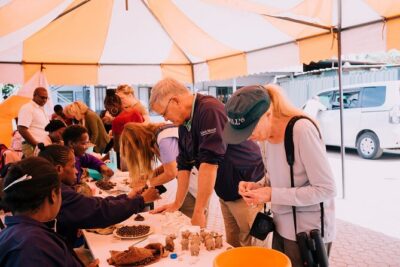
Nairobi cultural souvenir shopping tour with a local
Read our review →Browse the lists this tour appears in