
Reviewed · CITY TOURS
Nairobi: Maasai Market and Nairobi City Tour
Nairobi rewards curious walkers. I like the mix of city history and everyday life, from the Dedan Kimathi Monument to a snack at Nairobi City Market, and I also like the chance to learn a few Swahili words from an English-speaking guide. The tour links old landmarks, government buildings, memorials, and the Maasai Market in one useful half-day outing.
The main drawback is the walking. This is not a good choice if you have mobility limitations or use a wheelchair, and the exact pickup time and route can vary by booking option. At $35 per person, it offers solid value if you want hotel transport and a private guide, but food, drinks, and market purchases cost extra.
In This Review
- Key points to know before you book
- Why this four-hour Nairobi tour works
- Starting with Nairobi’s old and new faces
- Uhuru Gardens and the meaning of public space
- Monuments that give the walk a purpose
- Nairobi City Market and a local snack
- The Maasai Market in 30 minutes
- McMillan Library, All Saints Cathedral, and the city skyline
- Learning a few Swahili words
- What the $35 price includes
- Who should book this experience
- Should you book the Nairobi city and Maasai Market tour?
- FAQ
- How long does the Nairobi Maasai Market and city tour last?
- Is hotel pickup and drop-off included?
- What language does the guide speak?
- Is food included in the price?
- Is the tour private?
- Can wheelchair users join the tour?
- What is the cancellation policy?
Key points to know before you book

- The tour covers both old and modern Nairobi: You move from monuments and memorial buildings to city streets, market stalls, and skyline views.
- A private English-speaking guide leads the walk: This makes it easier to ask questions, slow down, or focus on subjects that interest you.
- The Dedan Kimathi and Tom Mboya monuments add political context: These are not just photo stops. Your guide explains their place in Kenya’s public memory.
- Nairobi City Market includes a food stop: You can choose a snack at a traditional local restaurant, though the cost is not included.
- The Maasai Market is short but practical: The visit lasts about 30 minutes, giving you time to see decorative arts and browse without making the entire tour about shopping.
- Hotel pickup and drop-off are included: The listed return points are Nairobi and International House, depending on your selected option.
Why this four-hour Nairobi tour works
Nairobi can feel hard to read at first. Its modern towers, colonial-era buildings, political memorials, religious sites, markets, and busy streets all sit close together, but they do not always explain themselves. A guide gives the city a voice.
This experience is built around that idea. You spend roughly four to five hours moving between important sites, with about three hours set aside for the main guided city tour, 30 minutes at Uhuru Gardens, and 30 minutes at the Maasai Market. The timing leaves room for transfers, questions, and the food stop.
I like this format for a first visit because it gives you a basic map of central Nairobi without asking you to spend a full day in a vehicle. You see the city on foot, hear how places connect to Kenya’s past and present, and get a small taste of local food and language along the way.
The private group format is another plus. You are not locked into the interests or pace of a large coach party. If the monuments interest you more than shopping, you can ask for more explanation there. If you want to practice Swahili or understand what you are seeing at the market, you can make that part of the conversation.
The walk still requires sensible expectations. You will be outdoors and on foot at several points, and the experience is specifically listed as unsuitable for people with mobility impairments and wheelchair users. Wear comfortable shoes and keep your day flexible around the four to five-hour duration.
More City Tours in Nairobi
- Nairobi Historical Walking City Tour
★ 5.0 · 258 reviews - Nairobi City Walking Tour with Traditional Kenyan Lunch
★ 5.0 · 106 reviews - Nairobi: Private 4-Hour City Tour
★ 4.5 · 68 reviews
Starting with Nairobi’s old and new faces
The tour begins with pickup from your accommodation, though the exact starting point depends on the option you select. Hotel pickup is useful in Nairobi because it removes the need to find the first meeting point in an unfamiliar part of the city.
Your guide then takes you into central Nairobi for a walking tour. One especially useful feature is the explanation of both older buildings and newer parts of the city. You are not simply taken to famous addresses for photographs. The guide explains the historical information and current relevance of each stop.
A past guest described guide Paul as calm, informative, and reassuring while walking around the city centre. That is worth noting because a city tour succeeds or fails partly on the guide’s manner. You want clear explanations without being hurried, and you want someone who helps you feel comfortable as you move through unfamiliar streets.
The tour may also include a local bus ride into the centre if you and your guide choose that option. This detail gives the outing a more ordinary Nairobi feel, rather than keeping you inside private transport the whole time. Since the bus choice is not guaranteed, treat it as a possible part of the day, not a fixed feature.
Uhuru Gardens and the meaning of public space

Uhuru Gardens receives a 30-minute visit. The stop gives the tour an open-air break and connects the city outing to Kenya’s national story.
The supplied details do not specify exactly which features your guide will emphasize there, so it is best to view this as a guided introduction rather than a long garden visit. Ask questions if you want more context about the site’s role, national symbols, or public ceremonies.
Thirty minutes is enough for an overview and photographs, but not for a slow, extended visit. That short timing helps the tour maintain its wide scope. You see several parts of Nairobi rather than spending most of the afternoon at one location.
Monuments that give the walk a purpose
The Dedan Kimathi Monument and Tom Mboya Monument are among the strongest parts of the route. They give you a way to connect names from Kenya’s political past with places you can actually see.
Dedan Kimathi is presented as an important figure in Kenya’s story, while the Tom Mboya Monument brings another major name into the walk. The value here depends on the guide’s explanation. A monument can be easy to pass without a second thought, but a good guide explains why it was placed there and what it means in modern Nairobi.
I would give these stops your full attention. They are not filler between the market and the city views. They help you understand that Nairobi’s centre is also a place of memory, national identity, and political discussion.
The tour also includes Kipande House and the Kenya Archives. These stops add a different layer to the day. Instead of seeing only monuments, you look at institutions and buildings tied to administration, records, and the development of the city.
The Parliament Buildings are another important stop. The tour does not promise entry, so expect an exterior visit and an explanation from outside unless your guide tells you otherwise. The same practical rule applies to several buildings on a city walking route: you are there to understand their role and appearance, not necessarily to go indoors.
More market tours:
- Traditional Kenyan Cooking Class & Local Market Tour
★ 5.0 · 129 reviews - Memorable Daily KIBERA Slums/Toi Market Tour with Locals (2 hours)
★ 5.0 · 29 reviews - Half-Day Nairobi National Park and Maasai Market with Pick up
★ 5.0 · 16 reviews - Authentic Kenyan Cooking Class & Market Tour in Nairobi
★ 5.0 · 12 reviews
Nairobi City Market and a local snack
Nairobi City Market is where the tour shifts from public monuments to daily commerce. You get to see a market setting and stop at a traditional Nairobi restaurant for a snack of your choice.
Food is not included in the $35 price, so bring some Kenyan shillings or another accepted payment method if you want to eat. The details do not state the snack menu or restaurant name, so you should ask your guide what is available that day and how much it costs before ordering.
I like that the food stop is modest. You are not promised a formal meal or a staged culinary show. Instead, you get a chance to try something small while learning about local food habits. That makes sense on a walking tour, where a full meal could eat into the time needed for the monuments and market.
The snack is optional in practical terms because food and drinks are excluded. Mineral water, 500 millilitres, is included. If you need more water during a warm day, plan to buy it separately.
The Maasai Market in 30 minutes
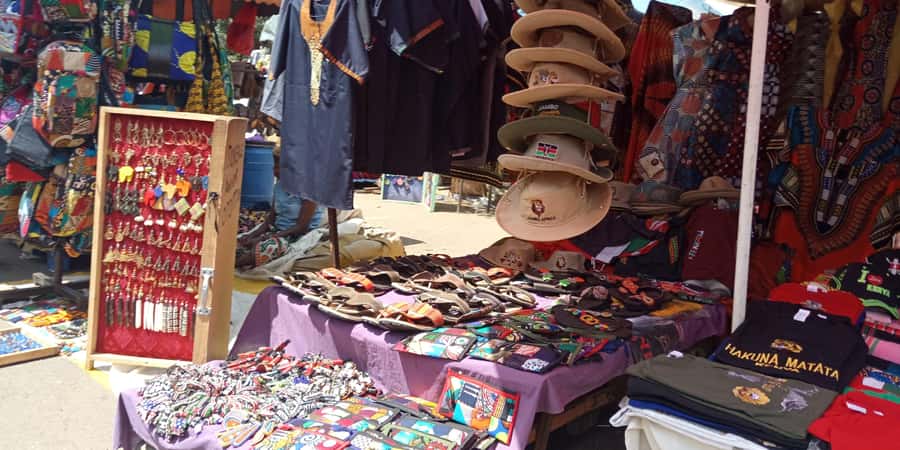
The Maasai Market is the clearest shopping part of the experience. You have about 30 minutes with a guide to look at decorative arts associated with Maasai culture and browse the stalls.
The word market can mean different things in different cities. Here, you should expect a short introduction and shopping opportunity, not an all-day craft workshop. The tour description focuses on decorative arts and Maasai cultural symbols, so ask your guide about the meaning and use of items that catch your eye.
A half-hour visit is enough to get a feel for the market and decide if you want to buy something. It is not much time for long bargaining sessions, careful comparison, and a relaxed browse through every stall. If shopping is your main reason for booking, you may want to return independently later, if your schedule allows.
The guide’s presence is useful because you can ask questions before purchasing. Still, use your own judgment about price and quality. The tour includes the visit, but it does not include purchases, and nothing in the supplied details promises fixed prices or particular products.
McMillan Library, All Saints Cathedral, and the city skyline
McMillan Memorial Library and All Saints Cathedral broaden the tour beyond political history and commerce. They show different sides of Nairobi’s civic and religious life.
The tour also takes you through the modern part of the city, where you can look at the skyline and see how Nairobi has changed. This contrast is one of the day’s best features. You move from memorials and older institutions to newer buildings and the visual energy of a capital city.
Do not expect a dedicated architecture tour. The focus is on learning facts about Nairobi and understanding the significance of the places you pass. If a building catches your eye, ask about it. The private format gives you a better chance of getting an answer than you would on a large group outing.
The route includes many names and locations, so it can feel like a quick survey. That is both its strength and its limitation. You receive a broad introduction to central Nairobi, but you will not get an hour at every stop.
Learning a few Swahili words
The language lesson is a small detail, but it can make the city feel less distant. Your guide teaches you some Swahili words during the outing, giving you a simple way to greet people and engage more naturally with the setting.
Do not expect a full language class. The value is in hearing a few useful expressions in context and understanding that language is part of the experience, not just background noise.
I would ask the guide to repeat the words slowly and write them down if possible. Small language efforts often improve the tone of a short city visit. They also give you something practical to keep using after the tour.
What the $35 price includes
At $35 per person, this is a reasonable price for a private four to five-hour outing with hotel pickup and drop-off. You are paying for an English-speaking guide, transport at the beginning and end, a walking route through several central sites, and a market visit.
The private group matters when judging value. A cheaper large-group tour may cover similar landmarks, but it may not give you the same chance to ask questions or adjust the pace. The guide’s role is especially important here because the route includes places that benefit from explanation rather than just a quick photograph.
Food and drinks are not included, apart from a 500-millilitre bottle of mineral water. Your extra spending should cover the snack and any market purchases. Since no exact food price is supplied, ask before ordering if you are keeping to a strict budget.
Free cancellation is available up to 24 hours before the activity for a full refund, and you can reserve now and pay later. Those terms help if your Nairobi plans are still shifting, though you should check the available start times before committing.
Who should book this experience
I would recommend this tour to a first-time Nairobi visitor who wants an introduction to the city centre without arranging separate transport between each stop. It suits you if you enjoy monuments, public buildings, local markets, and short conversations with a guide.
It is also a good fit if you prefer a private group and want the freedom to ask basic questions. The English-language guiding, Swahili lesson, food stop, and city walk make it more personal than a simple sightseeing transfer.
You may want something else if you are mainly interested in wildlife, museums, nightlife, or a long shopping session. This outing does not include a safari or a major indoor attraction, and the Maasai Market visit lasts only about 30 minutes.
The walking requirement is the clearest limitation. People with mobility impairments and wheelchair users should not book this specific experience. Anyone else should still wear reliable walking shoes and be ready for a fairly active half-day.
Should you book the Nairobi city and Maasai Market tour?
Book it if you want a compact, guided introduction to Nairobi’s central streets, political monuments, public buildings, local food, and market culture. The strongest reasons are the private guide, hotel pickup, broad route, and the chance to hear the city explained rather than simply viewed.
I would be especially comfortable recommending it for a first day in Nairobi, when you want to get your bearings and learn which parts of the centre deserve a closer look. The excellent feedback highlights clear explanations, a calm manner, and a strong sense of safety from guides such as Paul.
Skip it if you need an accessible route, dislike walking, or want an in-depth Maasai craft experience. For most active visitors, though, $35 is fair for a private half-day that combines history, everyday city life, a snack, and a little Swahili.
FAQ
How long does the Nairobi Maasai Market and city tour last?
The experience lasts approximately four to five hours. The guided city tour takes about three hours, with separate visits of around 30 minutes at Uhuru Gardens and the Maasai Market.
Is hotel pickup and drop-off included?
Yes. Hotel pickup and drop-off are included. The listed drop-off points are Nairobi and International House, depending on the selected option.
What language does the guide speak?
The live tour guide speaks English, and the activity also includes teaching you some Swahili words.
Is food included in the price?
No. Food and drinks are not included. You can choose a snack at a traditional Nairobi restaurant, but you pay for it separately. A 500-millilitre bottle of mineral water is included.
Is the tour private?
Yes. The activity is arranged for a private group rather than a shared large group.
Can wheelchair users join the tour?
No. The experience is listed as unsuitable for wheelchair users and people with mobility impairments.
What is the cancellation policy?
You can cancel up to 24 hours before the activity for a full refund. You can also reserve your place and pay later, which keeps your plans flexible.
More Shopping Tours
- Nairobi souvenir Shopping and Historical Half day Tour
★ 5.0 · 61 reviews - Nairobi Cultural Shopping Experience
★ 5.0 · 21 reviews - Nairobi cultural souvenir shopping tour with a local
★ 5.0 · 12 reviews - Nairobi Guided Cultural Shopping Experience Day Tour
★ 4.0 · 12 reviews
Just added around Nairobi
- Nairobi: Giraffe Center, Elephant Orphanage and Bomas Tour★ 5.0 · 3 reviews
- Nairobi: Airport and Hotel Private Transfers.★ 4.0 · 3 reviews
- Kitengela Anselm Hot Glass tour★ 4.5 · 3 reviews
- 11-Days Best of Kenya & Tanzania Big 5 Safari on a 4×4 Jeep★ 5.0 · 3 reviews
- 12-Day Tsavo west Amboseli lake Nakuru Maasai Mara safari★ 5.0 · 3 reviews
- NAIROBI NATIONAL PARK AFTERNOON GAME DRIVE.★ 5.0 · 3 reviews
- Nairobi Down Town & Walking City Tour★ 4.8 · 3 reviews
- Carnivore Resturant Dinner Experience★ 4.0 · 3 reviews
City Tours, compared.


Tusks, Fort Jesus, Old Town, Beach and City Tour
Read our review →
Nairobi City Walking Tour with Traditional Kenyan Lunch
Read our review →
Nairobi Cultural and Historical City Tour with a Local
Read our review →
Browse the lists this tour appears in