

Reviewed · WALKING TOURS
Nairobi City Walking Tour with Traditional Kenyan Lunch
Nairobi rewards curious walkers. This five-hour outing links Uhuru Park, government landmarks, memorials, and local streets with a meal at a nearby restaurant, giving you more than a quick look from a tour bus. I like the use of public transportation, and I like the small maximum group of 12, which should make it easier to ask questions and keep a steady pace.
The main caution is lunch. It is promoted as a traditional Kenyan meal, but one experience found the restaurant served Somali food instead, and the guide did not offer much help with choosing a dish. You should also expect a fairly active morning, modest dress, and no place for children under 18.
In This Review
- Key points to know before you book
- A five-hour introduction to Nairobi on foot
- Uhuru Park: a calm start beside the city centre
- Parliament and the Mzee Jomo Kenyatta Mausoleum
- Kenyatta International Conference Centre and the city’s public face
- August 7th Memorial Park and Nairobi’s difficult memories
- National Archives, Kenyan art, and regional handicrafts
- The traditional lunch: good idea, uneven execution
- What the $45 price really covers
- Who should book this Nairobi walking tour?
- Should you book it?
- FAQ
- How long does the Nairobi city walking tour last?
- Where does the tour start and finish?
- Is lunch included?
- Does the tour use public transportation?
- Are children allowed to join?
- What is the cancellation policy?
Key points to know before you book
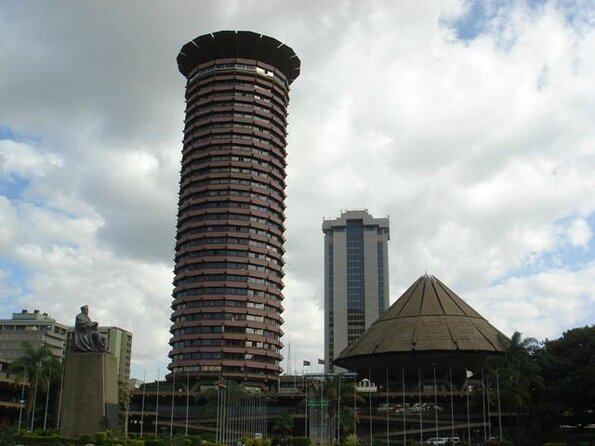
- Uhuru Park begins the morning in a quiet pocket of central Nairobi, with shady paths close to the city’s main business district.
- Public transportation is part of the experience, so you get a closer look at ordinary city life instead of staying inside a private vehicle.
- The route combines civic landmarks and painful recent history, including parliament, the Kenyatta Mausoleum, and August 7th Memorial Park.
- Lunch is included with a soft drink or juice, but the exact menu and restaurant experience may not always match your idea of a classic Kenyan meal.
- A maximum of 12 people keeps this more personal than a large city coach tour.
- The tour costs $45 per person, includes a local guide and lunch, and is operated as a carbon-neutral trip by a B Corp certified company.
A five-hour introduction to Nairobi on foot
This tour is designed for you to see Nairobi at street level. You start at Hotel Boulevard on Harry Thuku Road at 9:00 a.m., meet your English-speaking guide, and set off through central Nairobi. The activity ends back at the same meeting point.
That start and finish are useful if you are staying in the city centre or arranging another activity later in the day. Hotel pickup and drop-off are not included, so you need to make your own way to the meeting point. The tour is listed at about five hours, though the exact time spent walking, using public transport, visiting sites, and eating will depend on the route and group.
I like the way the tour mixes famous addresses with ordinary movement through town. Nairobi is not presented only as a series of monuments. You walk through public spaces, pass working government buildings, ride local transport, and watch the city function around you. That gives you a better sense of place than a checklist of photo stops.
The group limit of 12 is another practical plus. It is small enough for a guide to answer questions without shouting across a crowd, while still offering the social feel of a shared outing. Since you will be walking and using public transportation, comfortable shoes and a flexible attitude matter more than polished sightseeing gear.
More City Tours in Nairobi
- Nairobi Historical Walking City Tour
★ 5.0 · 258 reviews - Nairobi: Private 4-Hour City Tour
★ 4.5 · 68 reviews - Nairobi City Tour
★ 4.5 · 67 reviews
Uhuru Park: a calm start beside the city centre

Uhuru Park is the first major stop. Its paths offer a break from central Nairobi’s traffic and office activity, and the tour allows about an hour here. The park’s location is part of its appeal: you are close to the heart of the capital, yet the setting gives you room to slow down.
Your guide can use this opening walk to explain how the park fits into Nairobi’s city life and to help you get oriented. It is not simply empty green space. It gives you a first look at how public recreation sits beside major government and commercial areas.
I would treat this section as a gentle beginning rather than the tour’s main attraction. If you are hoping for a long nature walk, this is not that. The value comes from the contrast between the park and the streets that follow, plus the chance to settle into the walking pace before the more serious historical stops.
The tour description emphasizes mingling with local people as you move around the city. That does not mean a staged performance or a private village visit. It means you share public spaces and transport with people going to work, shopping, and handling daily business. For many visitors, that ordinary contact is the most useful part of the morning.
Parliament and the Mzee Jomo Kenyatta Mausoleum
After Uhuru Park, the route passes the Kenyan parliament buildings and continues toward the mausoleum of Mzee Jomo Kenyatta, Kenya’s first president. These sights give the tour a clear civic focus. You are not just seeing attractive buildings. You are looking at places tied to the country’s government and national story.
The parliament buildings are an imposing sight from the route, but this is primarily a walking visit and exterior viewing experience. You should not assume that the tour includes an interior parliament tour or a formal guided entry. The same applies to the mausoleum. The itinerary promises a walk past it, not an extended indoor visit.
That distinction matters. If you want detailed access to government interiors, you may need a separate arrangement. If you want a guide to explain how Nairobi’s central district is organized and why these buildings matter, this tour should suit you better.
The guide’s role is central here. A good explanation can turn a passing view into a useful lesson about Kenya’s public life. One particularly positive experience credited Lennox with being friendly, well informed, and willing to answer questions. Another guide, Clinton, was praised for sharing facts that made Nairobi seem more interesting than expected. Those comments point to the best version of this tour: the sights provide the framework, but the guide makes the connections.
Guide quality can vary, of course. I would arrive with a few questions ready, especially about Kenya’s independence, the role of parliament, and Jomo Kenyatta’s place in the country’s story. A walking tour improves when you take part in the conversation.
Kenyatta International Conference Centre and the city’s public face

The route also includes a look at the Kenyatta International Conference Centre. This is another central landmark that helps you read Nairobi’s skyline and civic core. The visit appears to be a viewing stop rather than a full building tour, so keep your expectations focused on the outside setting and the guide’s explanation.
This part of the walk connects the formal city to the working city around it. You may see office workers, public transport, shops, and foot traffic as you move between landmarks. The tour does not hide the everyday activity that can make central Nairobi feel demanding at times. Instead, it uses that movement as part of the lesson.
That is where local transport earns its place. A private minibus would be simpler, but it would also put a pane of glass between you and the city. Using public transportation adds a little uncertainty and may make the trip less comfortable, yet it gives you a more direct sense of how people move around Nairobi.
If you prefer a tightly controlled schedule, this may test your patience. If you want a city tour that feels connected to real routines, the tradeoff is worthwhile. Keep your belongings secure and follow your guide’s instructions, since the supplied tour information specifically presents public transport as part of the experience.
More Walking Tours in Nairobi
- Nairobi: Historic and Modern Highlights Walking Tour
★ 4.8 · 703 reviews - Nairobi Downtown Walking Tour
★ 4.7 · 208 reviews - Nairobi Walking Tour: Downtown & City Tour
★ 4.8 · 32 reviews - Day tour to Hells Gate, Lake Naivasha and Crescent Island Walk
★ 5.0 · 26 reviews
August 7th Memorial Park and Nairobi’s difficult memories

August 7th Memorial Park is one of the tour’s most serious stops. The site commemorates the 1998 bombing of the US Embassy, a tragedy that affected Nairobi and many families. It changes the tone of the outing from sightseeing to remembrance.
A memorial visit deserves time and quiet attention. Do not expect a light photo stop. The importance here lies in recognizing a painful event within the city where it happened, rather than treating Nairobi as a collection of pleasant parks and impressive buildings.
The tour allows roughly two hours for this part of the city route, along with the National Archives, lunch-related activity, and other possible central sights. That timing is approximate, so the actual order may shift. Your guide may also adjust the route based on group interests and what is practical that day.
I appreciate that this memorial is included alongside more familiar landmarks. It gives you a less polished but more honest view of the capital. Nairobi’s story includes political institutions, public parks, art, trade, daily work, and loss. A good guide will help you hold those parts together without turning the visit into a lecture.
National Archives, Kenyan art, and regional handicrafts

The Kenya National Archives is another useful stop in the city centre. The tour description connects it with Kenyan artistic traditions and regional handicrafts, offering a chance to see cultural material rather than only architecture and government sites.
The exact amount of time here is not specified, and the route may include other city-centre locations based on your interests. That flexibility is helpful if you want to ask about art, local history, or craft traditions. It also means you should not expect a fixed museum program with every room and display guaranteed.
For you, the best approach is to tell the guide early what interests you. If you care about art and archives, say so. If you are more interested in public life, markets, or transport, make that clear too. The route is built to allow some adjustment, within the limits of a five-hour outing.
The National Archives also gives the tour a stronger cultural center than a simple landmark walk. You get a chance to connect objects, images, and craft traditions with the wider country, not just the capital. That makes the visit useful for a first day in Nairobi, when you are still building a mental map of Kenya.
The traditional lunch: good idea, uneven execution

Lunch is included at a local restaurant, along with a soda or juice. In principle, this is one of the tour’s best features. Food gives you a direct way to learn about daily life, and a shared meal can turn a sightseeing morning into a more relaxed conversation with your guide and fellow participants.
The description promises local cuisine, but you should keep your expectations open. One experience found the restaurant disappointing and described the food as Somali rather than specifically Kenyan. That is not necessarily a bad meal, but it may not match what you booked the tour expecting.
The same account noted that Clinton could not recommend a dish and that the guest had to ask the waiter directly. My practical advice is simple: ask your guide what is good, what is typical, and what portion sizes are like before ordering. If the guide is unsure, ask the restaurant staff. You can also treat the meal as a chance to try something new rather than demanding one fixed national dish.
Only one drink is included, either soda or juice. Additional food and drinks cost extra. The tour does not promise a cooking lesson, food market visit, or tasting menu. Lunch is a regular restaurant meal folded into the day, so the quality and menu may depend on the chosen venue.
That uncertainty keeps lunch from being the tour’s strongest selling point. Still, the inclusion has real value. A meal purchased independently would take time and planning, while this one fits the walking route and gives you a place to sit, eat, and discuss what you have seen.
What the $45 price really covers
At $45 per person, this is not the cheapest way to walk around Nairobi, especially since many of the outdoor sights do not charge an admission fee. You are paying for the guide, route planning, public transport use, small-group setting, and included lunch rather than for a string of expensive entry tickets.
I think the price is fair if you want structure and context. A guide can help you understand why the park, parliament, mausoleum, conference centre, memorial, and archives belong in the same city story. The public transport element also gives the outing a local angle that a standard private vehicle tour would not provide.
Value depends heavily on the guide. Lennox received especially strong praise for friendliness and clear answers, while Clinton was credited with making the city more interesting through facts and explanations. At the same time, an administrative problem caused one booking to begin poorly because a manager did not follow through on the scheduled appointment. Confirm your meeting details before the day, even though booking confirmation is provided.
The activity is carbon neutral and operated by a B Corp certified company that presents travel as a force for good. That will matter to some people when choosing between similar city tours. It does not remove the need to judge the actual route and lunch, but it adds a responsible operating principle to the package.
Who should book this Nairobi walking tour?
I would recommend it to adults visiting Nairobi for the first time who want a broad introduction in one morning. You get parks, government landmarks, a memorial, cultural material, public transport, and food without having to arrange each piece yourself.
It is also a good fit if you prefer learning through conversation. The strongest experiences depend on asking questions and paying attention to the guide’s explanations. You will get less from it if you want a private car, a fixed photographic itinerary, or long visits inside each landmark.
The tour is not open to children or teenagers under 18. Modest clothing is strongly recommended because dress standards are conservative in the region, and it is also the comfortable choice for visiting civic and memorial sites. Wear shoes suitable for several hours on foot, though no special equipment is listed.
The 95 percent recommendation rate and 4.8 rating from 106 reviews point to a generally dependable experience, but the lunch concern and occasional management issue deserve attention. The tour is best understood as a well-priced city orientation with a local guide, not as a luxury excursion with perfectly controlled details.
Should you book it?
Book this tour if you want a human-scale introduction to Nairobi, especially one that uses local transport and gives you context for important civic and memorial sites. The guide, rather than the admission tickets, is the heart of the experience.
Skip it if your priority is a guaranteed, distinctly Kenyan food menu, private transportation, or access inside every landmark. If you do book, confirm the 9:00 a.m. start, arrive at Hotel Boulevard, dress modestly, and ask clear questions about lunch. With those expectations, the $45 cost offers a useful first look at Nairobi’s streets, institutions, memories, and daily routines.
FAQ
How long does the Nairobi city walking tour last?
The tour lasts approximately five hours and begins at 9:00 a.m.
Where does the tour start and finish?
It starts at Hotel Boulevard Nairobi in the City Centre CBD on Harry Thuku Road and ends back at the same meeting point.
Is lunch included?
Yes. A local restaurant lunch is included, along with one drink, either a soda or juice. Additional food and drinks are not included.
Does the tour use public transportation?
Yes. Local public transportation is part of the experience and is included in the tour plan.
Are children allowed to join?
No. Children and teens under 18 are not permitted on this tour.
What is the cancellation policy?
You can cancel up to 24 hours before the local start time for a full refund. Cancellations or changes made less than 24 hours before the tour are not accepted for a refund.
More Lunch Experiences
- Nairobi: Tea Farm Day Trip with Lunch at kiambethu
★ 4.0 · 21 reviews - The Carnivore Restaurant Experience in Nairobi: Lunch or Dinner
★ 4.5 · 21 reviews - Nairobi City Orientation Guided Tour with Lunch at Carnivore
★ 4.6 · 20 reviews - David Sheldrick Wildlife Trust & Giraffe Center with Lunch
★ 5.0 · 15 reviews
Just added around Nairobi
- Nairobi: Airport and Hotel Private Transfers.★ 4.0 · 3 reviews
- Nairobi: Giraffe Center, Elephant Orphanage and Bomas Tour★ 5.0 · 3 reviews
- 11-Days Best of Kenya & Tanzania Big 5 Safari on a 4×4 Jeep★ 5.0 · 3 reviews
- Kitengela Anselm Hot Glass tour★ 4.5 · 3 reviews
- NAIROBI NATIONAL PARK AFTERNOON GAME DRIVE.★ 5.0 · 3 reviews
- 12-Day Tsavo west Amboseli lake Nakuru Maasai Mara safari★ 5.0 · 3 reviews
- Nairobi Down Town & Walking City Tour★ 4.8 · 3 reviews
- Carnivore Resturant Dinner Experience★ 4.0 · 3 reviews
Walking Tours, compared.

Walking Tour Through Old Town Mombasa and Fort Jesus
Read our review →
Nairobi Walking tour:Explore History Culture and Traditions
Read our review →



Browse the lists this tour appears in