
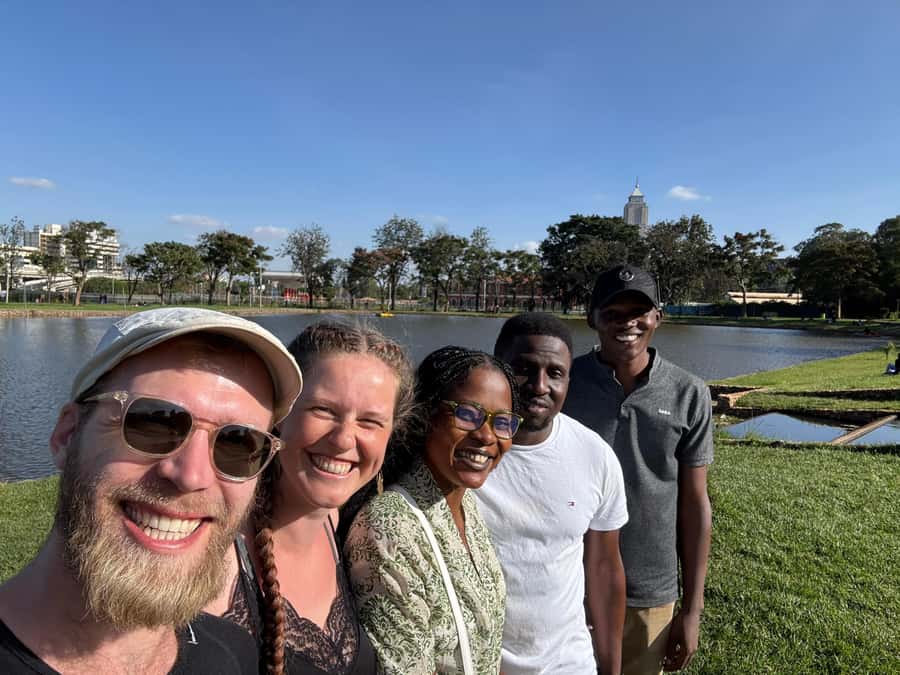
Reviewed · WALKING TOURS
Nairobi Walking tour:Explore History Culture and Traditions
Nairobi makes its first impression on foot. This three-hour walk links the city’s monuments, markets, religious buildings, parks, and public institutions in one useful introduction. I like the way the tour combines major sights with everyday city life, and I especially like the guides’ relaxed storytelling, often led by Edwin, John, Dennis, Sam, or Pierre. The main consideration is simple: you will walk for much of the three hours, and an evening departure may find some places closed.
I also like the practical pickup service from hotels, apartments, and hostels within 10 kilometers of Nairobi Municipality. At $22 per person, the tour offers strong value if you want a safe orientation before exploring alone. Just remember that coffee, meals, personal purchases, and the KICC helipad fee cost extra.
The route begins beside the Supreme Court and moves through central Nairobi at an unhurried pace. You will hear about politics, architecture, Kenyan customs, local life, and the city’s past while making frequent stops for photographs and questions. It is a good choice for a first afternoon in Nairobi, a short stay, or a visitor who wants context instead of simply passing buildings in a vehicle.
In This Review
- Key points before you book
- Starting beside the Supreme Court
- Monuments and the city’s public memory
- Jamia Mosque and Nairobi’s mix of faiths
- City Market, Jevanjee Garden, and a Kenyan coffee pause
- University of Nairobi and the Norfolk Hotel
- Uhuru Park and Holy Family Basilica
- KICC and the best city view
- Masai Market and shopping with guidance
- Railway Museum and Bomb Blast Memorial Park
- How the $22 price works for you
- Who will enjoy this Nairobi walk
- Should you book this tour?
- FAQ
- How long is the Nairobi walking tour?
- How much does the tour cost?
- Where does the tour start?
- Is hotel pickup available?
- Which languages are available?
- Is coffee included?
- Is the KICC helipad fee included?
- What should I bring?
- Is the tour wheelchair accessible?
Key points before you book

- Starts beside the Supreme Court: Meet at the Carrefour entrance next to the Supreme Court building, with hotel pickup available from many Nairobi addresses.
- A city walk with local context: Expect explanations about Kenyan culture, politics, daily life, architecture, and public history, not just a list of monuments.
- Coffee break included in the rhythm, not the price: You can stop at a local café and try Kenyan coffee, but the drink is optional and not included.
- Uhuru Park gives your feet a rest: The route includes time to sit on the grass and escape the sun amid greenery in central Nairobi.
- KICC offers the best high view: The helipad provides a broad look over the city, but its entrance fee is separate.
- Guides earn the strongest praise: Edwin is frequently singled out for humor, flexibility, and storytelling, while John, Dennis, Sam, and Pierre also receive warm praise.
Starting beside the Supreme Court
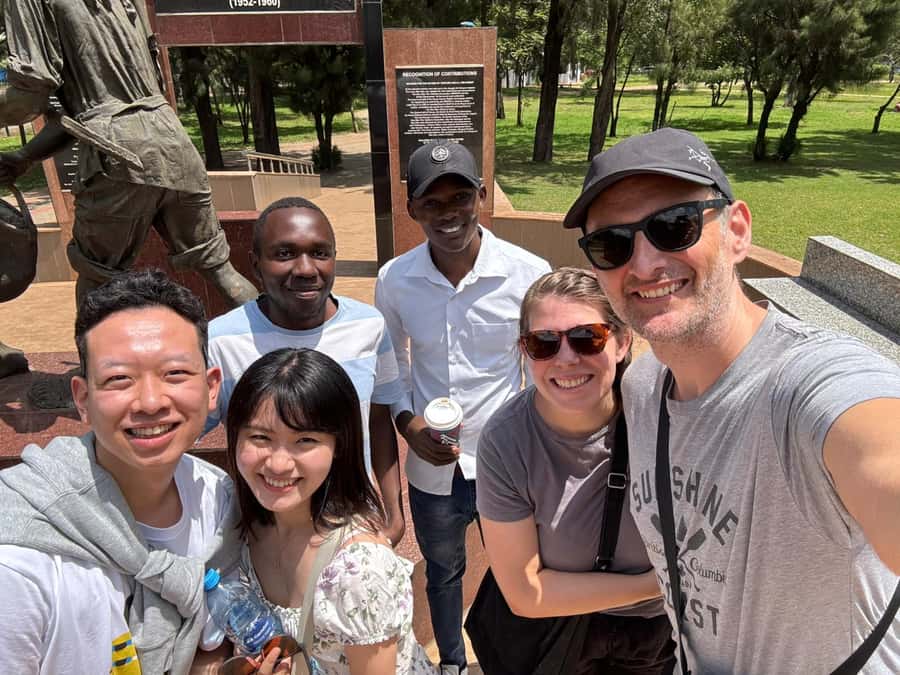
The official meeting point is the Carrefour entrance next to Nairobi’s Supreme Court building. If you choose hotel pickup, the operator collects you at the entrance of a hotel, apartment, or hostel within 10 kilometers of Nairobi Municipality. Thirty-two pickup points are listed, including Jomo Kenyatta International Airport, Four Points by Sheraton Nairobi Airport, Sarova Stanley, Fairmont The Norfolk, Best Western Plus Meridian, and several Westlands, Kilimani, and airport-area hotels.
That pickup is more useful than it may sound. Nairobi traffic can make a short journey feel long, and finding the correct downtown meeting place on your first day can be a nuisance. The service takes away some of that friction. If your address is not among the listed locations, you are asked to send it by WhatsApp.
The tour begins with a short safety briefing. That matters in a city center where you need to watch traffic, stay with the group, and pay attention to your surroundings. The guides are repeatedly praised for helping people feel safe and comfortable while walking downtown, a valuable benefit for anyone who would not normally explore the center alone.
More historical sites:
- Nairobi: Historic and Modern Highlights Walking Tour
★ 4.8 · 703 reviews - Nairobi Historical Walking City Tour
★ 5.0 · 258 reviews - Full Day Nairobi Cultural and Historical Tour
★ 5.0 · 153 reviews
Monuments and the city’s public memory
The early section introduces Nairobi through its memorials and civic buildings. The War Monuments provide a starting point for understanding how Kenya remembers conflict and service. Nearby, the McMilan Memorial Library adds a different layer, linking the city to education, books, and the colonial-era institutions that shaped central Nairobi.
Entrance to the McMilan Memorial Library is included, as is entry to Uhuru Park. These inclusions help the price feel fair because you are not paying $22 simply to follow a guide along public streets. The library stop also gives you a chance to look beyond Nairobi’s newer office towers and see an older side of the city.
The exact time at each stop is short, roughly 15 minutes in the published schedule. That is enough for an explanation, a few questions, and photographs, but not a long museum visit. If you prefer to study every display at length, you may find the pace brisk. The advantage is that the tour covers a lot of ground without turning into a single-site history lesson.
Jamia Mosque and Nairobi’s mix of faiths

Jamia Mosque is one of the route’s most striking stops. Its presence in the central business district gives you a clear sense of Nairobi as a meeting point for different communities and traditions. The guide explains the site and its place in the city, while you have a short visit rather than simply seeing it from the pavement.
Dress and behavior should be respectful at any religious site. The tour data does not specify a dress code or interior access conditions, so follow your guide’s instructions on the day. The stop is especially useful if you want to understand Nairobi through its people and institutions, rather than treating the city as a collection of photo backdrops.
The route may also include a monastery in this early stretch. It appears in the scheduled sightseeing stops, although the main description gives less detail about it than the mosque, library, or park. Think of it as part of the city’s religious and architectural story, with the guide providing the needed context.
City Market, Jevanjee Garden, and a Kenyan coffee pause

City Market changes the mood. After monuments and formal buildings, you reach a place connected to trade, food, crafts, and ordinary city errands. The schedule allows for shopping or passing through, so do not assume you will have a long market session. Still, it is a useful chance to see a more practical side of central Nairobi.
Jevanjee Garden follows as a small urban pause amid the streets. The route uses both places to show how public space and commerce fit together in the city. I would keep your belongings secure and stay close to the guide in crowded areas, not because the tour promises a problem, but because sensible city habits make any walk easier.
The local café stop is one of the most appealing details. Kenyan coffee is famous, and this break gives you a chance to taste it during a washroom stop. The coffee is optional and not included, so bring a little extra money if you want to try it. A short seat and drink can make a big difference before the second half of the walk.
The guides also use breaks well. One afternoon group spent time sitting on the grass in Uhuru Park to get out of the sun, while another tour ran close to four hours because the guide allowed extra time for conversation. Your booked duration is three hours, but the pace can be adjusted when the group is small or the guide has room in the schedule. Do not count on an extension, but the flexibility is a welcome feature.
More walking tours:
- Walking Tour Through Old Town Mombasa and Fort Jesus
★ 5.0 · 393 reviews - Nairobi Downtown Walking Tour
★ 4.7 · 208 reviews - Nairobi City Walking Tour with Traditional Kenyan Lunch
★ 5.0 · 106 reviews - Mombasa: Guided Nature Walk Amongst Giraffes
★ 4.8 · 48 reviews
University of Nairobi and the Norfolk Hotel
The walk toward the University of Nairobi shifts attention to learning and city growth. You will stroll through or alongside the university area and catch a glimpse of the Norfolk Hotel, one of Nairobi’s best-known historic hotels. Together, these stops show two sides of the capital: an institution serving students and a grand hotel tied to the city’s older visitor economy.
This section is less about entering every building and more about seeing how the center fits together. A good guide turns the walk into a conversation about local life, education, politics, food, sports, and the way Kenyans adapt to a changing city. That broad range is one of the tour’s strongest features.
Edwin is praised again and again for this kind of storytelling. He is described as funny, patient, flexible, and good at answering questions. John and Dennis have also led tours together, while Sam has been praised for his humor and easy manner. Pierre can guide in French and has also been praised for teaching bits of Swahili. Spanish, English, and French are available, making the tour more useful for international visitors.
Uhuru Park and Holy Family Basilica
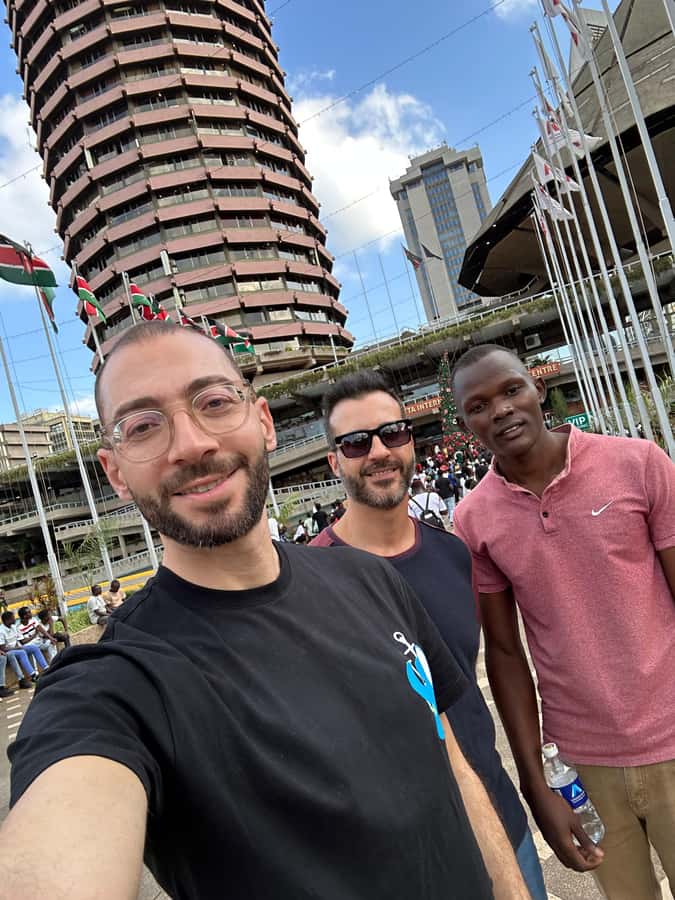
Uhuru Park is the route’s breathing space. The name means freedom, and the park offers a broad, green break from the hard edges of downtown. You can walk through it, take photographs, and, depending on the group’s needs, sit for a while. This is where comfortable shoes, water, a hat, and sunscreen earn their keep.
The park is included in the entry price, which adds to the tour’s value. It also prevents the walk from becoming a nonstop march between buildings. The stop may appeal most to you if you like a little quiet during a city tour, although anyone expecting a long nature outing should keep expectations modest. This is a central-city park, not a safari or a full-day garden visit.
The Cathedral Basilica of the Holy Family brings another important landmark into the route. Its location near the city center makes it easy to connect Nairobi’s civic, religious, and commercial life in one walk. The scheduled visit is short, so you should think of it as a guided introduction rather than time for an extended architectural study or worship visit.
KICC and the best city view
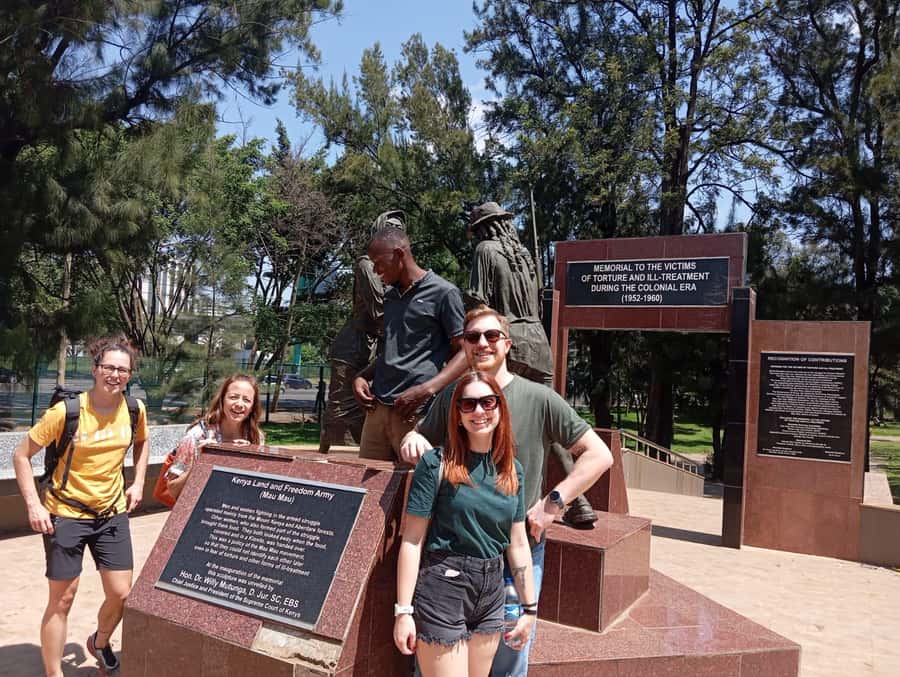
The Kenya International Convention Centre is the tour’s visual high point. You stop for photographs and, when access is available, visit the building and its helipad. From above, Nairobi’s streets, public buildings, and dense center make much more sense than they do at ground level.
The KICC helipad fee is not included, so check the cost before you decide to go up. This extra is worth considering if you care about city views and photography. If you are keeping expenses tight, the rest of the tour still works without paying for the platform.
The surrounding government buildings add useful context. Your guide can explain how the center of political power fits beside parks, churches, markets, and offices. Several people have enjoyed discussing Kenyan politics during this part of the walk, but the depth depends on your questions and the guide leading your group.
The evening option has a tradeoff. The lower sun can make the walk more comfortable, and one small evening group still enjoyed the helipad and learned about local life, architecture, and politics. But some places may be closed later in the day. If entering the library or seeing interiors matters to you, choose a daytime start and confirm the available departure time.
Masai Market and shopping with guidance
The Masai Market is a lively stop for local crafts and souvenirs. It gives you the chance to browse rather than simply look at public buildings, and it brings the tour closer to Kenya’s craft traditions. The schedule describes shopping time, but the length depends on the pace of the group and the day’s opening arrangements.
If you plan to buy something, ask the guide for help with prices and local shopping manners. John has been praised for helping a visitor find fairer prices, and that kind of support can make the market less stressful. You should still decide what an item is worth to you and avoid feeling pressured to purchase.
This stop is best approached as a cultural encounter, not a guaranteed bargain hunt. Bring room in your luggage and keep personal spending separate from the tour price. Purchases are not included, and the operator does not cover personal expenses.
Railway Museum and Bomb Blast Memorial Park

The Kenya Railway Museum adds a transport story to the day. Nairobi grew as a railway center, so the museum helps connect the capital’s development to movement, trade, and colonial-era infrastructure. The schedule describes the museum as a visit and also as a pass-by stop in places, so the amount of indoor time may vary.
That distinction is worth noting if you are a serious railway enthusiast. This tour is built around a broad city walk, not a dedicated museum program. You will get an introduction to the site, but you should not assume a long, detailed museum visit unless the guide confirms it.
The final stop, Bomb Blast Memorial Park, calls for a quieter mood. It is a place to pay respects, not a quick photo opportunity. The tour’s inclusion of this memorial gives the day a more serious close and reminds you that Nairobi’s public spaces carry painful memories as well as beautiful architecture and lively commerce.
A respectful attitude is essential here. The guide can provide context, but allow the site to speak for itself. This stop may feel emotionally heavier than the market or park, and that contrast is part of what makes the walking route feel like an introduction to a real city rather than a polished sightseeing loop.
How the $22 price works for you
At $22, this is a strong-value half-day introduction. The price includes the guide, pickup to the starting point, entry to McMilan Memorial Library, entry to Uhuru Park, and a route covering major civic, religious, cultural, and memorial sites. You would spend much more time and effort arranging all those stops independently.
The value is strongest for first-time visitors. A guide saves you from checking directions at every corner and gives each building a reason to matter. The tour also helps you decide which places deserve a later, longer visit.
The price does not include meals, drinks, optional coffee, personal shopping, or the KICC helipad fee. Budget a little extra for those choices. The tour is not a food experience, so eat beforehand or plan a meal afterward.
The published time is three hours, though small groups may move faster or receive extra time. One couple walked almost four hours, while another evening group finished after a little more than two hours. That flexibility can be pleasant, but if you have a flight, meeting, or restaurant booking, leave a generous buffer.
Who will enjoy this Nairobi walk
I would choose this tour for a first visit, especially if you have only a day or two in Nairobi. It gives you a working map of the center and introduces the city through history, faith, government, shopping, parks, and daily conversation.
It also suits solo visitors and couples who want company while walking downtown. The safety briefing, hotel pickup, and local guide reduce the strain of finding your way. Families and older participants can ask for a slower pace, though the route still requires several hours on foot.
It is less suitable if you want a quiet museum day, a food tour, or a private vehicle tour with minimal walking. The attractions are spread across the city center, and the short stops favor breadth over detailed exploration. Visitors using wheelchairs should appreciate that the activity is listed as wheelchair accessible, but it is sensible to confirm the exact route and access arrangements when booking.
Wear walking shoes, carry water, and protect yourself from the sun. Weather can change, so bring light protection for varying conditions. Photography is allowed, but ask before photographing people or inside religious and memorial spaces.
Free cancellation up to 24 hours before the start and reserve-now, pay-later terms make it easier to fit the walk into a changing schedule. Spanish, English, and French guiding is available. The overall rating is 4.8 from 222 reviews, with the warmest praise focused on the guides’ humor, safety-minded approach, clear explanations, and willingness to adapt.
Should you book this tour?
Book it if you want an affordable, people-centered introduction to central Nairobi. You will see the major sights, but the real benefit is the explanation between them: Kenyan culture, local customs, politics, architecture, and city life brought together by a guide who can answer questions.
I would favor a daytime departure if interior visits matter, and I would choose the tour early in your stay so you can use the guide’s suggestions afterward. Edwin is a particularly strong choice if available, but John, Dennis, Sam, and Pierre have also shown the friendly, engaging style this experience needs.
Skip it only if you dislike walking or prefer to explore at your own speed. For most first-time visitors, $22 buys a safe orientation, a useful city overview, and a much clearer sense of where Nairobi begins to make sense.
FAQ
How long is the Nairobi walking tour?
The stated duration is three hours. The actual time can vary, with some tours lasting a little over two hours and others extending close to four hours when the group is small or wants extra conversation.
How much does the tour cost?
The listed price is $22 per person.
Where does the tour start?
The walking tour starts at the Carrefour entrance beside Nairobi’s Supreme Court building.
Is hotel pickup available?
Yes. Pickup is included from the entrance of hotels, apartments, and hostels located within 10 kilometers of Nairobi Municipality. If your location is not listed, you can send it by WhatsApp.
Which languages are available?
The tour is available with live guides speaking English, Spanish, or French.
Is coffee included?
No. The tour includes a stop at a local café, but coffee is optional and you pay for it separately.
Is the KICC helipad fee included?
No. The KICC helipad fee is not included in the tour price.
What should I bring?
Wear comfortable walking shoes, carry water, and bring a hat and sunscreen. You should also be ready for changing weather conditions.
Is the tour wheelchair accessible?
Yes. The activity is listed as wheelchair accessible. You can confirm the specific route and access arrangements when booking.
Just added around Kenya
- Nairobi: Giraffe Center, Elephant Orphanage and Bomas Tour★ 5.0 · 3 reviews
- Nairobi: Airport and Hotel Private Transfers.★ 4.0 · 3 reviews
- 11-Days Best of Kenya & Tanzania Big 5 Safari on a 4×4 Jeep★ 5.0 · 3 reviews
- Kitengela Anselm Hot Glass tour★ 4.5 · 3 reviews
- NAIROBI NATIONAL PARK AFTERNOON GAME DRIVE.★ 5.0 · 3 reviews
- 12-Day Tsavo west Amboseli lake Nakuru Maasai Mara safari★ 5.0 · 3 reviews
- Nairobi Down Town & Walking City Tour★ 4.8 · 3 reviews
- Private 3 Day Tsavo East Safari from Mombasa★ 5.0 · 3 reviews
Walking Tours, compared.

Walking Tour Through Old Town Mombasa and Fort Jesus
Read our review →


Nairobi City Walking Tour with Traditional Kenyan Lunch
Read our review →


Browse the lists this tour appears in