
Reviewed · MARKETS
Market Tour and Traditional Kenyan Cooking Class in Nairobi
Food is Nairobi’s best front door. This four-hour private experience pairs a local market visit with hands-on Kenyan home cooking, giving you a closer look at everyday food culture than a standard restaurant meal. I like the chance to shop for fresh ingredients before cooking, and I like the personal setting at the host’s home.
The session costs $55 per person and includes food, fruit, soda, water, and transport to and from the market. The main consideration is space: the kitchen is small, so the host does most of the cooking while you help where possible. This is a cooking demonstration with participation, not a full class where you prepare every dish alone.
In This Review
- Key points at a glance
- Starting at K Mall Komarock
- Seeing Nairobi food through a local market
- Returning home to cook from scratch
- Ugali, chapati, pilau, and curry
- Meeting Evaline Mbugua
- What the $55 price includes
- Who will enjoy this cooking class most
- Practical details before you book
- Is this Nairobi food experience worth booking?
- FAQ
- How long does the Market Tour and Traditional Kenyan Cooking Class last?
- How much does the cooking class cost?
- Where is the meeting point?
- Is the experience private?
- Which languages are available?
- What food might be prepared?
- Is the meal included?
- Is transport included?
- Can I cancel for a refund?
- Can I reserve now and pay later?
Key points at a glance
- A market-first experience: You begin at a local market, choosing and seeing the ingredients used for the meal.
- A private four-hour session: Your party has a more personal setting instead of joining a large class.
- Kenyan and Indian influences: Expect dishes such as ugali, chapati, pilau, and curries.
- Cooking in a real home: The meal is prepared at the host’s home, using a small kitchen rather than a purpose-built cooking school.
- English and Swahili guidance: The experience is offered in both languages.
- Good value for a food-focused outing: The price includes the meal, drinks, fruit, water, and market transport, though Uber fees are separate.
Starting at K Mall Komarock
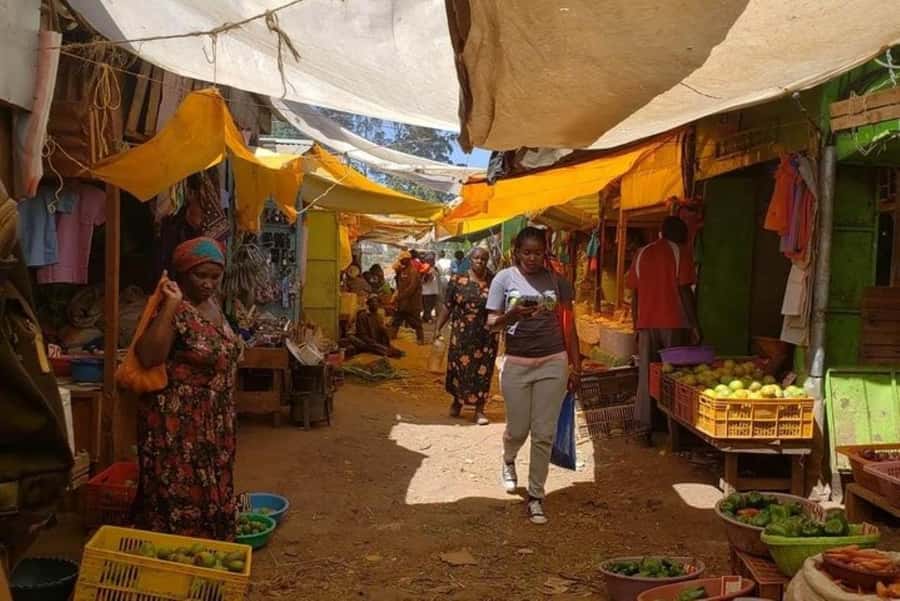
The meeting point is the K Mall Komarock parking lot. From there, you proceed to the market with your host before returning to the home kitchen.
That arrangement matters. You do not simply arrive at a prepared cooking studio and follow a recipe. The market visit gives the meal a beginning. You see the shopping stage, learn which ingredients are chosen, and get a better sense of how food fits into daily life in Nairobi.
The exact market name is not provided, so you should confirm the meeting details and starting time when booking. Availability depends on the selected date and time, and the total experience lasts about four hours.
Transport to and from the market is included. Uber fees are not included, so if you use Uber to reach K Mall Komarock or continue elsewhere afterward, budget for that separately.
More market tours:
- Traditional Kenyan Cooking Class & Local Market Tour
★ 5.0 · 129 reviews - Memorable Daily KIBERA Slums/Toi Market Tour with Locals (2 hours)
★ 5.0 · 29 reviews - Half-Day Nairobi National Park and Maasai Market with Pick up
★ 5.0 · 16 reviews
Seeing Nairobi food through a local market
The market portion is the strongest cultural part of the experience. You shop for fresh supplies before cooking, which lets you connect the finished dishes with their basic ingredients.
I like this format because food shopping often explains more than a short lecture. You can ask what an ingredient is used for, how it is prepared, and which items are common in a Kenyan home kitchen. The host, Evaline Mbugua, offers the experience in English and Swahili, making it easier to ask questions about both food and local life.
The market is described as local and authentic, but you should not expect a polished food hall or a formal guided market tour with a fixed list of stalls. The appeal is the ordinary setting. You are there to buy supplies for your meal, not to collect a series of staged tastings.
That also means the experience may feel more practical than theatrical. You might spend time watching how ingredients are selected rather than sampling something at every stop. For anyone interested in how a meal starts, this is a worthwhile trade.
Returning home to cook from scratch
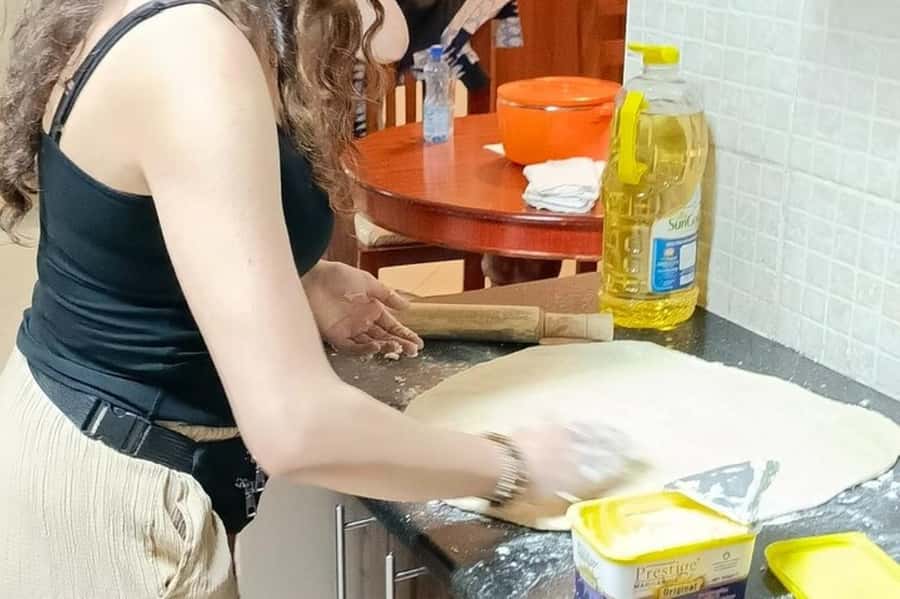
After shopping, you go to the host’s home and begin preparing the food. The cooking is done from scratch, with the host showing you the steps and allowing you to help.
The kitchen is small, and that detail should shape your expectations. Because of the limited space, Evaline does most of the cooking. You will still take part, but this is not the right choice if your main goal is to work independently at a large counter with your own stove and utensils.
A small home kitchen also gives the session a more personal feel. You are seeing how traditional food can be prepared in an ordinary household rather than in a commercial cooking school. One account describes the host producing several dishes in a very small kitchen while still making room for assistance. That is a useful picture of the format: close, informal, and somewhat compact.
You can ask questions as the food comes together. The session offers one-to-one guidance for your private party, so the host can focus on your group rather than moving between many unrelated groups.
Ugali, chapati, pilau, and curry
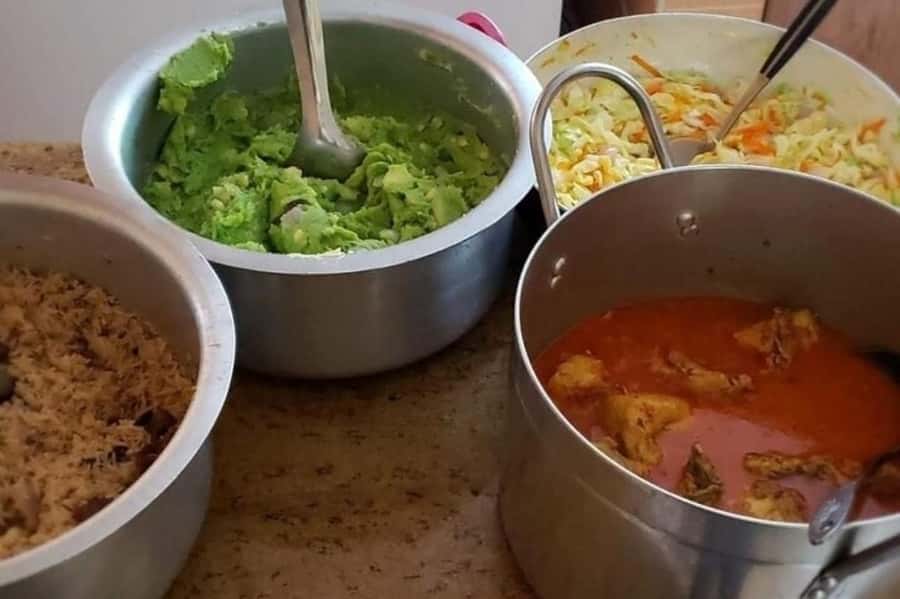
The food combines Kenyan cooking with Indian influences. The listed examples include ugali, chapati, pilau, and curries, though the exact menu may vary.
Ugali is a cornmeal staple and an important part of the meal’s Kenyan identity. It is simple in appearance, but its place at the table makes it more than a side dish. Preparing it helps you understand a food that appears in everyday home cooking.
Chapati gives you a more hands-on task. The flatbread is prepared during the session, and you may help with the process while learning how it is made. The cooking experience is especially useful here because chapati requires more than simply opening a packet and warming it.
Pilau brings another layer to the meal, with its connection to the Kenyan coast and Indian culinary influence. Curries add to that blend of flavors. The result is not presented as a single narrow style of food. Instead, you get a look at the way Kenyan home cooking can include several regional and cultural influences.
The food is part of the experience, not an optional tasting at the end. Food, fruit, soda, and water are included, so you should not need to arrange a separate lunch during the four-hour session. The meal is also the payoff for the market visit and preparation work.
A few more trips worth weighing up
- Nairobi souvenir Shopping and Historical Half day Tour
★ 5.0 · 61 reviews - Nairobi Cultural Shopping Experience
★ 5.0 · 21 reviews - Nairobi cultural souvenir shopping tour with a local
★ 5.0 · 12 reviews - Nairobi Guided Cultural Shopping Experience Day Tour
★ 4.0 · 12 reviews
Meeting Evaline Mbugua
The provider is Evaline Mbugua. The available feedback repeatedly points to her friendly manner and her ability to teach more than the mechanics of cooking.
One person described learning a great deal about Kenyan culture from Evaline. Another praised her kindness and willingness to explain how traditional meals are prepared. That makes her role important: she is not only demonstrating recipes, but also helping you place those recipes in the setting of daily life.
The experience is also hosted by Mary Evelyn in some of the available comments. The supplied details identify the provider as Evaline Mbugua, so confirm the host’s name and any meeting instructions at booking if this matters to you.
The strongest part of this format is the conversation. One account describes preparing food together and talking about personal lives while sitting in the home. That kind of exchange is hard to reproduce in a large group class.
Still, the personal setting requires the right attitude. You are entering a host’s home, not visiting a restaurant with a professional service routine. Be ready for a relaxed and informal session, and allow the host to guide the pace.
What the $55 price includes
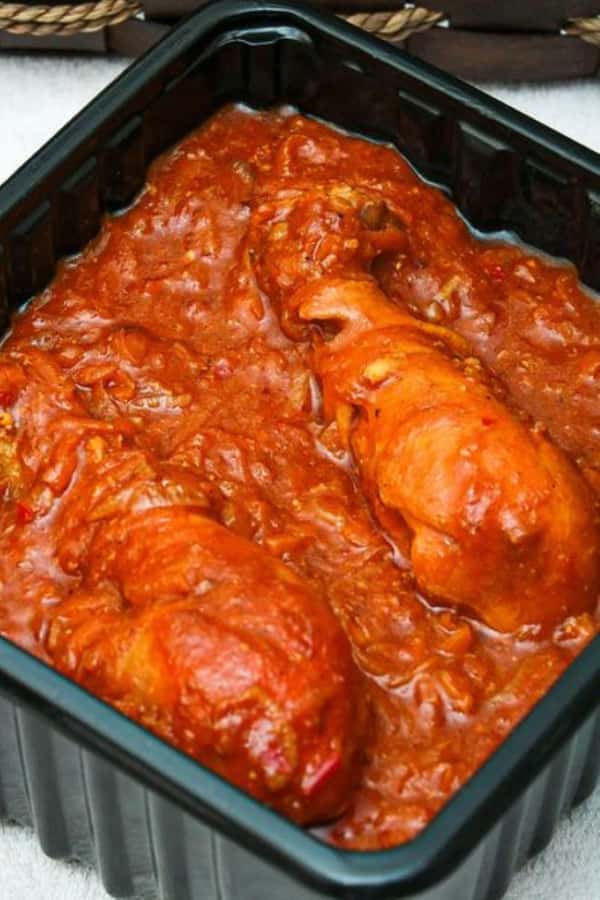
At $55 per person, the value depends on what you want from a Nairobi food experience. You are paying for four hours, a private group setting, the market visit, instruction, the meal, and drinks.
The included food covers the dishes prepared during the class, along with fruit, soda, and water. Transport to and from the market is also included. That makes the price easier to justify than a cooking lesson where you must pay separately for ingredients and lunch.
The private format is another part of the value. You are not sharing the session with a large class, and the host can offer more direct attention to your party. For couples, families, or a small group of friends, that privacy may matter more than having a large professional kitchen.
The limitation is that Uber fees are extra. If you need app-based transport to the meeting point, add that cost to your budget. The activity itself begins at K Mall Komarock parking lot.
I would see this as a cultural food outing rather than a technical culinary course. If you want detailed knife skills, precise recipe cards, or a chance to cook every dish alone, the format may feel light. If you want a personal meal, a market visit, and conversation in a home setting, the price is reasonable.
Who will enjoy this cooking class most
This experience suits you if food is one of your main ways of understanding a place. The market adds local context, and the home setting gives you a look at cooking beyond the dining room.
It is a good match for:
- Couples who want a private activity with time to talk
- Families interested in simple, familiar food traditions
- Small groups who prefer personal attention
- First-time visitors looking for a cultural introduction through food
- People who enjoy learning by watching, helping, and eating
It may suit you less if you dislike markets, prefer a formal cooking school, or need a large workspace. The host does most of the cooking because of space limits, so independent preparation is not the center of the class.
The four-hour length is also worth noting. It is long enough for the market, preparation, and meal without taking an entire day. You still need to allow time to reach the meeting point and continue to your next activity afterward.
Practical details before you book
The tour is a private group experience, not a shared class. The languages are English and Swahili.
You meet at K Mall Komarock parking lot. Transport to and from the market is included, but Uber costs are not. Starting times depend on availability, so check the date and time before confirming.
Food, soda, fruit, and water are included. The experience includes the meal prepared during the session, with examples such as ugali, chapati, pilau, and curry.
You can cancel up to 24 hours in advance for a full refund. A reserve-now-and-pay-later option is available, which gives you some flexibility while your Nairobi plans take shape.
The overall rating is 4.8 from six ratings, with the strongest praise focused on the authentic market visit, the friendly host, the cultural exchange, and the quality of the food. The clearest caution is not about the meal itself, but about the compact kitchen and the amount of cooking you personally get to do.
Is this Nairobi food experience worth booking?
I would book this experience if you want a personal introduction to Kenyan food and home life, not just a restaurant meal. The best features are the market shopping, the chance to help make chapati and other dishes, and the conversation with Evaline Mbugua.
Go in expecting a demonstration with participation. The small kitchen means the host handles much of the cooking, but that also keeps the group close and lets you watch the process carefully.
At $55, the included meal, drinks, market transport, and private setting make good sense for a four-hour activity. Book it if you value local contact and everyday cooking. Skip it if you need a formal culinary lesson where each participant prepares every dish independently.
FAQ
How long does the Market Tour and Traditional Kenyan Cooking Class last?
The experience lasts four hours.
How much does the cooking class cost?
The listed price is $55 per person.
Where is the meeting point?
You meet at the K Mall Komarock parking lot before proceeding to the market.
Is the experience private?
Yes. It is offered as a private group experience for your party.
Which languages are available?
The live tour guide service is available in English and Swahili.
What food might be prepared?
The meal may include Kenyan and Indian influenced dishes such as curries, ugali, chapati, and pilau.
Is the meal included?
Yes. Food is included, along with fruit, soda, and water.
Is transport included?
Transport to and from the market is included. Uber fees are not included.
Can I cancel for a refund?
You can cancel up to 24 hours in advance for a full refund.
Can I reserve now and pay later?
Yes. A reserve-now-and-pay-later option is available.
More Workshops
- Authentic Kenyan Cooking Class & Market Tour in Nairobi
★ 5.0 · 12 reviews - Private Traditional Kenyan Cooking Class with Lunch in Nairobi
★ 5.0 · 10 reviews - Local Market Tour and Traditional Meal Cooking Class
★ 5.0 · 4 reviews - Private Kenyan Cooking Class in Nairobi with a Local
★ 5.0 · 3 reviews
Just added around Nairobi
- Nairobi: Airport and Hotel Private Transfers.★ 4.0 · 3 reviews
- Nairobi: Giraffe Center, Elephant Orphanage and Bomas Tour★ 5.0 · 3 reviews
- 11-Days Best of Kenya & Tanzania Big 5 Safari on a 4×4 Jeep★ 5.0 · 3 reviews
- Kitengela Anselm Hot Glass tour★ 4.5 · 3 reviews
- NAIROBI NATIONAL PARK AFTERNOON GAME DRIVE.★ 5.0 · 3 reviews
- 12-Day Tsavo west Amboseli lake Nakuru Maasai Mara safari★ 5.0 · 3 reviews
- Nairobi Down Town & Walking City Tour★ 4.8 · 3 reviews
- Carnivore Resturant Dinner Experience★ 4.0 · 3 reviews
Markets, compared.

Traditional Kenyan Cooking Class & Local Market Tour
Read our review →
Memorable Daily KIBERA Slums/Toi Market Tour with Locals (2 hours)
Read our review →
Mombasa City Tour,Fortjesus,Oldtown,Tusks and Spice Market.
Read our review →
Half-Day Nairobi National Park and Maasai Market with Pick up
Read our review →
Authentic Kenyan Cooking Class & Market Tour in Nairobi
Read our review →
Hop on Hop off and Maasai market Collections Visit
Read our review →
Explore local Market matatu ride & Make Kenyan Cuisines with a home cook
Read our review →
Browse the lists this tour appears in