
Reviewed · MARKETS
Local Market Tour and Traditional Meal Cooking Class
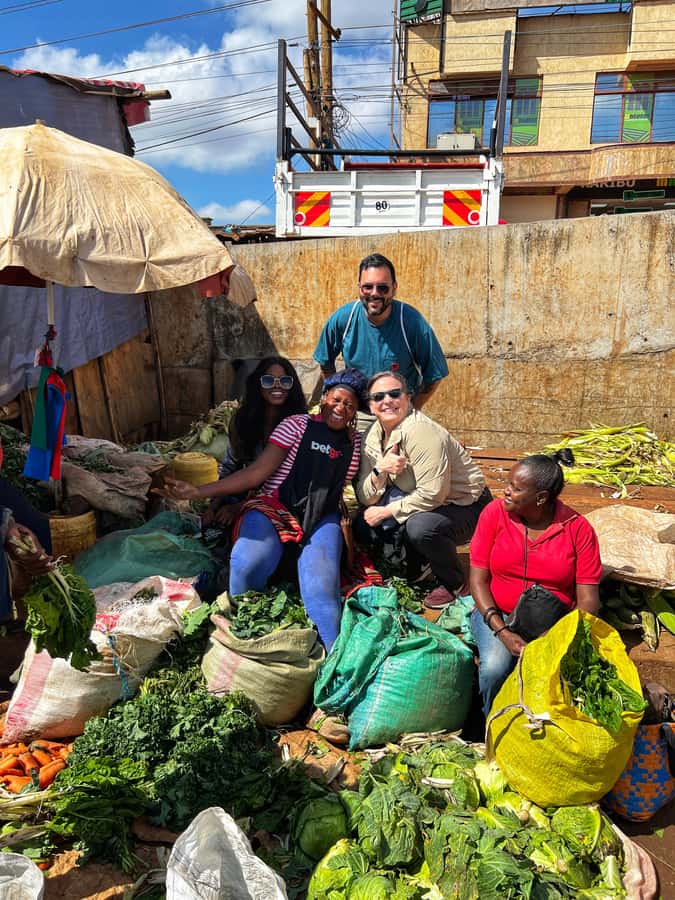
Nairobi tastes better from a market stall. This three-hour experience brings you into everyday city life through a fresh-food market, optional matatu ride, and hands-on cooking class in a local home. I like the small group size, limited to six people, and the warm personal format praised in feedback about Gladys and Ninoh.
I also like that you help shop for ingredients before cooking them. That simple link between market, kitchen, and table gives the meal a useful sense of place. The main drawback is the fourth-floor apartment with stairs only, which may be difficult for anyone with limited mobility despite the experience being described as wheelchair accessible.
In This Review
- Key Things to Know Before You Go
- Why This Nairobi Food Experience Works
- Starting at Westlands Square
- Walking Through the Local Fresh Market
- The Optional Matatu Ride
- Cooking in a Fourth-Floor Apartment
- Eating the Food You Helped Prepare
- What the $64 Price Gets You
- Timing, Group Size, and Practical Comfort
- Who Will Enjoy This Most
- Should You Book This Cooking Class?
- FAQ
- Where does the experience begin?
- How long does the experience last?
- What start times are available?
- Is hotel pickup included?
- Is the matatu ride required?
- Where does the cooking class take place?
- Is there an elevator in the apartment building?
- Can the meal accommodate different diets?
- What languages does the guide speak?
- What is included in the $64 price?
Key Things to Know Before You Go
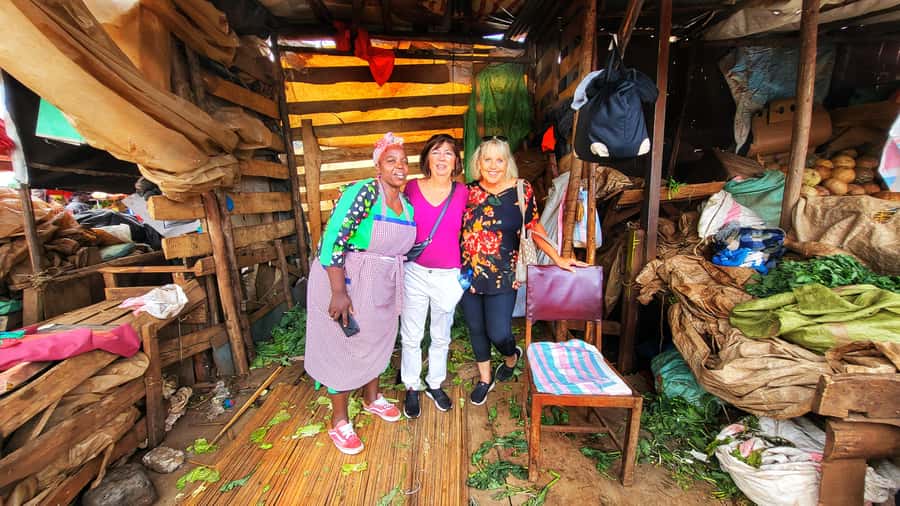
- You shop for fresh ingredients in a true local market, rather than simply watching a guide explain Kenyan food.
- The cooking takes place in a private apartment, about 10 minutes from the market, with a city view and no elevator.
- A matatu ride is available as an optional part of the outing, giving you a taste of ordinary Nairobi transport.
- The meal can suit several diets, including vegan, vegetarian, pescatarian, and meat-based preferences.
- The group is capped at six people, making it easier to ask questions and take part at the stove.
- The $64 price covers the main activities, but hotel transport and your return taxi or Uber are extra.
Why This Nairobi Food Experience Works
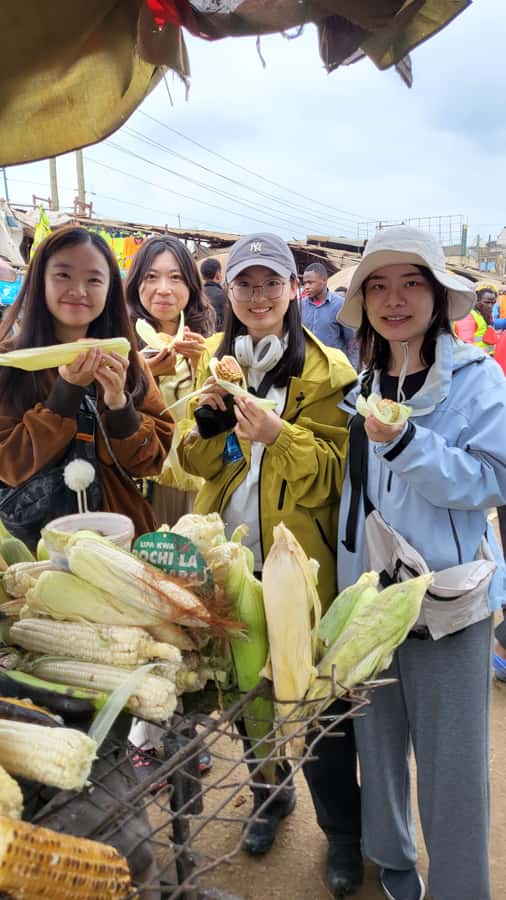
Nairobi can be hard to read from the window of a tour vehicle. You see traffic, shops, pedestrians, and bright produce, but you do not always understand how the city eats. This experience gives you a more direct route into that daily rhythm.
You start at Westlands Square, meeting the guide near the Java cafe entrance. From there, the outing shifts from a familiar shopping center to a local market, where the focus is fresh food and ordinary shopping. That change is part of the appeal. You are not only being shown Kenyan cuisine. You are seeing how ingredients are selected before they reach the cooking pot.
The format is personal. A group of six or fewer means you should have room to ask about food, transport, customs, and daily life. One couple specifically enjoyed taking a bus to the market, shopping, and then cooking in the host’s home. That detail matters because it turns the activity into a connected afternoon or evening rather than three unrelated stops.
The experience runs for about three hours, with a start time listed at either 11:30 a.m. or 5 p.m. The schedule makes it possible to fit around other Nairobi plans, though you should allow extra time for traffic and the return journey.
More market tours:
- Traditional Kenyan Cooking Class & Local Market Tour
★ 5.0 · 129 reviews - Memorable Daily KIBERA Slums/Toi Market Tour with Locals (2 hours)
★ 5.0 · 29 reviews - Half-Day Nairobi National Park and Maasai Market with Pick up
★ 5.0 · 16 reviews
Starting at Westlands Square
The meeting point is straightforward: Westlands Square, by the entrance to the Java cafe. I would arrive a little early, especially if you are unfamiliar with the mall, and keep the guide’s contact details handy.
The experience does not include hotel pickup. That keeps the price lower, but you need to arrange your own way to Westlands Square. It also means you should not plan a tight connection afterward. Nairobi traffic can make a short ride take longer than expected, and the activity ends at the host’s home rather than back at the mall.
The guide will help request an Uber when you are ready to leave, but the ride is at your own cost. That is a useful courtesy, especially if you are not comfortable arranging transport from a residential area.
Walking Through the Local Fresh Market

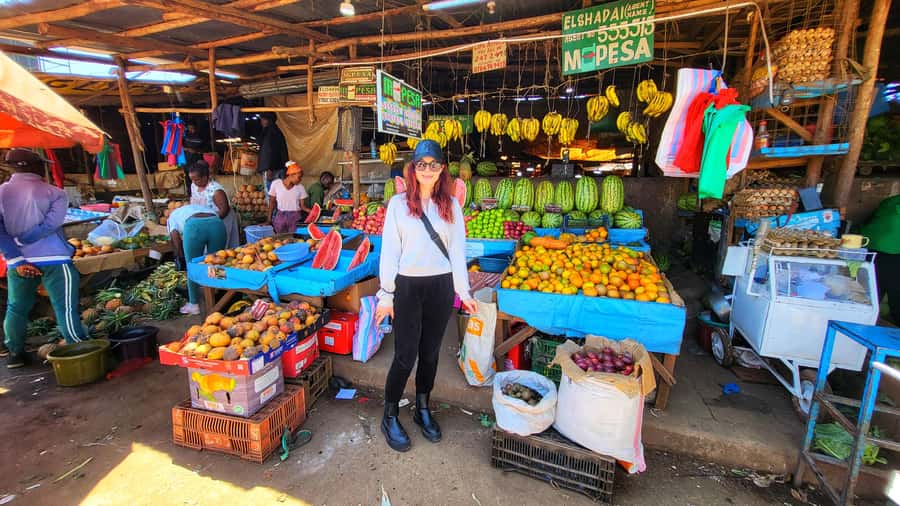
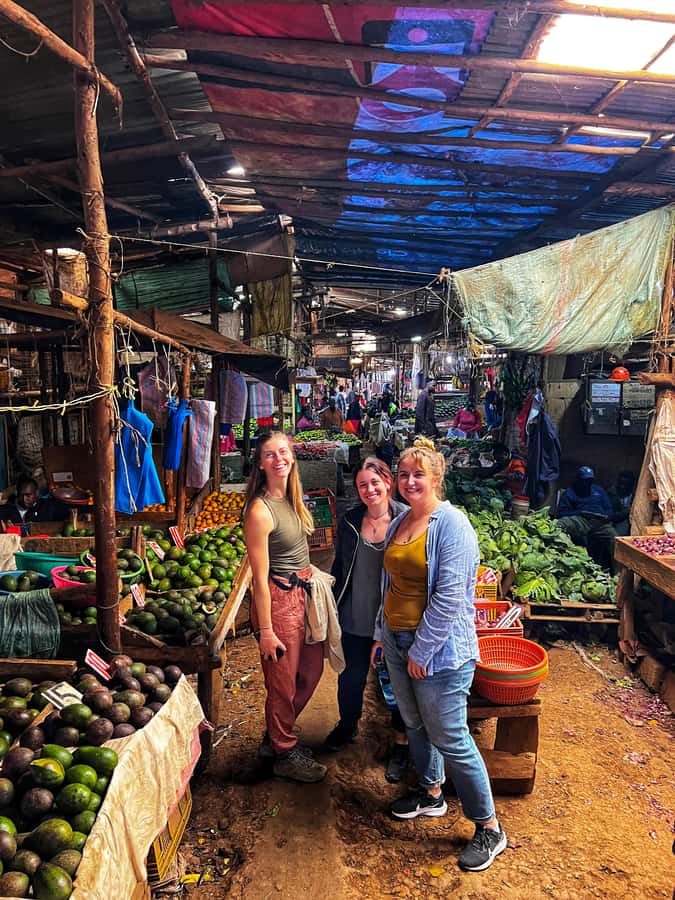
The market visit is the heart of the experience. You walk through a working African fresh market and shop for the ingredients used in the meal. This gives you a chance to see food in its everyday setting, with the guide explaining what you are looking at and how it fits into Kenyan cooking.
The important point is participation. You are not simply standing at the edge while someone else shops. You help choose and purchase fresh local ingredients. That can make even familiar items more interesting, since the guide can connect them to household meals and food habits.
The market portion is listed at roughly 30 minutes, though the supplied route information contains confusing time entries for the Nairobi stops. The overall activity is described as three hours, so I would treat the market visit as a compact but active stop rather than a long market expedition.
Wear flat, closed shoes or sports shoes. Market walking can be uneven, and comfortable footwear is more useful than anything stylish. During the rainy season, bring an umbrella or raincoat. A light jacket is also recommended.
You are asked to dress decently, preferably in trousers or a long skirt. Crop tops and shorts are not suitable for the visit or the home cooking session. This is practical advice for showing respect in a local setting.
The Optional Matatu Ride
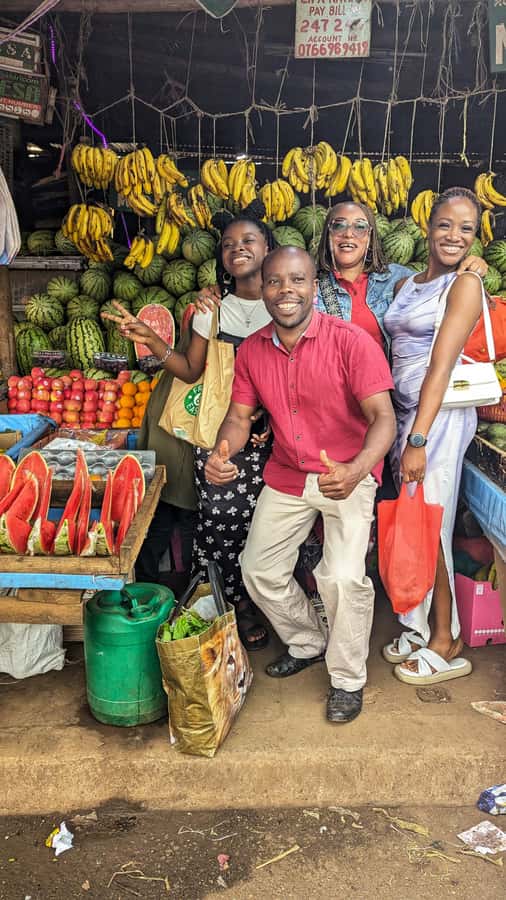
The public transport portion is an optional matatu experience. A matatu is a shared public minibus and a normal part of getting around Nairobi. Taking one gives you a look at city movement from street level, rather than from a private car.
I would choose this option if you want the outing to feel more connected to ordinary Nairobi life. It adds a little uncertainty, since public transport is not as controlled as a private transfer, but that is also the point. You move as local residents do, alongside the ordinary flow of the city.
If you prefer a quieter route, ask the guide about the exact transport plan. The information describes the ride as optional, so it should not be assumed that every participant must use a matatu.
A few more trips worth weighing up
- Nairobi souvenir Shopping and Historical Half day Tour
★ 5.0 · 61 reviews - Nairobi Cultural Shopping Experience
★ 5.0 · 21 reviews - Nairobi cultural souvenir shopping tour with a local
★ 5.0 · 12 reviews - Nairobi Guided Cultural Shopping Experience Day Tour
★ 4.0 · 12 reviews
Cooking in a Fourth-Floor Apartment
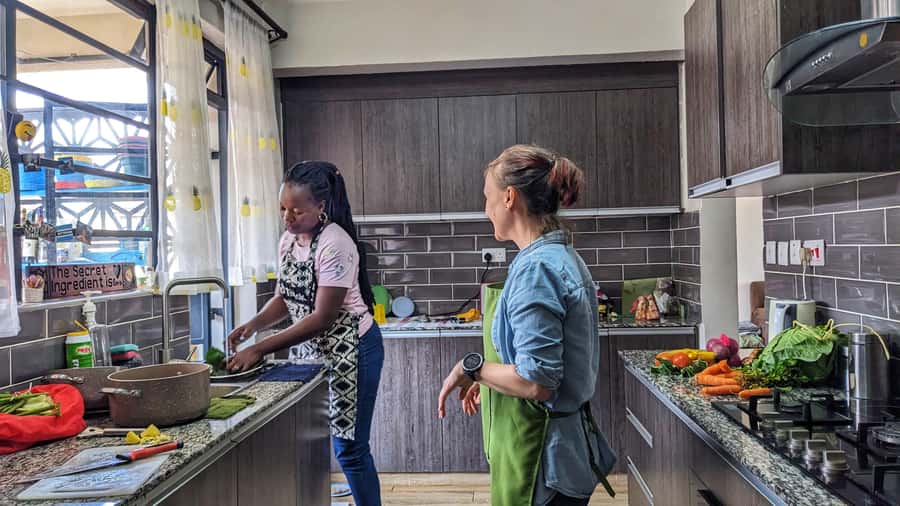
After the market, you travel to the host’s home, about 10 minutes away depending on traffic. The cooking takes place in a private apartment on the fourth floor, with a pleasant view and staircases instead of a lift.
That home setting gives the class its character. You are cooking in a real domestic space rather than a large commercial kitchen. The mood should feel more like being welcomed into someone’s routine than attending a formal demonstration.
You begin with a refreshment before getting to work. The class is hands-on, so expect to help prepare the food and get your hands dirty. The host then guides you through traditional Kenyan dishes made from fresh, local ingredients.
The meal is described as suitable for vegan, vegetarian, pescatarian, and meat-eating diets. Still, I would send any specific dietary request before the day of the activity. The provider invites you to ask for particular meal requests, and advance notice is the safest way to make sure the menu fits you.
The four-star accessibility detail needs careful reading. The activity is marked wheelchair accessible, but the apartment has no elevator and requires stairs to the fourth floor. If you use a wheelchair, have trouble climbing stairs, or simply dislike several flights after a market walk, contact the provider before booking.
Eating the Food You Helped Prepare
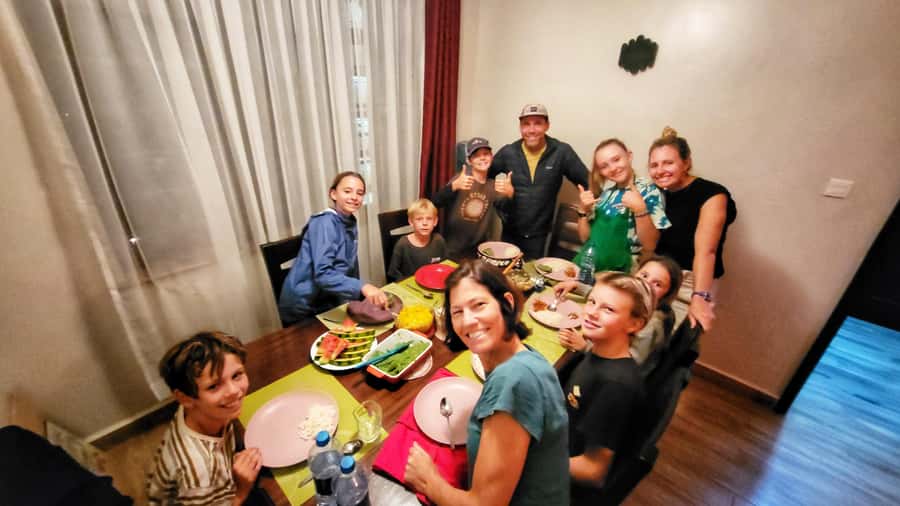
The final meal is not just a tasting stop. You sample the traditional dishes you have helped prepare, which gives the cooking class a satisfying finish. Food tends to make a stronger memory when you know where the ingredients came from and took part in the preparation.
This is also the point when conversation becomes central. The experience is built around spending time with a local host and learning about food culture. Feedback from Uwe of Germany praised the host’s professionalism in security, meal preparation, cooking, and presentation. Peta from Australia described the market visit as full of local insight and community connection, and called the cooking warm and hands-on.
Those comments point to the best reason to book: the host seems to be the real attraction. The recipe matters, but the exchange around the recipe matters just as much. You can ask about shopping, meals at home, and the role of food in daily life.
The experience includes Wi-Fi and a clean washroom. After eating, you are free to relax for a while before arranging your own taxi or Uber.
What the $64 Price Gets You
At $64 per person, this is not the cheapest way to eat in Nairobi. You could certainly find a less expensive meal. The value comes from combining several parts of the day: a market visit, ingredient shopping, optional local transport, guided cooking, and the meal itself.
For a small group, the price is easier to justify. You are paying for personal attention, food, instruction, and access to a home setting that you would not normally find through a standard restaurant visit. The included ingredients also mean you are not paying separately for the meal you prepare.
The price does not include hotel pickup, drop-off, or the ride home. You should add those costs when working out your full budget. The meeting point is in Westlands, and the activity finishes at Waiyaki Real Gardens on Waiyaki Way according to the route information, though the detailed description says you leave from the host’s home. Confirm the exact finishing point when booking.
The reservation terms are flexible. You can reserve and pay later, and cancellation is free up to 24 hours ahead for a full refund. Those terms help if your Nairobi schedule is still changing.
Timing, Group Size, and Practical Comfort
The experience is offered at 11:30 a.m. or 5 p.m. The midday option should lead naturally into lunch, while the later start makes sense for an evening meal. Since the cooking takes place in a private home, I would avoid arriving hungry enough to rush the process. The meal is part of the activity, not a quick snack between sights.
The small group limit of six is a real advantage. Cooking around a crowded counter can become awkward, while a small group gives you a better chance to chop, stir, ask questions, and follow what is happening.
The guide speaks English and Swahili. If those languages work for you, communication should be simple. The provider is Nai Local Experience Tours & Safari, and the experience is designed around a local host rather than a large sightseeing operation.
Bring:
- Comfortable closed shoes
- Comfortable clothing
- A light jacket
- An umbrella or raincoat during rainy periods
You should also dress modestly for the market and home visit. Animal allergies may make this activity unsuitable, and nudity is not allowed, though that is hardly a difficult rule to follow for a food outing.
Who Will Enjoy This Most
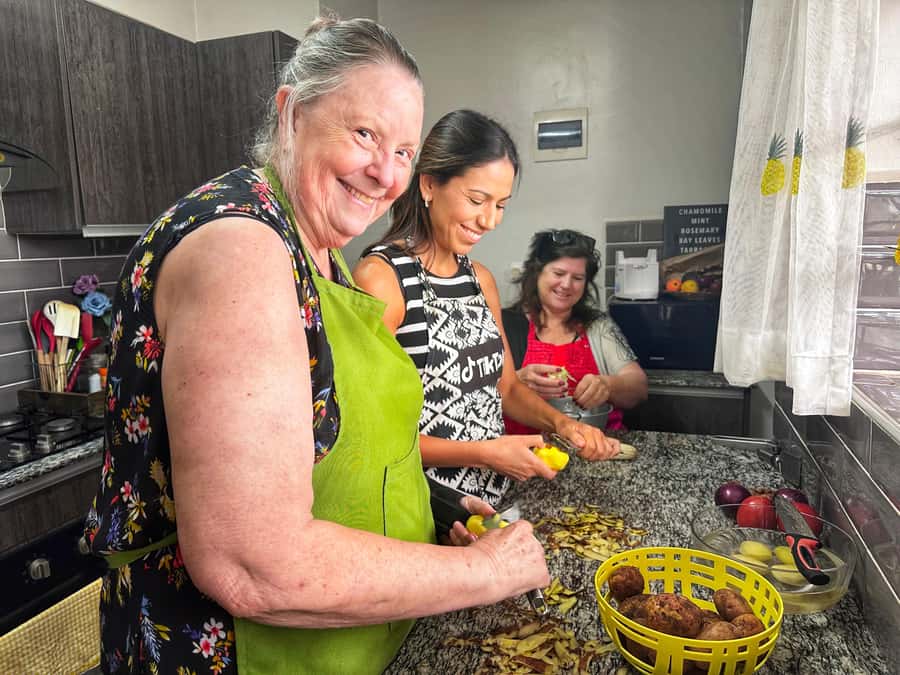
I would recommend this to you if you want food to be your way into Nairobi. It suits curious eaters, couples, solo visitors, and small groups who prefer conversation and participation over a polished show.
It is especially good for anyone who wants to understand the path from market ingredients to a Kenyan home meal. The optional matatu ride adds value for people who enjoy public transport and ordinary city routines.
You may want to choose another activity if you need hotel pickup, dislike stairs, or want a carefully timed sightseeing tour. This is not a broad Nairobi highlights tour. The focus is local food, daily life, and time spent with a host.
The activity also requires some flexibility. The market, traffic, public transport, and home setting are all less predictable than a restaurant reservation. That is part of its charm, but it is worth knowing before you arrive.
Should You Book This Cooking Class?
Book it if you want a personal Nairobi experience with real participation. The strongest features are the market shopping, the optional matatu ride, the small group, and the chance to cook in a private home using fresh ingredients.
The excellent feedback is consistent about the same things: warm hosting, personal attention, local insight, and a meal that you help make. Gladys is praised for professionalism, while Ninoh is praised for passion and the way the market and cooking fit together. Check the host name and exact meeting details when you reserve, since both names appear in the available feedback.
I would skip it if a fourth-floor walk-up is a problem, if you need all transport included, or if you want a conventional restaurant meal with no active work. For everyone else, $64 is a fair price for three hours that connect Nairobi’s market, transport, kitchen, and table in one small outing.
FAQ
Where does the experience begin?
It begins at Westlands Square. Meet near the entrance to the Java cafe, where the guide will be waiting.
How long does the experience last?
The experience is listed as three hours.
What start times are available?
The stated start times are 11:30 a.m. and 5 p.m. You should check availability for the date you want.
Is hotel pickup included?
No. Hotel pickup and drop-off are not included.
Is the matatu ride required?
No. The matatu public transport experience is described as optional.
Where does the cooking class take place?
The class takes place in the host’s apartment, about 10 minutes from the market depending on traffic.
Is there an elevator in the apartment building?
No. The apartment is on the fourth floor, and the building has stairs only.
Can the meal accommodate different diets?
Yes. The meal options are described as suitable for pescatarians, vegans, vegetarians, and meat eaters. You can also contact the provider about specific meal requests.
What languages does the guide speak?
The guide speaks English and Swahili.
What is included in the $64 price?
The price includes the local market tour, fresh food shopping, the cooking class, and sampling traditional Kenyan meals. Hotel transport and your return taxi or Uber are not included.
More Workshops
- Authentic Kenyan Cooking Class & Market Tour in Nairobi
★ 5.0 · 12 reviews - Private Traditional Kenyan Cooking Class with Lunch in Nairobi
★ 5.0 · 10 reviews - Market Tour and Traditional Kenyan Cooking Class in Nairobi
★ 4.8 · 6 reviews - Private Kenyan Cooking Class in Nairobi with a Local
★ 5.0 · 3 reviews
Just added around Nairobi
- Nairobi: Giraffe Center, Elephant Orphanage and Bomas Tour★ 5.0 · 3 reviews
- Nairobi: Airport and Hotel Private Transfers.★ 4.0 · 3 reviews
- 11-Days Best of Kenya & Tanzania Big 5 Safari on a 4×4 Jeep★ 5.0 · 3 reviews
- Kitengela Anselm Hot Glass tour★ 4.5 · 3 reviews
- NAIROBI NATIONAL PARK AFTERNOON GAME DRIVE.★ 5.0 · 3 reviews
- 12-Day Tsavo west Amboseli lake Nakuru Maasai Mara safari★ 5.0 · 3 reviews
- Nairobi Down Town & Walking City Tour★ 4.8 · 3 reviews
- Carnivore Resturant Dinner Experience★ 4.0 · 3 reviews
Markets, compared.

Traditional Kenyan Cooking Class & Local Market Tour
Read our review →
Memorable Daily KIBERA Slums/Toi Market Tour with Locals (2 hours)
Read our review →
Mombasa City Tour,Fortjesus,Oldtown,Tusks and Spice Market.
Read our review →
Half-Day Nairobi National Park and Maasai Market with Pick up
Read our review →
Authentic Kenyan Cooking Class & Market Tour in Nairobi
Read our review →
Hop on Hop off and Maasai market Collections Visit
Read our review →
Explore local Market matatu ride & Make Kenyan Cuisines with a home cook
Read our review →
Browse the lists this tour appears in