
Reviewed · COOKING CLASSES
Private Kenyan Cooking Class in Nairobi with a Local
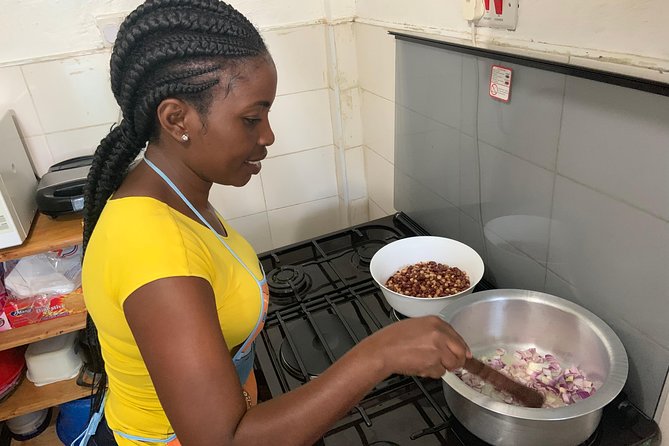
Food opens doors quickly. This private Nairobi experience takes you into a typical Kenyan home, where Grace shares family cooking traditions and serves a meal you help prepare. I like the personal setting and the chance to learn dishes such as mukimo and ugali rather than simply eating them in a restaurant. I also like that the same recipes can be made at home with ordinary pantry ingredients. The main drawback is the small kitchen: this is partly a cooking demonstration, not a full hands-on class.
At $76 per person, the experience makes the most sense for people who value conversation, local contact, and a private setting. You can expect about three hours from the 11:00 a.m. start, although the core cooking demonstration lasts about an hour. Grace does most of the work because of limited space, but she brings you in whenever possible and explains the food as she cooks.
In This Review
- Key points to know before booking
- Entering a Nairobi home for a different kind of food tour
- The 11:00 a.m. start and the shape of the visit
- Watching mukimo come together
- Ugali and pilau: two different sides of Kenyan cooking
- A demonstration with genuine chances to help
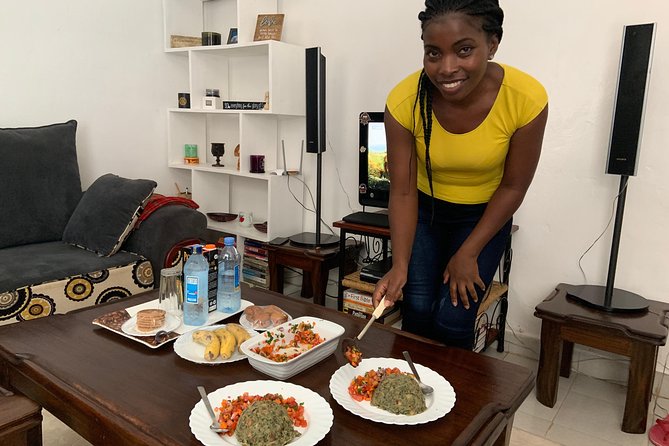
- Sharing the meal after the cooking
- Is $76 per person good value?
- Who will enjoy this Kenyan cooking experience?
- Booking flexibility and the small print
- Should you book it?
- FAQ
- Where does the Kenyan cooking experience take place?
- What time does the experience start?
- How long does the experience last?
- Is this a private activity?
- What dishes might I learn to prepare?
- Is the class fully hands-on?
- Can I cancel for a full refund?
Key points to know before booking
- Grace is the host: Her family stories, including memories of her grandmother making mukimo, give the meal a personal connection.
- The kitchen is very small: Expect close observation and some participation, not a large classroom with separate workstations.
- The menu is traditionally Kenyan: You may learn mukimo, ugali, pilau, and local vegetables, depending on the session.
- You eat what you help prepare: The cooking ends with a shared home-cooked meal.
- The tour is private: Only your own group takes part, which allows more room for questions and conversation.
- It begins and ends in Nairobi: The listed start time is 11:00 a.m., and the activity finishes back at the meeting point.
Entering a Nairobi home for a different kind of food tour
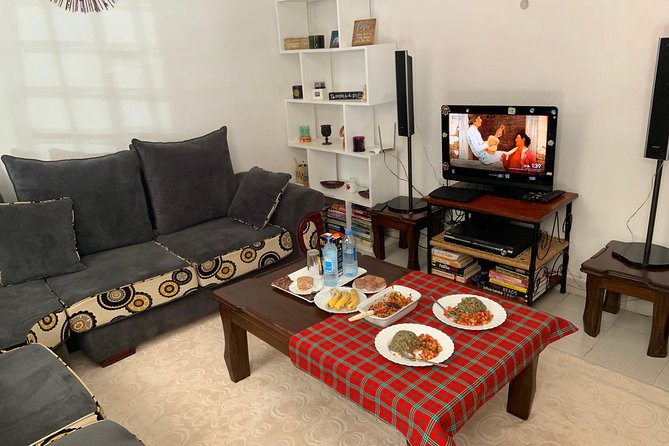
Many Nairobi food experiences take place in restaurants, markets, or formal cooking schools. This one uses a more personal setting: a local household. You meet Grace and spend time in her modest kitchen, learning how an everyday Kenyan meal comes together.
That setting is the heart of the experience. You are not only learning a recipe. You are seeing how food connects with family, memory, and routine. Grace talks about her grandmother, who is more than 100 years old, and the way she prepared mukimo for the family. Those stories add meaning to a dish that might otherwise look like a simple bowl of mashed potatoes and greens.
I especially like this format for a first visit to Nairobi. A meal in a home gives you a closer look at daily life than a standard restaurant stop. It also creates a natural reason to ask questions about ingredients, cooking habits, and Kenyan food traditions without forcing the conversation.
There is one practical point to understand before you book. Grace’s kitchen is small. You will not have a large counter, a personal chopping board, and a complete set of ingredients in front of you. The experience is best described as a demonstration with hands-on moments.
A few more trips worth weighing up
- Traditional Kenyan Cooking Class & Local Market Tour
★ 5.0 · 129 reviews - Authentic Kenyan Cooking Class & Market Tour in Nairobi
★ 5.0 · 12 reviews - Private Traditional Kenyan Cooking Class with Lunch in Nairobi
★ 5.0 · 10 reviews
The 11:00 a.m. start and the shape of the visit
The activity starts at 11:00 a.m. in Nairobi and ends back at the meeting point. The full visit lasts about three hours, giving you time for the cooking, conversation, and meal rather than rushing through a recipe and leaving.
The cooking portion itself is described as about one hour. That does not mean the whole experience is only an hour. The remaining time allows the visit to feel like a meal with a host, not a quick lesson. You should allow the full half-day window when planning your Nairobi schedule.
Because the experience is private, your group does not share the session with strangers. That matters in a small kitchen. You can ask questions at your own pace, and Grace can adjust her explanations to your interests. A couple, family, or small group of friends will likely get more from this setup than someone looking for a formal culinary course.
The meeting information is simple, with Nairobi listed as both the starting area and the ending point. The activity is near public transportation, but the supplied details do not specify a hotel pickup or private transfer. Check the exact meeting instructions after booking so you can plan your route without guessing.
Watching mukimo come together
Mukimo is one of the most interesting dishes on the menu because it combines mashed potatoes with greens. The result is hearty, filling, and easy to understand as home cooking. Grace also explains other versions of the dish and how you can adapt it using ingredients already in your pantry.
That practical angle gives mukimo real value. You do not need to return home with a specialty shopping list to try it again. You can focus on the basic method, texture, and balance of ingredients, then make your own version in a familiar kitchen.
The family connection makes the lesson more memorable. Grace’s stories about her grandmother preparing mukimo show that recipes are often passed along through repeated family meals rather than written instructions. Pay attention to those small details, since they may teach you as much about Kenyan food as the ingredient list itself.
If you want to take part, be ready to help whenever space allows. The amount of direct work can vary because the kitchen is compact. You may spend more time watching Grace handle the cooking than you expected from the phrase cooking class.
Ugali and pilau: two different sides of Kenyan cooking

The session may also include ugali, a staple made from corn flour mixed with water. Its preparation is simple in concept, but the texture and consistency matter. Watching Grace make it gives you a useful sense of how this familiar Kenyan food is prepared at home.
Ugali is not a heavily seasoned dish. Its appeal comes from its firmness, simplicity, and role alongside other foods. Local vegetables and sauces help form the rest of the meal. This makes the lesson useful for understanding how a Kenyan plate is balanced, rather than treating each dish as an isolated recipe.
Pilau offers a different flavor profile. This spiced rice dish brings aromatic seasoning to the menu and gives the class another way to explore Kenyan cooking. The exact combination of dishes may vary, so you should not book expecting all four items every time. The available menu includes mukimo, ugali, pilau, and local vegetables.
I like that the choices cover several types of food: mashed vegetables, cornmeal, spiced rice, and fresh produce. You get a broader sense of Kenyan home cooking than you would from a single signature dish.
A completely different kind of day out from Nairobi:
- Nairobi National Park Half-Day Tour; Free Wi-Fi connection
★ 5.0 · 878 reviews - Nairobi: National Park & Optional Elephants & Giraffe Center
★ 4.8 · 874 reviews - NAI NAMI: Nairobi Storytelling Tour with Street Children
★ 5.0 · 792 reviews - Nairobi National Park Half-Day Game Drive
★ 4.5 · 738 reviews
A demonstration with genuine chances to help
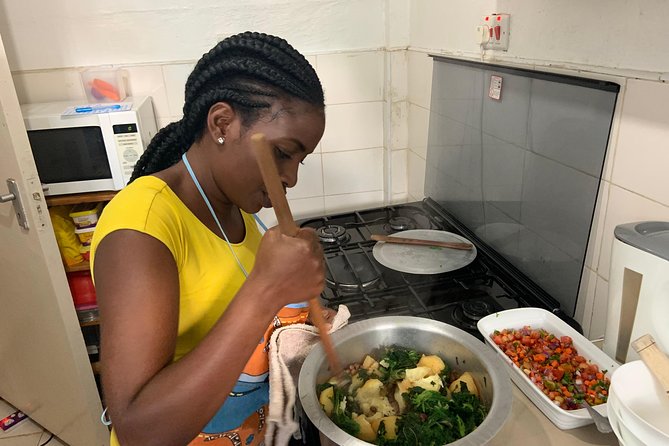
The strongest expectation to set is this: you are joining Grace in her kitchen, not enrolling in a professional cooking school. She does most of the cooking because the room is very small. She will involve you when possible, but the experience cannot promise constant hands-on work.
That limitation is not necessarily a flaw. Watching a local cook prepare familiar food in a real home can feel more natural than working through a staged class with identical workstations. You see the pace, tools, and methods used in an ordinary household. The tradeoff is that you have less control over each step.
This format suits you if you care more about learning through conversation and observation than mastering knife skills. It also works well if someone in your group enjoys cooking but another person would rather watch. Everyone can take part in the meal and discussion without needing to spend the full session at a counter.
If direct practice is your main goal, ask yourself how much participation you need. The private format gives you access to Grace, but the small room limits what she can safely hand over to visitors. Calling it a demonstration with some hands-on help is the fairest description.
Sharing the meal after the cooking
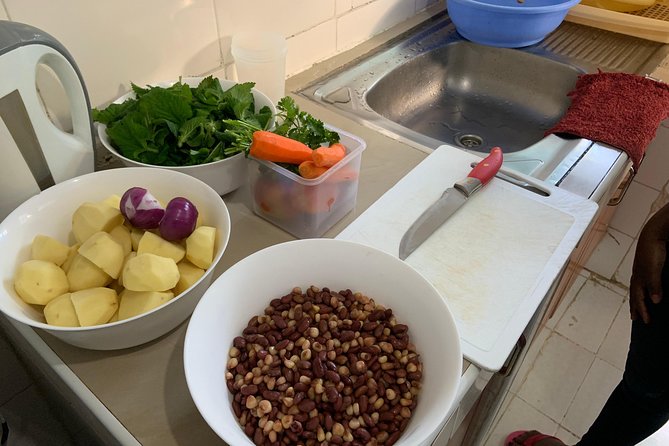
The meal is the payoff, but it is also part of the lesson. After the cooking, you sit down together and eat the food prepared during the visit. That shared table turns the session into a social experience rather than a sequence of instructions.
I like this part because it lets you judge the dishes in the form Grace intended. You can taste the texture of mukimo, compare it with ugali or pilau, and see how the vegetables fit into the meal. You also have a natural chance to ask follow-up questions while the food is in front of you.
The meal may be especially useful for cautious eaters. You are not ordering an unfamiliar dish from a menu and hoping for the best. Grace explains what you are eating and how it was made. If you discover a favorite, you can ask about variations and ways to recreate it at home.
The social side is important, too. A home meal encourages a slower pace and more personal exchange. Grace’s stories about her family give the food a sense of place, while the private group setting keeps the conversation relaxed.
Is $76 per person good value?
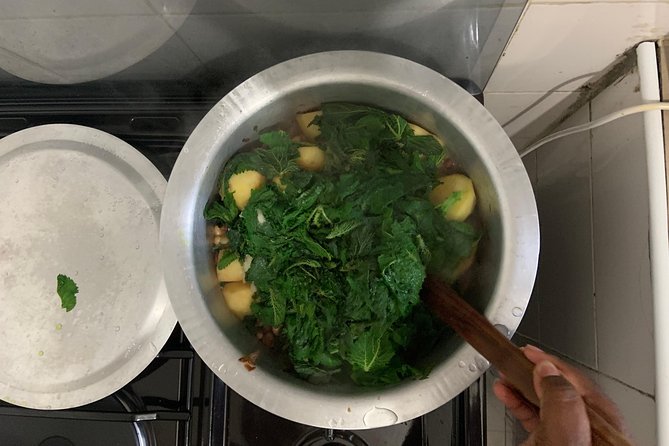
At $76 per person, this is not the cheapest way to eat in Nairobi. You could certainly find a less expensive meal elsewhere. The value comes from the private host, the cooking instruction, the home setting, and the meal combined into one three-hour experience.
I consider the price reasonable for people who want personal contact rather than a simple restaurant visit. You are paying for Grace’s time, preparation, conversation, and attention, as well as the food. A private experience also avoids the compromises of a large class.
The value is weaker if you only want a long, highly practical cooking lesson. Since the kitchen is small and Grace does most of the cooking, you may not receive the amount of direct practice offered by a dedicated culinary school. Group discounts may help if you are booking for several people, so check the available rate for your party.
The experience is also a good use of a morning or early afternoon in Nairobi. The 11:00 a.m. start leads naturally into lunch, and the cooking, stories, and meal fill a substantial part of the day without requiring a full-day excursion.
Who will enjoy this Kenyan cooking experience?

I would recommend it most strongly to:
- Couples looking for a private cultural experience
- Families who enjoy food and conversation
- Small groups wanting an activity they can share
- First-time visitors curious about everyday Kenyan life
- Home cooks who want recipes they can repeat abroad
- People who prefer a personal host to a formal cooking school
It may be less suitable if you need a fully accessible commercial kitchen, a strict lesson plan, or constant hands-on work. The available details do not describe kitchen accessibility, so anyone with mobility needs should confirm the setup before booking.
Service animals are allowed, and the activity is near public transportation. It is a private activity for your group only. Those details make planning easier, but you should still confirm the meeting instructions and any personal requirements before the day of the visit.
The experience is booked, on average, about 18 days ahead. That is useful planning guidance, especially since confirmation arrives within 48 hours and remains subject to availability. If your Nairobi dates are fixed, it is sensible to reserve before your trip rather than leave this for the last morning.
Booking flexibility and the small print
Free cancellation is available if you cancel at least 24 hours before the 11:00 a.m. start time. The cutoff uses Nairobi local time. Cancellations or changes made less than 24 hours before the experience are not accepted for a refund.
That policy is fairly flexible for a scheduled food experience, but pay attention to the clock if your plans are changing. The activity ends back at the meeting point, so avoid booking it immediately before a flight or another appointment unless you have plenty of spare time.
Should you book it?
Book this experience if you want a private meal, a local host, and a window into Kenyan home cooking. Grace’s personal stories and the chance to share food at her table are the main reasons to choose it. You will leave with a better feel for mukimo, ugali, pilau, and local vegetables, plus ideas you can try at home.
Skip it if your priority is a full practical cooking course where you prepare every dish yourself. The small kitchen means Grace handles much of the work. For most people, that is a fair trade for the warmth of a real home setting and a meal shared with someone who knows these recipes through family tradition.
FAQ
Where does the Kenyan cooking experience take place?
It takes place in Nairobi, in a typical Kenyan household with host Grace.
What time does the experience start?
The listed start time is 11:00 a.m.
How long does the experience last?
The experience lasts approximately three hours. The cooking demonstration itself is described as about one hour.
Is this a private activity?
Yes. Only your group participates in the activity.
What dishes might I learn to prepare?
The menu may include mukimo, ugali, pilau, and local vegetables. The available information does not guarantee that every dish will be prepared during each session.
Is the class fully hands-on?
Not entirely. Grace does most of the cooking because her kitchen is very small, but she involves you whenever possible. The experience is best understood as a cooking demonstration with some hands-on participation.
Can I cancel for a full refund?
Yes. You can cancel for a full refund if you do so at least 24 hours before the experience start time. Changes or cancellations made less than 24 hours before the start are not accepted for a refund.
Just added around Nairobi
- Nairobi: Giraffe Center, Elephant Orphanage and Bomas Tour★ 5.0 · 3 reviews
- Nairobi: Airport and Hotel Private Transfers.★ 4.0 · 3 reviews
- 11-Days Best of Kenya & Tanzania Big 5 Safari on a 4×4 Jeep★ 5.0 · 3 reviews
- Kitengela Anselm Hot Glass tour★ 4.5 · 3 reviews
- 12-Day Tsavo west Amboseli lake Nakuru Maasai Mara safari★ 5.0 · 3 reviews
- NAIROBI NATIONAL PARK AFTERNOON GAME DRIVE.★ 5.0 · 3 reviews
- Nairobi Down Town & Walking City Tour★ 4.8 · 3 reviews
- Carnivore Resturant Dinner Experience★ 4.0 · 3 reviews
Cooking Classes, compared.

Traditional Kenyan Cooking Class & Local Market Tour
Read our review →
Authentic Kenyan Cooking Class & Market Tour in Nairobi
Read our review →
Private Traditional Kenyan Cooking Class with Lunch in Nairobi
Read our review →
Market Tour and Traditional Kenyan Cooking Class in Nairobi
Read our review →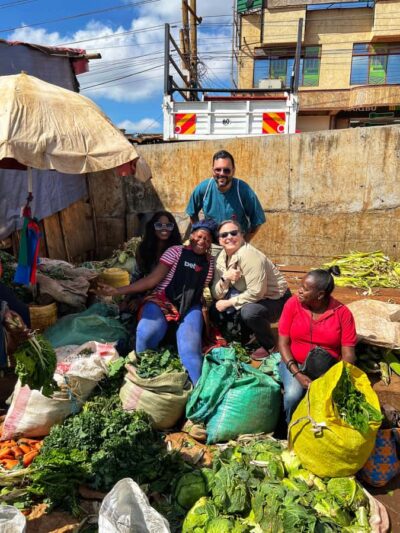
Local Market Tour and Traditional Meal Cooking Class
Read our review →
Browse the lists this tour appears in