
Reviewed · KIBERA COMMUNITY TOURS
Nairobi: Chocolate City Kibera Slum Walking Tour
Kibera changes how you see Nairobi. This two-hour visit, priced at $15 per person, is led by local guides who explain daily life, community projects, and the realities behind the nickname Chocolate City. I like that your ticket supports the Agape Hope Children Centre and a community beadwork project, rather than treating Kibera as a place to simply photograph. I also like the care shown by guides such as Collins and Allan, who have helped visitors find taxis safely after the tour.
The main consideration is that this is not a light sightseeing walk. You may encounter poverty and difficult living conditions, and the experience asks you to listen with respect. Also, several language options are offered, but recent bookings made in Japanese were handled in English, so you should confirm your guide language before paying.
In This Review
- Key points to know before you book
- Why a Kibera visit matters
- Starting at Ayany or Prestige Plaza
- Walking through Chocolate City
- Agape Hope Children Centre
- Beadwork, local enterprise, and shopping
- Toi Market and the home visit
- Guides, safety, and the human side
- What $15 gets you
- Who will appreciate this tour
- Practical advice for a respectful visit
- Should you book the Chocolate City walk?
- FAQ
- How much does the Kibera walking tour cost?
- How long does the tour last?
- Where does the tour start?
- Where does the tour finish?
- What is included in the price?
- What languages are available?
- What should I wear or bring?
- Is the tour suitable for wheelchair users or pregnant women?
Key points to know before you book

- Local guides lead the way: Guides including Collins and Allan have been praised for clear explanations, patience, and attention to personal safety.
- Your fee supports local work: The visit includes Agape Hope Children Centre and community beadwork activities, giving your money a direct local purpose.
- Expect more than a photo stop: The route can include streets, Toi Market, a home visit, a beadwork factory, and time to ask questions.
- Safety is taken seriously: Guides accompany you through Kibera and may help you reach your taxi at the end.
- English is the safest language choice: French, German, Japanese, Italian, and Spanish are listed, but Japanese bookings have reportedly been conducted in English.
- Check the timing carefully: The activity is advertised as two hours, while one itinerary description refers to a two-and-a-half-hour Kibera visit.
Why a Kibera visit matters

Kibera is Nairobi’s largest informal settlement, and a walk here offers a view of the city that a standard sightseeing route cannot provide. You see a community where daily life, work, education, trade, and family routines all take place under demanding conditions.
That does not mean the area should be treated as a human exhibit. The best reason to go is to learn directly from people who live or work there, while supporting projects that serve the community. This experience makes that purpose clear through its children’s centre and beadwork visits.
I would approach the walk with humility. Ask questions, but listen carefully to the answers. Take photographs only when your guide says it is appropriate, especially during a home visit or around children. The tone of the tour matters, and the available information suggests a strong effort to keep the visit respectful and useful.
More City Tours in Nairobi
- Nairobi Historical Walking City Tour
★ 5.0 · 258 reviews - Nairobi City Walking Tour with Traditional Kenyan Lunch
★ 5.0 · 106 reviews - Nairobi: Private 4-Hour City Tour
★ 4.5 · 68 reviews
Starting at Ayany or Prestige Plaza
You may be given one of two meeting points: Agape Hope for Kibera or Prestige Plaza Shopping Mall. The exact starting point depends on the option you book, so check your confirmation rather than assuming you will meet at the bank or at the shopping centre.
One route description places the start at Ayany Equity Bank in Kibera. This is described as a practical meeting spot in an active local area, where your guide gives a safety briefing before you begin. The meeting area may feel busy and unfamiliar, so arrive with your phone charged and your meeting details easy to find.
The tour can also end at either Prestige Plaza Shopping Mall or Agape Hope for Kibera. That flexibility is useful if you are combining the walk with other plans in Nairobi, but allow a little extra time to locate your transport. Allan and Collins have both been praised for staying with visitors until their taxi arrived, a small service that can make a big difference after a demanding walk.
Walking through Chocolate City

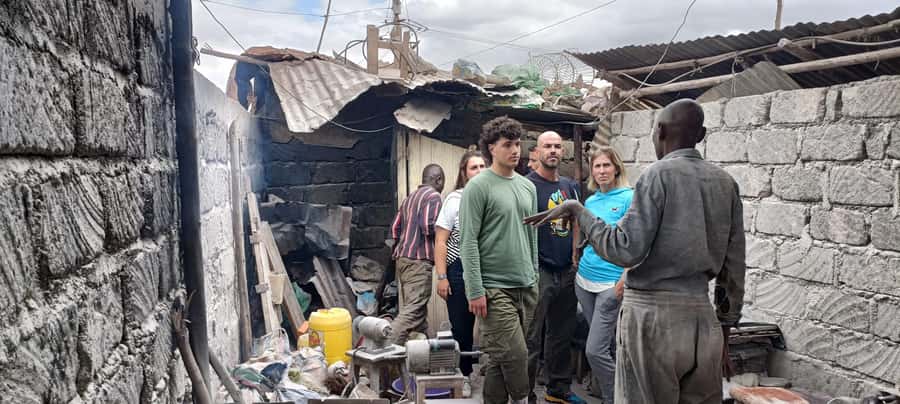
The central portion of the tour takes you through Kibera on foot. The guide provides context about the community and points out places connected with work, family life, and local commerce. You are not simply left to wander, which is important in an area where a local guide can help you move with confidence and avoid causing offense.
The nickname Chocolate City refers to Kibera’s distinctive appearance and dense urban setting. The route is described as a mix of guided walking, photo opportunities, and explanation. You may see ordinary scenes of people going about their day, rather than a polished attraction designed for tourists.
That is both the value and the challenge. The walk can be eye-opening, but it may also feel confronting. I would not book it if you want a relaxed stroll with little emotional weight. If you want a clearer understanding of Nairobi’s inequalities and the strength of its residents, this is a useful addition to a Kenya itinerary.
Wear comfortable, closed-toe shoes. The instructions specifically rule out high heels and bare feet, and sensible footwear will help you handle uneven streets and a long period on foot. Bring only what you need, and follow your guide’s advice about phones, cameras, and personal belongings.
Agape Hope Children Centre
The Agape Hope Children Centre is the most important stop for understanding the tour’s community purpose. It is presented as a place connected with education, health support, and economic opportunity, rather than just another stop on a sightseeing route.
You may have a chance to learn how the centre supports children and families. The experience information does not promise a specific classroom activity or a set program with the children, so it is best to keep expectations modest. One person who took the tour wished there had been more contact with children, but also recognized that this could have been discussed with the guide.
That point is worth remembering. A responsible visit should not demand access to children for entertainment. If you are interested in the centre’s work, ask thoughtful questions and let staff decide what interaction is suitable. Your ticket helps support the initiative, which gives the stop practical value even if the visit is brief.
For families, the age restrictions need careful attention. The information excludes children under two, under three, and under four in different places, so the rules are not perfectly consistent. Babies under one are specifically not suitable. Contact the provider before booking if you are traveling with young children.
More Walking Tours in Nairobi
- Nairobi: Historic and Modern Highlights Walking Tour
★ 4.8 · 703 reviews - Nairobi Downtown Walking Tour
★ 4.7 · 208 reviews - Nairobi Walking Tour: Downtown & City Tour
★ 4.8 · 32 reviews - Day tour to Hells Gate, Lake Naivasha and Crescent Island Walk
★ 5.0 · 26 reviews
Beadwork, local enterprise, and shopping

The tour includes a community-based beadwork project and a visit to a beadwork factory. This gives you a look at one way local skill can become income. Instead of discussing poverty only in terms of need, the stop shows work, creativity, and self-reliance.
You may be able to see how pieces are made and learn how the project supports local residents. The information does not guarantee a particular demonstration or a set amount of shopping time, so ask your guide what is planned on the day.
A useful feature is that buying is not forced. A Japanese visitor specifically appreciated not being pressured to purchase anything. That matters because a community project should feel like a genuine opportunity to support local makers, not an uncomfortable sales stop.
If you want a souvenir, beadwork can give your spending a clearer local connection than an ordinary shop purchase. If you do not want to buy, you should still be able to take part in the visit without pressure.
Toi Market and the home visit

The route description includes Toi Market, where the experience becomes more sensory and commercial. Markets show how people earn money, find household goods, and meet daily needs. Your guide can help explain what you are seeing and how the market fits into life in Kibera.
The market may be crowded and noisy, and conditions can change from one day to the next. Keep your belongings secure and stay with your guide. You should also avoid blocking stalls or photographing people without permission.
A home visit is included as part of the experience. This can be one of the most personal parts of the walk, but it also requires the most care. A home is not a backdrop. Follow your guide’s instructions, ask before taking pictures, and accept that the amount of time or access may vary.
The supplied information does not explain whose home you visit or how the arrangement works. That is a good reason to ask for details before setting out. You want to understand the purpose of the visit and make sure it feels welcome, not intrusive.
Guides, safety, and the human side

Safety is one of the strongest features of this experience. The guides are described as residents or people closely connected to Kibera, and Collins in particular has been praised for answering questions throughout the walk, explaining photo spots, and sharing local information. Allan has also been described as kind and attentive.
That local connection adds something a guide from outside the area might not provide. You can ask about what you are seeing in real time, and the guide can adjust explanations to your interests. The experience is offered with English, French, German, Japanese, Italian, and Spanish language choices, but English appears to be the most dependable option based on recent experiences.
The safety briefing at the start is not just a formality. Listen to advice about where to walk, what to carry, and when to use your camera. Stay with the guide and do not wander off for a better photograph.
The tour is not suitable for wheelchair users or people with mobility impairments. It is also not recommended for pregnant women, people with epilepsy, or people prone to motion sickness. The motion-sickness restriction is curious for a walking tour, but it may relate to transport elements included in some options. Ask the provider to clarify if you are sensitive to movement or have a medical concern.
What $15 gets you
At $15, this is one of the more affordable guided ways to learn about Nairobi beyond the usual attractions. The price includes a professional English-speaking guide, bottled water, the Kibera walk, the children’s centre, beadwork activities, the factory visit, and a home visit.
The value is not measured by the number of stops alone. You are paying for local guidance, a safer introduction to a complex area, and support for community projects. A typical sightseeing bus may show you Nairobi’s main landmarks, but it will not offer this kind of direct conversation.
The short duration keeps the cost and time commitment manageable. You can fit the tour into a Nairobi stay without giving up an entire day. On the other hand, two hours passes quickly, especially if the route includes the market, children’s centre, beadwork site, factory, and home visit.
Because one itinerary description refers to two and a half hours while the main activity duration says two hours, check the start and end times before arranging another appointment. The difference may reflect different route options, but it is not explained.
Free cancellation up to 24 hours before the start and reserve-now, pay-later booking add useful flexibility. Those policies are especially helpful if your Nairobi schedule depends on safari connections or changing transport plans.
Who will appreciate this tour
I would recommend it to you if you want:
- A direct introduction to Kibera with a local guide
- A short activity that fits into a Nairobi itinerary
- A chance to support a children’s centre and local makers
- Honest discussion of poverty, work, and community life
- A guided route rather than exploring unfamiliar streets alone
It suits adults and older children who can listen respectfully and handle difficult sights. It may also suit visitors who have already seen Nairobi’s central attractions and want a more grounded look at the city.
I would hesitate to recommend it if you want a conventional sightseeing experience, dislike walking on uneven ground, or are uncomfortable with a home visit. It is also not a good match if you need wheelchair access or have the medical restrictions listed above.
Practical advice for a respectful visit
Keep your clothing comfortable and practical. Closed-toe shoes are required, and high heels are not allowed. Bottled water is included, but you may still want to carry sun protection and any personal essentials you normally need for a two-hour walk.
Ask before taking photographs. A person’s difficult living conditions do not give anyone automatic permission to take their picture. Children deserve particular care, and the guide should be your first point of reference.
Bring questions about education, work, housing, markets, and community projects. Questions show interest when they are asked politely and without assuming that every resident has the same experience.
Do not expect the guide to provide a single answer to every issue. Kibera is a large, complicated community, and a short visit can only introduce some of its stories. The strongest benefit is a more informed starting point for thinking about Nairobi and the people who live there.
Should you book the Chocolate City walk?
Book it if you want an affordable, locally guided experience with a clear community purpose. The combination of Kibera streets, Agape Hope Children Centre, beadwork, Toi Market, and a home visit offers more substance than a quick photo stop. Guides such as Collins and Allan appear to add warmth and reassurance, especially for first-time visitors.
Before booking, confirm your meeting point, the actual duration, the language of the guide, and the details of the home visit. Choose English unless the provider clearly confirms another language. With those points settled, this $15 walk can be a meaningful way to understand Nairobi while directing some of your spending toward local initiatives.
FAQ
How much does the Kibera walking tour cost?
The tour costs $15 per person.
How long does the tour last?
The activity is advertised as two hours. One route description refers to a two-and-a-half-hour Kibera visit, so confirm the exact timing for your chosen option.
Where does the tour start?
The two possible starting locations are Agape Hope for Kibera and Prestige Plaza Shopping Mall. The meeting point depends on the option booked.
Where does the tour finish?
The two possible drop-off locations are Prestige Plaza Shopping Mall and Agape Hope for Kibera.
What is included in the price?
The price includes a professional guide, bottled water, an English-speaking guide, the Kibera walking tour, a visit to Agape Children Centre, participation in a community beadwork project, a beadwork factory visit, and a home visit.
What languages are available?
The activity lists English, French, German, Japanese, Italian, and Spanish. English is the safest choice to expect, since Japanese bookings have been handled in English.
What should I wear or bring?
Bring comfortable shoes and wear closed-toe shoes. High heels and bare feet are not allowed.
Is the tour suitable for wheelchair users or pregnant women?
No. The tour is not suitable for wheelchair users, people with mobility impairments, or pregnant women. It is also not suitable for people with epilepsy, babies under one year, and people with motion sickness. Children’s age restrictions are listed inconsistently, so confirm the rule before booking with young children.
More Dessert Tours
- Kibera Chocolate City Tour
★ 5.0 · 13 reviews - A Visit To KIBERA The Chocolate City.
★ 4.9 · 12 reviews - Nairobi: Kibera Slum (The Chocolate city)Guided Walking Tour
★ 5.0 · 5 reviews - Visit kibera Slum the chocolate city
★ 4.8 · 3 reviews
More Community Tours
- Nairobi: Explore Kibera Slum with Local Guides
★ 4.9 · 365 reviews - Kevins Kibera Slum Tours
★ 5.0 · 213 reviews - Nairobi: Kibera Slum storytelling tour with a Local
★ 5.0 · 185 reviews - Kibera Slum Tour with Lucas
★ 5.0 · 119 reviews
Just added around Nairobi
- Nairobi: Giraffe Center, Elephant Orphanage and Bomas Tour★ 5.0 · 3 reviews
- Nairobi: Airport and Hotel Private Transfers.★ 4.0 · 3 reviews
- Kitengela Anselm Hot Glass tour★ 4.5 · 3 reviews
- 11-Days Best of Kenya & Tanzania Big 5 Safari on a 4×4 Jeep★ 5.0 · 3 reviews
- 12-Day Tsavo west Amboseli lake Nakuru Maasai Mara safari★ 5.0 · 3 reviews
- NAIROBI NATIONAL PARK AFTERNOON GAME DRIVE.★ 5.0 · 3 reviews
- Nairobi Down Town & Walking City Tour★ 4.8 · 3 reviews
- Carnivore Resturant Dinner Experience★ 4.0 · 3 reviews
Kibera Community Tours, compared.





Kibera Slum Tour with Local Social Entrepreneurs
Read our review →


Browse the lists this tour appears in