

Reviewed · KIBERA COMMUNITY TOURS
6-hour Historic Nairobi city Tour and Kibera slums
Nairobi reveals itself in layers. This six-hour private tour pairs a historic city walk with a personal visit to Kibera, guided by locals who can explain both places in clear, human terms. You get hotel pickup, transport, a bottle of water, and a guide for the full day.
I like the mix of famous landmarks and ordinary city corners. I also like the Kibera visit’s personal angle, especially when your guide is a resident who grew up there and introduces you to friends, classmates, schools, homes, and community projects. The main drawback is the pace: four hours in central Nairobi followed by two hours in Kibera can feel full, and the emotional weight of the second half may not suit every visitor.
I would choose this for a first visit or a short stay. Guides named Sam, Kelvin, Collins, and Isaiah have been praised for explaining Nairobi clearly and keeping the day engaging. Before booking, confirm the entrance-fee wording, since the tour details both include all entrance fees and say admission tickets are not included at the individual stops.
In This Review
- Key points at a glance
- Why this six-hour Nairobi tour works well
- Four hours among Nairobi’s central landmarks
- What makes the Kibera visit different
- Local guides make the difference
- Is $85 a fair price?
- Who should book this experience?
- Practical advice before you go
- Final call: book it for context, not just sightseeing
- FAQ
- How long does the Nairobi and Kibera tour last?
- Is hotel pickup included?
- Is this a private tour?
- What places are included in the Nairobi city tour?
- What can I see in Kibera?
- Is lunch included?
- Are entrance fees included?
- What is the cancellation policy?
Key points at a glance

- Two very different sides of Nairobi: Spend four hours on city streets and two hours in Kibera, rather than seeing only the usual sights.
- A guide with local roots: The Kibera portion can be led by a resident who was born and raised there, with introductions to friends and former classmates.
- A private experience: Only your group participates, making it easier to ask questions and set the pace.
- Hotel pickup and return: Transport from and back to your place of stay is included, which saves time in a large city.
- Community projects are part of the visit: The route can include a school, biogas center, bead factory, typical homes, and a women’s craft workshop.
- Strong guide feedback: Sam, Kelvin, Collins, and Isaiah are singled out for their warmth, explanations, and ability to keep the day moving.
Why this six-hour Nairobi tour works well

Nairobi can be hard to read at first. It is a major capital with formal government buildings, memorials, parks, crowded streets, and neighborhoods where daily life follows a very different rhythm. A private guide helps you connect those pieces instead of simply passing them from a vehicle window.
This experience gives you four hours for the city center and two hours in Kibera. That division is useful if your time in Kenya is limited. You get an introduction to Nairobi’s public story, then a closer look at how people organize work, education, housing, and community life in one of the city’s best-known informal settlements.
The private format matters. You will not be sharing the day with a large coach group, so you can ask about Kenya’s past, city life, or the places you are seeing. The guide is also able to explain sensitive subjects with more care than a quick stop-and-go sightseeing program.
The strongest part of the experience is the local connection. The Kibera guide is described as someone born and raised there, with friends and former classmates still living in the area. That changes the visit from a distant look at poverty into a meeting with people and community groups, although you should still approach the experience with respect and modest expectations.
More City Tours in Nairobi
- Nairobi Historical Walking City Tour
★ 5.0 · 258 reviews - Nairobi City Walking Tour with Traditional Kenyan Lunch
★ 5.0 · 106 reviews - Nairobi: Private 4-Hour City Tour
★ 4.5 · 68 reviews
Four hours among Nairobi’s central landmarks
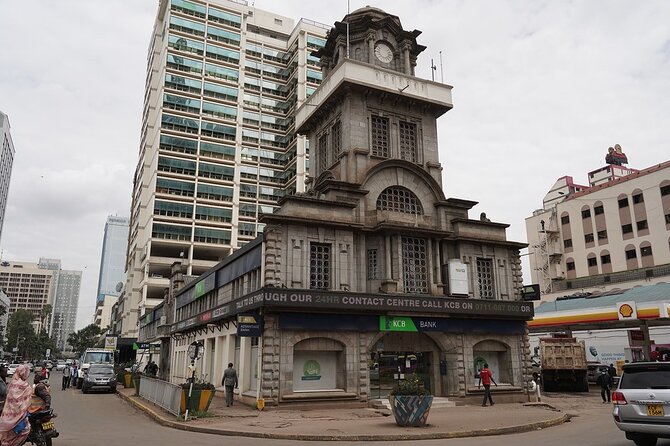
After pickup from your accommodation, the guide drives you into central Nairobi. The city section includes the K.I.C.C building, Kipande House, the Bomb Blast Memorial Park, Uhuru Park, Zero Point, Freedom Corner, and several Nairobi streets.
The K.I.C.C building gives you a familiar point of reference in the capital. Kipande House adds historical context, while Zero Point helps explain Nairobi’s role as a center of government, commerce, and national movement. You are not just collecting photographs. Your guide is there to explain how the city developed and answer questions as you move around.
The Bomb Blast Memorial Park is likely to be one of the more serious stops. The site remembers the 1998 attack on the United States Embassy in Nairobi, which killed and injured many people. One visitor specifically described the Athens American Embassy Memorial Garden as moving, though the tour information names the Bomb Blast Memorial Park. Either way, expect a reflective stop rather than a light sightseeing break.
Uhuru Park and Freedom Corner bring a different kind of history. These places are linked to public gatherings, civic life, and Kenya’s political story. The tour also allows time for Nairobi streets and smaller corners that may not appear on a standard landmark checklist. That is where the guide’s explanations become especially useful.
I like this approach because it leaves room for questions. You can ask about the meaning of a memorial, the role of a public park, or how Nairobi’s past affects the city today. The experience is less about rushing through a list and more about getting your bearings.
There are a few practical limits. Four hours is a long city walk and sightseeing period, but the exact balance between walking, driving, and stopping is not specified. Nairobi traffic may also affect how much time you spend moving between places. If you want a slow museum visit or extended time at one attraction, ask the provider in advance.
What makes the Kibera visit different
The second half takes you to Kibera, described for this experience as one of Africa’s largest informal settlements. You spend about two hours there with a local Kibera guide, learning how families live and meeting people connected to the community.
This is not a detached bus tour. The plan includes interaction with families, a school visit, typical Kibera houses, a biogas center, a bead factory, and a local women’s craft workshop. The workshop supports women living with HIV and widows, giving you a chance to see a practical community effort rather than only the difficult conditions.
The biogas center is another useful stop because it points to local problem-solving. A visit like this can help you see that Kibera is not defined only by poverty. People work, study, make crafts, run projects, raise families, and create services with limited resources.
The school visit may be the most memorable part for many people. Your guide may have attended a school in Kibera himself, and meeting friends or former classmates can give the area a personal face. That connection also helps you ask questions in a more natural way.
You should prepare yourself for an honest and possibly upsetting experience. One visitor described Kibera as heartbreaking, especially when considering the living conditions. That response is understandable, but it is important not to treat the community as a spectacle. Listen carefully, ask before taking photographs, and let your guide set the tone for interactions.
The two-hour limit is sensible. It offers a meaningful introduction without pretending you can understand a whole neighborhood in an afternoon. Still, the route and exact interactions can vary. The information does not specify which families or projects you will meet on a particular day, so think of the listed locations as the intended focus rather than a guaranteed script.
Local guides make the difference

Guide quality is the heart of this tour. The names most closely associated with the experience are Sam, Kelvin, Collins, and Isaiah.
Sam is praised for explaining Nairobi’s sites and answering many questions. That makes him a good fit if you want context rather than a silent transfer between stops. Kelvin is also praised for showing the city and explaining Kenya from a local point of view.
Collins leads the Kibera portion with an emphasis on the work being done in the community. Isaiah is praised for keeping the visitor engaged from the city walk through the Kibera visit. Guides may change, but these comments point to the sort of service you can expect: personal attention, steady explanations, and a willingness to talk.
The setup may involve one guide for the city and another local guide in Kibera. That is a sensible arrangement. A city guide can handle Nairobi’s landmarks and logistics, while a resident guide can introduce the neighborhood with greater familiarity. It also means you should not be surprised if the person who picks you up is not the same person leading every part of the day.
More community tours:
- Nairobi: Explore Kibera Slum with Local Guides
★ 4.9 · 365 reviews - Kevins Kibera Slum Tours
★ 5.0 · 213 reviews - Nairobi: Kibera Slum storytelling tour with a Local
★ 5.0 · 185 reviews - Kibera Slum Tour with Lucas
★ 5.0 · 119 reviews
Is $85 a fair price?

At $85 per person, this is not the cheapest way to walk around Nairobi. It can still be good value for a private half-day experience because the price includes transport from and back to your accommodation, a professional guide throughout the day, a bottle of water, and the listed entrance fees.
The private format is especially valuable for couples, families, or small groups who want to ask questions and avoid a fixed large-group schedule. Group discounts are offered, so the per-person cost may become more attractive when several people book together.
You are paying for more than landmarks. The fee covers a local introduction to Nairobi, a resident connection in Kibera, transport between areas, and the time needed to explain what you are seeing. If you arranged separate transport and hired guides for both sections, the cost and planning could quickly become similar.
Lunch is not included. Six hours is long enough that you should plan around a meal, but the supplied details do not name a restaurant or lunch stop. Ask about the day’s timing if you need a scheduled meal.
There is also a small contradiction worth resolving before payment. The overall inclusions say all entrance fees are included, while both itinerary stops say admission tickets are not included. Ask the provider exactly which fees, if any, you will pay separately. That simple question avoids an awkward surprise.
Who should book this experience?

I would recommend it to first-time visitors who want a broad introduction to Nairobi in one day. It is also a good match for people staying briefly, since pickup and return reduce the need to arrange city transport yourself.
You should book it if you enjoy asking questions, meeting local people, and seeing both public landmarks and community projects. The experience will suit you especially well if you want a city tour with more substance than photographs at famous buildings.
Families and small private groups may appreciate the flexible format. Most people can participate, and the tour is near public transportation, though no specific accessibility details are provided. If you have mobility needs, ask how much walking is involved at each stop.
I would think twice if you want a relaxed sightseeing day with long breaks. The schedule is full, and the Kibera portion can be emotionally demanding. It is also not the right choice if you are uncomfortable with direct interaction in residential areas or prefer to see Nairobi only through conventional attractions.
Practical advice before you go

Confirm your pickup details and allow flexibility for city traffic. The tour promises transport from and back to your place of stay, but the information does not give an exact pickup time or route sequence.
Wear clothing and shoes suitable for walking. The tour includes city streets and movement through Kibera, so comfort matters more than dressing for a formal attraction. Carry only what you need and keep personal belongings secure.
Bring questions. The best use of a private guide is conversation, and the city section provides plenty of openings to ask about Kenya’s capital, public spaces, memorials, and national history.
Use good judgment with photography. Ask permission before photographing people, homes, schools, workshops, or community activities. A respectful approach helps preserve the human character of the visit.
Tips are not included. You can budget separately if you feel the guide provided good service. Free cancellation is available if you cancel at least 24 hours before the start time. Changes or cancellations made later are not accepted for a refund.
Final call: book it for context, not just sightseeing

I would book this tour if I had six hours in Nairobi and wanted to understand the city beyond its headline sights. Its best features are the private transport, the two-part structure, and the chance to meet a Kibera guide with personal roots in the neighborhood.
The city section gives you landmarks and civic history. Kibera adds the harder, more personal questions about housing, work, education, and community support. Guides such as Sam, Kelvin, Collins, and Isaiah have been praised for making both parts clear and engaging.
Book it with an open mind and realistic expectations. You will not understand all of Nairobi in six hours, and Kibera should never be treated as entertainment. But if you listen, ask permission, and value direct local contact, this can be a meaningful use of a short stay.
FAQ
How long does the Nairobi and Kibera tour last?
The experience lasts approximately six hours. About four hours are planned for the Nairobi city tour, followed by about two hours in Kibera.
Is hotel pickup included?
Yes. Transport from and back to your place of stay is included.
Is this a private tour?
Yes. Only your group participates in the activity.
What places are included in the Nairobi city tour?
The city portion includes the K.I.C.C building, Kipande House, Bomb Blast Memorial Park, Uhuru Park, Zero Point, Freedom Corner, and Nairobi streets.
What can I see in Kibera?
The Kibera portion can include interactions with local families, a school, biogas center, typical homes, a bead factory, and a women’s craft workshop.
Is lunch included?
No. Lunch is not included in the tour price.
Are entrance fees included?
The package information says all entrance fees are included, but the individual stop details say admission tickets are not included. Confirm the exact arrangement with Nairobi and Beyond Safaris before booking.
What is the cancellation policy?
You can cancel at least 24 hours before the start time for a full refund. Cancellations or changes made less than 24 hours before the experience are not accepted for a refund.
More Historical Sites
- Nairobi: Historic and Modern Highlights Walking Tour
★ 4.8 · 703 reviews - Full Day Nairobi Cultural and Historical Tour
★ 5.0 · 153 reviews - Nairobi Cultural and Historical City Tour with a Local
★ 5.0 · 67 reviews - Nairobi souvenir Shopping and Historical Half day Tour
★ 5.0 · 61 reviews
Just added around Nairobi
- Nairobi: Giraffe Center, Elephant Orphanage and Bomas Tour★ 5.0 · 3 reviews
- Nairobi: Airport and Hotel Private Transfers.★ 4.0 · 3 reviews
- 11-Days Best of Kenya & Tanzania Big 5 Safari on a 4×4 Jeep★ 5.0 · 3 reviews
- Kitengela Anselm Hot Glass tour★ 4.5 · 3 reviews
- NAIROBI NATIONAL PARK AFTERNOON GAME DRIVE.★ 5.0 · 3 reviews
- 12-Day Tsavo west Amboseli lake Nakuru Maasai Mara safari★ 5.0 · 3 reviews
- Nairobi Down Town & Walking City Tour★ 4.8 · 3 reviews
- Carnivore Resturant Dinner Experience★ 4.0 · 3 reviews
Kibera Community Tours, compared.





Kibera Slum Tour with Local Social Entrepreneurs
Read our review →


Browse the lists this tour appears in