

Reviewed · KIBERA COMMUNITY TOURS
Nairobi: Visit Kibera Slum with a Social Entrepreneur
Kibera puts Nairobi’s daily life in clear view. I like the local-led approach, with Eric, Samuel, Benta, and Jack sharing a community they were born in and still call home. I also like that 50% of the booking fee supports children in need, giving this three-hour visit a purpose beyond sightseeing. The main consideration is that Kibera is a place of real hardship, so you need to bring respect, patience, and an open mind.
This is not a polished city attraction, and that is precisely its value. You visit a home, learn how residents manage water, electricity, bathrooms, and limited space, then see community work at KCOOP Children’s Centre. The route is practical and personal, but it is not suitable for wheelchair users or people with mobility impairments.
In This Review
- Key points at a glance
- Why this Kibera visit feels different
- Meeting at Prestige Plaza on Ngong Road
- Stop one: the local office and a useful briefing
- Stop two: inside a Kibera home
- Stop three: recycled materials become useful crafts
- Stop four: KCOOP Children’s Centre
- Stop five: fair prices at OAC Kenya Crafts
- What the $16 price really offers
- Safety, comfort, and the right attitude
- Which guide might lead your visit
- Who should book this experience
- Should you book the Kibera community visit?
- FAQ
- Where does the tour meet?
- How long does the experience last?
- Where does the tour end?
- Who leads the experience?
- What is included in the price?
- Are meals and drinks included?
- How does the booking support Kibera?
- Can I bring gifts for the children?
- Can I buy souvenirs during the visit?
- Is the tour suitable for wheelchair users?
Key points at a glance

- Half of your booking fee supports children: The money helps pay school fees for orphans and vulnerable children and supports other local projects.
- Four guides have lived in Kibera all their lives: Eric, Samuel, Benta, and Jack offer first-hand knowledge of the area.
- A home visit explains ordinary routines: You learn about water, electricity, bathroom arrangements, and typical house sizes.
- KCOOP Children’s Centre gives the tour a working community focus: The center serves children in need through programs connected to education, food, arts, and sports.
- OAC Kenya Crafts sells fixed-price souvenirs: Prices are marked clearly, so you can shop without bargaining or inflated starting prices.
- The tour lasts about three hours: The length can be adjusted to suit your interests, and the route begins and ends at Prestige Plaza Shopping Mall.
Why this Kibera visit feels different

Kibera is about 6.6 kilometers, or 4.1 miles, from Nairobi’s city center. It is widely described as Africa’s largest slum and one of the largest in the world. Those labels may help you understand its scale, but they do not explain daily life here. A local guide can do that far better than a passing drive or a distant view.
The strongest feature is the people leading the experience. OAC Kenya Tours is run by a team of four local guides who were born, raised, and still live in Kibera. That gives the visit a direct connection to the community. You are not simply being shown a difficult area by an outsider. You are hearing how life works from people with personal ties to the streets, homes, and projects you see.
I also appreciate the clear social purpose. Half of the booking fees goes back to the community, helping pay school fees for orphans and vulnerable children. The guides also run KCOOP Organization, a nonprofit founded and registered in 2022. Its work includes after-school activities, education support, child hunger programs, arts and sports, and wider community outreach.
That does not remove the need for careful behavior. You should not treat poverty as a spectacle or assume every person wants to be photographed. Listen first, follow your guide’s lead, and ask before taking pictures. The experience is most useful when you see residents as neighbors and workers, not as scenery.
More community tours:
- Nairobi: Explore Kibera Slum with Local Guides
★ 4.9 · 365 reviews - Kevins Kibera Slum Tours
★ 5.0 · 213 reviews - Nairobi: Kibera Slum storytelling tour with a Local
★ 5.0 · 185 reviews
Meeting at Prestige Plaza on Ngong Road
The meeting point is in front of Java House inside Prestige Plaza Shopping Mall on Ngong Road. This is a useful starting place because you can arrive, find a familiar coffee shop, and meet the team before heading into Kibera.
After meeting, you take a taxi to the guides’ office in the community. The supplied details do not list transportation, meals, or drinks as included, so you should plan for those costs separately and carry water. You can also contact the team by WhatsApp at 0711419529 if you need help finding the meeting point.
The tour ends back at Prestige Plaza. That makes the outing easier to fit around other Nairobi plans. Allow about three hours for the main experience, with some flexibility if you want more time at a particular stop.
Stop one: the local office and a useful briefing

The first stop is the OAC Kenya Tours office. Here, the team welcomes you, explains the visit, and gives you a briefing about Kibera and the route. Free Wi-Fi is available at the office, which may be handy if you need to send a message or arrange your next ride.
This opening matters because it gives you context before you begin walking through residential areas. You can ask questions early and get a better sense of what is appropriate during the visit. A short introduction also helps avoid the awkwardness of entering a community without knowing how the tour will work.
The office is more than a meeting room. It is part of the local operation that connects paid tours with community projects. You can ask the guides about the school-fee support, KCOOP Organization, or how the tour income is used.
Stop two: inside a Kibera home
The home visit is the central part of the experience. You are welcomed into one of the residential houses and shown practical details of daily life, including how residents get water, use electricity, manage bathrooms, and live within a typical house size.
This is where general descriptions of Kibera become real. Instead of hearing only about population size or hardship, you see how ordinary household systems work. The visit can help you understand the resource limits that shape daily routines, while also showing the care and organization involved in running a home.
You should approach this stop with particular sensitivity. It is a privilege to enter someone’s home, not an automatic right. Follow the guide’s instructions, keep your voice and behavior respectful, and do not assume that every detail is available for photographs. The strongest part of this stop is listening to the explanation and asking thoughtful questions.
The emotional effect may be strong. One part of the visit can feel difficult because you are seeing poverty at close range. At the same time, the guides describe a community where people work, raise children, welcome visitors, and find ways to move forward. That balance is important. Kibera is not only a place of need.
A few more trips worth weighing up
- Nairobi National Park Half-Day Tour; Free Wi-Fi connection
★ 5.0 · 878 reviews - Nairobi: National Park & Optional Elephants & Giraffe Center
★ 4.8 · 874 reviews - NAI NAMI: Nairobi Storytelling Tour with Street Children
★ 5.0 · 792 reviews - Nairobi National Park Half-Day Game Drive
★ 4.5 · 738 reviews
Stop three: recycled materials become useful crafts
At the handicrafts center, you see local artisans recycling materials into jewelry and other handmade items. This stop adds a practical side to the tour. It shows how discarded or inexpensive materials can become products with economic value.
For you, the benefit is the chance to see the making process rather than only a finished souvenir on a shop shelf. It also connects the tour to local work and small business. OAC Kenya Crafts was created to support local artisans and generate income for children in need in Kibera.
The range of items can vary, so do not arrive expecting a specific product. The point is to see the skill and effort behind handmade goods, and to understand how craft sales can support household income.
Stop four: KCOOP Children’s Centre

KCOOP Children’s Centre serves orphans and vulnerable children. Because the tour organizers run the center, this stop gives you a direct look at one of the projects supported by their wider social work.
KCOOP Organization’s programs include an after-school program, education support, efforts to combat child hunger, empowerment through arts and sports, and community outreach. These areas are easy to understand as a list, but they matter because they address more than one problem. School fees may keep a child in class, while food support, sports, and creative activities can help children stay connected to a safe and supportive routine.
You may bring optional gifts such as candies, biscuits, snacks, school supplies, used clothes, sports supplies, art supplies, indoor games, rice, or sugar. I would treat this as a personal choice, not a duty. If you bring anything, ask the organizers what is most useful and let them manage the distribution. A donation should support the center’s work, not create a scramble among children.
This stop can be moving, but it should not be handled as a photo opportunity. The center is a working project for children, and respectful conduct matters more than bringing a large bag of gifts.
Stop five: fair prices at OAC Kenya Crafts

The final stop is OAC Kenya Crafts, a local curio shop with handmade African crafts and souvenirs. The shop uses fixed, clearly marked prices. There is no bargaining and no inflated opening price, which makes shopping simple and predictable.
That pricing policy is a real advantage. You can decide what an item is worth to you without worrying that the first price is designed only to start a long negotiation. If you want souvenirs, bring some cash. Buying here also supports the social enterprise’s effort to create opportunities for local artisans and help needy children.
You can preview products and prices through the shop’s Instagram account, @oac.kenya.crafts. Do not feel pressured to buy. The shop is part of the route, but the visit remains worthwhile even if you leave without a purchase.
What the $16 price really offers

The listed price is $16 per group, up to one person, which is unusually low for a private, three-hour experience with a local guide. The value is not found in luxury transport or included refreshments. It comes from access, local knowledge, and the direct link to community programs.
Your fee helps pay school fees for children in need, with 50% going back to the community. You also support a local tour business, a children’s center, and a craft enterprise connected to local artisans. That gives the price a clear social purpose.
Still, read the inclusions carefully. An expert guide is included, but meals and drinks are not. The route includes a taxi from Prestige Plaza to the office, yet transportation is not listed among the included items, so confirm how that fare is handled before setting out. Carry water and some cash if you want to shop.
If you want a conventional sightseeing tour with major monuments, air-conditioned transport, and a polished presentation, this is not the right value calculation. If you want a low-cost, locally led experience that supports education and community work, the price is compelling.
Safety, comfort, and the right attitude
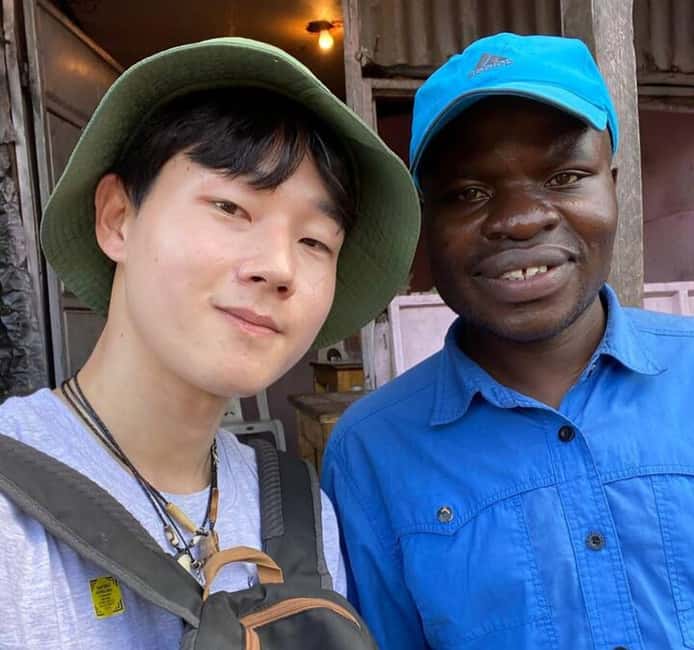
The guides place strong emphasis on welcome and safety. Benta, Eric, Zack, and Jack are specifically praised for being friendly, reassuring, and well prepared. Two local guides may sometimes lead the experience, giving you more than one perspective and extra support along the route.
That said, Kibera is a dense residential area, not a purpose-built attraction. Wear comfortable shoes, use sunscreen, and carry water. Hand sanitizer or tissues are also recommended. The route is not suitable for people with mobility impairments or wheelchair users.
Your attitude matters as much as your footwear. Dress and behave respectfully, keep valuables secure, and follow the guide’s advice about where to walk and when to stop. Do not wander away from the group or photograph people without permission.
The tone of the visit can shift from difficult to warm. You may hear about serious hardship, then meet welcoming residents and smiling children. That contrast is not a contradiction. It is part of seeing a community as a real place rather than a single story.
Which guide might lead your visit
The team includes Eric, Samuel, Benta, and Jack. The guides share the important fact of being born and raised in Kibera, but each may bring a different personality and focus.
Benta is described as welcoming and supportive during a moving visit. Eric is praised for explaining the community and for his work on local projects. Jack is described as friendly, and the wider team receives strong praise for organization and energy. Zack is also mentioned in the feedback, although the main team description names Eric, Samuel, Benta, and Jack.
You may not be able to choose a particular guide in advance. The useful thing is that the operation is local and team based. If you have a specific interest, such as education, crafts, housing, or community programs, tell your guide at the start.
Who should book this experience
I would recommend this tour to you if you want to understand Nairobi beyond its central streets and formal attractions. It suits visitors who value direct conversation, local leadership, and social impact. It is also a good choice if you want a short experience that can fit into a busy Nairobi schedule.
It is especially suitable for people interested in community development, education, ethical tourism, craft work, or everyday urban life. Families and adults may appreciate the children’s center, though anyone bringing children should prepare them to behave respectfully.
I would not choose it if you want a carefree outing or if you are uncomfortable with poverty being part of the subject. The home visit and children’s center can be emotional. They require maturity and a willingness to listen rather than judge.
You should also reconsider if walking and uneven conditions are difficult for you. The organizers clearly state that the experience is not suitable for wheelchair users or people with mobility impairments.
Should you book the Kibera community visit?
Book it if you want a personal, locally guided look at Kibera and you care where your tourism money goes. The home visit, KCOOP Children’s Centre, and artisan stops create a fuller picture than a quick drive through the area. The strong points are the local guides, the clear social purpose, the fixed-price crafts, and the chance to ask honest questions.
Skip it if your main goal is comfort, private transport, or traditional sightseeing. You will need comfortable shoes, water, respectful behavior, and emotional readiness. For the right person, $16 is a small price for a direct community experience that also helps fund school fees.
FAQ
Where does the tour meet?
The meeting point is in front of Java House inside Prestige Plaza Shopping Mall on Ngong Road.
How long does the experience last?
The tour takes about three hours. The length can be made longer or shorter depending on your interests.
Where does the tour end?
The activity ends back at Prestige Plaza Shopping Mall.
Who leads the experience?
The local guide team includes Eric, Samuel, Benta, and Jack. They were born, raised, and still live in Kibera.
What is included in the price?
An expert guide is included.
Are meals and drinks included?
No. Meals and drinks are not included, so bring water or plan to purchase refreshments separately.
How does the booking support Kibera?
Fifty percent of the booking fee goes back to the community, including support for school fees for orphans and vulnerable children.
Can I bring gifts for the children?
Yes, but this is optional. Suggested items include snacks, school supplies, used clothes, sports supplies, art supplies, indoor games, rice, and sugar.
Can I buy souvenirs during the visit?
Yes. OAC Kenya Crafts sells handmade African crafts at clearly marked, fixed prices. Cash is optional but useful if you want to shop.
Is the tour suitable for wheelchair users?
No. The experience is not suitable for wheelchair users or people with mobility impairments.
Just added around Nairobi
- Nairobi: Giraffe Center, Elephant Orphanage and Bomas Tour★ 5.0 · 3 reviews
- Nairobi: Airport and Hotel Private Transfers.★ 4.0 · 3 reviews
- 11-Days Best of Kenya & Tanzania Big 5 Safari on a 4×4 Jeep★ 5.0 · 3 reviews
- Kitengela Anselm Hot Glass tour★ 4.5 · 3 reviews
- NAIROBI NATIONAL PARK AFTERNOON GAME DRIVE.★ 5.0 · 3 reviews
- 12-Day Tsavo west Amboseli lake Nakuru Maasai Mara safari★ 5.0 · 3 reviews
- Nairobi Down Town & Walking City Tour★ 4.8 · 3 reviews
- Carnivore Resturant Dinner Experience★ 4.0 · 3 reviews
Kibera Community Tours, compared.





Kibera Slum Tour with Local Social Entrepreneurs
Read our review →


Browse the lists this tour appears in