
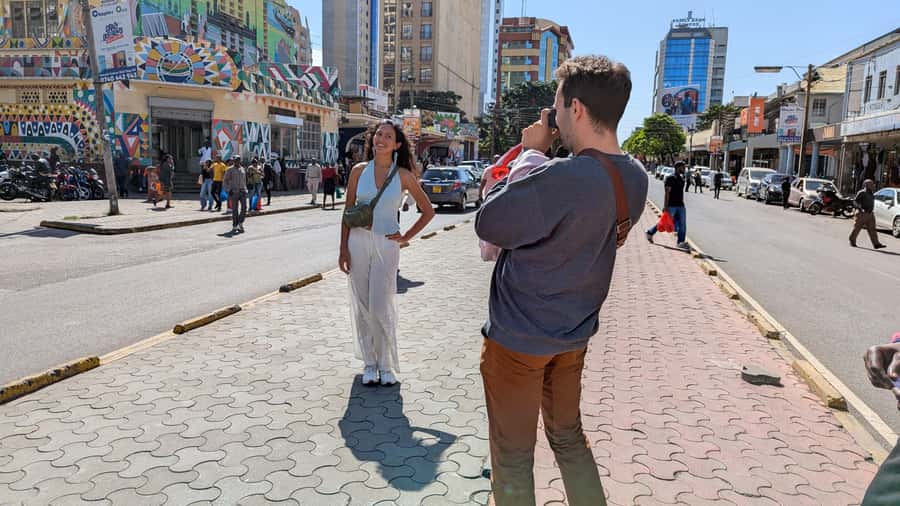
Reviewed · WALKING TOURS
Nairobi City: Walking tour with Lifestyle and History.
Nairobi reveals itself one block at a time. This three-hour walk with Allan brings the city’s central landmarks, government buildings, markets, and everyday life together in one friendly introduction. I like the mix of history and local conversation, and I especially like that Allan helps with Swahili, market shopping, SIM cards, and practical Nairobi questions.
The $35 price is fair for a private or small-group experience with a local guide, especially if you value personal attention. The main drawback is the amount of walking in sunny weather, plus the schedule may feel ambitious if you linger at the markets or stop for a long coffee break.
In This Review
- Key points before you book
- Starting at CJ’s on Koinange Street
- Jeevanjee Gardens and McMillan Memorial Library
- Jamia Mosque and Nairobi’s layered identity
- City Market: shopping with a local translator
- Kencom House and the city’s working center
- Masai Market and buying Kenyan handicrafts
- Supreme Court and Kenya’s government district
- Java House on Mama Ngina Street
- Parliament and the road to KICC
- What Allan adds to the walk
- Pace, comfort, and safety
- Is $35 a good value?
- Who should book this Nairobi walk?
- Should you book it?
- FAQ
- Where does the Nairobi walking tour start and end?
- How long does the tour last?
- What languages does Allan speak?
- Is the tour wheelchair accessible?
- Is the KICC entrance included?
- Do coffee and tea cost extra?
- What should I bring?
Key points before you book

- Allan’s personal approach: He shares stories about Nairobi, Kenyan life, and his own background, while taking time for your questions.
- A useful first-day tour: The route covers central landmarks, markets, coffee, transport hubs, and government buildings in one outing.
- Best market help: Allan translates into Swahili and offers advice when you shop for handmade gifts, but you should still bargain firmly.
- KICC viewpoint: The $3 entry fee gives you access to the Kenyatta International Conference Centre, with time for photos and city views.
- Coffee costs extra: Sampling different coffees, teas, or chai at Java House is not included in the tour price.
- Come prepared to walk: Comfortable shoes, sunscreen, sunglasses, and some spending money will make the afternoon easier.
Starting at CJ’s on Koinange Street

The meeting point is CJ’s restaurant on Koinange Street, a practical place to begin. You can wait outside or sit inside with coffee before the guide arrives. It also makes a useful end point, since you can stay for coffee or lunch after the walk.
Allan begins with a short safety briefing. That matters in a busy city center, where the main challenge is not a strenuous trail but crossing streets, keeping together, and staying alert around crowds and traffic. The tour is described as wheelchair accessible, though you should discuss your exact mobility needs with Allan before booking because the route includes city streets, markets, and several walking sections.
The language of the tour is English or Swahili. Allan can teach you a few Swahili words and translate while you shop. He can also offer practical help with an eSIM or SIM card, passport requirements for registration, and SGR train tickets to Mombasa. Those extras are not part of the sightseeing route, but they can be useful if Nairobi is your first stop in Kenya.
More City Tours in Nairobi
- Nairobi Historical Walking City Tour
★ 5.0 · 258 reviews - Nairobi City Walking Tour with Traditional Kenyan Lunch
★ 5.0 · 106 reviews - Nairobi: Private 4-Hour City Tour
★ 4.5 · 68 reviews
Jeevanjee Gardens and McMillan Memorial Library
The walk moves first toward Jeevanjee Gardens, one of the city’s central green spaces. You spend only a short time here, but it gives Allan a chance to explain how Nairobi developed and how public spaces fit into city life.
From there, the route passes McMillan Memorial Library. The building offers a change from the open garden, with architecture that reflects Nairobi’s older civic and commercial center. This is a quick stop rather than a long interior visit, so think of it as part of a walking lesson in the city’s built history.
I like this early section because it starts gently. You are not rushed straight into a market or government district. Instead, you get a few landmarks, some context, and time to ask Allan what you are seeing.
Jamia Mosque and Nairobi’s layered identity

Jamia Mosque is a photo stop and a chance to see one of central Nairobi’s important religious landmarks. The visit is brief, and the plan is primarily to view the mosque from the outside rather than take part in a formal interior tour.
This is one place where respectful clothing and behavior are wise. The tour information does not promise entry, so you should not expect an inside visit. Allan’s role here is to help explain the setting and its place in Nairobi’s cultural life.
The route works best when you treat these stops as connected pieces rather than isolated attractions. A mosque, library, garden, market, courthouse, and government building all appear within the same compact center. That gives you a clear sense of how different parts of Nairobi sit side by side.
City Market: shopping with a local translator

City Market receives about 35 minutes, making it one of the more useful stops for anyone who wants souvenirs or a closer look at local commerce. You can browse goods, ask questions, and get help speaking with vendors.
Carry cash if you plan to buy anything. Some sellers accept foreign currency, while others may not take credit or debit cards. Allan can translate into Swahili and suggest items, which is valuable when you are unsure about prices, quality, or how to begin a conversation.
You should still handle the bargaining yourself. A practical approach is to ask the opening price, compare a few stalls, and make a lower counteroffer without rushing. One useful benchmark from this experience is that an opening price may be reduced substantially, sometimes to half or less, after firm negotiation. Do not assume the first figure is the final one.
The market can take more or less time than planned. If you enjoy shopping, tell Allan early so you can decide whether to shorten another stop. The tour is flexible, but three hours goes quickly.
More Walking Tours in Nairobi
- Nairobi: Historic and Modern Highlights Walking Tour
★ 4.8 · 703 reviews - Nairobi Downtown Walking Tour
★ 4.7 · 208 reviews - Nairobi Walking Tour: Downtown & City Tour
★ 4.8 · 32 reviews - Day tour to Hells Gate, Lake Naivasha and Crescent Island Walk
★ 5.0 · 26 reviews
Kencom House and the city’s working center
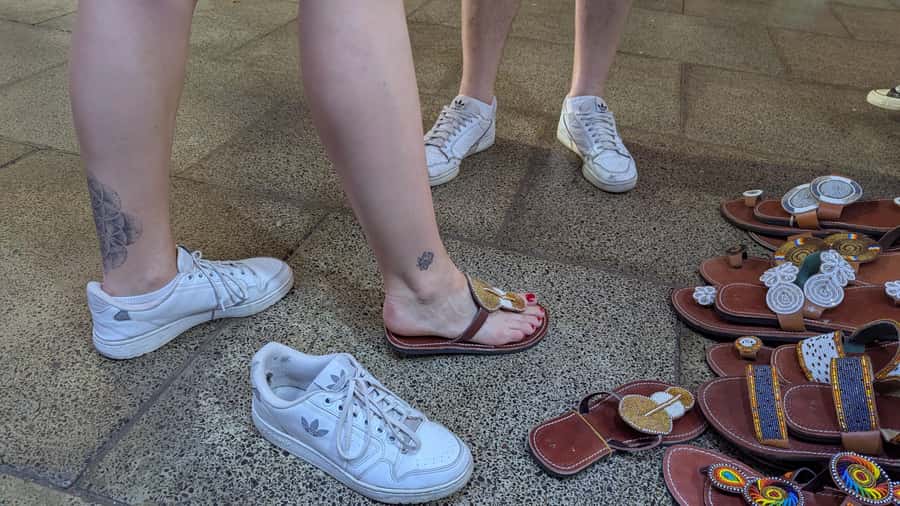
Kencom House gives you a look at a major city-center transport and commercial area. The stop includes sightseeing and a pass-by rather than a long building visit.
This part of the route helps you see Nairobi as a working capital, not just a collection of monuments. Kencom Matatu Terminus is connected with the city’s daily movement, and the surrounding streets show the pace of ordinary business and transport. Keep your belongings secure and listen to Allan’s directions when moving through crowded areas.
The tour may also point out other central sights along the way, including Nyayo House, the Senate, Holy Family Basilica, and the Parliament area. These are useful orientation points even when they are viewed from outside.
Masai Market and buying Kenyan handicrafts
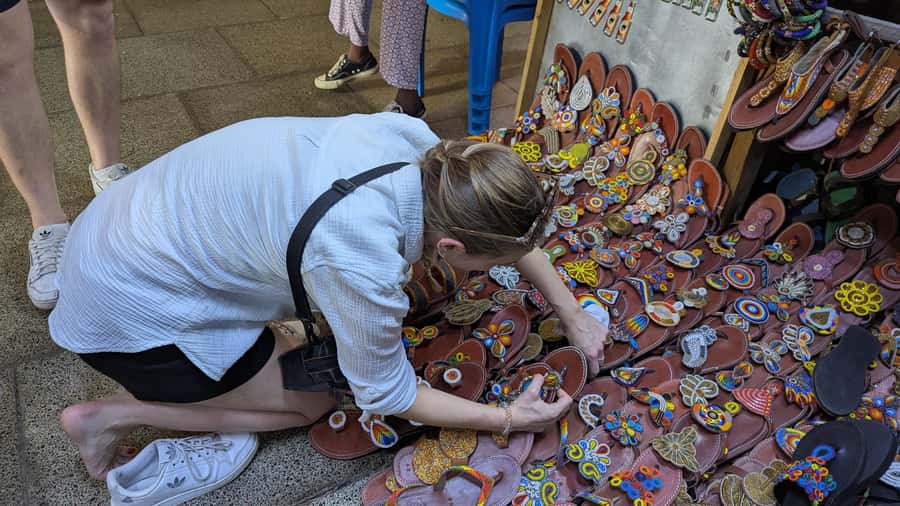
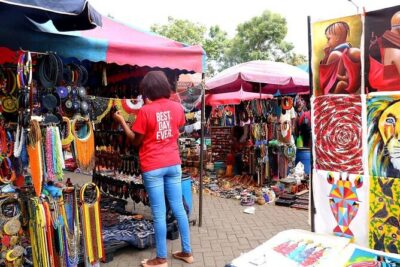
The Masai Market is the longest shopping stop, at about 40 minutes. It is aimed at people who want handmade gifts, artwork, clothing, jewelry, or other Kenyan handicrafts.
This is where a local guide can make a real difference. Allan can help translate, offer suggestions, and make the buying process less awkward. He can also help you compare items instead of purchasing the first thing you see.
Still, keep your expectations sensible. Market shopping involves negotiation, and prices vary by seller and item. Bring enough cash for purchases, but avoid displaying all of it at once. If you dislike bargaining, you can browse without buying. The market is part shopping trip and part lesson in how commerce works in Nairobi.
You may find this section more tiring than the sightseeing stops. There can be repeated conversations, standing, and close attention to what you are buying. If you want the walk mainly for history and architecture, ask Allan to keep the shopping portion focused.
Supreme Court and Kenya’s government district

The route then moves through the Supreme Court area and toward Parliament. These stops are mainly guided sightseeing and exterior views. You should not expect a general public tour inside the working government buildings.
The value here is the explanation. Allan can connect the buildings to Kenya’s political structure and recent development, while showing you how the country’s institutions occupy the center of Nairobi. You will also pass the Senate and other important civic buildings in this part of town.
Photography may need care around government sites. Follow Allan’s instructions and ask before taking pictures of anything that could be sensitive. The tour promises good photo opportunities, but it does not mean every building or security area is open for unrestricted photography.
Java House on Mama Ngina Street
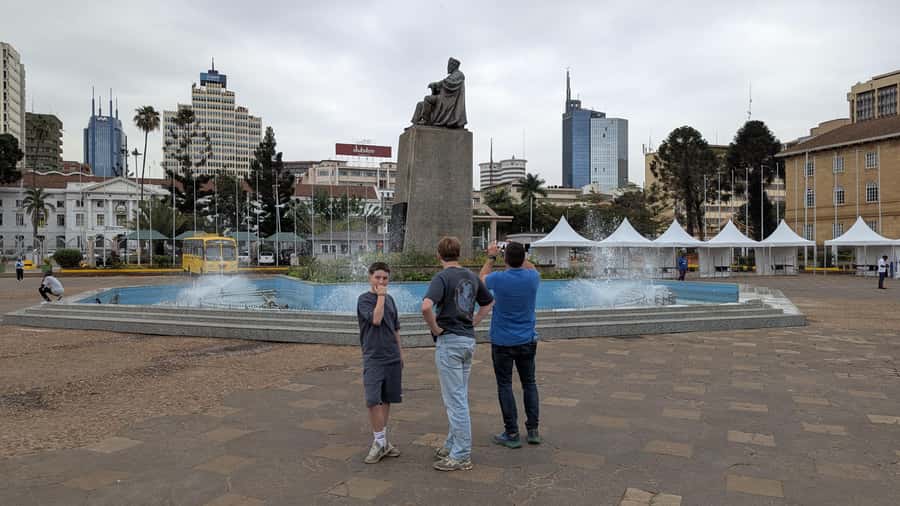
Java House provides a 40-minute break. The café is known as a popular Kenyan coffee house, and you can sample different coffee types, tea, or chai if you wish.
These drinks cost extra, so budget separately. The break is more than a café stop because it gives you time to rest, ask Allan follow-up questions, and talk about what you have seen. If the weather is hot, this pause may be welcome before the final section.
The coffee break also shows one of the tour’s strengths: it is not only a march between landmarks. Allan encourages conversation and can share practical tips about Nairobi, Kenya, and the rest of your trip. If you prefer a quick drink and more sightseeing, tell him. If you want a slower local conversation, this is the natural place for it.
Parliament and the road to KICC
After Java House, the route continues past the Parliament of Kenya. Again, this is an exterior sightseeing stop, not a guaranteed interior visit. The building is part of the government district, so the main benefit is understanding the city’s civic center and seeing how close the major institutions are to one another.
The final major stop is the Kenyatta International Conference Centre, usually called KICC. You get guided sightseeing, free time, and a photo stop here. The tower is one of Nairobi’s best-known landmarks, and the upper viewpoint gives you a broad view over the city.
Entry to KICC costs $3. You must pay by card or MPESA, and cash is not accepted. This is an important practical detail. If you do not have MPESA or a suitable card, speak with Allan before reaching the entrance.
The KICC visit can take up to 45 minutes, so it is not a rushed photo stop. You have time to look around, take pictures, and enjoy the view. For many people, this is the visual payoff of the walk, especially after seeing the city from street level.
What Allan adds to the walk
The strongest part of this experience is Allan’s personal style. He does not simply name buildings and move on. He answers questions, adjusts the route when possible, and talks about modern Nairobi as well as earlier events.
His personal stories add a human side to the tour. You get a chance to ask about family life, education, work, city development, and daily routines. He is also interested in your background, which can turn the walk into a two-way conversation rather than a lecture.
The practical help is another plus. Allan has helped with MPESA and Safaricom arrangements, offered restaurant suggestions, and continued spending time with people after the walk. Some outings have included a local meal afterward, but dinner is not part of the advertised tour, so treat that as an optional arrangement rather than a promised feature.
The tour can also be extended by agreement. One person used Allan’s local knowledge for a separate Karura Forest outing, including information about plants, animals, and the park’s past. That is not included in this three-hour city walk, but it shows how Allan may help shape a wider Nairobi visit.
Pace, comfort, and safety
This is a city walk in sunny weather, not a relaxed vehicle tour. Wear comfortable shoes and light, comfortable clothes. Sunscreen and sunglasses are specifically recommended, and you should carry water even though it is not listed among the required items.
The route includes markets, sidewalks, civic areas, and busy transport zones. You should stay alert and follow Allan’s advice with bags, phones, and cash. The strongest recurring impression of the experience is that Allan helps people feel safe and comfortable, but no city walk removes the need for normal urban awareness.
The tour is not suitable for pregnant women or people with heart problems. If you have a medical concern or find three hours of walking difficult, contact Allan before booking. The schedule includes breaks, but the day still involves a fair amount of standing and walking.
The published stop times add up to more than a simple three-hour stroll when all breaks and optional time are counted. The route may be flexible, and the final stop at CJ’s can become an additional coffee or lunch break. Confirm the exact timing with Allan so you know which sections are fixed and which can be shortened.
Is $35 a good value?
At $35 per person, the tour offers a useful introduction to central Nairobi. You are paying for a local guide, route planning, translation help, market support, and access to a wide range of city sights. You are not paying for coffee, shopping, or the KICC entrance fee, so add those costs separately.
The value is strongest if you are new to Nairobi and want context quickly. A self-guided walk could show you some of the same buildings, but it would not provide Allan’s personal stories, Swahili help, market advice, or local guidance with everyday tasks.
The value is less clear if you dislike shopping or prefer a formal museum-style tour. Several stops are short exterior views, and the city center can feel busy and tiring. You may also want more time at individual landmarks than this broad route allows.
Free cancellation up to 24 hours before the start and reserve-now, pay-later booking make the plan easier to adjust. The tour is available in English and Swahili, and you can contact Allan through WhatsApp at +254 723 477 823 for meeting guidance or questions.
Who should book this Nairobi walk?
I would choose this tour for a first afternoon in Nairobi, especially after arriving with a free half-day. It gives you an orientation to the CBD, introduces the country’s history and culture, and helps you get comfortable with markets, currency, local phrases, and city transport.
It suits curious people who like conversation more than a scripted sightseeing routine. It is also a good fit if you want to buy gifts but would prefer help with translation and bargaining.
You may want another type of outing if you have limited mobility, a heart condition, are pregnant, or want a quiet vehicle-based tour. It is also not the right pick if you want guaranteed interior access to Parliament, the Supreme Court, Jamia Mosque, or every building named along the way.
Should you book it?
Book this Nairobi walking tour if you want a friendly local introduction with real practical value. Allan’s warm manner, personal stories, market assistance, and willingness to answer questions are the main reasons to choose it.
Before you go, bring comfortable shoes, sun protection, cash for handicrafts, and a card or MPESA for the $3 KICC entry. Ask Allan about the exact timing, especially if you want a long market visit or coffee break. For a reasonable price, this is a personable way to meet Nairobi at street level.
FAQ
Where does the Nairobi walking tour start and end?
The tour starts and ends at CJ’s restaurant on Koinange Street. You can wait outside or have coffee inside before the tour begins.
How long does the tour last?
The advertised duration is three hours. The route includes several stops and breaks, so confirm the exact timing with Allan if you want to adjust the schedule.
What languages does Allan speak?
The tour is available in English and Swahili.
Is the tour wheelchair accessible?
The tour is described as wheelchair accessible. Because it includes city streets, markets, and several walking sections, contact Allan before booking to discuss your specific needs.
Is the KICC entrance included?
No. Entry to KICC costs $3 and must be paid by card or MPESA. Cash is not accepted.
Do coffee and tea cost extra?
Yes. Coffee, tea, or chai at the restaurant are charged separately if you choose to sample them.
What should I bring?
Bring comfortable shoes, comfortable clothing, sunscreen, sunglasses, and cash if you plan to buy handicrafts or souvenirs. Drones, alcohol, and drugs are not allowed.
More Historical Sites
- Full Day Nairobi Cultural and Historical Tour
★ 5.0 · 153 reviews - Nairobi Cultural and Historical City Tour with a Local
★ 5.0 · 67 reviews - Nairobi souvenir Shopping and Historical Half day Tour
★ 5.0 · 61 reviews - Nairobi History and Modern Culture 3 Hours Tour
★ 4.5 · 31 reviews
Just added around Nairobi
- Nairobi: Giraffe Center, Elephant Orphanage and Bomas Tour★ 5.0 · 3 reviews
- Nairobi: Airport and Hotel Private Transfers.★ 4.0 · 3 reviews
- Kitengela Anselm Hot Glass tour★ 4.5 · 3 reviews
- 11-Days Best of Kenya & Tanzania Big 5 Safari on a 4×4 Jeep★ 5.0 · 3 reviews
- 12-Day Tsavo west Amboseli lake Nakuru Maasai Mara safari★ 5.0 · 3 reviews
- NAIROBI NATIONAL PARK AFTERNOON GAME DRIVE.★ 5.0 · 3 reviews
- Nairobi Down Town & Walking City Tour★ 4.8 · 3 reviews
- Carnivore Resturant Dinner Experience★ 4.0 · 3 reviews
Walking Tours, compared.
Walking Tour Through Old Town Mombasa and Fort Jesus
Read our review →
Nairobi Walking tour:Explore History Culture and Traditions
Read our review →
Nairobi City Walking Tour with Traditional Kenyan Lunch
Read our review →

Browse the lists this tour appears in