
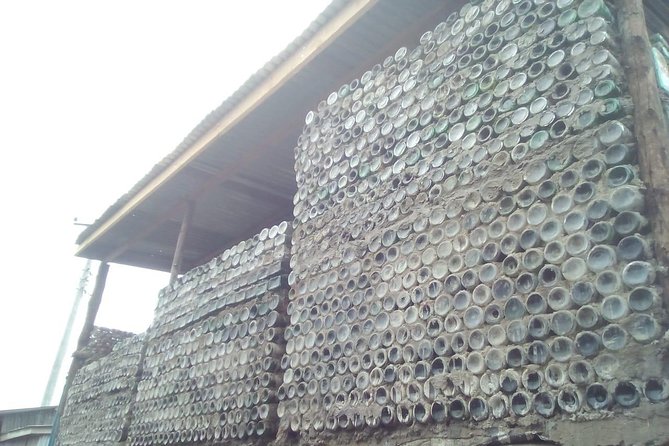
Reviewed · KIBERA COMMUNITY TOURS
Full Day Kibera Slum Tour
Look beyond Nairobi’s polished center. This private Kibera tour gives you a close look at daily life through Toi Market, a community kindergarten, a bead shop, women’s and youth groups, and the Hope and Shine Kibera Center. I like the direct contact with local projects, and I like that a private format lets you move at your own pace. The main consideration is that this is an emotionally demanding visit, and the timing needs clarification: the tour is described as lasting four to six hours, while the detailed schedule lists seven hours.
You are not simply passing through Kibera in a vehicle. You are asked to listen, meet people, and take part in a co-curricular activity with children. That can make the day meaningful, but you should approach it with respect rather than treating the community as a sightseeing display. Guide quality matters, too. Lucas is praised by name for being pleasant, intelligent, and kind, though another account points to a communication problem with a guide.
In This Review
- Key points to know before booking
- Starting at Greenhouse Mall and Toi Market
- Hope and Shine Kibera Center
- Two aerial views of the City of Hope
- Meeting a women’s group and a youth group
- Bead shopping with a local connection
- Riding a matatu in Nairobi
- How private touring changes the day
- Is $65 a fair price?
- Who will appreciate this Kibera visit?
- Timing, transport, and booking advice
- What to bring and how to act
- Should you book the Full Day Kibera Slum Tour?
- FAQ
- Where does the Full Day Kibera Slum Tour take place?
- How long does the tour last?
- Is hotel pickup available?
- Is this a private tour?
- What is included in the price?
- Is lunch included?
- What will I see at Toi Market?
- Does the tour visit a school or children’s center?
- Can I cancel for a full refund?
Key points to know before booking
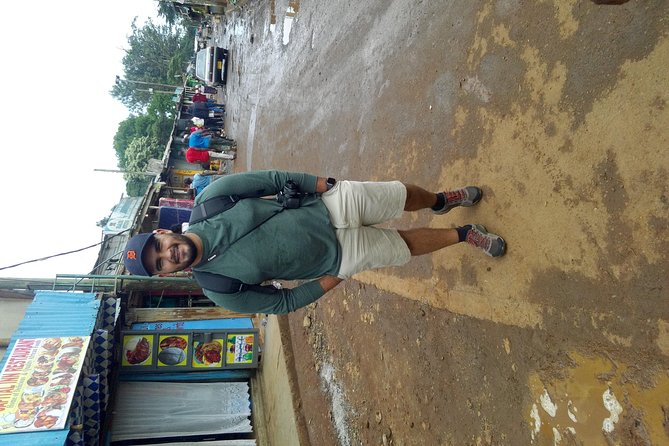
- Toi Market comes early: You see the market’s different sections, meet traders, and learn how daily commerce works in Kibera.
- Hope and Shine is central: Time at the community center includes children, a teacher, volunteering, and a co-curricular activity.
- The tour includes several community meetings: You visit a women’s group and a youth group, giving the day more range than a simple walking route.
- You get two aerial views: These provide a useful sense of Kibera and Nairobi from above.
- Transport is part of the experience: Private transportation is included, along with a ride in a matatu, Nairobi’s familiar shared minibus.
- The $65 price buys access and structure: It includes private transport, taxes, and fees, but not lunch.
Starting at Greenhouse Mall and Toi Market
Pickup is offered from your hotel, followed by a briefing at Greenhouse Mall or the stated starting point. That opening matters. Kibera is a large, busy urban area, and a short orientation helps you understand the route before entering the community.
The first major stop is the extensive side of Toi Market. Here, the guide explains the market’s sections and the daily work of its traders. You can expect stalls and shopfronts selling different kinds of goods, although the supplied details do not specify every product section. The value lies less in shopping than in seeing how trade supports ordinary households.
I like this part because it places Kibera in an economic context. It is easy to reduce a low-income neighborhood to hardship, but a market shows enterprise, skill, and routine. You see people working, negotiating, stocking goods, and serving customers. That gives you a fuller picture than a quick walk past homes.
You should still behave carefully. Ask before taking photographs, follow your guide’s advice, and avoid turning private moments into souvenirs. If you want to buy something, the market gives you a direct way to support local commerce without making the visit feel like charity.
More community tours:
- Nairobi: Explore Kibera Slum with Local Guides
★ 4.9 · 365 reviews - Kevins Kibera Slum Tours
★ 5.0 · 213 reviews - Nairobi: Kibera Slum storytelling tour with a Local
★ 5.0 · 185 reviews
Hope and Shine Kibera Center

The Hope and Shine community development program is the heart of the experience. You visit its center, meet children and their teacher, and take part in a co-curricular activity. The schedule also describes volunteering at the center and learning about the children’s daily lives.
This is the portion that needs the most sensitivity. A classroom visit can be warm and personal, but it also involves children who deserve privacy and dignity. Listen to the teacher and guide about what is appropriate. Do not assume that every child wants to be photographed or handled, and do not arrive expecting a staged performance.
One account describes time in a class with children singing, learning, and sharing a meal together. That detail gives you a useful sense of the visit: it may feel participatory rather than like a quick look through a doorway. Still, the exact classroom activity can change, so treat singing, learning, or a shared meal as possibilities rather than promises.
The center makes the tour more than a poverty-focused walk. You see one local response to difficult conditions, and you meet people working to give children support and education. I consider that a strong reason to choose this experience over a route that only points out crowded housing and narrow paths.
Two aerial views of the City of Hope
The itinerary includes two aerial views of the City of Hope. These viewpoints help you understand the scale and layout of the area in a way that ground-level walking cannot.
From above, you can compare the dense urban setting with the wider city around it. You may also gain a clearer sense of how homes, roads, market areas, and community facilities fit together. The exact viewpoints are not specified, so you should not expect a particular skyline or landmark.
These stops also provide a natural pause during a long day. Kibera can be intense, and a change in perspective gives you time to absorb what you have seen without rushing immediately into the next meeting.
Meeting a women’s group and a youth group

The tour includes a visit with one women’s group. You hear what the members do each day and learn about their regular activities. This is valuable because it shifts attention from outside descriptions of Kibera to local voices.
The schedule does not state the group’s specific work, so keep your expectations open. You might hear about community work, income, family responsibilities, or other daily concerns, but the guide should explain what this particular group does.
Later, you meet one youth group. That adds another local viewpoint and gives the day a useful age range. Children at the center, adult women, and young people do not experience the neighborhood in exactly the same way. These meetings can help you see that Kibera is made up of many lives and priorities, not one single story.
Be prepared to listen more than you speak. A respectful question is usually better than a long speech about your own assumptions. If the group sells goods or invites support, ask how contributions work rather than guessing.
A few more trips worth weighing up
- Full Day Nairobi Cultural and Historical Tour
★ 5.0 · 153 reviews - Full Day Lake Nakuru Park and optional boat ride on Lake Naivasha
★ 4.5 · 95 reviews - Amboseli National Park: Guided Full Day Tour
★ 4.5 · 42 reviews - Full-Day Lake Nakuru National Park Private Tour With 4*4 Vehicle
★ 5.0 · 16 reviews
Bead shopping with a local connection

A stop at one bead shop gives you the chance to buy a locally made item. This is a small part of the tour, but it can be one of the most practical ways to spend money in the community.
Ask about the item, its maker, and the price before purchasing. The details provided do not identify the shop or explain how the bead work is organized, so the guide is your best source of information on the day.
I would treat the bead stop as an optional purchase, not an obligation. You are paying for the tour, and you should never feel that buying something proves you care. If you do find an item you like, buying directly can make the visit more useful to the local business.
Riding a matatu in Nairobi
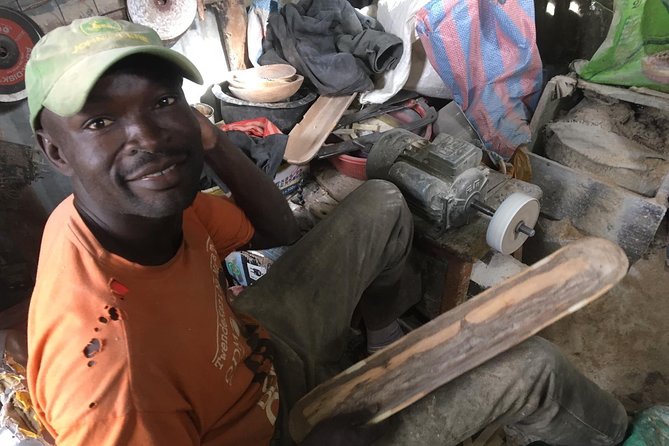
The itinerary includes experiencing life inside a matatu. These shared minibuses are a familiar part of Nairobi transport, and this ride gives you a practical look at how people move around the city.
The private transportation included with the tour is separate from this local transport experience. The supplied details do not say how long the matatu ride lasts, what route it follows, or whether it is guaranteed under every condition. Ask the operator if this part is especially important to you.
For you, the value is not comfort or sightseeing. It is context. A ride in a matatu shows a normal part of urban life and breaks up the walking and meetings. If you prefer a highly controlled day, the public transport portion may feel less predictable than the private vehicle.
How private touring changes the day

Only your group participates, and that is a real advantage here. A private tour allows you to ask more questions, pause at the market, and set a pace that suits your group. It can also make community meetings feel less crowded.
A private format does not mean you can change every stop. The tour has a set program that includes Toi Market, Hope and Shine, aerial views, a bead shop, a women’s group, a matatu ride, and a youth group. Still, you should have more room to discuss what interests you than on a large group excursion.
The guide’s role is especially important. Lucas is named positively for his pleasant manner, intelligence, and kindness. At the same time, one account reports that a guide did not know something expected during the visit, and the provider apologized for the communication problem. That mixed signal suggests a practical step: confirm the schedule and guide details before the day begins.
Is $65 a fair price?

At $65 per person, the tour includes private transportation, all fees, and taxes. Lunch is not included. For a private experience lasting roughly four to six hours, with a detailed plan that can run to seven hours, the price is reasonable if you value personal transport and several community-based meetings.
The value is not in expensive facilities or polished attractions. You are paying for organization, local access, transportation, and time with community programs. That makes the experience worthwhile for someone who wants a guided introduction and does not want to arrange several stops alone.
The missing lunch is easy to manage only if you plan for it. Since the day can last much of the day, ask when you will have time to eat and what arrangements are possible. Do not assume a meal is included simply because one account describes a shared meal at the center.
The price also makes sense for a group that wants privacy. If you are looking only for a short walk and a few photographs, it may feel expensive. If you want market life, community work, group meetings, transport, and time for questions, the package offers more substance.
Who will appreciate this Kibera visit?
I would recommend it most strongly to you if you want to understand Nairobi through local work, commerce, education, and transport. It suits people who can listen carefully, accept some uncertainty, and approach the visit with humility.
It may also suit families with older children, students, photographers who respect strict permission rules, and visitors interested in community development. The kindergarten and youth group add an educational side, though you should decide in advance how your group will handle a setting involving children.
This is not the right choice if you want a light, polished sightseeing day. The subject is serious, the conditions may be confronting, and the tour asks you to think about poverty without reducing people to it. A private vehicle and guide provide structure, but they cannot remove the emotional weight of the visit.
Timing, transport, and booking advice
The experience offers hotel pickup and mobile ticketing, and confirmation is provided at booking. It is near public transportation, though private transportation is included. Most people can participate, according to the supplied information.
Pay close attention to the conflicting duration descriptions. The headline information gives an approximate four to six hours, while the detailed itinerary states seven hours. Ask the provider to confirm your pickup time, expected finish, and lunch plan before you set up another activity.
Booking around 75 days ahead is the stated average. That does not guarantee that you must reserve that early, but it suggests that advance planning is sensible, especially if you need a particular date or guide.
Free cancellation is available if you cancel at least 24 hours before the start time. Inside that window, the payment is not refunded, and changes are not accepted. The cut-off follows local Nairobi time.
What to bring and how to act
Wear practical clothing for several hours of walking and local transport. The supplied details do not provide a dress code or weather guidance, so check the day’s forecast and ask the operator if you have concerns.
Carry only what you need. Keep valuables secure and follow the guide’s instructions in the market and during transport. Ask before taking photographs, especially around children, classrooms, women’s groups, and private homes.
Bring curiosity, but leave the savior attitude at the hotel. The best exchange is simple: listen, ask polite questions, buy only what you want, and understand that a community is not a stage built for outside visitors.
Should you book the Full Day Kibera Slum Tour?
Book it if you want a structured, private introduction to Kibera that includes more than a walk. Toi Market, Hope and Shine, the women’s and youth groups, the aerial views, bead shopping, and matatu ride create a broad day with several local perspectives.
Before paying, confirm the real duration, pickup time, lunch arrangements, and whether Lucas is available if you specifically want him as your guide. If you can accept an intense subject and treat each meeting with respect, the $65 cost is fair for the access and transport provided. If you want easy entertainment or a tightly scripted attraction, choose a different Nairobi activity.
FAQ
Where does the Full Day Kibera Slum Tour take place?
The tour takes place in Kibera, Nairobi, Kenya. It begins with pickup from your hotel and a briefing at Greenhouse Mall or the stated starting point.
How long does the tour last?
The approximate duration is listed as four to six hours. The detailed schedule states seven hours, so confirm the expected length with the provider before booking other plans.
Is hotel pickup available?
Yes. Pickup is offered from your hotel or residence.
Is this a private tour?
Yes. Only your group participates, and the tour includes private transportation.
What is included in the price?
The $65 price includes all fees and taxes and private transportation.
Is lunch included?
No. Lunch is not included in the tour price.
What will I see at Toi Market?
You see an extensive side of Toi Market, learn about traders’ daily lives, and identify the different sections of the market.
Does the tour visit a school or children’s center?
Yes. You visit the Hope and Shine Kibera Center, meet children and their teacher, volunteer at the center, and take part in a co-curricular activity.
Can I cancel for a full refund?
Yes, if you cancel at least 24 hours before the experience start time. Cancellations made less than 24 hours before the start time are not refunded, and changes within that period are not accepted.
Just added around Nairobi
- Nairobi: Giraffe Center, Elephant Orphanage and Bomas Tour★ 5.0 · 3 reviews
- Nairobi: Airport and Hotel Private Transfers.★ 4.0 · 3 reviews
- Kitengela Anselm Hot Glass tour★ 4.5 · 3 reviews
- 11-Days Best of Kenya & Tanzania Big 5 Safari on a 4×4 Jeep★ 5.0 · 3 reviews
- 12-Day Tsavo west Amboseli lake Nakuru Maasai Mara safari★ 5.0 · 3 reviews
- NAIROBI NATIONAL PARK AFTERNOON GAME DRIVE.★ 5.0 · 3 reviews
- Nairobi Down Town & Walking City Tour★ 4.8 · 3 reviews
- Carnivore Resturant Dinner Experience★ 4.0 · 3 reviews
Kibera Community Tours, compared.





Kibera Slum Tour with Local Social Entrepreneurs
Read our review →


Browse the lists this tour appears in