
Reviewed · HISTORICAL TOURS
Go Granny Go – An Amazing Cultural Tour in Kenya
Meet the women holding a community together. This six-and-a-half-hour outing from Nairobi offers a rare chance to speak with Kikuyu grandmothers who care for families, lead their communities, and run small pig farms. I like the direct, human contact, and I like that the visit connects conversation with a practical income program rather than stopping at sightseeing.
The small group, capped at nine people, should make the meeting feel personal. Lunch and tea give you time to talk without rushing, and hotel pickup keeps the day simple. The main consideration is the $265 price, which is a serious spend for a half-day experience, and the subject matter can be emotionally heavy as you hear about poverty, family responsibility, and the difficult choices many grandmothers face.
In This Review
- Key points to know before you go
- Why this Nairobi outing feels different
- Meeting Kikuyu grandmothers near Ngong Hills
- Seeing how pig farming supports families
- Lunch, tea, singing, and time to talk
- The stories behind the program
- What the small group changes
- Is $265 a fair price?
- Who should book this experience?
- Practical details for a smoother visit
- Should you book Go Granny Go?
- FAQ
- Where does Go Granny Go take place?
- What time does the tour start?
- How long does the experience last?
- Is hotel pickup available?
- How many people can join the tour?
- What activities are included?
- Is lunch included?
- Can I cancel for a full refund?
Key points to know before you go
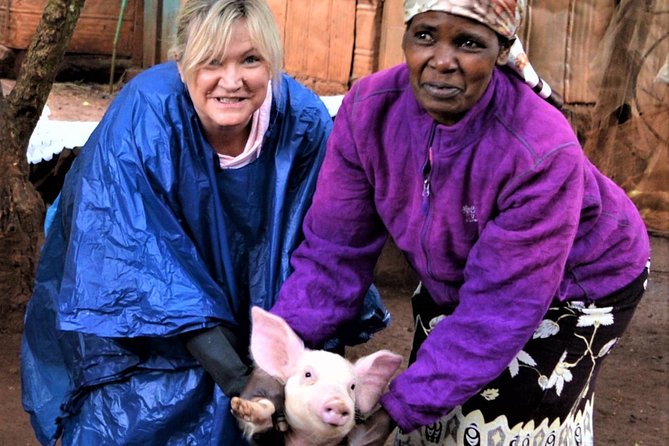
- Meet community leaders, not costumed performers: The grandmothers speak about their real work, families, and daily responsibilities.
- Visit a pig-farming project: You can see how pig husbandry helps create income for households under financial pressure.
- Take part if you wish: The visit can include farm chores, singing, conversation, lunch, and tea.
- Keep the group intimate: A maximum of nine people gives the meeting a more relaxed feel.
- Start at 9:30 am: Round-trip hotel transportation is included, with the experience lasting about six and a half hours.
- Connect beyond the usual safari route: The stories and family life here can become as memorable as a first wildlife sighting.
Why this Nairobi outing feels different
Nairobi offers plenty of standard city tours, but this one shifts your attention from monuments and traffic to the people who keep family life moving. You travel to a Kikuyu village near the city and meet grandmothers who serve as carers, community figures, and business owners.
That last part matters. This is not simply a friendly visit arranged for sightseeing. The women are involved in a pig-farming program supported by One Horizon Africa. The aim is to provide a sustainable source of income, helping grandmothers feed their families and handle household costs.
I find that purpose gives the visit more weight. You are not just hearing about Kikuyu culture in the abstract. You are seeing how family structures, work, and financial pressure shape everyday decisions.
The experience also avoids the stiff feel of a formal lecture. You have time to speak with the women, ask questions, and listen to their stories over food. The mood may shift from serious to cheerful, especially when singing begins. That mixture of difficult truth and warm hospitality is one of the strongest reasons to consider booking.
More historical sites:
- Nairobi: Historic and Modern Highlights Walking Tour
★ 4.8 · 703 reviews - Nairobi Historical Walking City Tour
★ 5.0 · 258 reviews - Full Day Nairobi Cultural and Historical Tour
★ 5.0 · 153 reviews
Meeting Kikuyu grandmothers near Ngong Hills
The day begins at 9:30 am, with pickup offered from your hotel. The route takes you toward a Kikuyu village near Ngong Hills. The supplied schedule labels this part Ngong Hills, but the main focus is the village and its community program rather than a hill walk or scenic climb.
That distinction is useful. If you are expecting a hiking trip, this is not the right choice. The hills provide the area reference, while the meaningful activity happens through the meeting with the grandmothers and the visit to the pig farm.
Once there, you meet women who may be raising grandchildren because the children’s parents can no longer care for them. Some households include as many as 20 family members living in a single-room corrugated iron home. That detail helps explain why earning money is not a minor concern. A small business can affect food, schooling, and the wider needs of a large household.
You should approach this part with respect. The stories may be personal and painful, and the visit is strongest when you listen carefully rather than treating hardship as a spectacle. The program gives the women a voice, and your role is to meet them as people with responsibilities, humor, skills, and opinions.
Seeing how pig farming supports families
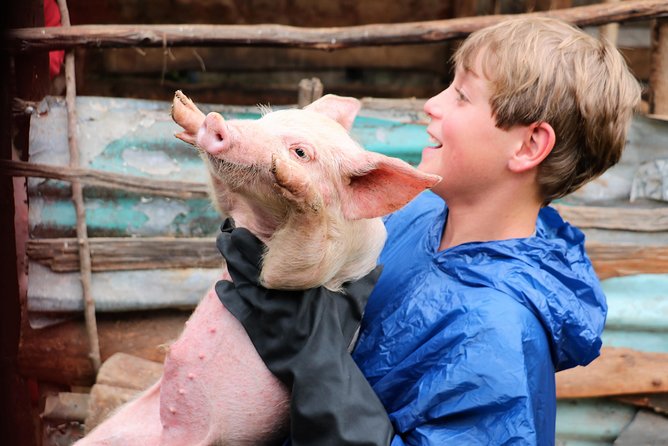
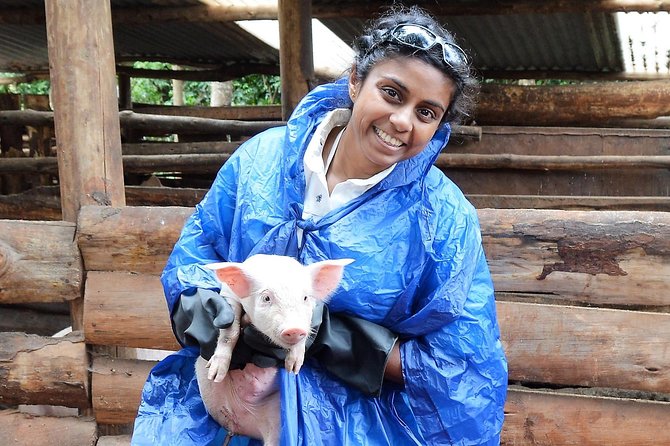
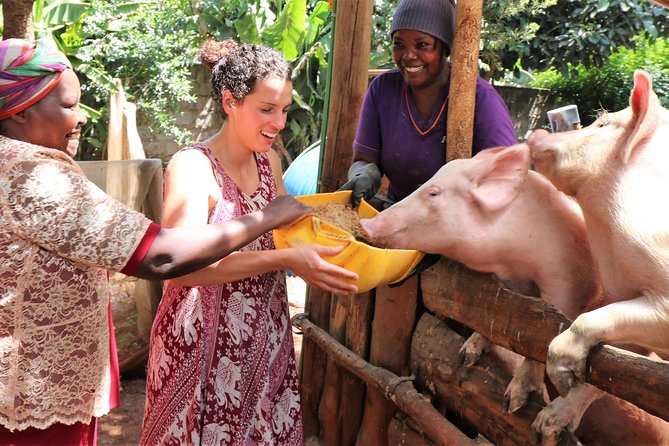
The pig farm is the practical heart of the experience. You are shown how the program works and can pitch in with chores if you like. The information provided does not specify exactly which tasks you will do, so think of participation as an option rather than a guaranteed hands-on farming session.
That flexibility is sensible. Some people will want to help with the work, while others will prefer to observe and talk. Either approach can be worthwhile. I like that the farm gives you something concrete to understand: a community program can be discussed in broad terms, but seeing the animals and the work makes the idea easier to grasp.
Pig husbandry also shows how small-scale enterprise can fit into family life. The grandmothers are not presented only as people needing assistance. They are taking part in an income-generating activity that supports their households. That change in emphasis makes the encounter more balanced and dignified.
The farm visit may be especially useful if you want to understand the practical side of community support. You can ask how the women combine care work with farming and what the income means for their families. The available details do not promise a business seminar, so expect an informal explanation rather than charts, lectures, or financial figures.
Lunch, tea, singing, and time to talk
Food is an important part of the meeting. Lunch and tea are included, giving you a natural setting for conversation. Sharing a meal can make the exchange less formal, especially after you have already visited the farm and heard about family life.
I would treat lunch as part of the cultural experience, not just a break in the schedule. It gives you time to slow down and ask follow-up questions. You may find that the most memorable details come out during these quieter moments, after the formal introductions are over.
The visit can also include joyful singing. This is more than a decorative performance added to the program. It shows how community gatherings can hold several emotions at once. The grandmothers’ lives may involve serious financial strain, yet music and laughter still have a place.
One especially positive response to this outing described meeting the women and their families as both humbling and beautiful, even when compared with seeing Kenyan wildlife for the first time. That is a useful clue about the experience’s character. It may not provide the instant visual drama of a safari, but it can leave a stronger personal impression for someone who values conversation and human connection.
A few more trips worth weighing up
- Nairobi National Park Half-Day Tour; Free Wi-Fi connection
★ 5.0 · 878 reviews - Nairobi: National Park & Optional Elephants & Giraffe Center
★ 4.8 · 874 reviews - NAI NAMI: Nairobi Storytelling Tour with Street Children
★ 5.0 · 792 reviews - Nairobi National Park Half-Day Game Drive
★ 4.5 · 738 reviews
The stories behind the program
The social setting is central here. Grandmothers may become the main carers when parents cannot look after their children, placing an enormous burden on older women. A single household can include many relatives, while the home itself may be extremely small.
The pig-farming program responds to that pressure with a source of income designed around the women’s own community. One Horizon Africa supports the initiative, but the important point for you is how the program is presented: the grandmothers are community leaders and active participants, not passive recipients.
A second strong response to the experience described the women as having endured a great deal while working to break the cycle of poverty for themselves and their families. I would keep that idea in mind when deciding if this tour suits you. The visit asks you to listen to real accounts of hardship, and it may stay with you long after the vehicle returns to Nairobi.
At the same time, the outing is not described as a solemn charity visit from start to finish. Warm welcomes, singing, food, farm work, and conversation all form part of the day. You get a fuller picture of community life when difficulty and joy appear side by side.
What the small group changes
The maximum group size is nine people. That is a meaningful advantage for this kind of meeting. A large busload would make personal conversation awkward, while a small group gives you a better chance to ask questions and hear answers clearly.
A small group can also make participation feel less exposed. If you want to help with farm chores or join the singing, you can decide at your own pace. If you prefer to listen, there should be less pressure to perform.
The group size does not guarantee that every moment will feel private. You are still sharing the visit with other people, and the exact flow depends on the community hosts and the day’s schedule. Still, nine is a reasonable limit for a personal meet-and-greet.
I would choose this outing over a larger cultural stop if your goal is genuine conversation. It suits people who want to understand how a family and community function, not just photograph a rural setting.
Is $265 a fair price?
At $265 per person, this is not a bargain excursion. You are paying more than you would for a basic city transfer or a short neighborhood stop. The value comes from the full package: roughly six and a half hours, round-trip hotel transportation, a small group, lunch, tea, access to community leaders, and support for a structured income program.
I would judge the price based on what you want from your time in Nairobi. If you want the lowest-cost way to see rural life, this will probably feel expensive. If you want a carefully arranged meeting with a small community group, the price is easier to defend.
The included transportation also matters. Nairobi traffic and unfamiliar roads can make independent planning tiring, especially when you have only one day in the city. Pickup and drop-off remove that practical burden and let you focus on the visit.
The strongest value is personal rather than visual. You are not paying for a long list of attractions. You are paying for time, access, organization, and a chance to support an effort that gives grandmothers a way to earn money for their families.
Who should book this experience?
I would recommend it to you if you enjoy thoughtful cultural encounters, small groups, and conversations that reveal how people actually live. It is a good match for anyone who wants more from Kenya than wildlife viewing and major sights.
It also suits visitors interested in women’s roles, family care, community leadership, and small businesses. Parents, educators, social-impact visitors, and people who prefer meeting local residents over watching a staged show may find the subject especially meaningful.
You should think twice if you want a light, purely entertaining morning. The stories involve poverty, family separation, and heavy responsibility. The singing and hospitality bring warmth, but the social issues do not disappear.
This outing may also be less suitable if you need a tightly timed schedule. The advertised visit lasts about six and a half hours, while the village portion is listed at about four hours. With pickup, driving, lunch, conversation, and activities included, you should keep the rest of your day flexible.
Practical details for a smoother visit
Pickup is offered, and the stated start time is 9:30 am. Confirm the pickup arrangement when booking so you know where and when to meet the vehicle.
A mobile ticket is available, and confirmation is received at booking. Service animals are allowed, and most people can participate. The activity has a maximum of nine people, which helps keep the visit manageable.
Wear clothing you can move in if you hope to help with farm chores. The supplied details do not set a dress code or list required equipment, so there is no need to assume special gear. A respectful attitude is more important than dressing for a performance.
You can cancel for a full refund if you do so at least 24 hours before the local start time. Changes or cancellations made inside that window are not accepted for a refund. That rule is worth noting because the experience takes planning and has a limited group size.
Should you book Go Granny Go?
Book it if you want a personal, community-led experience and are willing to spend for depth rather than spectacle. The combination of grandmothers’ stories, pig farming, lunch, tea, singing, and a small group gives you a direct look at Kikuyu family and community life.
Skip it if your priority is a cheap half-day activity, a hill hike, or a carefree cultural show. For the right audience, though, this can become one of the most meaningful parts of a Nairobi stay, with the added benefit of supporting a practical program led by the women you meet.
FAQ
Where does Go Granny Go take place?
The experience takes place in a Kikuyu village near Nairobi, in the Ngong Hills area.
What time does the tour start?
The stated start time is 9:30 am.
How long does the experience last?
The full experience lasts approximately six hours and 30 minutes.
Is hotel pickup available?
Yes. Pickup and drop-off from your hotel are offered.
How many people can join the tour?
The maximum group size is nine people.
What activities are included?
You meet Kikuyu grandmothers, learn about their work and families, visit a pig farm, and may help with chores if you wish. The visit can also include singing, lunch, and tea.
Is lunch included?
Yes. Lunch and tea are included in the experience.
Can I cancel for a full refund?
Yes. You can receive a full refund if you cancel at least 24 hours before the experience start time. Cancellations made less than 24 hours in advance are not refunded.
Just added around Nairobi
- Nairobi: Giraffe Center, Elephant Orphanage and Bomas Tour★ 5.0 · 3 reviews
- Nairobi: Airport and Hotel Private Transfers.★ 4.0 · 3 reviews
- 11-Days Best of Kenya & Tanzania Big 5 Safari on a 4×4 Jeep★ 5.0 · 3 reviews
- Kitengela Anselm Hot Glass tour★ 4.5 · 3 reviews
- NAIROBI NATIONAL PARK AFTERNOON GAME DRIVE.★ 5.0 · 3 reviews
- 12-Day Tsavo west Amboseli lake Nakuru Maasai Mara safari★ 5.0 · 3 reviews
- Nairobi Down Town & Walking City Tour★ 4.8 · 3 reviews
- Carnivore Resturant Dinner Experience★ 4.0 · 3 reviews
Historical Tours, compared.

Nairobi Walking tour:Explore History Culture and Traditions
Read our review →

Nairobi Cultural and Historical City Tour with a Local
Read our review →
Nairobi souvenir Shopping and Historical Half day Tour
Read our review →
Half-Day Cultural Tour to Bomas of Kenya in Nairobi
Read our review →Browse the lists this tour appears in