
Reviewed · WALKING TOURS
Nairobi City Walk Tour
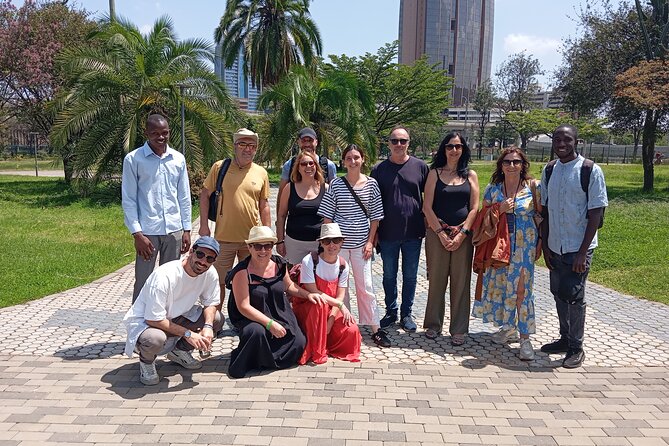
Nairobi reveals itself best on foot. This $20 walking tour links mosques, markets, parks, churches, government buildings, and museums in one useful circuit through the city center. I like the mix of everyday Nairobi and major landmarks, and I like that local guides John and Samson explain the city in a relaxed, personal way. The main drawback is the pace: with 12 stops in about 2 hours and 40 minutes, you will see many places briefly rather than explore each one at length.
This is a good first look at Kenya’s capital, a city of roughly five million people where modern buildings sit near older colonial-era sites and open green spaces. You should expect plenty of walking, a group of up to 50 people, and an outdoor experience shaped by the energy of central Nairobi. The rooftop visit at the Kenyatta International Conference Center is the one stop with an extra admission cost.
In This Review
- Key points to know before booking
- Why this city walk works well for a first visit
- Starting near Wabera Street and Jamia Mosque
- City Market and the first chance to shop
- The University of Nairobi and a changing capital
- The Maasai Market and choosing a souvenir
- Uhuru Park, green space in the city center
- The cathedral, Parliament, and the KICC view
- Nairobi Railway Museum and the city’s beginnings
- National Archives and Jeevanjee Gardens
- What the $20 price really gets you
- Timing, comfort, and who should book
- The guides make the difference
- Should you book the Nairobi City Walk Tour?
- FAQ
- How much does the Nairobi City Walk Tour cost?
- How long does the tour last?
- Where does the tour start?
- Where does the tour end?
- Is transportation included?
- Which languages are available?
- What is the maximum group size?
- Is the KICC rooftop admission included?
- Can I cancel for a full refund?
Key points to know before booking

- Twelve central Nairobi stops: The route covers Jamia Mosque, City Market, Uhuru Park, Parliament, the Railway Museum, National Archives, and more.
- John and Samson guide the experience: John receives especially strong praise for his clear explanations, friendly manner, city knowledge, and ability to answer questions.
- A useful orientation tour: The route gives you a practical sense of Nairobi’s center, making it easier to understand the city during a short stay.
- Souvenir shopping is built in: City Market and the Maasai Market are natural places to look for crafts and traditional items.
- The KICC rooftop costs extra: Admission is not included, but the view across central Nairobi is one of the tour’s visual highlights.
- Plan for a serious walk: The official duration is about 2 hours and 40 minutes, but one outing lasted 3.5 hours, so comfortable shoes and flexible timing make sense.
Why this city walk works well for a first visit

Nairobi can feel like a large puzzle when you first arrive. A guided walk helps you place the main landmarks on a mental map while giving you context about how the capital developed.
I particularly like the route’s variety. You move from a major mosque to a historic library, then to a market, a university, a park, a cathedral, the national Parliament area, and institutions that preserve Kenya’s past. It is not simply a parade of monuments. You get glimpses of religion, education, commerce, politics, public space, and local art within one outing.
The tour also has a strong local voice. John is described as young, energetic, friendly, and easy to understand. He explains Nairobi’s past in a clear voice and also talks about ordinary life in Kenya. That matters because a city walk is only as good as the person connecting the buildings to the people who use them.
The route is not designed for long museum visits or extended shopping. Most stops last 10 to 20 minutes. I would treat it as a broad introduction, not a detailed study of every site.
More City Tours in Nairobi
- Nairobi Historical Walking City Tour
★ 5.0 · 258 reviews - Nairobi City Walking Tour with Traditional Kenyan Lunch
★ 5.0 · 106 reviews - Nairobi: Private 4-Hour City Tour
★ 4.5 · 68 reviews
Starting near Wabera Street and Jamia Mosque
The meeting point is at Carrefour St. Ellis, PR7F+G34 on Wabera Street. The activity ends back at the same meeting point, which simplifies your plans before and after the walk. The starting area is near public transportation, and a mobile ticket makes check-in practical.
The first stop is Jamia Mosque, described as the biggest mosque in Kenya. You have about 10 minutes here, with no admission fee. The short visit gives the guide a chance to explain the place within Nairobi’s religious and civic life, though you should not expect a full interior tour or extended time for quiet observation.
From there, the walk moves to McMillan Memorial Library. This old city library was built in 1929 by Lady MacMillan in memory of William MacMillan. The stop lasts about 10 minutes and is free. Its appeal is less about a long visit inside and more about seeing an older Nairobi institution that reflects the city’s early twentieth-century development.
These opening stops set the tone. You are not seeing only the newest side of Nairobi. The route keeps returning to older institutions and the way they fit into the modern capital.
City Market and the first chance to shop
City Market gets about 20 minutes, making it one of the longer stops. It is a place to find traditional items made by different Kenyan communities, including Maasai goods. If you want a souvenir, this is an early chance to compare items and prices.
I would avoid rushing into a purchase during the first few minutes. Use the stop to look at the range of crafts, then decide if something is worth carrying for the rest of the walk. Since the tour later visits the Maasai Market, you can also wait and compare before buying.
The value here is cultural as well as practical. A market gives you a more direct sense of local commerce than a display behind glass. Still, this is a guided city walk, not a dedicated shopping trip. Twenty minutes may be enough for browsing, but not for a long negotiation or a careful search for a particular object.
The University of Nairobi and a changing capital
The University of Nairobi receives about 20 minutes. It is described as the oldest and biggest university in eastern Africa. The stop adds an important part of modern Kenyan life to the route, showing that Nairobi is not only government offices, religious buildings, and tourist sights.
This is also a good point to ask John about education, city growth, and the role of Nairobi as a national center. The guide is open to questions, and that personal exchange is one of the strongest parts of the experience.
The itinerary does not promise a campus tour or entry into university buildings. Expect an exterior visit and an explanation of the institution rather than a formal academic presentation.
More Walking Tours in Nairobi
- Nairobi: Historic and Modern Highlights Walking Tour
★ 4.8 · 703 reviews - Nairobi Downtown Walking Tour
★ 4.7 · 208 reviews - Nairobi Walking Tour: Downtown & City Tour
★ 4.8 · 32 reviews - Day tour to Hells Gate, Lake Naivasha and Crescent Island Walk
★ 5.0 · 26 reviews
The Maasai Market and choosing a souvenir

The Maasai Market is another 20-minute stop. It sells Maasai items along with products associated with other Kenyan communities. The tour describes it as the best place for souvenirs, so this is where you may want to make your final purchase.
I like having two market stops because it gives you a chance to see different shopping settings. City Market comes earlier, while the Maasai Market gives you another opportunity after you have learned more about the country’s cultural groups.
Keep your expectations realistic. The tour does not state that every item is handmade, antique, or sourced from a particular community. Look closely, ask questions, and buy something because you like it, not simply because it carries a cultural label.
Uhuru Park, green space in the city center

Uhuru Park is a beautiful public park in the middle of Nairobi. You get about 15 minutes here, and admission is free. This stop breaks up the built-up sections of the route and shows why Nairobi is often described as a green capital.
The park also helps you understand the city’s scale. Tall buildings, busy roads, and open public space exist close together. I would use the stop to slow down, take photos, and listen to the guide’s explanation of the park and its place in Nairobi.
Fifteen minutes is not enough for a long stroll through the grounds. It is a pause within a much longer walking route, not a separate park visit.
The cathedral, Parliament, and the KICC view
The Cathedral Basilica of the Holy Family is a 10-minute stop. This Catholic church sits in the city center and adds another religious landmark after Jamia Mosque. Seeing both places on the same walk helps you notice Nairobi’s mix of faiths and communities.
The route then reaches the Kenyatta International Conference Center, one of the city’s most recognizable buildings. The visit lasts about 15 minutes, and the rooftop offers a clear view of Nairobi. Admission is not included, so you should budget separately for this part.
For me, this is one of the tour’s most useful photo stops. The view gives you a better sense of the central district than a street-level walk alone. Since the extra fee is not stated, check the current cost when booking or before entering.
Parliament follows for about 10 minutes. The description calls it a tower where members of Parliament hold meetings. You should expect an exterior look and an explanation from the guide, not an interior parliamentary tour. Government buildings can be hard to understand from the street, so having John explain their role adds value.
Nairobi Railway Museum and the city’s beginnings
The Nairobi Railway Museum is a brief 10-minute stop. The railway was built by the British with help from Indian workers, and its development led to the creation of Nairobi. That connection gives the stop real importance: the city grew in part because of the railway.
The short time here is the main limitation. A railway museum normally rewards a longer visit, especially if you enjoy transport history or old engineering. This tour gives you an introduction, but you may want to return independently if the subject catches your interest.
The stop also broadens the tour beyond present-day city life. Nairobi’s growth was tied to imperial construction, Indian labor, transport, and trade. The guide can help connect those facts to the streets you are walking through.
National Archives and Jeevanjee Gardens
The National Archives on Moi Avenue is the final major historical institution on the route. It holds artifacts and documents connected with Kenya’s government history since independence. The planned visit lasts about 10 minutes and admission is listed as free.
Again, think of this as a short orientation rather than a full archive visit. The collection may interest you most if you want a clearer sense of Kenya’s political and cultural record. With only 10 minutes, you will have to focus on the explanation and any quick look inside that the schedule allows.
The last stop is Jeevanjee Gardens, a small park in Nairobi. It provides another open-air pause before the walk returns to Carrefour St. Ellis. Ending in a modest city park feels fitting after a route that has moved through major public buildings and crowded streets.
What the $20 price really gets you
At $20 per person, this tour offers strong value if you want a guide-led introduction to central Nairobi. You receive a certified guide, all listed fees and taxes, and an English or Spanish-speaking guide. The price also includes access to the free stops, but not the KICC rooftop admission.
The value comes from the connections between places. Visiting one landmark alone might tell you little about the city. Moving from mosque to library, market to university, park to Parliament, and railway museum to archive creates a much clearer picture.
Transportation is not included. That is not a serious problem if you are already near central Nairobi, since the tour is built around walking and the meeting point is near public transportation. It does mean you should arrange your own way to Wabera Street and back if you are staying farther away.
A group of up to 50 people is allowed. That is the biggest practical concern for anyone who prefers a quiet, highly personal walk. A smaller group may be easier for questions and street crossings, while a larger group can make it harder to hear or stay close to the guide.
Timing, comfort, and who should book
The stated duration is about 2 hours and 40 minutes. One outing took 3.5 hours and covered several miles, so I would leave extra time afterward. Do not schedule a tight airport transfer, meal reservation, or appointment immediately after the walk.
You should wear comfortable shoes and be ready to walk between stops. The itinerary includes many short visits, so the experience feels active rather than slow. If you have limited walking ability, note that the information says most participants can take part, but it does not provide detailed accessibility information.
I would recommend this tour to:
- First-time visitors with a short stay in Nairobi
- People who want local explanations rather than a self-guided route
- Solo visitors who prefer a structured introduction
- Anyone interested in markets, public spaces, religion, politics, and city history
- Spanish speakers who want a guide able to explain Nairobi in Spanish
I would be more cautious if you want lengthy museum visits, private transportation, a small group, or a relaxed pace. The tour covers a lot of ground, and its strength is range.
The guides make the difference
John is the name most closely associated with the experience. His strengths are clear explanations, friendly conversation, strong navigation around the city, and a willingness to answer questions. He also speaks Spanish very well, which makes the tour especially useful for Spanish-speaking visitors.
Samson also guides the walk, and the two have been praised for being personable and well informed. That combination matters in Nairobi, where the setting changes quickly from formal institutions to open markets and busy streets.
I would ask questions as you go. The most useful parts of a city walk are often not the prepared facts, but the guide’s explanations of daily life, local customs, city development, and how the different communities shape Nairobi.
Should you book the Nairobi City Walk Tour?
Yes, if you want an affordable and active introduction to Nairobi’s center. For $20, you get a broad route, local guidance, two market stops, green parks, historic institutions, and the chance to see the city from the KICC rooftop for an additional fee.
Book it early if your schedule is fixed, since it is commonly reserved about 15 days ahead. Allow at least three hours, bring comfortable shoes, and keep your shopping light until you have visited both markets.
Skip it if you want a private vehicle tour or the chance to spend an hour inside each museum and landmark. For most first-time visitors with limited time, though, John’s walk offers a practical way to get your bearings and see Nairobi as a living capital rather than a list of isolated sights.
FAQ
How much does the Nairobi City Walk Tour cost?
The tour costs $20 per person. Admission to the KICC rooftop is not included.
How long does the tour last?
The stated duration is approximately 2 hours and 40 minutes. One outing lasted 3.5 hours, so you should allow some extra time.
Where does the tour start?
It starts at Carrefour St. Ellis, PR7F+G34, on Wabera Street in Nairobi, Kenya.
Where does the tour end?
The activity ends back at the same meeting point.
Is transportation included?
No. Private transportation is not included. The meeting point is near public transportation.
Which languages are available?
The certified guide service is available in English and Spanish. John is described as speaking Spanish very well.
What is the maximum group size?
The tour can include up to 50 people.
Is the KICC rooftop admission included?
No. The KICC rooftop is the only listed stop with an admission charge that is not included in the tour price.
Can I cancel for a full refund?
Yes. You can cancel at least 24 hours before the start time for a full refund. Cancellations or changes made within 24 hours are not refunded or accepted.
Just added around Nairobi
- Nairobi: Giraffe Center, Elephant Orphanage and Bomas Tour★ 5.0 · 3 reviews
- Nairobi: Airport and Hotel Private Transfers.★ 4.0 · 3 reviews
- 11-Days Best of Kenya & Tanzania Big 5 Safari on a 4×4 Jeep★ 5.0 · 3 reviews
- Kitengela Anselm Hot Glass tour★ 4.5 · 3 reviews
- NAIROBI NATIONAL PARK AFTERNOON GAME DRIVE.★ 5.0 · 3 reviews
- 12-Day Tsavo west Amboseli lake Nakuru Maasai Mara safari★ 5.0 · 3 reviews
- Nairobi Down Town & Walking City Tour★ 4.8 · 3 reviews
- Carnivore Resturant Dinner Experience★ 4.0 · 3 reviews
Walking Tours, compared.

Walking Tour Through Old Town Mombasa and Fort Jesus
Read our review →

Nairobi Walking tour:Explore History Culture and Traditions
Read our review →

Nairobi City Walking Tour with Traditional Kenyan Lunch
Read our review →

Browse the lists this tour appears in