

Reviewed · WALKING TOURS
Nairobi City Guided Walking Tour
Nairobi reveals itself on foot. This compact city tour brings together rooftop views from the KICC, independence-era monuments, the 1998 bombing memorial, and a stop at Maasai Market. I like the way it gives you both the big picture and the street-level details, especially with a guide such as Calvince explaining the people and events behind each place.
I also like the small group size, capped at eight people, and the help with market bargaining. The main consideration is the market itself: salespeople can be persistent, and the two-hour schedule leaves limited time at each historic stop. At $40 per person, you are paying mainly for local guidance and context, not admission-heavy sightseeing.
This is a useful first look at central Nairobi, especially if you want to get your bearings before visiting other parts of the city. The route covers a lot, but it is not a slow museum tour. You will spend much of the time walking, listening, and moving on.
In This Review
- Key Things to Know Before You Go
- Starting at the Hilton and Finding Your Bearings
- KICC Rooftop Views and Kenya’s First President
- Dedan Kimathi and Tom Mboya: Independence in Statue Form
- National Archives and Kipande House
- Jamia Mosque and Nairobi’s Religious History
- August 7th Memorial Park and a Difficult Chapter
- Maasai Market: Crafts, Bargaining, and a Test of Patience
- What $40 Really Buys You
- Who Will Get the Most From This Walk?
- Should You Book the Nairobi City Guided Walking Tour?
- FAQ
- How long does the Nairobi City Guided Walking Tour last?
- How much does the tour cost?
- Is KICC admission included?
- Where does the tour start?
- Where does the tour end?
- How many people can join the tour?
- Is the National Archives visited inside?
- Is the tour refundable if I cancel?
Key Things to Know Before You Go

- KICC gives you the city from above: The rooftop visit offers an aerial view of Nairobi, with a $5 admission fee paid separately.
- Kenyan independence is the main thread: Statues of Dedan Kimathi and Tom Mboya, along with Kipande House, connect the walk to the country’s political past.
- The tour includes a difficult modern-memory stop: August 7th Memorial Park marks the site of the 1998 US Embassy bombing and is viewed from outside.
- Maasai Market is part shopping stop, part cultural encounter: You can browse crafts and souvenirs, but expect direct selling and bargaining.
- The group stays small: A maximum of eight people makes it easier to ask questions and keep up in central Nairobi.
- The finish is practical: The walk ends after the market visit, and the guide can recommend a restaurant and help arrange an Uber back to your hotel.
Starting at the Hilton and Finding Your Bearings

The listed meeting point is the Globetrotter of Scandinavia Hilton Hotel on City-Hall Way. The tour operates near public transportation, and confirmation is provided when you book. Since the experience averages being reserved 35 days ahead, booking early is sensible if your Nairobi dates are fixed.
The walking portion lasts about two hours. The scheduled stops add up to roughly 85 minutes before allowing for the walks between them, so you should expect a steady city walk rather than long breaks. Wear comfortable shoes and keep your attention on the guide, especially when the route moves between busy central streets.
The tour accepts mobile tickets, which keeps the start simple. With no more than eight people, you should have a better chance of hearing the explanations than you would on a large coach excursion. That matters here because many of the stops are ordinary-looking city locations whose importance comes from the story told on site.
The guide is the key part of the experience. Calvince is praised for explaining Kenyan history clearly and making the monuments easier to understand. If you have only just arrived in Nairobi, this background can help you recognize why later visits to museums, markets, or memorials matter.
More City Tours in Nairobi
- Nairobi Historical Walking City Tour
★ 5.0 · 258 reviews - Nairobi City Walking Tour with Traditional Kenyan Lunch
★ 5.0 · 106 reviews - Nairobi: Private 4-Hour City Tour
★ 4.5 · 68 reviews
KICC Rooftop Views and Kenya’s First President
The first major stop is the Kenyatta International Conference Center, usually known as KICC. The tour takes you to the first statue of Jomo Kenyatta, Kenya’s first president, and offers the chance to go to the building’s rooftop for a view over Nairobi.
The rooftop is not included in the $40 price. Admission is listed at $5 per person, so bring that extra amount if you want the aerial view. The tour description presents KICC as Nairobi’s tallest building, making this the natural place to begin with a broad view of the capital.
Timing can shape this stop. Depending on when your tour runs, the rooftop may give you sunrise or sunset views. That possibility adds a pleasant bonus, but you should not book the walk solely for a dramatic sky. The exact light depends on your start time and conditions.
The KICC stop is scheduled for only 10 minutes, so the visit is brief. You will have time to look out, take pictures, and hear the basic story, but not to linger for a long city-view session. The admission cost is fair if an elevated view is important to you, though visitors watching their budget can skip the rooftop and still benefit from the guide’s explanation outside.
Dedan Kimathi and Tom Mboya: Independence in Statue Form

The walk then turns to two figures tied to Kenya’s independence movement. At the Dedan Kimathi Statue, the guide explains Kimathi’s role as a national hero and one of the people who helped Kenya fight for independence. The scheduled stop is five minutes, so expect a short explanation and time for a photograph.
The Tom Mboya Statue follows. Mboya played an important role in the independence story and spoke at the congress hall in support of Kenya’s freedom. Again, this is a quick stop, with about five minutes for the explanation and pictures.
These statues are valuable because they break up the political story into recognizable individuals. Instead of hearing a general account of independence, you see the people the city has chosen to remember. I would pay close attention to names, dates, and roles here, since the stops are short and the details can pass quickly.
The drawback is that neither stop offers much time for extended discussion. If Kenyan political history is your main interest, treat this tour as an introduction. You will get a framework for later reading or museum visits, not a full history lesson.
National Archives and Kipande House
The Kenya National Archives is explored from the outside. It is a national monument and an important place for understanding Nairobi’s past, but entry is optional and the tour schedule does not include an interior visit. The stop lasts about 10 minutes.
That outside view still has value. A guide can point out why the building matters and connect it to the city’s records and public memory. If you want to go inside, clarify the timing with the guide, since the planned experience focuses on the exterior.
The route also includes Kipande Road and Kipande House, a national monument with an important part in Kenya’s growth as a country. This stop lasts about five minutes. Like the statues, Kipande House works best when you listen to the explanation rather than expect a long visit inside.
The appeal of these stops is their ordinary setting. You are not being driven to isolated attractions with no connection between them. You are walking through central Nairobi and learning how streets, buildings, and monuments fit into the country’s story. That is a useful way to understand the capital, though the rapid pace may frustrate anyone who likes to examine every building at leisure.
More Walking Tours in Nairobi
- Nairobi: Historic and Modern Highlights Walking Tour
★ 4.8 · 703 reviews - Nairobi Downtown Walking Tour
★ 4.7 · 208 reviews - Nairobi Walking Tour: Downtown & City Tour
★ 4.8 · 32 reviews - Day tour to Hells Gate, Lake Naivasha and Crescent Island Walk
★ 5.0 · 26 reviews
Jamia Mosque and Nairobi’s Religious History

Jamia Mosque is another short stop, scheduled for about 10 minutes. The mosque is described as a national monument and a center of worship for Nairobi’s Muslim community. You can see the building, take pictures, and hear more about its role in the city.
The tour does not promise an interior visit, so you should treat this as an exterior sightseeing and history stop. Be respectful with photography and follow any instructions given at the site. The value here is the chance to include Nairobi’s Muslim heritage in a city tour that otherwise leans heavily toward political history and public monuments.
Ten minutes is enough for a basic introduction, but not for a detailed architectural study or extended religious discussion. If you want a longer visit, ask the guide whether the route allows extra time. Since the tour ends after the market visit, stretching one stop could reduce time elsewhere.
August 7th Memorial Park and a Difficult Chapter

At August 7th Memorial Park, you see the site where the US Embassy was bombed in 1998. The attraction is explored from outside, and the stop is scheduled for 10 minutes.
This is a serious part of the walk. The memorial connects Nairobi’s streets with a painful event in recent history, and the guide’s explanation gives the location meaning beyond its appearance. It is not simply another photo stop. Give the site the attention it deserves and expect the mood to change from the lighter pace of statues and shopping.
Because the visit is exterior only, you will not receive the full experience of a dedicated memorial visit. Still, including the site gives you a clearer sense of Nairobi’s modern history and the events that have shaped the city’s public memory.
Maasai Market: Crafts, Bargaining, and a Test of Patience

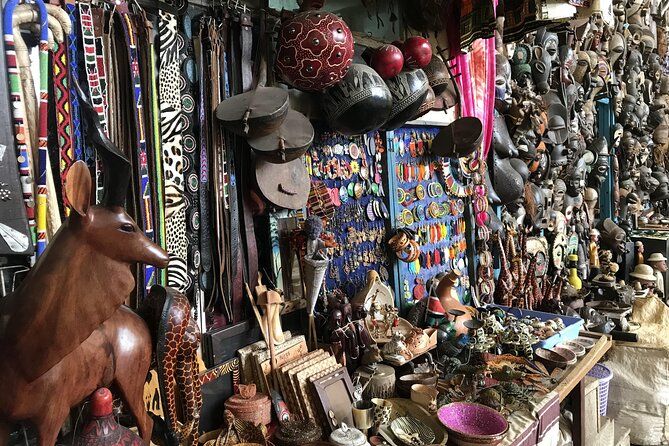
The Maasai Market receives the longest scheduled stop, about 30 minutes. Here you can browse African handicrafts, souvenirs, curios, and other locally sold items. You can also take pictures and interact with sellers.
The guide’s help with prices is one of the strongest practical reasons to book this tour. Bargaining can be unfamiliar, and it is easy to pay more than necessary when you do not know the local range. Calvince’s role is to help you buy at a local price and keep the process from becoming confusing.
Still, you should know what kind of market this is. Salespeople may approach you directly and continue trying to make a sale. If you dislike persistent selling or bargaining, this could be the least comfortable part of the tour. Go in with a clear budget, compare items before buying, and remember that you can walk away politely.
The market is useful for small gifts and a first look at local craft trading, but it may not be the best place for a relaxed coffee break or careful souvenir search. One helpful tip is to consider Langata Link or Spinners Web for souvenirs and gifts if you prefer a calmer shopping setting. Those places were also singled out as good options for coffee and lunch.
The advertised end point is City Market on Muindi Mbingu Street, and the tour ends after the market visit. Since the description uses Maasai Market for the shopping stop and lists City Market as the final point, confirm the exact drop-off location with the guide if you need to meet a driver or connect with another activity.
What $40 Really Buys You

At $40 per person, this is not the cheapest way to walk through central Nairobi. The value depends on how much you want from a guide.
The price includes the guided walk and Wi-Fi, but KICC admission costs an extra $5. Most of the other listed stops are free, and the National Archives and August 7th Memorial Park are visited from outside. You are paying for the guide’s time, historical explanations, market assistance, and the convenience of linking eight places in a single route.
For a first day in Nairobi, that can be good value. You get a city overview without arranging several separate visits, and the small group keeps the experience more personal. The guide can also recommend a restaurant afterward and help you arrange an Uber back to your hotel, which is useful if you are still learning how the city works.
The value is weaker if you mainly want long visits inside attractions. This tour does not include a museum admission, a full National Archives visit, or a full memorial visit. It is best understood as a guided introduction to central Nairobi, not a collection of major indoor attractions.
Who Will Get the Most From This Walk?
I would recommend this tour to first-time visitors who want historical context before exploring Nairobi on their own. It suits people who enjoy walking, short stops, city stories, and practical help with shopping.
It is also a good fit if you are traveling alone or prefer a small group. A maximum of eight people is more manageable than a large sightseeing group, especially when the guide is explaining statues or helping with market purchases.
You may want a different plan if you dislike bargaining, persistent sellers, or quick outdoor stops. The tour also may not satisfy you if your main goal is wildlife, art, architecture, or long museum visits. Its focus is central Nairobi’s public history and everyday street life.
The fixed, non-refundable booking policy deserves attention. Once you book, you cannot cancel or change the experience for a refund, so only reserve after your schedule is firm.
Should You Book the Nairobi City Guided Walking Tour?
Book it if you want a well-organized first look at Nairobi, value a guide who can explain Kenya’s independence story, and like the idea of ending with a local market. The combination of KICC views, national heroes, Kipande House, Jamia Mosque, the 1998 bombing site, and shopping gives you a useful introduction in a short time.
Skip it if you want a slow-paced tour or dislike market bargaining. In that case, the $40 may feel high for a route where most stops are outside and brief.
For many first-time visitors, I think the tour earns its place early in a Nairobi stay. Take the extra $5 for KICC if the view matters to you, keep your market budget controlled, and ask the guide for restaurant and transport help at the end.
FAQ
How long does the Nairobi City Guided Walking Tour last?
The tour lasts approximately two hours.
How much does the tour cost?
The price is $40 per person.
Is KICC admission included?
No. Admission to KICC costs $5 per person and is not included.
Where does the tour start?
The listed starting point is the Globetrotter of Scandinavia Hilton Hotel on City-Hall Way in Nairobi.
Where does the tour end?
The listed end point is City Market on Muindi Mbingu Street, and the tour ends after the market visit.
How many people can join the tour?
The tour has a maximum group size of eight people.
Is the National Archives visited inside?
No. The planned tour explores the Kenya National Archives from outside. Going inside is optional.
Is the tour refundable if I cancel?
No. The experience is non-refundable and cannot be changed for any reason after booking.
Just added around Nairobi
- Nairobi: Giraffe Center, Elephant Orphanage and Bomas Tour★ 5.0 · 3 reviews
- Nairobi: Airport and Hotel Private Transfers.★ 4.0 · 3 reviews
- 11-Days Best of Kenya & Tanzania Big 5 Safari on a 4×4 Jeep★ 5.0 · 3 reviews
- Kitengela Anselm Hot Glass tour★ 4.5 · 3 reviews
- NAIROBI NATIONAL PARK AFTERNOON GAME DRIVE.★ 5.0 · 3 reviews
- 12-Day Tsavo west Amboseli lake Nakuru Maasai Mara safari★ 5.0 · 3 reviews
- Nairobi Down Town & Walking City Tour★ 4.8 · 3 reviews
- Carnivore Resturant Dinner Experience★ 4.0 · 3 reviews
Walking Tours, compared.


Walking Tour Through Old Town Mombasa and Fort Jesus
Read our review →

Nairobi Walking tour:Explore History Culture and Traditions
Read our review →

Nairobi City Walking Tour with Traditional Kenyan Lunch
Read our review →

Browse the lists this tour appears in