

Reviewed · MAASAI VILLAGE VISITS
Maasai Village Experience Day Tour
The road is part of the lesson. This $100 day tour from Nairobi takes you beyond the usual safari stop and into a small Maasai village, where you can milk a goat, cook ugali, make beadwork, learn a few Maasai words, and join songs and dancing. I especially like the hands-on village activities and the chance to see ordinary trade at a livestock market on Mondays or Fridays.
I also like the practical setup: hotel or airport pickup, an air-conditioned vehicle, bottled water, onboard Wi-Fi, and guides such as Simon, Sharon, and Dennis, who are praised for their warmth and clear explanations. The main drawback is the long drive, about 2.5 hours each way, and the village visit can feel smaller and simpler than some people expect. Bring a snack, since lunch is not included.
In This Review
- Key points to know before you go
- Leaving Nairobi for Kajiado’s open plains
- Bisil on Monday or Friday: a working livestock market
- Three hours of village work, food, and music
- What the village visit is really like
- Kitengela Mall gives you a needed break
- A brief stop at a primary school in Ilbisil
- Is $100 a fair price from Nairobi?
- Clothing, courtesy, and what to pack
- Who will enjoy this day most?
- Should you book the Maasai Village Experience Day Tour?
- FAQ
- How long does the Maasai Village Experience Day Tour last?
- What time does the tour start?
- Is hotel or airport pickup available in Nairobi?
- What activities can I do in the Maasai village?
- Can I see a livestock market?
- Is lunch included?
- What should I wear and bring?
Key points to know before you go
- Monday or Friday adds a livestock market: Bisil may have goats, cattle, Maasai beadwork, herbs, and clothing for sale.
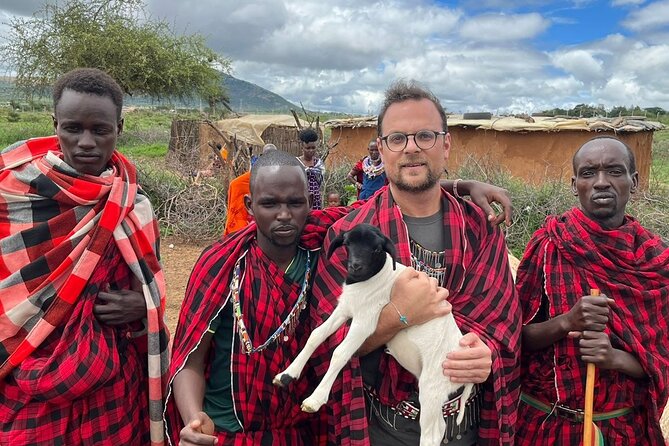
- The village visit is hands-on: You can milk a goat, help cook ugali, make beadwork, learn words, and enter a manyatta.
- The drive takes about five hours round trip: The scenery is worthwhile, but this is a full day on the road.
- Guides make a major difference: Simon, Sharon, and Dennis are repeatedly praised for their energy, patience, cultural explanations, and help with photographs.
- Pack for village conditions: Wear closed shoes and modest clothing, carry a snack and some cash, and use the bathroom at scheduled stops.
- The experience is intimate but not elaborate: The village may consist of one or two families, which can make the visit personal, though not grand.
Leaving Nairobi for Kajiado’s open plains
The day begins around 8 a.m. with pickup from your Nairobi hotel or the airport. The exact pickup details are sent the night before, so keep an eye on your phone and be ready for a morning departure.
The air-conditioned vehicle matters here. Nairobi can be busy, and the road toward Kajiado takes you from city traffic into broad, open country. Wi-Fi and bottled water are included, though I would still carry a small snack because the schedule has no proper lunch stop.
Kajiado is the first major town outside the Nairobi metropolitan area on this route. It is predominantly Maasai in population, and the roadside view gives you a useful introduction before you reach the village. You may see goats, donkeys, and cattle, along with people going about daily business in town.
The scenery changes as you go. You pass wide plains, hills, and stretches of vegetation. You may spot Maasai herders moving animals in search of pasture or women carrying firewood. These are not staged performances. They are brief views from the road, so keep your camera ready, but remember that a passing glimpse is not the same as a conversation.
The drive is about 2.5 hours each way. That is the central tradeoff of the tour. You give up a large part of the day to the road, but the journey helps place the village in its wider setting. You see how quickly Nairobi gives way to rural communities and open grazing country.
More Maasai village visits:
- Nairobi: Day Tour to Amboseli National Park & Maasai Village
★ 4.5 · 310 reviews - Masai village Day Tour Experience
★ 5.0 · 284 reviews - From Nairobi: Maasai Village Experience Day Tour
★ 4.9 · 70 reviews
Bisil on Monday or Friday: a working livestock market
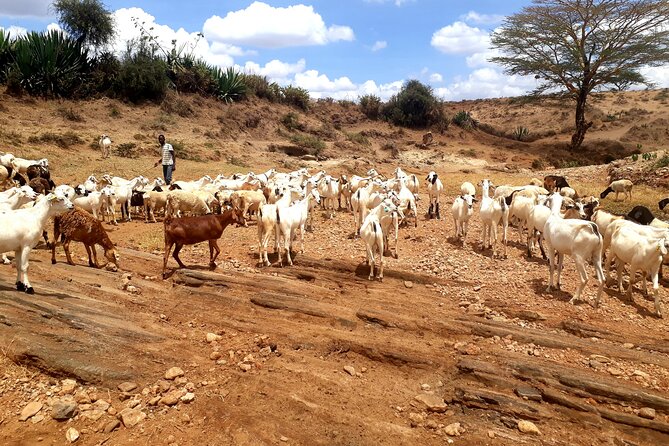
The first substantial stop is Bisil, a Maasai-majority town along the route. If your visit falls on a Monday or Friday, the livestock market is the extra reason to choose that day.
The market may include goats and cattle, along with Maasai beadwork, herbs, and traditional clothing. It is a place of buying and selling, not a performance arranged for tourists. That makes it one of the most interesting parts of the day for anyone curious about local commerce and rural life.
You may find the market smaller than expected. One account describes a market focused mainly on livestock with only one other vendor present. That is useful to know. Monday and Friday improve your chances of seeing market activity, but they do not guarantee a huge fair packed with stalls.
Give yourself about an hour here. Watch how animals are handled and traded, but do not get in the way of business. Ask your guide before photographing people, especially during negotiations. The guide can also help you understand what you are seeing and point out souvenirs.
The market is a good place to carry cash. You might find a small piece of beadwork or another locally made item, but purchases are optional. The tour also allows donations, so you can bring clothes, school supplies, children’s toys, teaching aids, food items, or other useful goods. It is best to ask the guide what would be appropriate rather than handing out items casually.
Three hours of village work, food, and music
The main village visit lasts about three hours. This is not a quick photo stop. You are introduced to village members and take part in a set of simple activities that show how work, food, clothing, and community fit together.
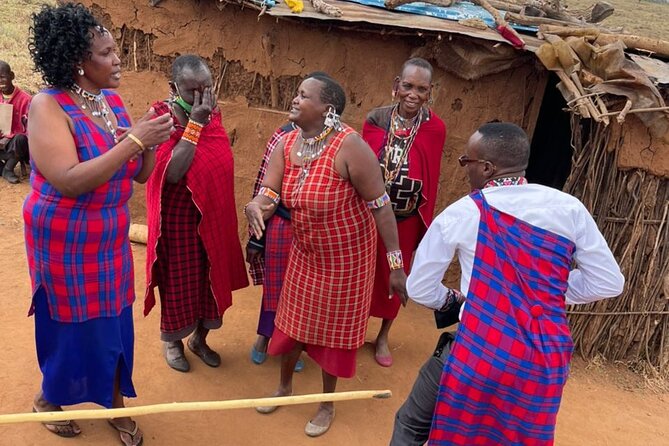
You may begin by learning a few Maasai words. This small gesture matters. Even a basic greeting can make the meeting feel more respectful and less like an inspection. Guides such as Simon are praised for explaining what to expect and helping visitors approach the community politely.
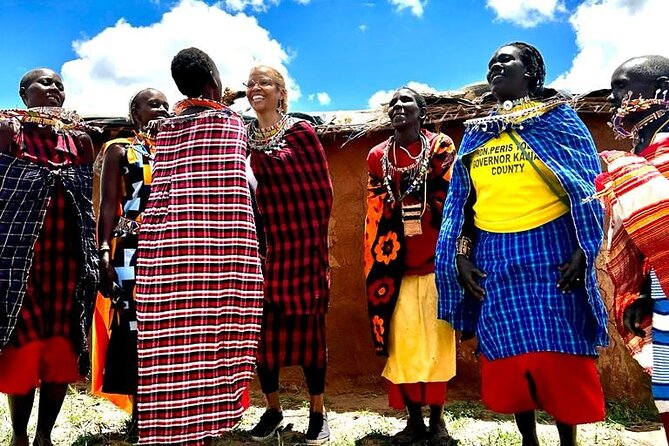
You may also be dressed in traditional clothing and jewelry. This can make for memorable photographs, but treat it as a chance to ask questions rather than a costume novelty. Your guide can explain what you are wearing and how it fits into Maasai culture.
Goat milking is one of the more practical activities. You get to handle the animal and see a small part of daily food production. You may also help herd goats, handle young animals, and watch village members demonstrate how tasks are done.
Cooking is another highlight. You can help prepare a basic meal and cook ugali, a staple made from maize flour. Do not expect a cooking class with a printed recipe or a restaurant-style meal. The value is in seeing the work involved and trying a familiar food in a different setting.
The visit may include entering a manyatta, the traditional Maasai dwelling. This gives you a closer look at the structure and living space than you would get from a roadside stop. The experience is basic and direct, so modest clothing and a considerate manner are important.
Beadwork adds another hands-on element. You can make a small beaded item and learn about a craft closely associated with Maasai identity and trade. It is also a chance to buy something directly, if you wish. Carry cash for souvenirs, since the tour does not state that card payments are available in the village.
The final part often brings music, singing, and dancing. The welcome has been described as warm, and the music can be one of the most moving moments of the day. Join in if invited, but follow the lead of the community and your guide. You do not need to perform perfectly. Enthusiasm and respect are more useful than polished footwork.
What the village visit is really like
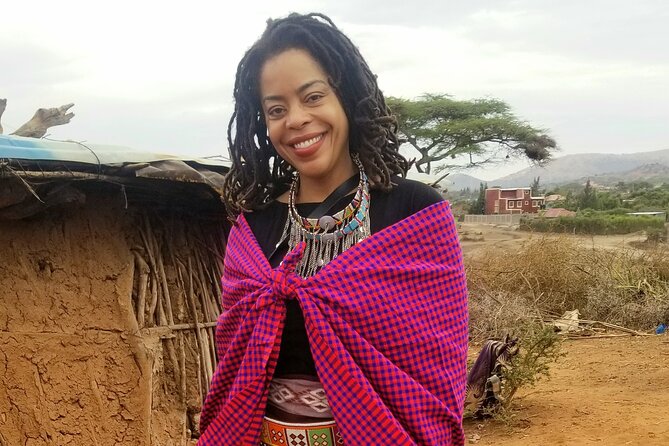
It helps to set your expectations correctly. This is not a large cultural center with many exhibits, a shop-lined compound, or a long list of formal demonstrations. The village can be small, sometimes centered around one or two families.
That small scale is both a strength and a limitation. I like the chance to ask questions and spend real time with a host family rather than moving through a crowded attraction. At the same time, you may feel that the visit is shorter or less expansive than the phrase Maasai village experience suggests.
The best approach is to treat the day as a personal introduction, not a complete study of Maasai life. The tour gives you contact with specific people and selected daily tasks. It cannot represent every Maasai community, family structure, or modern experience.
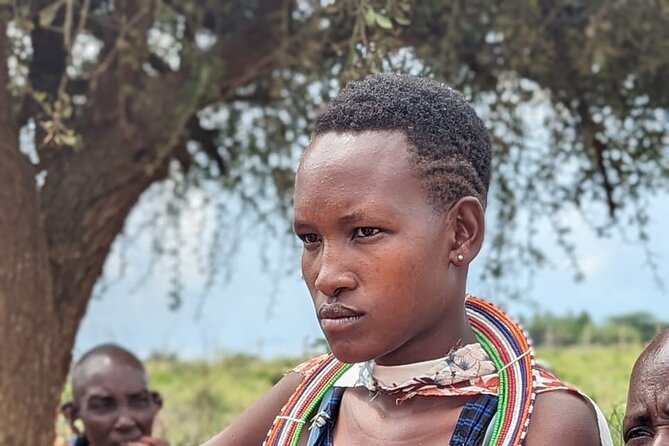
Your guide helps keep the visit useful. Simon is frequently praised for his patience, English, cultural explanations, and ability to make the long drive pass quickly. Sharon is described as friendly and helpful, while Dennis receives strong praise for his energy, humor, and concern for supporting local villages and traditions.
Some guides may take photographs and videos for you. That is a useful touch, especially if you are traveling alone, but professional cameras and commercial photography are not allowed. Use a phone or ordinary personal camera, and always ask before photographing people.
A few more trips worth weighing up
- Nairobi National Park Half-Day Tour; Free Wi-Fi connection
★ 5.0 · 878 reviews - Nairobi: National Park & Optional Elephants & Giraffe Center
★ 4.8 · 874 reviews - NAI NAMI: Nairobi Storytelling Tour with Street Children
★ 5.0 · 792 reviews - Nairobi National Park Half-Day Game Drive
★ 4.5 · 738 reviews
Kitengela Mall gives you a needed break
On the return journey, the vehicle stops at Kitengela Mall for about 20 minutes. This is the practical pause in an otherwise active day.
You can use the bathroom, buy snacks, tea, coffee, or lunch, or visit an ATM. Since lunch is not included and the stop is short, plan your purchase quickly. I would not count on a leisurely meal here. A snack packed in advance remains the safest choice.
There is no bathroom at the village itself. The tour makes two bathroom stops along the way, so use them even if you do not feel an immediate need. This is one of those small details that can make a long rural day much more comfortable.
The timing is not rigid. The advertised duration is about six to eight hours, and the aim is to return to Nairobi before 4 p.m. Traffic, group size, bathroom stops, and food breaks can change that. The maximum group size is 50 people, so a full departure may take longer to move between activities than a private outing.
A brief stop at a primary school in Ilbisil
The final listed stop is Ilbisil, where the route passes a local primary school. The visit lasts about 20 minutes and may include seeing school activities and delivering donations.
This stop gives the day a community-support angle, but donations should be handled thoughtfully. Suggested items include clothing, school supplies, children’s toys, teaching aids, cooking oil, maize flour, and dry grains. You can bring items from home or carry money for a donation or local purchase.
Do not feel pressured to donate. The tour permits donations, but the decision should fit your budget and the guidance of the operator. If you bring supplies, practical goods are likely more useful than random gifts.
Is $100 a fair price from Nairobi?
At $100 per person, the tour is not the cheapest way to see rural Kenya. The price becomes easier to justify when you add up the included services: pickup, return transport, an air-conditioned vehicle, bottled water, Wi-Fi, entry charges, and a guide.
The real value is the access. A normal drive through Kajiado will show you scenery and herders, but it will not normally arrange goat milking, ugali preparation, beadwork, language practice, or time with a host family. The livestock market on Monday or Friday adds another layer at no extra stated admission cost.
I think the price works best for solo visitors and small groups who want one organized cultural day from Nairobi. Group discounts may improve the value for families or friends. The price works less well if you dislike long road journeys, prefer a packed sightseeing schedule, or expect an elaborate attraction with many activities running continuously.
The tour is also useful if you have limited time in Kenya. You do not need to arrange rural transport, find a community contact, or work out how to reach Bisil. The operator handles the route and introduces you to the village.
Clothing, courtesy, and what to pack

Wear closed shoes. Parts of the day take place outdoors and around animals, and practical footwear will serve you better than sandals.
Dress modestly and cover up. Pants are recommended for all genders. This is not only a comfort issue. Conservative clothing shows respect in a community that has its own customs and expectations.
I would pack:
- A snack and any personal drinks you need
- Cash for souvenirs, an ATM stop, or optional donations
- Sunscreen and a hat
- A phone or personal camera
- Light layers for changing conditions
- Hand sanitizer and tissues
Personal photography is allowed, but professional cameras and commercial photography are not. Ask before taking close-up portraits, particularly at the market and school.
Most people can take part, but the day includes a long vehicle journey, outdoor activity, walking around a village, and handling animals. If you have concerns about mobility or endurance, ask the provider before booking. The supplied information does not promise a fully accessible route.
Who will enjoy this day most?
I would choose this tour if you want direct contact, simple activities, and a better sense of life outside Nairobi. It suits solo visitors especially well because the guide can help with introductions, photographs, and questions. The positive experiences of solo women also suggest that the setting feels welcoming, with the important reminder to follow the modest-dress guidance.
It is a good fit for families and curious adults who enjoy learning by doing. Children may like the goats, beadwork, cooking, singing, and dancing, though parents should judge whether the long drive is suitable for them.
This is not the right pick if your priority is wildlife viewing. You may see goats, donkeys, cattle, and herders, but this is a cultural outing rather than a game drive. It is also not ideal if you need a guaranteed large market or a full restaurant lunch.
The tour has a 4.9 rating from 72 reviews and a 97 percent recommendation rate. Those numbers line up with the strongest parts of the day: friendly host families, guides who explain clearly, and activities that let you participate instead of simply watch.
Should you book the Maasai Village Experience Day Tour?
Book it if you value contact over spectacle. The best parts are the small village setting, the chance to help with ordinary tasks, and the guides, especially Simon, Sharon, and Dennis, who are repeatedly praised for their patience, humor, and care.
Choose Monday or Friday if the livestock market interests you, but keep expectations modest. Pack food, accept the long drive, dress respectfully, and allow the schedule to breathe. If you want a polished attraction or a quick cultural stop, choose something else. If you want a thoughtful day meeting people and trying a few pieces of daily life, this is a strong use of one day from Nairobi.
Free cancellation is available up to 24 hours before the start time. Cancellations or changes made inside that window are not refunded or accepted, and poor weather may lead to another date or a full refund.
FAQ
How long does the Maasai Village Experience Day Tour last?
The tour lasts approximately six to eight hours. The drive from Nairobi to the village takes about 2.5 hours each way, and the operator aims to return before 4 p.m., though traffic and breaks can affect the timing.
What time does the tour start?
The stated start time is 8:00 a.m. Pickup details are provided the night before the tour.
Is hotel or airport pickup available in Nairobi?
Yes. Pickup and transfers from Nairobi hotels or the airport are provided.
What activities can I do in the Maasai village?
You can learn Maasai words, milk a goat, help cook ugali, make beadwork, enter a manyatta, and join singing and dancing with village members.
Can I see a livestock market?
You have the best chance on Monday or Friday, when Bisil may host a livestock market. Goats, cattle, beadwork, herbs, and Maasai clothing may be traded, but the size and activity level can vary.
Is lunch included?
No. Lunch is not included. A stop at Kitengela Mall allows you to buy snacks, tea, coffee, or lunch, but you should bring a snack because the break is limited.
What should I wear and bring?
Wear closed shoes and modest clothing, preferably pants for all genders, with your shoulders and legs suitably covered. Bring cash for souvenirs or optional donations, a snack, and a personal camera or phone. Professional cameras and commercial photography are not allowed.
Just added around Nairobi
- Nairobi: Giraffe Center, Elephant Orphanage and Bomas Tour★ 5.0 · 3 reviews
- Nairobi: Airport and Hotel Private Transfers.★ 4.0 · 3 reviews
- Kitengela Anselm Hot Glass tour★ 4.5 · 3 reviews
- 11-Days Best of Kenya & Tanzania Big 5 Safari on a 4×4 Jeep★ 5.0 · 3 reviews
- 12-Day Tsavo west Amboseli lake Nakuru Maasai Mara safari★ 5.0 · 3 reviews
- NAIROBI NATIONAL PARK AFTERNOON GAME DRIVE.★ 5.0 · 3 reviews
- Nairobi Down Town & Walking City Tour★ 4.8 · 3 reviews
- Carnivore Resturant Dinner Experience★ 4.0 · 3 reviews
Maasai Village Visits, compared.

Day Tour to Amboseli National Park & Maasai Village
Read our review →

Day Trip: Amboseli National Park & Maasai Village – Nairobi
Read our review →
Day Trip to Maasai Mara Reserve & Maasai village
Read our review →
3days/2nights group joining Masai Mara with Masai Village Visit
Read our review →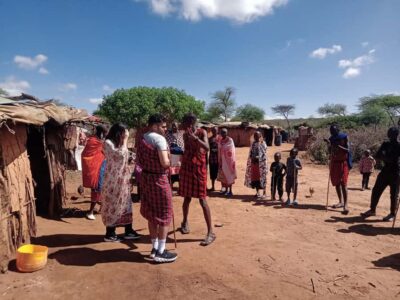
Kenya: Maasai Village Visit with Traditional Dance Show
Read our review →
Browse the lists this tour appears in