
Reviewed · MAASAI VILLAGE VISITS
From Nairobi: Maasai Village Experience Day Tour
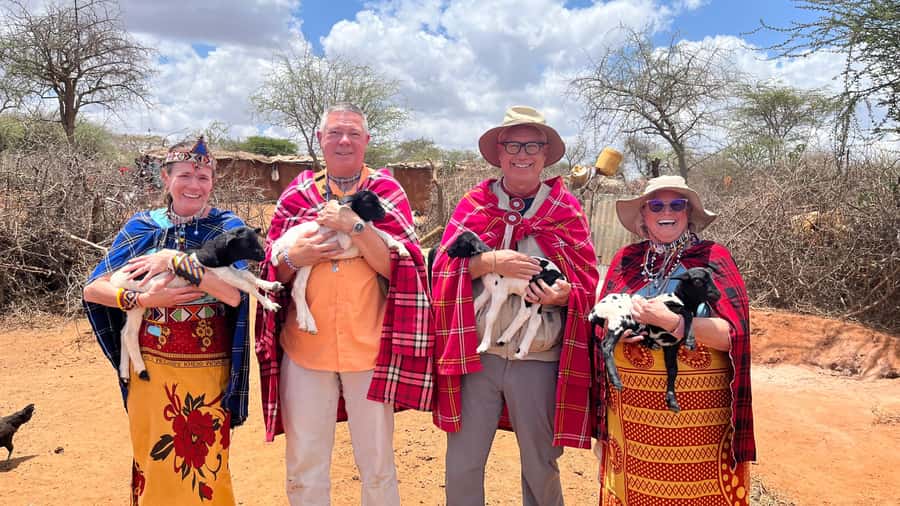
Come for the people, not the photo stop. This day tour takes you about 2.5 hours from Nairobi to a Maasai village near Bissil, where you take part in ordinary tasks rather than watching a staged performance. I like the small-scale setup, with visits limited to booked guests, and I like the chance to ask direct questions while cooking ugali, making beadwork, lighting a fire, milking a goat, and joining songs and dances. The main drawback is the long drive: you spend roughly five hours on the road for about two hours in the village.
I also appreciate the effort to explain how payments work. The guide records which villagers attend, and payment is sent to each person through M-Pesa after the visit. Guides such as Simon, Dennis, Sharon, and Jacqii have been praised for being warm, flexible, and helpful with explanations and photographs. Still, you should come ready for basic conditions, limited bathroom access, dusty roads, and an experience that asks you to participate rather than simply observe.
In This Review
- Key points at a glance
- The long road from Nairobi to Bissil
- A livestock market on Mondays and Fridays
- Meeting the village beyond a staged performance
- Cooking ugali inside a manyatta
- Fire-making, goat milking, and animal care
- Beads, clothing, music, and movement
- Visiting the local primary school
- What the two-hour village visit feels like
- The guide makes a big difference
- Is $117 a fair price?
- What to bring and what to expect
- Who should book this Maasai village day?
- Should you book it?
- FAQ
- How long is the Maasai village tour from Nairobi?
- Where does the tour go?
- Is hotel pickup included?
- What activities can I do in the village?
- Can I visit a school?
- When can I visit the livestock market?
- Is food included?
- What should I bring?
Key points at a glance
- About five hours of driving: The village is roughly 2.5 hours from Nairobi each way, so bring patience and use the optional roadside stops.
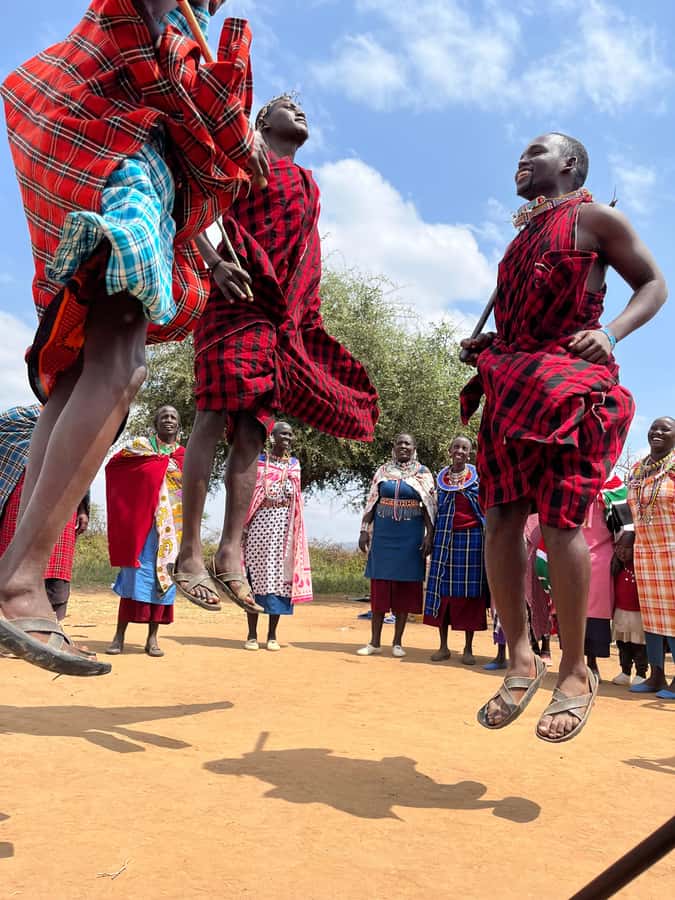
- Hands-on Maasai activities: You may cook ugali, make beadwork, milk a goat, start a fire, herd animals, wear traditional clothing, and join singing and dancing.
- Monday and Friday market visit: On these days, the route passes a major livestock market, described as the second biggest in Kenya, with animals arriving from as far as Tanzania.
- Small-scale village access: Visits are limited to booked clients, rather than running on an hourly tourist schedule.
- School visit by request: You can ask to visit a local primary school and meet learners.
- Nairobi pickup included: Hotel pickup and drop-off are provided within a three-mile radius of Nairobi City.
The long road from Nairobi to Bissil
The day begins with pickup at your hotel or accommodation within three miles of Nairobi City. Keep your phone connected to the internet and wait in the lobby, since the driver guide is expected to contact you when arriving. The exact start time depends on availability, but Sunday bookings begin early, around 7 a.m.
The drive to the village takes about 2.5 hours in one direction. That sounds like a lot for an eight-hour outing, and it is. You are not signing up for a quick cultural stop between city sights. The distance is part of the point: the tour leaves the urban area and passes through changing climates, work patterns, and ways of life before reaching the village.
I would treat the drive as part of the learning rather than dead time. Your English or Swahili-speaking guide can explain what you are seeing and answer questions about Kenya and Maasai culture. Simon, Dennis, Sharon, and Jacqii have all been singled out for friendly conversation and clear explanations, which matters on a road-heavy day.
Two optional stops provide bathroom breaks and a chance to stretch. At the village itself, there are no toilets, so use these stops carefully. You can also ask to stop for lunch or another bathroom break on the return journey, but food is not included.
More Maasai village visits:
- Nairobi: Day Tour to Amboseli National Park & Maasai Village
★ 4.5 · 310 reviews - Masai village Day Tour Experience
★ 5.0 · 284 reviews - Maasai Village Experience Day Tour
★ 5.0 · 72 reviews
A livestock market on Mondays and Fridays
If you book for a Monday or Friday, the route includes a stop at a large livestock market. The market is described as the second biggest in Kenya, with animals brought in from areas as far away as Tanzania. This is a useful addition because it shows an active part of local commerce, not a display arranged for visitors.
The setting is practical and rough around the edges. You may visit one of the makeshift kiosks run by women who serve food to livestock traders. Food and drinks remain your own expense, so carry money if you want to eat there.
Market days add variety to the outing, but they can also make the schedule feel fuller. If the market is your main interest, choose Monday or Friday. If the village is your priority, the experience remains available on other days, with the exception of the extra market stop.
Meeting the village beyond a staged performance
Before you arrive, the guide explains what you will do and how to behave. That briefing is useful because the activities are participatory, and you need to know when to ask permission, how to handle animals, and how to approach personal or cultural questions with care.
The village visit lasts about two hours. That is not enough time to understand every part of Maasai life, but it gives you a focused window into household tasks, craft work, food preparation, livestock care, and communal performance.
The company presents this village as one that does not receive a stream of tourist groups. Only this operator visits, and visits are tied to individual bookings. That smaller flow may help the meeting feel less like a scheduled show, though you should still remember that your presence changes the setting. The best approach is to be curious without treating people as scenery.
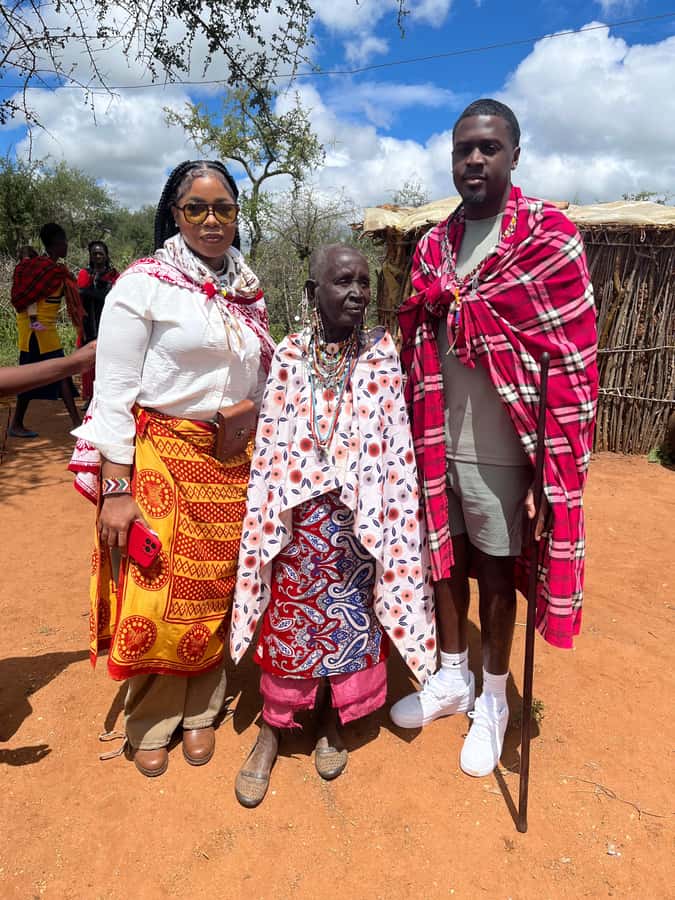
The experience also addresses money openly. Villagers who attend are recorded in an online register, and payment is later sent individually by M-Pesa. You can ask the guide to explain the system and how the company tries to pay participants equally. This transparency gives you a useful way to think about responsible cultural tourism instead of simply accepting claims about authenticity.
Cooking ugali inside a manyatta
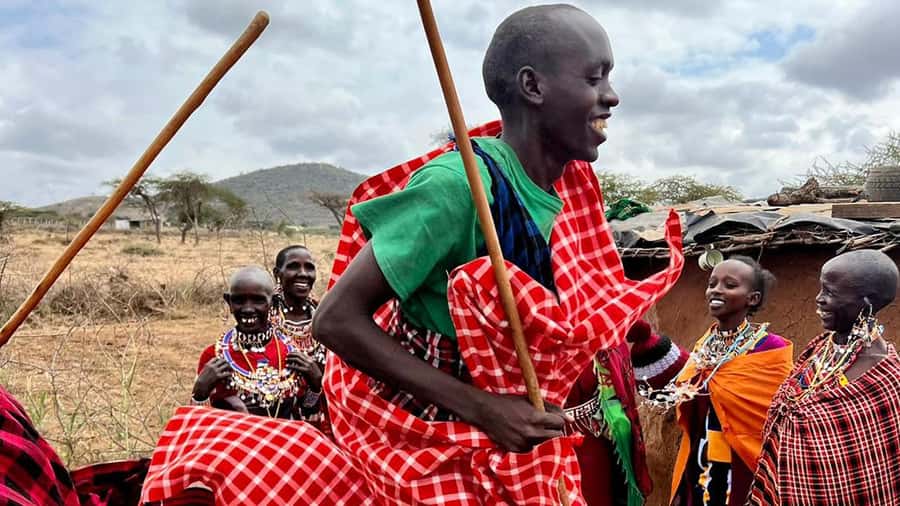
Cooking ugali is one of the most memorable parts of the visit for many people because it turns a familiar food into a shared task. You prepare it in a manyatta, a traditional Maasai homestead structure, rather than being served a polished demonstration from a distance.
Expect to work with your hands and clothing that can handle dust or spills. The activity is less about producing a perfect meal and more about learning how food fits into daily life. You may get to eat what you help prepare, but meals are not listed as included, so do not assume the activity replaces lunch.
The guide stays with you throughout the village activities. That helps with translation and context, especially when you want to ask how household roles, food, or livestock fit into everyday routines.
A few more trips worth weighing up
- Nairobi National Park Half-Day Tour; Free Wi-Fi connection
★ 5.0 · 878 reviews - Nairobi: National Park & Optional Elephants & Giraffe Center
★ 4.8 · 874 reviews - NAI NAMI: Nairobi Storytelling Tour with Street Children
★ 5.0 · 792 reviews - Nairobi National Park Half-Day Game Drive
★ 4.5 · 738 reviews
Fire-making, goat milking, and animal care
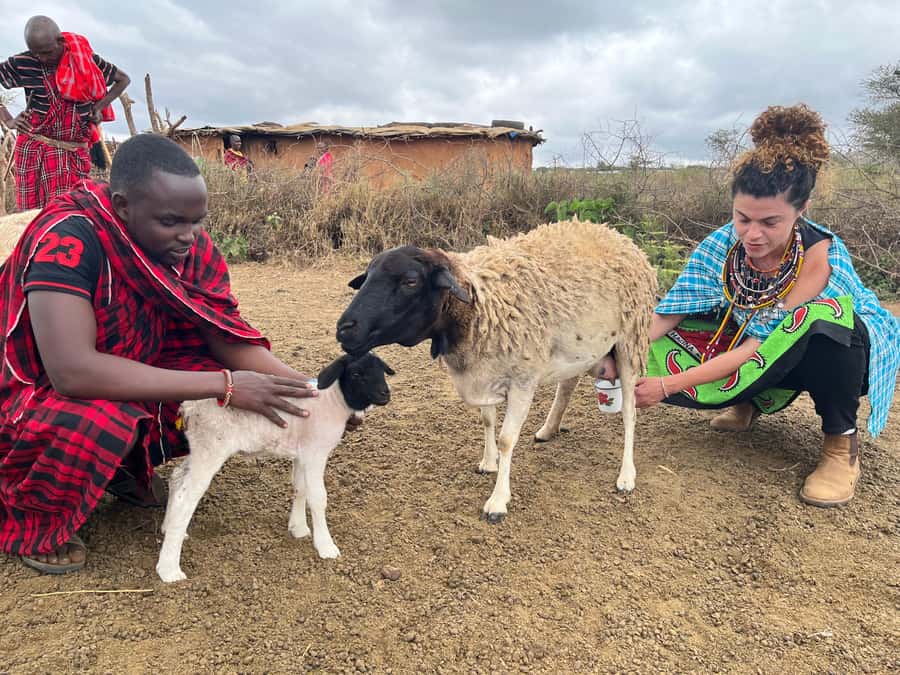
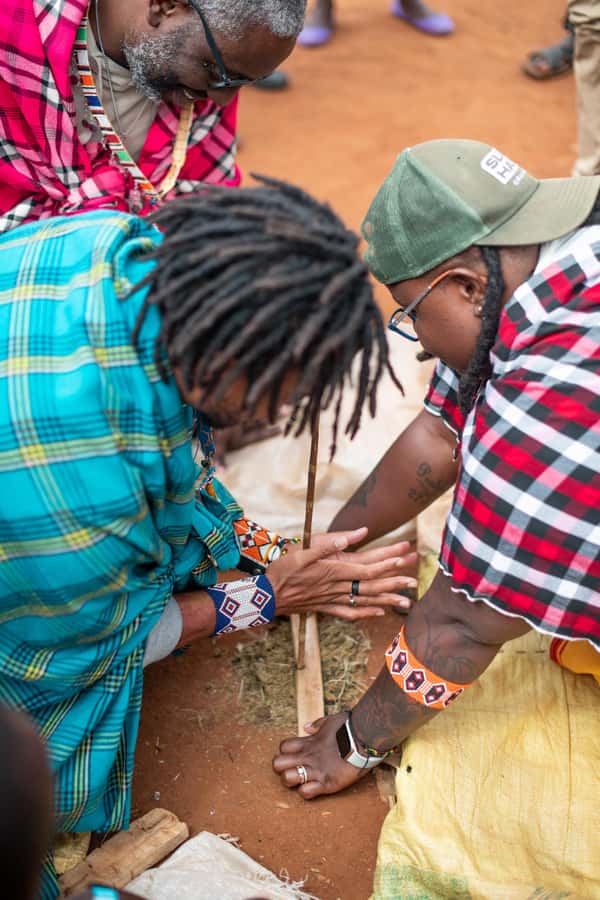
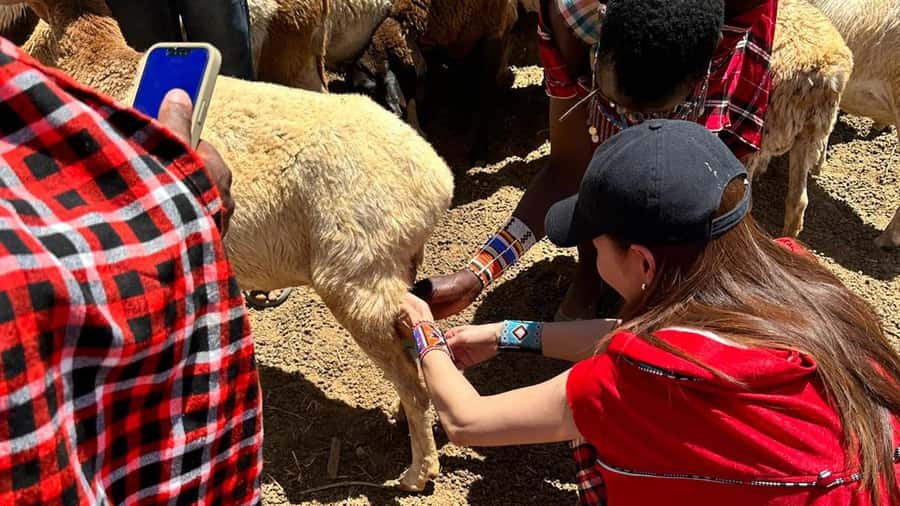
The hands-on tasks continue with traditional fire-making and goat or sheep milking. Some people have also herded goats, tried throwing spears, and explored the living space. These details can vary, so think of them as possible activities rather than a fixed checklist.
Fire-making takes patience. It is a good reminder that a simple household task can require real skill when there is no modern lighter or stove at hand. Goat milking is equally practical, and you may find it harder than it looks. That is part of the fun, provided you follow instructions and treat the animals gently.
The guide can help you understand what is happening, while Maasai hosts show you the technique. You should be prepared to get close to livestock, walk over uneven ground, and spend time outdoors in the sun.
Beads, clothing, music, and movement
Beadwork offers a quieter change of pace. You can learn how traditional jewelry is made and create a small item such as a ring. The craft connects everyday design with identity, skill, and income. Handmade items are displayed afterward, and buying something is optional.
You may also be invited to wear Maasai clothing before joining singing, dancing, and jumping. The jumping is lively, but you do not need to perform perfectly. You are there to participate respectfully, laugh at your own awkwardness, and let the hosts lead.
Do not expect every activity to feel equally comfortable. Some people enjoy dancing and dressing up; others prefer watching and asking questions. Tell your guide about your boundaries. One solo visitor specifically valued having those limits respected, which is a helpful reminder that participation should not mean pressure.
The experience can be especially meaningful for families. A family of six found the hosts welcoming and appreciated help with a car seat and booster seats. Children who can manage the long car ride may enjoy the animals, beads, cooking, and movement, but babies under one year are not considered suitable for this tour.
Visiting the local primary school
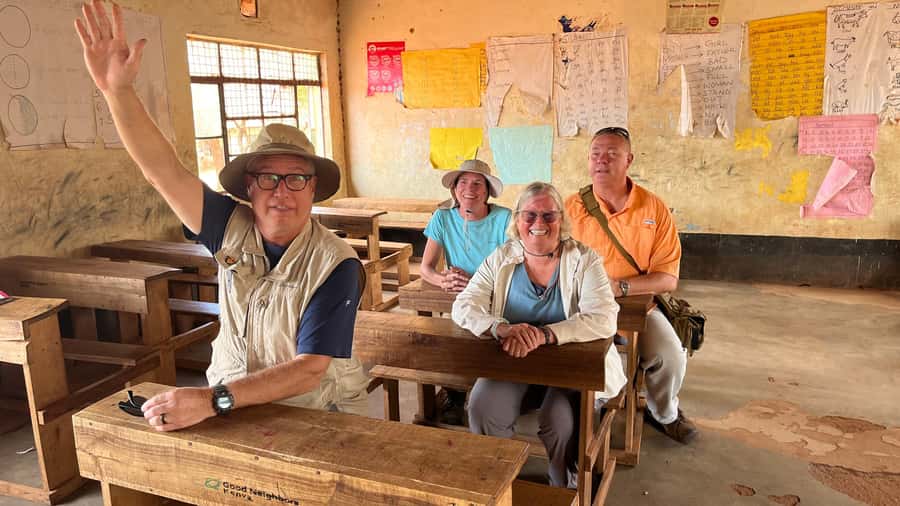
A school visit is available on request. The local primary school gives you another view of community life, and your presence may encourage the learners. The tour description frames the visit as a chance to inspire students, but you should ask your guide how the school visit will work on the day.
This is one of the moments where sensitivity matters most. Do not assume that photographs, gifts, or direct interaction are automatically appropriate. Ask before taking pictures and follow the guide’s instructions. The school visit is optional, so you can choose it based on your interest and the day’s timing.
What the two-hour village visit feels like
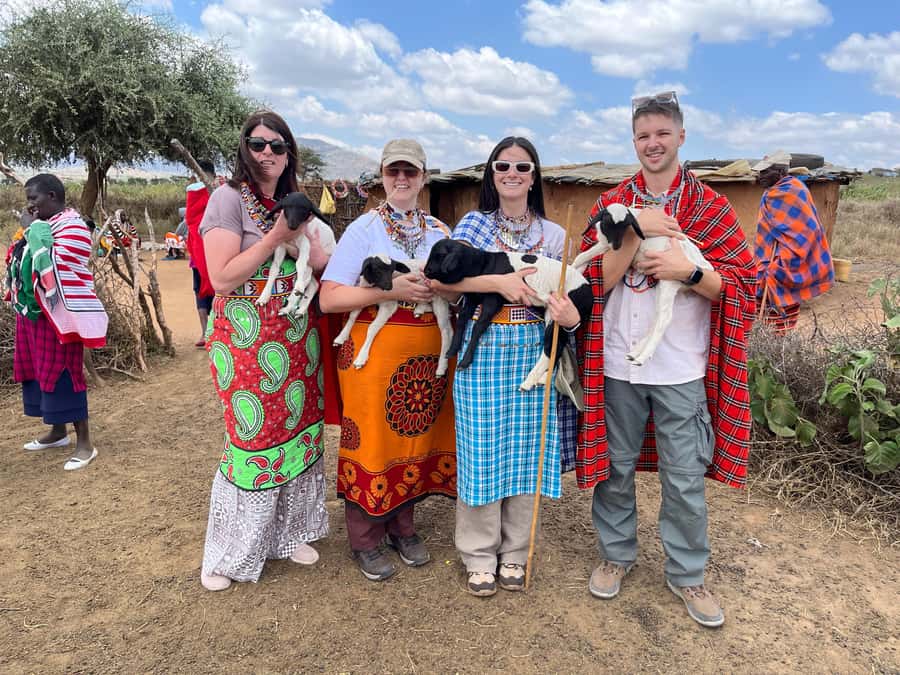
The strongest feature here is the direct contact. You are not simply led around a row of huts while someone recites a speech. You may sit inside a manyatta, work on food, handle beads, learn a fire-making method, milk an animal, and join a communal activity.
At the same time, two hours passes quickly. You will not receive a full study of Maasai history, religion, politics, or modern economic pressures. You get an introduction through daily tasks, guided conversation, and the people you meet that day.
I would use your time well by preparing questions before arrival. Ask about language, livestock, school, changing technology, relations with nearby communities, and how tourism affects village life. The guide can help explain the wider Kenyan context, while the Maasai hosts offer the most immediate perspective.
The guide makes a big difference
Guide quality matters on a trip built around conversation. Dennis has been praised for his warmth and for explaining the experience clearly from pickup onward. Simon is often described as an excellent driver and guide, with strong explanations and an ability to take photos and videos when requested or appropriate.
Sharon has received similar praise for being helpful from morning pickup through the evening return. Jacqii has been noted for answering questions and making the long drive feel worthwhile. You cannot normally choose a particular guide, but these names give you a sense of the personal service the company aims to provide.
Some departures may feel almost private if no other clients book the same date. That can make the village meeting more personal, though group size is not guaranteed. A solo booking can become a one-to-one day with the guide, which several people found especially valuable.
Is $117 a fair price?
At $117 per person, the price is not cheap for an eight-hour day with only about two hours in the village. You are paying for private or small-scale transport, hotel pickup and drop-off, a guide, village entry, bottled water, and the access arrangements behind the visit.
The value improves if you care about a direct cultural experience rather than a quick stop near a national park. The long drive, limited visitor numbers, individual payment system, and hands-on activities help explain the cost. If your main goal is to see a Maasai dance and buy souvenirs, you can likely find shorter and simpler options. If you want time for conversation and ordinary tasks, this tour offers more substance.
Wi-Fi is included, but I would not rely on it for the whole day. Keep your phone connected before pickup so the driver can reach you. Bring extra cash for lunch, drinks, optional purchases, or a donation. Buying handmade items and donating are both voluntary, and the tour does not require either.
What to bring and what to expect
Wear comfortable shoes and clothes that can get dusty or dirty. A sun hat and sunscreen are sensible because much of the visit takes place outdoors. Bring water beyond the supplied bottle if you prefer to drink often, though bottled water is included.
The tour is not suitable for wheelchair users, visually impaired people, people with motion sickness, or babies under one year. The winding or lengthy drive may be uncomfortable if you are prone to motion sickness, so plan accordingly.
Pets, drones, professional cameras, alcohol, drugs, smoking in the vehicle, nudity, and see-through clothing are not allowed. The restriction on professional cameras is tied to avoiding commercial use of the community. A phone may be more appropriate, but ask before photographing people, children, homes, school activities, or ceremonies.
You can cancel up to 24 hours before departure for a full refund, and you can reserve now and pay later. Those policies help if your Nairobi plans are still shifting.
Who should book this Maasai village day?
I would recommend it to curious visitors who want conversation, participation, and a less polished cultural encounter. It suits solo visitors, couples, and families with older children who can handle a long day in a vehicle.
It is a good match if you want to learn by doing. Cooking ugali, making a bead ring, starting a fire, and milking a goat will stay with you longer than a short talk beside a souvenir stall.
I would hesitate if you have only one free day in Nairobi and dislike long drives. I would also think twice if you need reliable toilets, accessible paths, a formal restaurant lunch, or a tightly timed sightseeing schedule. The village is intentionally basic, and that is both its appeal and its limitation.
Should you book it?
Book this tour if the idea of spending five hours on the road for a small, personal village visit sounds worthwhile. Choose Monday or Friday if the livestock market interests you, request the school visit if you want that added perspective, and prepare thoughtful questions before you leave Nairobi.
Skip it if you want a quick cultural activity with polished facilities. For everyone else, the combination of direct participation, warm guides, animal care, cooking, crafts, and an open discussion of payment makes this one of the stronger ways to meet Maasai hosts outside a safari park setting.
FAQ
How long is the Maasai village tour from Nairobi?
The full activity lasts about eight hours. The drive to the village takes approximately 2.5 hours each way, and the stay in the village lasts about two hours.
Where does the tour go?
The route begins in Nairobi and goes to a Maasai village near Bissil in central Kenya. You return to Nairobi at the end of the day.
Is hotel pickup included?
Yes. Pickup and drop-off are included for locations within a three-mile radius of Nairobi City. You should wait in the hotel lobby and keep your internet connection active until the driver guide contacts you.
What activities can I do in the village?
Activities may include cooking ugali, making beadwork, starting a fire traditionally, milking a goat or sheep, herding goats, wearing Maasai clothing, and joining singing, dancing, and jumping.
Can I visit a school?
Yes. A visit to the local primary school is available on request.
When can I visit the livestock market?
The livestock market stop is available when you book the tour on a Monday or Friday. The market is described as the second biggest in Kenya, with livestock coming from as far as Tanzania.
Is food included?
No. Food and drinks are not included. Bottled water is provided, and you can request a lunch or bathroom stop during the return drive.
What should I bring?
Bring comfortable shoes, a sun hat, sunscreen, and clothing that can get dirty. You may also want cash for food, handmade items, or an optional donation.
Just added around Nairobi
- Nairobi: Giraffe Center, Elephant Orphanage and Bomas Tour★ 5.0 · 3 reviews
- Nairobi: Airport and Hotel Private Transfers.★ 4.0 · 3 reviews
- 11-Days Best of Kenya & Tanzania Big 5 Safari on a 4×4 Jeep★ 5.0 · 3 reviews
- Kitengela Anselm Hot Glass tour★ 4.5 · 3 reviews
- NAIROBI NATIONAL PARK AFTERNOON GAME DRIVE.★ 5.0 · 3 reviews
- 12-Day Tsavo west Amboseli lake Nakuru Maasai Mara safari★ 5.0 · 3 reviews
- Nairobi Down Town & Walking City Tour★ 4.8 · 3 reviews
- Carnivore Resturant Dinner Experience★ 4.0 · 3 reviews
Maasai Village Visits, compared.

Day Tour to Amboseli National Park & Maasai Village
Read our review →

Day Trip: Amboseli National Park & Maasai Village – Nairobi
Read our review →
Day Trip to Maasai Mara Reserve & Maasai village
Read our review →
3days/2nights group joining Masai Mara with Masai Village Visit
Read our review →
Kenya: Maasai Village Visit with Traditional Dance Show
Read our review →
Browse the lists this tour appears in