
Reviewed · MAASAI VILLAGE VISITS
Kenya: Maasai Village Visit with Traditional Dance Show
Meet the people behind the red shukas. This seven-hour outing from Nairobi gives you a direct look at Maasai customs through a village walk, house visit, traditional dance, and conversation with local hosts. I like the small-scale setting, which can feel more personal than a large cultural center, and I like that the village fee helps fund community development. The main caution is the long road journey and uneven service: vehicle quality, air conditioning, and guide attention may vary.
I also like the easy hotel pickup from Nairobi neighborhoods such as Karen, Kilimani, Westlands, Kileleshwa, Loresho, and Kitisuru. Guides Brian and Alfred have earned especially warm praise for answering questions and explaining daily life. Still, you should check the final price carefully, since the listed cost and the separate village contribution are not presented consistently.
In This Review
- Key points before you book
- What this Maasai visit is really like
- The road from Nairobi: allow time for the journey
- Arriving at the village and meeting the hosts
- Inside the Maasai houses
- The dance show, jumping, singing, and simple demonstrations
- Shopping, tips, and the meaning of the village fee
- What to pack for the two-hour village stop
- Who will enjoy this, and who may not
- Price, cancellation, and booking details
- My verdict: book it if you value contact over polish
- FAQ
- How long does the Maasai village visit take?
- What is included in the price?
- Is the $30 village fee included?
- Where can pickup take place in Nairobi?
- What should I bring?
- Is the activity suitable for wheelchair users?
Key points before you book
- A compact village visit: The Maasai portion lasts about two hours, with a house tour, dancing, walking, photos, and time to ask questions.
- A separate community fee: The $30 entry contribution is listed as not included, so the advertised $50 price may not be your final cost.
- A long day from Nairobi: The total outing lasts seven hours, and one account describes roughly two hours each way on local roads.
- A small village, not a major cultural complex: You might see only a few huts and a small group of hosts, which can feel more direct but less elaborate.
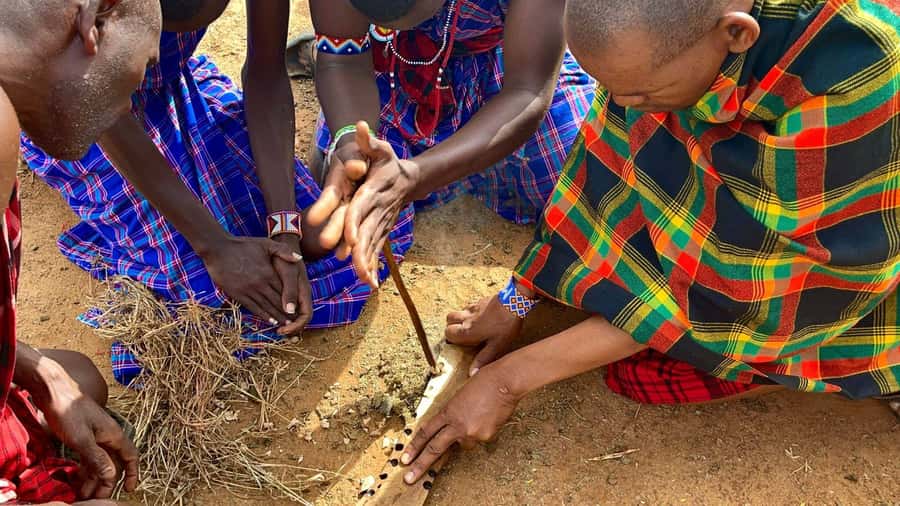
- Traditional participation: You may watch jumping and singing, learn how a fire is made, and try throwing a spear under local guidance.
- Flexible Nairobi pickup: Pickup and drop-off are available at listed Nairobi areas, with an exact meeting point confirmed after you provide your address or landmark.
What this Maasai visit is really like
This is not a full-day safari or a polished museum program. It is a cultural stop built around meeting Maasai people in or near a traditional village and seeing parts of everyday life explained by local hosts.
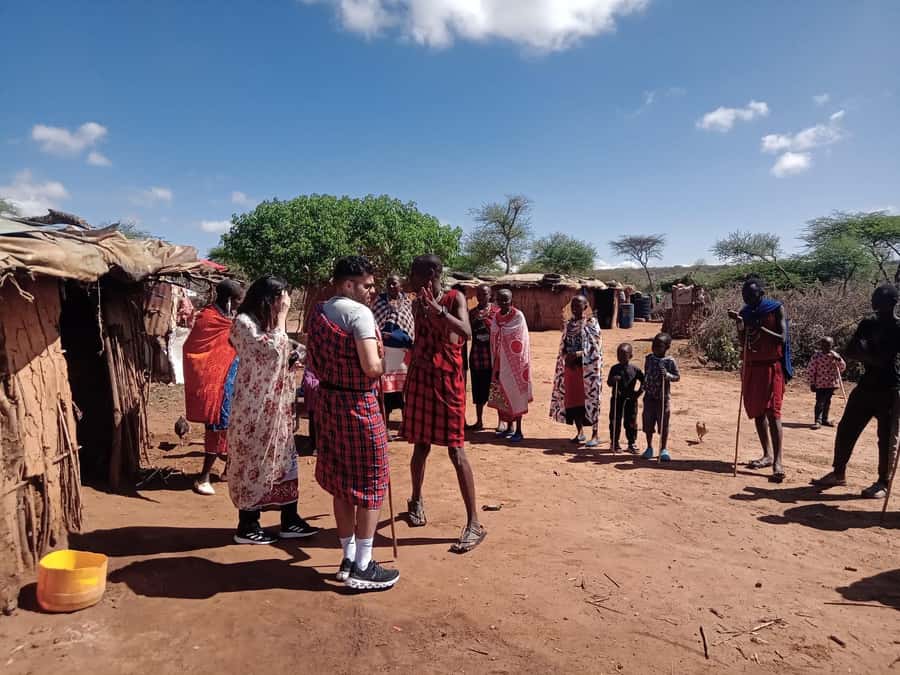
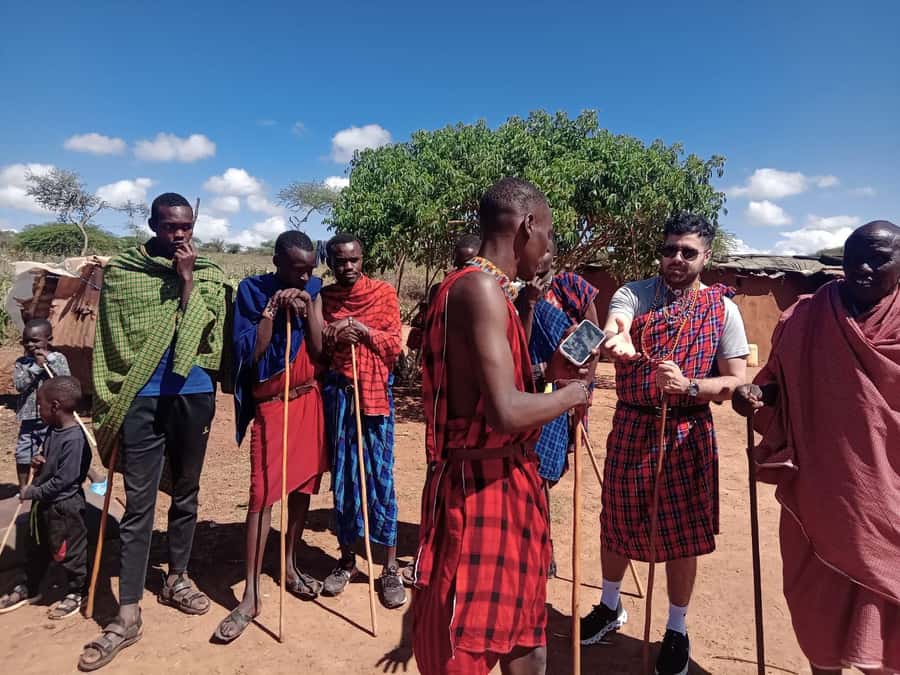
The central activity lasts about two hours. You can expect a welcome, a traditional dance show, a walk around the village, and a look inside Maasai houses. There is also time for questions, photographs, shopping, and simple demonstrations connected with Maasai customs.
The setting may be quite modest. One account describes about three huts, three men, and five women. That detail matters. If you want a large performance with many dancers and a long program, this may feel too small. If you prefer a short, personal visit with less staging, the size may suit you well.
You should also understand that this is a cultural exchange with a commercial side. A village fee is charged, and you may be invited to buy crafts or leave a tip. That is not automatically a flaw, especially when the fee supports community development, but it is best to arrive knowing that shopping and contributions are part of the visit.
More Maasai village visits:
- Nairobi: Day Tour to Amboseli National Park & Maasai Village
★ 4.5 · 310 reviews - Masai village Day Tour Experience
★ 5.0 · 284 reviews - Maasai Village Experience Day Tour
★ 5.0 · 72 reviews
The road from Nairobi: allow time for the journey
Pickup is available from several Nairobi districts, including Karen, Kilimani, Westlands, Kileleshwa, Loresho, and Kitisuru. You give the operator your address or a nearby landmark, then receive a pickup time and exact meeting point.
The full outing takes seven hours. One early pickup began at 6:00 in the morning, followed by about two hours on local roads. Your exact driving time may differ, but you should treat this as a substantial road day rather than a quick Nairobi excursion.
That early start has one benefit: you spend the cultural portion before the hottest part of the day. It also means you need to be ready at your hotel while many of Nairobi’s cafés are still getting started. Pack water and eat beforehand if breakfast is not arranged, since meals and drinks are not included.
Vehicle standards deserve realistic expectations. One account praised a safe return and a kind stop for chai, while another described an old, dirty vehicle with weak air conditioning and unpleasant exhaust entering through open windows. This is the biggest practical weakness in the available feedback.
If a comfortable vehicle matters greatly to you, ask about the car before confirming. The driver is listed as English-speaking, and several accounts praise the driver or coordinator, including Brian and Suffik. But the transport experience may depend on the individual vehicle and staff member assigned that day.
Arriving at the village and meeting the hosts
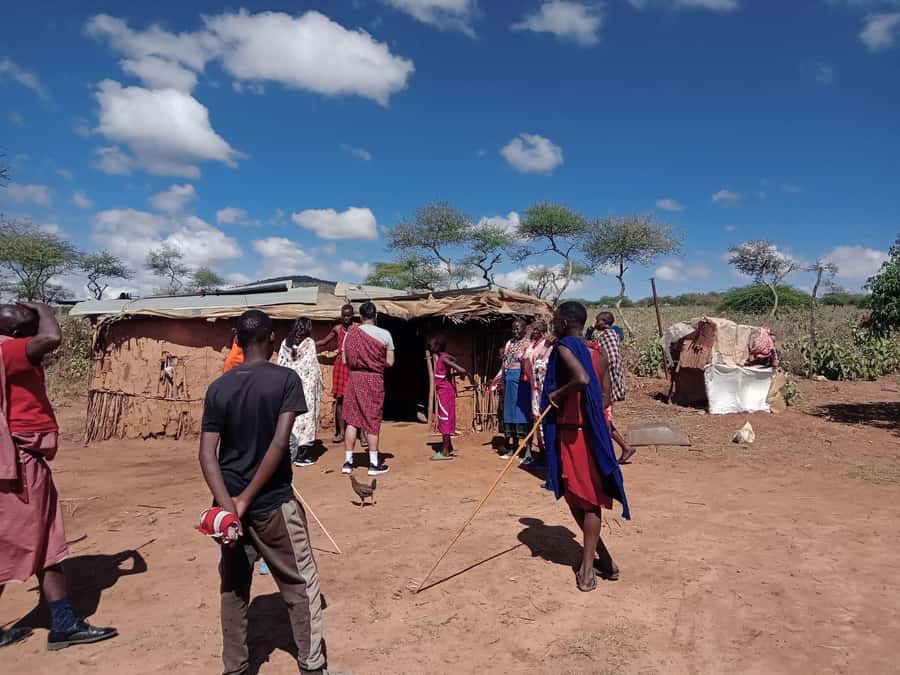
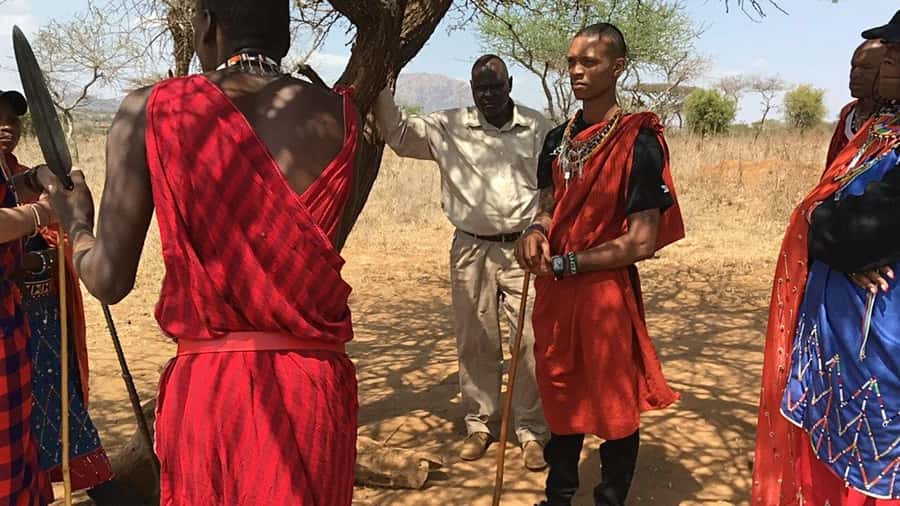
The village visit begins with a welcome and an introduction to Maasai life. Your local host explains customs, traditions, and the group’s origins as understood through Maasai oral history.
That history traces Maasai beginnings to an area north of Lake Turkana in northwestern Kenya, in the lower Nile Valley. Maasai migration south began in the 15th century, with arrival in the broad region of northern Kenya and central Tanzania during the 17th and 18th centuries.
This background gives the visit useful context. You are not simply watching a dance and taking pictures. You are hearing how the community understands its own past and how traditions fit into daily life.
The quality of this conversation depends heavily on the guide. Brian is praised for answering questions about Maasai culture and Kenya, while Alfred is described as a warm village leader and a strong source of information about daily practices. Those names are worth noting when you contact the operator, though you should not assume a particular person will always lead your visit.
Guide attention may not be perfect. One account describes a local host leaving repeatedly to answer phone calls during the explanation. I would treat that as a warning to keep your questions ready and politely ask for clarification when something is rushed.
Inside the Maasai houses
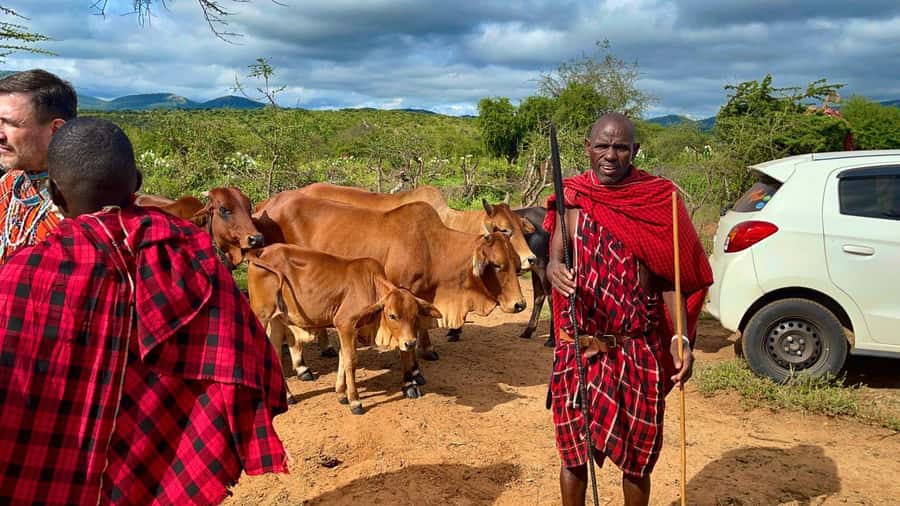
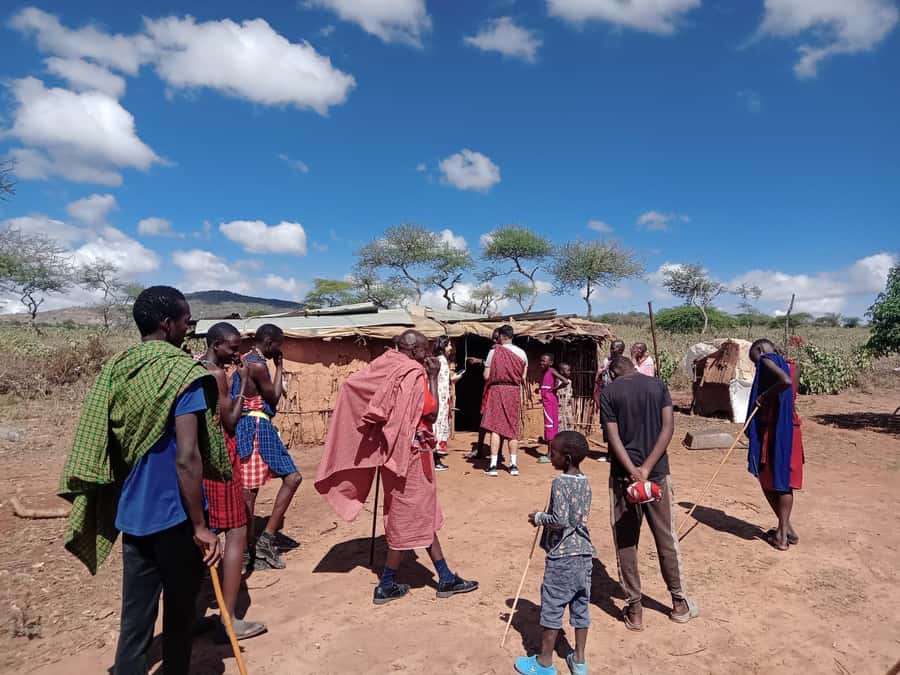
The house tour is one of the most useful parts of the experience because it moves the visit beyond performance. You are shown inside traditional huts and given a sense of how the structures function.
The supplied details do not specify the exact building materials, room layout, or household arrangement, so you should not expect a detailed architectural lesson in every case. The value comes from seeing the interior directly and asking the host how the space is used.
This is also where respectful behavior matters. Listen before taking photographs, and ask permission when people are included in the frame. You are entering a living community, not a theme park set.
The small scale can work in your favor. With only a few huts, you may be able to focus on the explanation rather than move through a crowded compound. On the other hand, the village may feel quieter and simpler than the word traditional suggests. Keep your expectations modest and you are more likely to appreciate what is offered.
A few more trips worth weighing up
- Diani: Giriama Cultural Dance Show and Local Village Tour
★ 4.6 · 32 reviews - Nairobi: The Safari Cats Show Tickets & Buffet Dinner
★ 4.4 · 29 reviews - Safari Cat Dancers Show And Dinner
★ 4.5 · 19 reviews - Fort Jesus Sound and Light show Mombasa
★ 4.0 · 17 reviews
The dance show, jumping, singing, and simple demonstrations
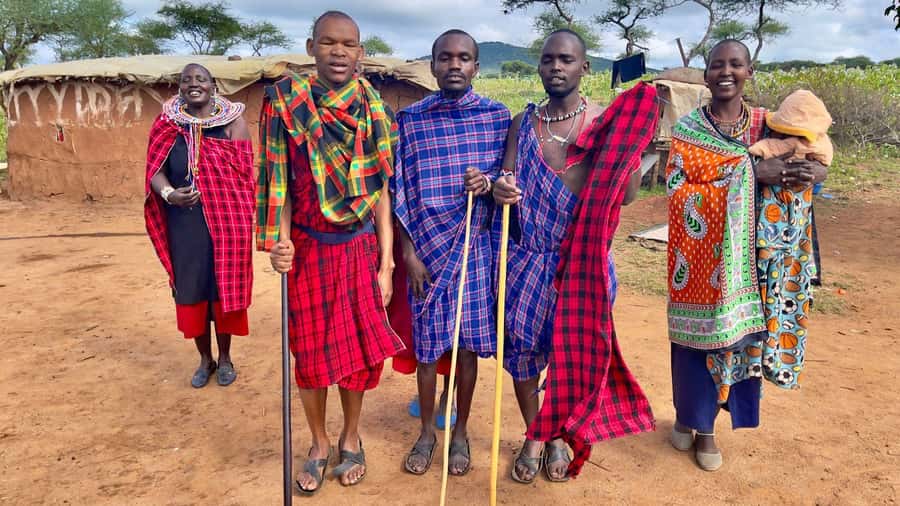
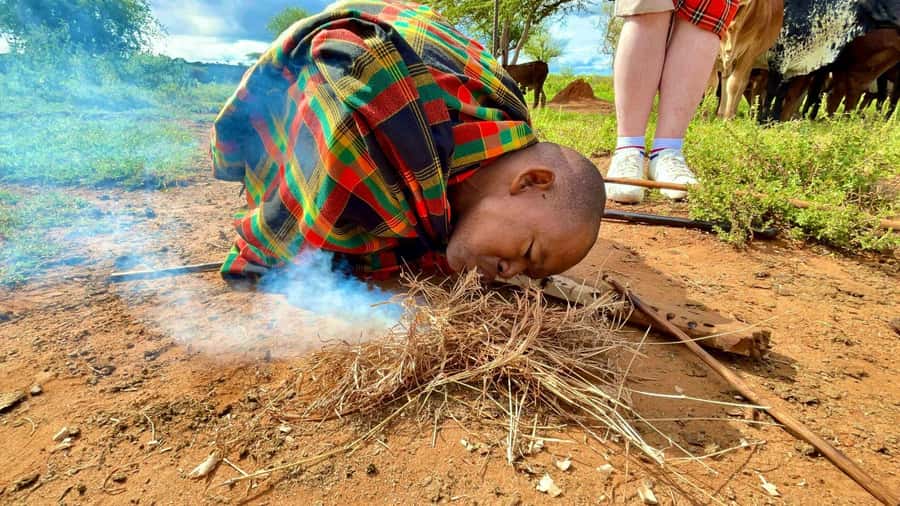
The traditional dance is the most lively section of the visit. You may watch singing and jumping, and in some cases join the group. The experience also includes opportunities to see how fire is made and learn how to throw a spear.
These activities are valuable because they give you something to observe and something to ask about. The physical demonstrations connect the performance to skills and customs, rather than leaving you with a short show detached from the rest of the visit.
Still, the program is not described as a long theatrical production. The village portion may last closer to one hour in practice, even though the itinerary allows two hours. That shorter format was enough for one person who experienced jumping, fire-making, spear throwing, photographs, and singing, but you may want more time if cultural demonstrations are your main reason for booking.
Bring a camera, but use it thoughtfully. A photograph can be a fine memory, yet it should not replace conversation. If people invite you to join a dance, take part with good humor and follow their lead. You do not need to perform perfectly.
Shopping, tips, and the meaning of the village fee
The village fee is intended to support community development. The activity details list a $30 entry fee as not included, while another note says the total cost can vary between $25 and $60 per person and may include the village contribution.
Because those figures do not line up neatly, confirm the exact breakdown before you pay. The headline price is $50 per person, but if the $30 fee is added separately, your actual spend could be about $80 per person before meals, drinks, shopping, or tips.
That does not automatically make the experience poor value. You are paying for return road transport from Nairobi, a guide, the cultural program, drinking water, and a direct contribution to the village. A seven-hour private or small-group road outing can also cost more than a short city attraction.
The important point is transparency. Ask these questions before departure:
- Is the $30 village fee already included?
- Is the quoted $50 price per person or the total group price?
- Are tips expected?
- Is shopping optional?
- Will the same vehicle remain with you for the day?
You may be encouraged to buy local items after the visit. Consider it optional. Buy only what you genuinely want, and keep enough small cash for the community contribution if the operator asks you to pay it locally.
What to pack for the two-hour village stop
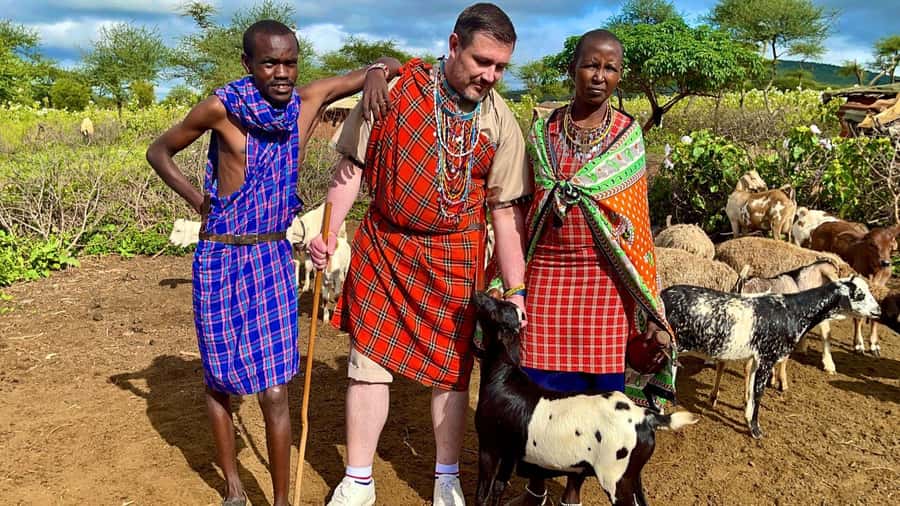
Wear comfortable shoes. You will walk around the village, and the ground may not be as smooth as a hotel courtyard.
A sun hat and sunscreen are practical choices. Bring water even though drinking water is included, especially if the drive is long or the day is hot. Hand sanitizer or tissues are also useful, since facilities at a traditional village may be basic.
A camera is welcome, but respect requests about photography. Do not touch plants, and do not smoke or bring alcohol or drugs. These rules are simple, but following them helps keep the visit comfortable for everyone.
Meals and drinks are not included. One driver kindly stopped for chai on the return journey, but that was an individual courtesy rather than a promised part of the program. Pack a snack unless you have confirmed a meal stop.
Who will enjoy this, and who may not
I would recommend this outing to you if you want a straightforward introduction to Maasai customs during a Kenya safari or Nairobi stay. It works especially well for first-time visitors who want human contact and cultural context without committing to a longer rural stay.
It suits adults and older children who can manage a long road day and a village walk. Children under five are not accepted, and the activity is not suitable for pregnant women, people with mobility impairments, or wheelchair users, despite another part of the description mentioning wheelchair accessibility. The restrictions are the safer information to follow, so confirm directly if accessibility is important.
You may prefer a larger village program if you want more performers, more buildings, or a broader range of activities. This visit can be very small. That is its strength for some people and its limitation for others.
The experience also suits you if you enjoy asking questions. You will gain more from the visit when you ask about family life, traditions, ceremonies, houses, and the meaning of the dance. If you want only a quick photo stop, the long transfer may not feel worthwhile.
Price, cancellation, and booking details
The advertised cost is $50 per person, but the additional $30 village fee needs special attention. Other pricing information gives a range of $25 to $60 per person, sometimes describing the community fee as included. Confirm the final amount in writing before booking.
Return road transfers and drinking water are included. Meals, drinks beyond the supplied water, personal expenses, shopping, and possibly the village fee are not included.
You can cancel up to 24 hours in advance for a full refund, and you can reserve now and pay later. Starting times depend on availability. Pickup is available within the named Nairobi areas when you provide your address or nearest landmark.
The experience is offered in English. A booking with Arara Travel and Tours Safaris is recommended in the supplied details, and that operator is named as the provider.
My verdict: book it if you value contact over polish
I would book this Maasai village visit if I wanted a modest, direct cultural stop and was comfortable spending much of the day on the road. The best parts are the welcome from local hosts, the house tour, the chance to ask questions, and the simple demonstrations of dancing, singing, fire-making, and spear throwing.
I would hesitate if I expected a polished vehicle, strong air conditioning, a large village, or a tightly scripted show. The transport complaints and occasional lack of guide attention are real considerations, not small footnotes.
Before booking, confirm the village fee, vehicle condition, pickup time, group size, and whether shopping is optional. With those details clear, this can be a worthwhile addition to a Kenya itinerary, especially when guides such as Brian or Alfred are leading the conversation. You are paying not only for entertainment, but also for access and a direct community contribution. Just make sure you know exactly how that payment is divided.
FAQ
How long does the Maasai village visit take?
The complete experience lasts seven hours, including pickup and return transport from Nairobi. The village program itself is scheduled for about two hours, though the time on site may vary.
What is included in the price?
Return road transfers, traditional Maasai dances, a house tour, and drinking water are included. Meals, drinks, and personal expenses are not included.
Is the $30 village fee included?
The details list a $30 entry fee as not included, but other pricing information says the cost can vary and may include a village contribution. Confirm the final price and fee arrangement before booking.
Where can pickup take place in Nairobi?
Pickup is available from Nairobi areas including Loresho, Kileleshwa, Kilimani, Kitisuru, Karen, and Westlands. You should provide your address or a nearby landmark so the exact meeting point can be confirmed.
What should I bring?
Bring comfortable shoes, a sun hat, sunscreen, water, a camera, and hand sanitizer or tissues. Smoking, alcohol, drugs, and touching plants are not allowed.
Is the activity suitable for wheelchair users?
The information includes both a wheelchair-accessible statement and a restriction against wheelchair users and people with mobility impairments. If accessibility affects your booking, confirm directly with the provider before paying.
Just added around Kenya
- Nairobi: Giraffe Center, Elephant Orphanage and Bomas Tour★ 5.0 · 3 reviews
- Nairobi: Airport and Hotel Private Transfers.★ 4.0 · 3 reviews
- 11-Days Best of Kenya & Tanzania Big 5 Safari on a 4×4 Jeep★ 5.0 · 3 reviews
- Kitengela Anselm Hot Glass tour★ 4.5 · 3 reviews
- NAIROBI NATIONAL PARK AFTERNOON GAME DRIVE.★ 5.0 · 3 reviews
- 12-Day Tsavo west Amboseli lake Nakuru Maasai Mara safari★ 5.0 · 3 reviews
- Nairobi Down Town & Walking City Tour★ 4.8 · 3 reviews
- Private 3 Day Tsavo East Safari from Mombasa★ 5.0 · 3 reviews
Maasai Village Visits, compared.

Day Tour to Amboseli National Park & Maasai Village
Read our review →


Day Trip: Amboseli National Park & Maasai Village – Nairobi
Read our review →
Day Trip to Maasai Mara Reserve & Maasai village
Read our review →
3days/2nights group joining Masai Mara with Masai Village Visit
Read our review →
Browse the lists this tour appears in