
Reviewed · SHOW
Diani: Giriama Cultural Dance Show and Local Village Tour
Leave the resort behind. This three-hour Giriama cultural tour takes you from Diani into everyday coastal life, with a market visit, school stop, family homestead, traditional healer, and dance performance. I like that the day is built around people and their routines rather than a polished stage show.
I especially like the chance to prepare food, taste fresh madafu, and learn how palm wine is collected. The other strong point is the guide service. Samson receives repeated praise for being warm, helpful, and well informed, while driver Salim has also helped make the outing run smoothly. The main drawback is that the dance portion may feel brief or less polished than some visitors expect.
You should also budget for transport. The $35 price covers the cultural experience, but hotel pickup, waiting time, and return travel cost extra. A tuk-tuk is listed at $25, while a sedan costs $40, with the final amount depending on your hotel.
In This Review
- Key points to know before booking
- Why this tour adds something Diani beach cannot
- Ibiza Market: start with ordinary coastal life
- The school beneath the baobab tree
- Madafu, coconut trees, and a family kitchen
- Meeting the traditional healer
- Giriama dancing in the village arena
- What the $35 price really covers
- Timing, language, and comfort
- Small gifts, photographs, and respectful visits
- Who should book the Giriama village tour?
- Should you book it?
- FAQ
- How long does the Giriama cultural tour last?
- Does the $35 price include hotel pickup and return transport?
- What are the main stops on the tour?
- Is food included?
- What should I bring?
- Is the tour available in English and German?
Key points to know before booking
- Five stops in three hours: You visit Ibiza Market, a local school, a homestead, a traditional healer, and the dance arena.
- The food experience is hands-on: You may help prepare ugali or cashew nuts, but food and drinks are not included in the tour price.
- Fresh coconut is part of the visit: You taste madafu and see how coconuts are harvested, with a demonstration of palm wine tapping.
- The dance is participatory: Twelve Giriama dancers perform, and you are invited to join rather than simply watch.
- Small gifts are welcomed: Pencils, notebooks, toys, balls, sweets, and clothes can be useful contributions for children and the local school.
- Transport needs planning: You must arrange a vehicle from your hotel, and comfortable shoes are essential for walking through village lanes.
Why this tour adds something Diani beach cannot
Diani is famous for sand, sea, and hotel pools. Those are good reasons to visit, but they show only one side of the Coast Province. This outing takes you inland and gives you a look at how trade, schooling, cooking, healing, music, and family life fit together.
The Giriama are one of the nine sub-groups of the Mijikenda people, who live along Kenya’s coast. You are not simply watching a museum display about them. You move through real community spaces, meet residents, and hear explanations about daily customs from people who live there.
That difference matters. A staged cultural show can be entertaining, but it often keeps you at a safe distance. Here, you may be welcomed into a home, invited to try a task, or asked to join a dance. The experience is more personal, though it also asks you to be respectful, curious, and ready for a less controlled setting.
The tour has a relaxed feel, according to the strong feedback attached to it. Samson is a major reason for that. He has been singled out for his friendly manner and clear explanations, so if he is assigned to your group, you can expect a guide who helps connect the separate stops into one coherent story.
A few more trips worth weighing up
- Diani Beach: Glass-bottom Boat Ride with Underwater Show
★ 4.0 · 4 reviews - Nairobi: The Safari Cats Show Tickets & Buffet Dinner
★ 4.4 · 29 reviews - Kenya: Maasai Village Visit with Traditional Dance Show
★ 4.6 · 24 reviews
Ibiza Market: start with ordinary coastal life
The first stop is Ibiza Market, an open-air trading area where people sell fresh fish, food, clothing, and other daily goods. This is a useful beginning because it shows community life before you reach the quieter village paths.
I like market visits that explain what people actually buy and sell, rather than treating the place as a quick photo stop. Here, you can observe the pace of local trade and see the practical side of coastal living. The market also gives you a chance to adjust to the fact that this is not a resort activity. It is a working public place.
Keep your camera ready, but ask before taking close photographs of people. Your guide can help with local etiquette and point out details you might miss on your own. Since the whole tour lasts only three hours, the market portion is likely an introduction rather than a long shopping session.
If you want souvenirs, you may find opportunities later in the village. Carrying some spare cash is sensible, but the tour does not promise a fixed shopping stop or specific products.
The school beneath the baobab tree
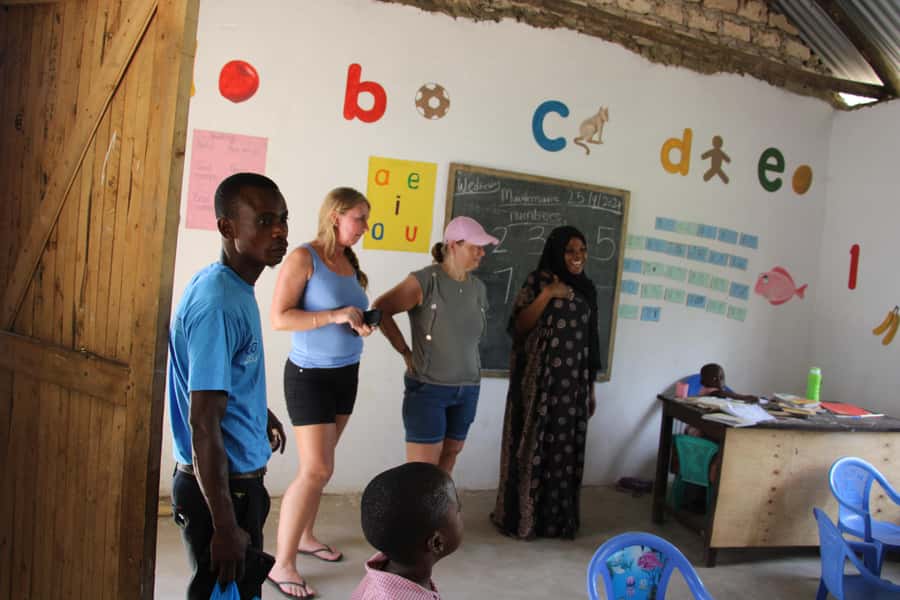
From the market, the tour continues to a community school shaded by a large baobab tree. Depending on the time of day, you may meet students and have a short interaction with them.
This can be one of the most moving parts of the outing, but it needs the right attitude. The children are not there to provide a photo opportunity. You are visiting a real school, so follow your guide’s lead, keep any interaction polite, and avoid handing out items randomly unless the tour team says it is appropriate.
Small educational supplies are suggested as gifts. Pencils, crayons, notebooks, stickers, toys, balls, sweets, and simple clothes are all mentioned as possible contributions. A small, practical item can be more useful than an expensive present, and bringing something from home avoids a last-minute search in Diani.
You should also be prepared for the possibility that people may ask for financial support for the school. Decide in advance what you are comfortable giving. A donation is optional, and you should never feel pressured to spend beyond your means.
The school visit works best when you see it as a chance to meet people and understand local education, not as charity tourism. The tour’s village setting makes this a direct and memorable encounter, but your conduct matters as much as the stop itself.
Madafu, coconut trees, and a family kitchen
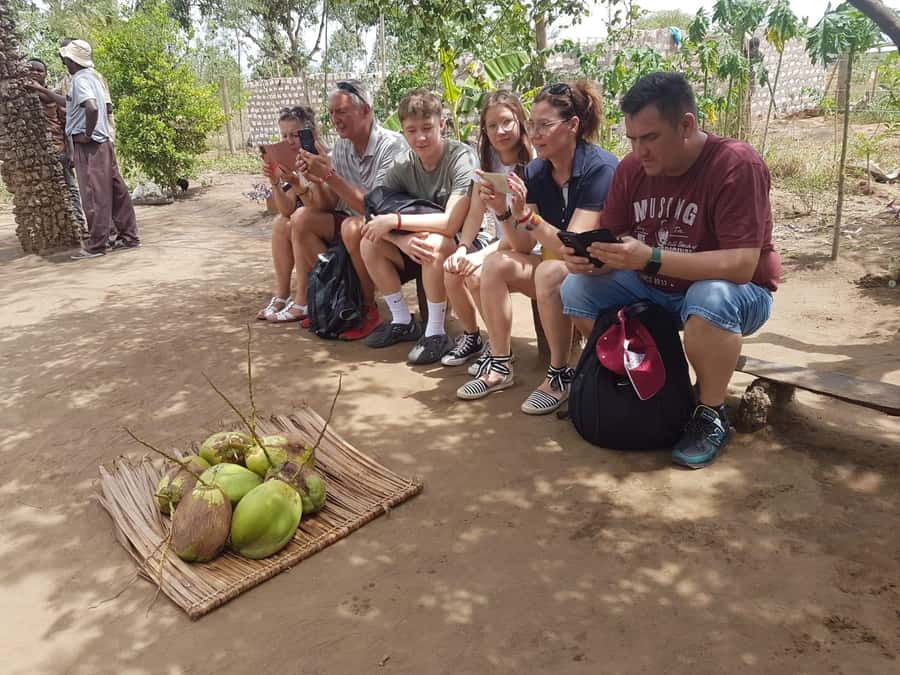
At a local homestead, you receive madafu, fresh coconut water, and learn about its uses and health benefits. A host demonstrates how coconuts are harvested, including the method used to tap palm wine.
This is a fine example of the tour’s practical approach. Instead of only hearing that coconuts are important to coastal life, you see the work behind the drink in your hand. The climbing demonstration gives the visit a clear sense of place and shows how common plants support food, drink, and income.
You might also help prepare cashew nuts or ugali, a staple dish in the region. Ugali is simple in appearance, but preparing it with a local family gives you a better sense of how food fits into home life. Several visitors have especially enjoyed the cooking portion, and one described the food served during the visit as very tasty.
Be clear about the difference between tasting and a full meal. Food and drinks are not included in the official price, even though madafu and possible food preparation are part of the experience. Ask your provider what will be available on your date, and carry a snack if you need a guaranteed meal during the three-hour outing.
Palm wine tasting is included, but this is not a drinking tour. Alcohol and drugs are not allowed, so treat the tasting as a small cultural sample rather than the main attraction.
A completely different kind of day out from Diani Beach:
- PILLI PIPA DHOW, the genuine product, snorkeling tour to Kisite Marine Park
★ 4.5 · 217 reviews - Full-Day Special Wasini Island Tour with Snorkeling and Lunch
★ 4.5 · 184 reviews - Full Day Dolphin Watching with Snorkeling in Wasini
★ 5.0 · 88 reviews - Diani Beach: Glass Boat Cruise to Robinson Island
★ 4.6 · 69 reviews
Meeting the traditional healer
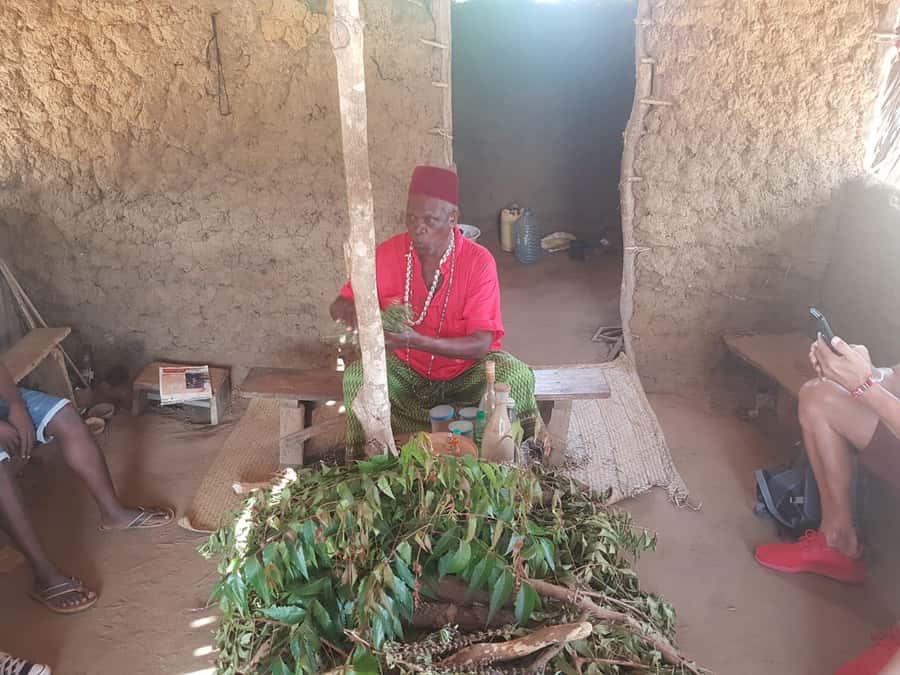
The traditional healer, or mganga, introduces you to indigenous herbs and the ways they are prepared for different ailments. You learn how this knowledge has passed through generations.
This stop offers useful cultural context, especially if you are interested in how communities preserve plant knowledge outside modern clinics. The value is in hearing how remedies are understood and prepared, not in treating the visit as medical advice.
Use common sense here. Do not replace prescribed medicine with a plant remedy based on a short demonstration, and ask before touching herbs or equipment. A respectful question about the healer’s work is more appropriate than demanding a diagnosis or treatment.
The visit also gives the day a wider focus. You are not seeing only music and costumes. You are learning about food, education, trade, health, and belief within the same community. That makes the experience feel more substantial than a short dance show attached to a sightseeing drive.
Giriama dancing in the village arena
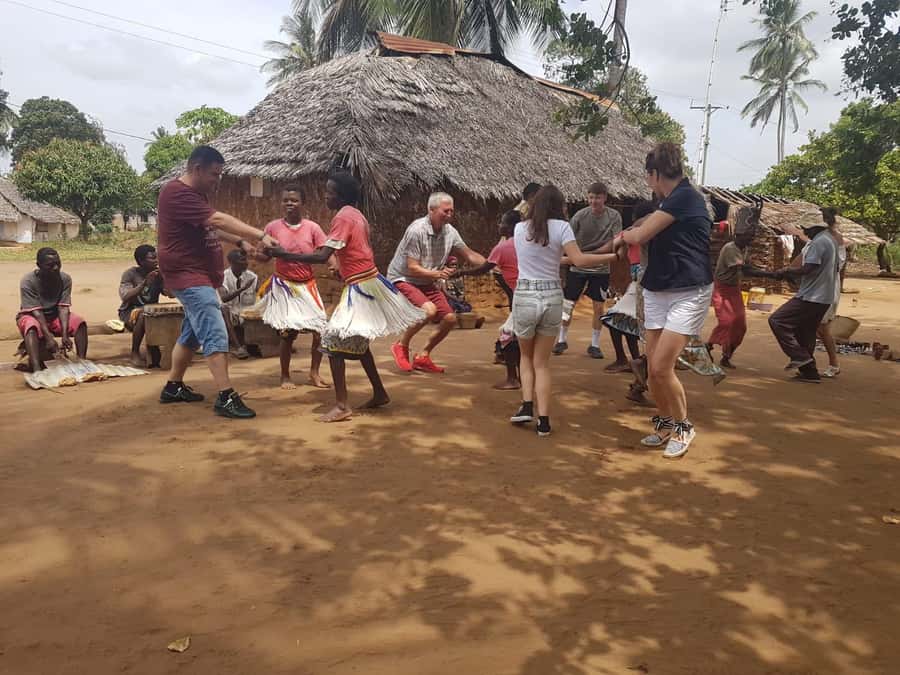
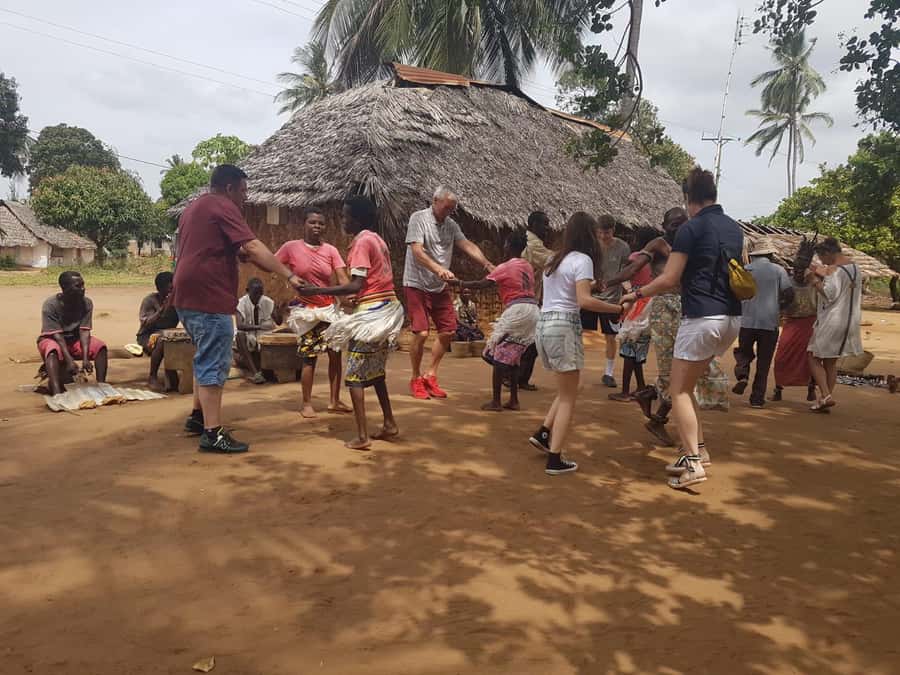
The final stop takes you through narrow village lanes to a dance arena. Twelve Giriama dancers perform together, and each dance carries a meaning linked to events such as weddings, celebrations, or farewells.
The best part is the invitation to join. You are not expected to know the steps. The point is to share the rhythm, laugh at your mistakes, and take part in a social welcome. Traditional attire is included, and villagers may also invite you into their homes.
This is where expectations matter most. The dance may not have the stage lighting, sound system, or tight choreography of a professional cultural theater. One visitor specifically felt that the dance section could be improved, while praising the cooking, healer visit, and village explanations.
I would treat that as a useful warning, not a deal breaker. Come for contact and participation, not a perfectly timed performance. If you want a formal show, this may feel too informal. If you enjoy joining in and seeing how dance fits into community celebrations, the relaxed setting will likely suit you.
Photography is included using your own equipment, which is a nice practical touch. Bring a charged phone or camera, and ask permission before photographing individuals, homes, schoolchildren, or the healer.
What the $35 price really covers
At $35 per person, this is a good-value half-day experience if you want several different activities in one short outing. You get a village walk, traditional healer visit, palm wine tasting, traditional dances, local interaction, traditional attire, and photography using your own equipment.
The price looks less complete once transport is added. Hotel pickup, waiting, and drop-off are not included. The provider can arrange a tuk-tuk for $25 or a sedan for $40, with the price depending on where you are staying. Confirm the transport cost after booking so the final amount does not surprise you.
Food and drinks are also excluded. Madafu is part of the visit, and you may take part in cooking, but do not assume you are buying a full lunch. Ask what the homestead plans to serve and carry extra cash for optional purchases or donations.
The tour offers free walking tours on Tuesdays and Thursdays, but you need to communicate with the provider about that option. This may be useful if you want more time on foot around the area, though it should not be confused with the main three-hour village experience.
The booking terms are traveler-friendly. You can cancel up to 24 hours before the activity for a full refund, and reserve now while paying later. Starting times depend on availability.
Timing, language, and comfort
Three hours passes quickly across five stops. You will spend part of the time moving between locations, so do not expect long lessons at every site. The advantage is variety. You get a broad introduction to Giriama life without giving up an entire day at the coast.
English and German guiding are available. Samson has received especially strong praise for his manner, but guide assignments can change, so do not book solely on the hope that one particular person will lead your tour.
Wear comfortable shoes. The village walk includes narrow lanes and time on foot, and beach sandals may not be your best choice. Dress simply and respectfully for visits to homes, the school, and the healer.
The information is inconsistent about mobility access. The activity details describe it as wheelchair accessible, but the same material says it is not suitable for wheelchair users. Because the outing includes village lanes and walking, anyone using a wheelchair should confirm the actual route and vehicle arrangements directly with Kaaribu Experiences before booking.
Small gifts, photographs, and respectful visits
Bringing school supplies is encouraged, but do it thoughtfully. Pencils, crayons, notebooks, balls, toys, sweets, and stickers are all suggested. You can pack a small set rather than handing out large quantities, and ask the guide how to share them fairly.
Carry spare cash if you want to buy souvenirs or support the school. You are not required to purchase anything, and the tour should remain worthwhile even if you spend no more than the stated price and transport fee.
The strongest memories may come from ordinary moments: drinking coconut water, standing beneath the baobab, watching a family prepare food, or trying to follow the dancers. Let the guide manage introductions and photography. A smile and a question often do more than a camera.
Who should book the Giriama village tour?
I would recommend this outing to you if you want a direct look at coastal life beyond Diani’s hotels. It suits curious adults, families who can prepare children for a school visit, and anyone who values conversation, cooking, and participation more than polished entertainment.
It is also a good choice for a short stay. In three hours, you cover a market, school, household, healer, and dance performance. That is a lot of cultural ground for $35, provided you accept the added transport and food costs.
You may want to skip it if you dislike informal visits, feel uncomfortable around school fundraising, or expect a highly choreographed show. The dance portion can feel less developed than the rest of the tour, and the day depends on respectful interaction in real community spaces.
Should you book it?
Book this tour if you want to understand Diani through local people, food, work, and music rather than viewing Kenya only from a hotel compound. The best parts are the family visit, cooking, healer explanation, coconut demonstration, and the warm guidance associated with Samson.
Before paying, confirm your pickup cost, ask what food will be available, and bring a few useful school supplies if you wish to contribute. Go with comfortable shoes and flexible expectations. You are buying access to a human encounter, not a flawless stage production, and that is exactly why this experience can be worth your time.
FAQ
How long does the Giriama cultural tour last?
The tour lasts three hours. Starting times depend on availability.
Does the $35 price include hotel pickup and return transport?
No. Pickup, waiting time, and drop-off are not included. The provider can arrange a sedan for $40 or a tuk-tuk for $25, with the cost depending on your hotel location.
What are the main stops on the tour?
The tour visits Ibiza Market, a local school beneath a baobab tree, a family homestead for madafu and food preparation, a traditional healer, and a village dance arena.
Is food included?
No. Food and drinks are not included, although you may taste madafu and take part in preparing cashew nuts or ugali if time allows.
What should I bring?
Bring comfortable shoes. You may also bring small school supplies or simple gifts such as pencils, notebooks, toys, balls, sweets, crayons, stickers, or clothes.
Is the tour available in English and German?
Yes. Live guiding is available in English and German.
Just added around Diani Beach
- Overnight Safari to Tsavo East with Pick Up From Mombasa★ 5.0 · 3 reviews
- Mombasa: Snorkeling, Dolphin watching, seafood lunch.★ 4.5 · 3 reviews
- 1 Day Red Elephant Safari starting from Diani beach.★ 5.0 · 3 reviews
- Kaya Kinondo Sacred Forest Guided Tour★ 4.4 · 3 reviews
- Mombasa City Tour – Fort Jesus, Old Town, Spice Town & Craft★ 5.0 · 3 reviews
- 4-Day Safari to Tsavo and Amboseli from Diani Beach★ 5.0 · 3 reviews
- Diani: Wasini Island Dolphin Watching and Snorkeling Tour★ 4.2 · 3 reviews
- (2 Days, 1 Night) Day & Night Game Drive Tsavo East National Park★ 5.0 · 3 reviews
Show, compared.


Kenya: Maasai Village Visit with Traditional Dance Show
Read our review →


Nairobi Bomas Cultural Dance Show & Dinner Carnivore Restaurant
Read our review →
Safari Park Hotel Show & Dinner Experience In Nairobi Tour
Read our review →Browse the lists this tour appears in