
Reviewed · GUIDED
Kaya Kinondo Sacred Forest Guided Tour
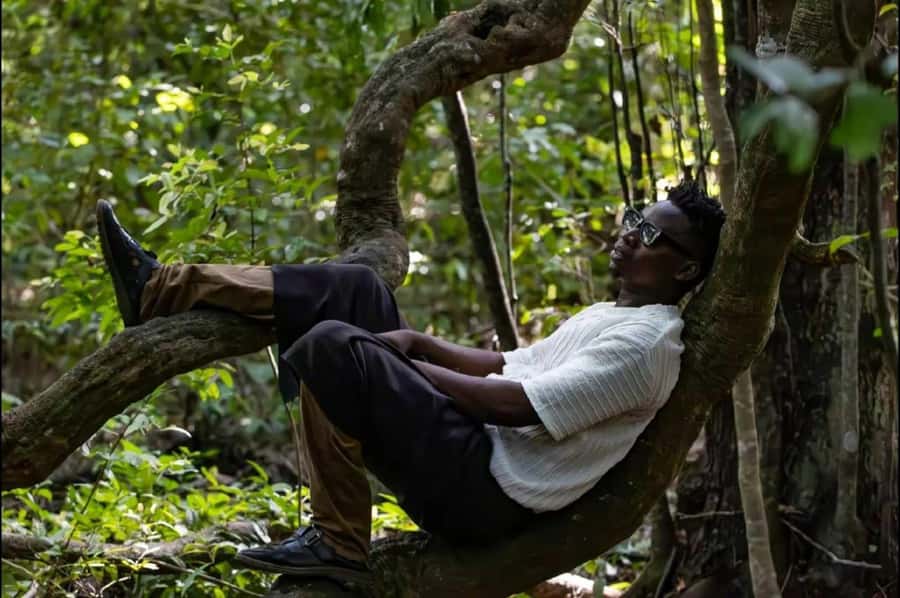
Sacred forests reward quiet attention. Kaya Kinondo offers a rare look at Digo spiritual tradition alongside birds, monkeys, butterflies, and ancient trees. I like the small groups of up to eight and the fact that hotel transfers, entrance fees, water, and a multilingual guide are included. The main caution is that the traditional clothing may be only a simple piece of cloth, and transport can be less smooth for anyone starting outside Diani.
This is not just a forest walk. Your guide explains the meaning of shrines, altars, prayer rituals, medicinal plants, and the forest’s connection to ancestors. I also like that the experience may continue into a nearby village or school, although that extra stop should be confirmed before you book.
In This Review
- Key points to know before you go
- Why Kaya Kinondo is more than a nature walk
- The 09:30 pickup from Diani hotels
- The welcome hall and traditional attire
- Walking beneath old coastal trees
- Birds, monkeys, and butterflies along the trail
- Shrines, altars, and the forest’s spiritual heart
- A possible village and school visit
- Languages, group size, and guide quality
- Is $60 a fair price?
- Who will enjoy Kaya Kinondo most?
- Should you book the Kaya Kinondo tour?
- FAQ
- Where is the Kaya Kinondo Sacred Forest tour located?
- What time does pickup begin?
- How long does the activity last?
- What languages are available?
- What is included in the $60 price?
- How large is the group?
Key points to know before you go
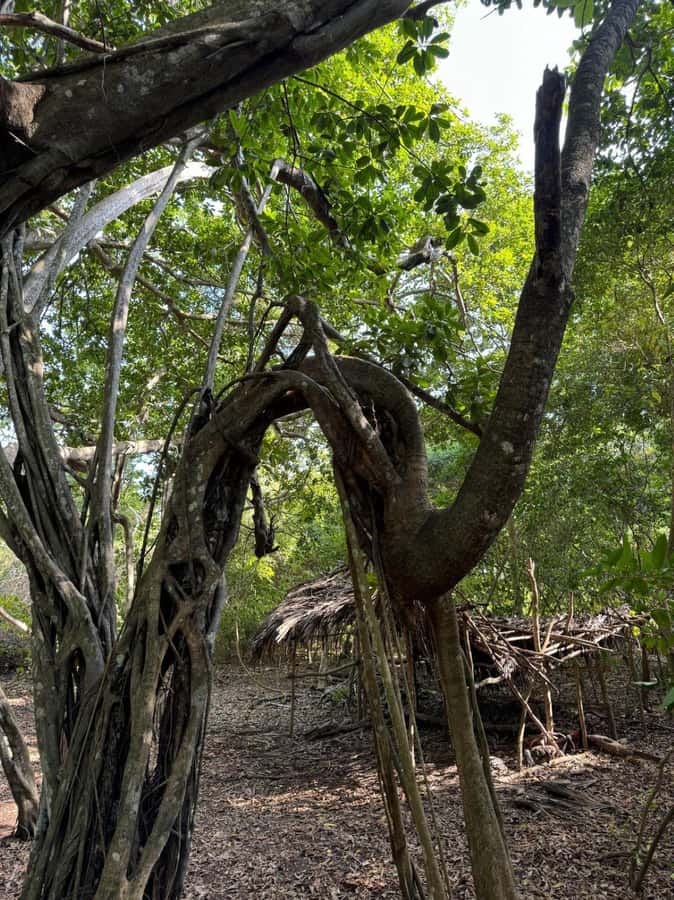
- The forest is sacred to the Digo people: You will learn why Kaya Kinondo is a spiritual place, not simply a patch of coastal woodland.
- Wildlife comes as a bonus: Birds, monkeys, butterflies, insects, and unusual plants may appear along the trail.
- The tour begins with a cultural welcome: You are briefed at the hall and given traditional attire before entering the forest.
- Small groups make the walk more personal: The maximum group size is eight, useful when you want to ask questions.
- Diani transfers are included: Pickup begins at 09:30 from a long list of hotels and villas, with about 30 minutes of driving to the forest.
- The school or village visit may add depth: Some departures include singing, dancing, and a school stop, but this should not be treated as guaranteed.
Why Kaya Kinondo is more than a nature walk
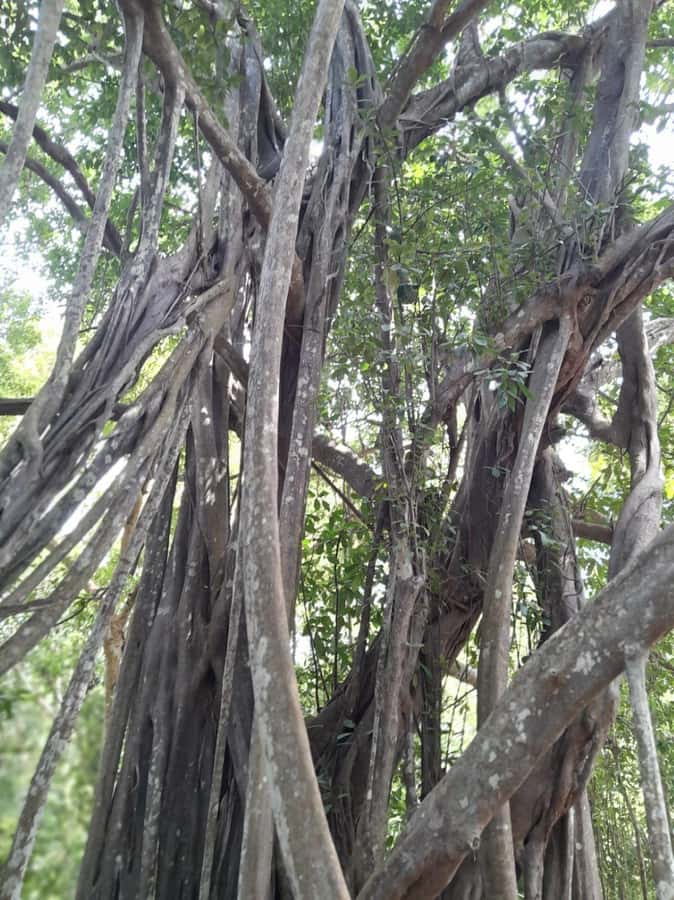
Kaya Kinondo is in Kenya’s Coast Province, near Diani, where coastal forest and Swahili culture meet. The word kaya refers to an ancestral fortified settlement associated with the Mijikenda communities. Here, the forest remains a sacred place for the Digo people, with rituals and traditional practices tied to the ancestors.
That context changes how you walk. You are not simply looking for a monkey in the branches or a bright butterfly beside the trail. You are moving through a place where particular trees, clearings, shrines, and altars may carry spiritual meaning.
The guide’s role is central. A good forest guide helps you understand what you are seeing without turning sacred customs into a performance. During this tour, the guide explains the forest’s importance, how the community connects with nature, and how prayers and ceremonies take place.
I find that cultural explanation is the strongest reason to choose Kaya Kinondo over a standard woodland excursion. The wildlife may be unpredictable, but the sense of place gives the walk its purpose.
A few more trips worth weighing up
- PILLI PIPA DHOW, the genuine product, snorkeling tour to Kisite Marine Park
★ 4.5 · 217 reviews - Full-Day Special Wasini Island Tour with Snorkeling and Lunch
★ 4.5 · 184 reviews - Full Day Dolphin Watching with Snorkeling in Wasini
★ 5.0 · 88 reviews
The 09:30 pickup from Diani hotels
The day begins at 09:30, with pickup available from many Diani hotels, resorts, villas, apartments, and cottages. The list covers properties from the northern and southern parts of the Diani area, including places around Galu Beach and Kinondo.
The drive to Kaya Kinondo takes about 30 minutes from Diani. That makes this an easy half-day outing if you are staying nearby and want a break from the beach without giving up most of your day.
Transfers are part of the $60 price, along with the entrance fee, water, and guide. That matters in Diani, where arranging a separate vehicle can add cost and uncertainty. It also means you do not need to negotiate a taxi and then find the forest entrance on your own.
You should pay attention to the exact pickup point at your accommodation. The tour lists a large number of locations, but a hotel’s main entrance or reception area is the sensible meeting point unless the operator tells you otherwise.
The experience is less convenient from farther away. A departure from Bamburi Beach involved a long journey, several vehicle changes, a breakdown, and more than three hours before reaching the forest. If you are staying outside Diani, ask about the transport plan before paying. The advertised 30-minute drive applies to Diani, not every coastal base.
The welcome hall and traditional attire
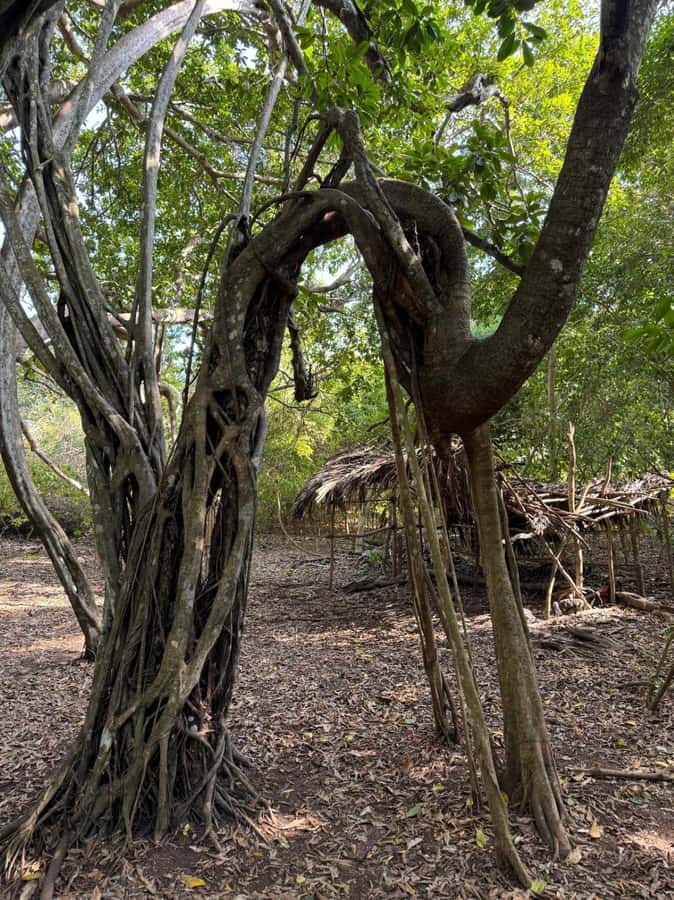
At the sanctuary, you are welcomed into a hall for a briefing. This is where the guide explains basic expectations and gives you traditional attire to wear before entering the forest.
Treat this as part of the cultural introduction, not a costume show. The clothing helps mark the change from a normal sightseeing trip to a visit to a sacred place. It also signals that respectful behavior matters.
Keep your expectations modest. One account described the attire as a simple brown cloth around the waist rather than a full traditional outfit. If you imagine elaborate garments or a long dressing ceremony, you may be disappointed.
The briefing is especially important because some areas may have spiritual significance. Listen closely when the guide explains where you may walk, what you may touch, and how to behave near shrines and altars. The information provided does not spell out every rule, so your guide’s instructions should take priority.
Wear practical clothing underneath. The trail is described as well maintained and accessible to all, but a forest path can still be warm, humid, and uneven in places. Comfortable walking shoes, insect protection, and sun protection are sensible choices. These items are not listed as inclusions, so plan to bring them yourself.
Walking beneath old coastal trees
As you enter Kaya Kinondo, the sounds and feel of the coast begin to fade. The air is described as fresh and scented with damp earth and vegetation, while the trail runs through tall trees and thick undergrowth.
The path winds through a variety of plants, including old trees that have been growing for centuries. Your guide points out the forest’s plant life and explains how particular species relate to local knowledge and tradition.
The trail is well maintained, which makes the outing more approachable than a rough wilderness hike. Still, accessible to all should not be read as a promise that every section is effortless for every person. The tour is a guided forest walk, not a paved route or vehicle-based visit. If you have mobility concerns, ask the operator for a current description of the path.
The pace should leave room to stop and listen. This is a place where the guide’s explanation matters more than covering distance. You may pause to look at a tree, study a plant, hear a bird, or learn why a certain part of the forest is treated with respect.
I would not choose this tour mainly for dramatic scenery. Its appeal is quieter. You are paying for interpretation, access to a protected cultural site, and a chance to see coastal nature through Digo traditions.
A completely different kind of day out from Diani Beach:
- Diani Beach: Glass Boat Cruise to Robinson Island
★ 4.6 · 69 reviews - Diani: Sunset Canoe Tour along the River with Mangroves
★ 4.8 · 65 reviews - Day Trip – Tsavo East National Park ( Man Eater Lions of Tsavo & Other Big Five)
★ 4.5 · 55 reviews - Diani Beach: Private African Pool Map Guided Tour
★ 4.7 · 52 reviews
Birds, monkeys, and butterflies along the trail
Kaya Kinondo is home to birds, monkeys, insects, and butterflies. You may see monkeys moving through the trees and colorful butterflies close to the path, while birdwatching adds another layer to the walk.
A sighting is never guaranteed, so keep your expectations sensible. The forest is not presented as a formal wildlife reserve with a fixed animal checklist. You are more likely to enjoy the experience if you appreciate small discoveries rather than waiting for a major animal encounter.
Bring patience. Stop when the guide stops, scan the branches, and listen for movement. A compact camera or phone can be useful, but do not let photography distract you from the cultural side of the visit.
The wildlife is best understood as part of a living forest. The same trees that support birds and monkeys are also tied to community customs and conservation. That connection is one of the tour’s better lessons: protecting the forest preserves both habitat and heritage.
One account specifically noted seeing birds and monkeys during the walk. Another described being shown medicinal plants and playing briefly with vines. Those activities may vary by guide and conditions, but they suggest that the tour can be hands-on rather than a simple march along a path.
Shrines, altars, and the forest’s spiritual heart
The most meaningful part of the tour comes when you reach sacred sites inside the forest. These can include shrines and altars used during traditional ceremonies, sometimes with offerings placed nearby.
This is where respectful listening matters more than taking photographs. The guide explains how rituals are conducted, why prayer is important, and how the Digo community maintains a relationship with the forest and its ancestors.
One account described embracing a prayer tree and feeling a strong sense of peace. That moment will not affect everyone in the same way, and you should not expect a staged spiritual experience. Still, the tree and the surrounding customs can give the walk a powerful emotional focus.
The forest’s spirituality is not presented as an abstract idea. It is connected to particular places, trees, and community practices. That makes the explanation easier to understand and gives the visit a human scale.
You may have questions about offerings, prayer, or who can enter certain places. Ask politely. The small-group format helps here, since a maximum of eight people gives you more opportunity for conversation than a large coach tour.
A possible village and school visit
The standard description focuses on the forest, but some departures continue into a nearby village. There, the guide may explain how the village is arranged and introduce you to local residents.
A school visit has also formed part of at least one outing. Children sang, and the group made a small donation to the school. This can be a moving extension of the forest visit because it connects Digo customs with daily community life.
At the same time, you should clarify the plan before departure. The school or village stop is not clearly listed as a fixed part of every tour. Do not assume you will have time for it, and do not arrive expecting to hand out sweets or supplies unless the operator advises you to do so.
If a school visit is included, ask about the most appropriate way to support it. A donation handled through the guide or school is generally more orderly than distributing treats directly to children. The important point is to approach the stop with respect, not as a photo opportunity.
Another departure included singing and dancing with village residents. That sounds lively, but the quality and length of this part may depend on the day, the community, and the guide. The forest remains the dependable core of the experience.
Languages, group size, and guide quality
The tour offers guides in English, German, French, Spanish, Polish, and Italian. That is useful for a cultural visit, where a language gap can make the difference between a meaningful explanation and a vague walk among trees.
You should confirm your preferred language ahead of time. One French-speaking booking from Bamburi had problems arranging a French guide, along with transport trouble. This does not mean every French departure will have the same issue, but it is a clear reason to check rather than assume.
The maximum group size is eight. I like that limit for Kaya Kinondo because sacred sites call for a calm atmosphere, and a small group makes it easier to hear the guide.
A guide from the Digo community led one successful outing and spoke good English. The guide was described as friendly and willing to answer many questions. That local connection is a major strength, since the tour’s main subject is living culture, not just botany.
The guide also controls the tone. You may learn about medicinal plants, prayer customs, village life, conservation, and the meaning of old trees. Ask questions, but remember that this is a sacred place and some information may be shared with appropriate limits.
Is $60 a fair price?
At $60 per person, the tour is not the cheapest short excursion from Diani. The value depends on what you want from your morning.
The price includes:
- Hotel pickup and return by vehicle
- Entrance fees
- A multilingual guide
- Drinking water
- A small group of no more than eight people
Meals are not included. Since the outing lasts three hours, that is not a major issue for most people, but do not expect lunch or refreshments beyond the supplied water.
I consider the price reasonable if you value cultural interpretation and door-to-door transport. A self-guided forest walk would not provide the same explanation of Digo rituals, shrines, altars, and conservation. You are also supporting access to a protected sacred site through a local tour arrangement.
The value drops if you are seeking a long wildlife safari. This is a short coastal forest visit, and sightings are incidental. You are paying for a mix of nature, heritage, and spirituality, not a guaranteed animal encounter.
Free cancellation up to 24 hours before the start and the option to reserve now and pay later make the booking less risky. Still, transport details and language should be confirmed if your plans are complicated.
Who will enjoy Kaya Kinondo most?
I would recommend this tour to you if you want to understand more about the coast than its beaches and resorts. It suits people who enjoy local traditions, guided walks, conservation, plants, birds, and thoughtful cultural encounters.
It is also a good choice for anyone who prefers a small group. Eight people is enough for conversation but small enough to avoid the feel of a large organized procession.
Families may enjoy the monkeys, butterflies, stories, and possible village activities, although the spiritual sites require calm and respectful behavior. Curious first-time visitors to Kenya may find this a useful introduction to Digo culture.
I would hesitate if you want a fast-paced adventure or a major wildlife count. I would also ask extra questions if you are leaving from Bamburi, need a particular language, or have mobility concerns.
Should you book the Kaya Kinondo tour?
Book it if you want a quiet, culture-led forest experience near Diani and appreciate the chance to learn from a local guide. The combination of sacred sites, old trees, wildlife, and Digo traditions gives the morning more meaning than a routine nature walk.
Before booking, confirm three things: your exact pickup point, the language of your guide, and whether the village or school visit is planned. If you accept that the traditional attire may be simple and animal sightings are not guaranteed, the $60 price offers solid value for a small-group outing with transfers included.
FAQ
Where is the Kaya Kinondo Sacred Forest tour located?
The tour takes place in Coast Province, Kenya, near Diani. Pickup is available from many hotels and accommodations in the Diani area.
What time does pickup begin?
Pickup begins at 09:30 from the listed Diani hotel locations. The drive from Diani to Kaya Kinondo takes about 30 minutes.
How long does the activity last?
The advertised duration is three hours. Check the available starting time when booking, especially if you are staying outside Diani.
What languages are available?
Guided tours are offered in English, German, French, Spanish, Polish, and Italian. You should confirm your preferred language in advance.
What is included in the $60 price?
The price includes entrance fees, hotel transfers to and from the forest, a multilingual guide, and water. Meals are not included.
How large is the group?
The tour is limited to eight participants. This keeps the walk relatively personal and gives you more opportunity to ask the guide questions.
Just added around Diani Beach
- Overnight Safari to Tsavo East with Pick Up From Mombasa★ 5.0 · 3 reviews
- Mombasa: Snorkeling, Dolphin watching, seafood lunch.★ 4.5 · 3 reviews
- 1 Day Red Elephant Safari starting from Diani beach.★ 5.0 · 3 reviews
- Mombasa City Tour – Fort Jesus, Old Town, Spice Town & Craft★ 5.0 · 3 reviews
- 4-Day Safari to Tsavo and Amboseli from Diani Beach★ 5.0 · 3 reviews
- Diani: Wasini Island Dolphin Watching and Snorkeling Tour★ 4.2 · 3 reviews
- (2 Days, 1 Night) Day & Night Game Drive Tsavo East National Park★ 5.0 · 3 reviews
- From Diani or Mombasa: Tsavo East National Park Day Trip★ 5.0 · 4 reviews
Guided, compared.

Nairobi National Park 5-hour Guided Game Drive Free Pick up
Read our review →
Nairobi National Park Full or Half-Day Tour with Guide
Read our review →

Half Day Guided Tour in Nairobi National Park With 4*4 Vehicle
Read our review →


Browse the lists this tour appears in