
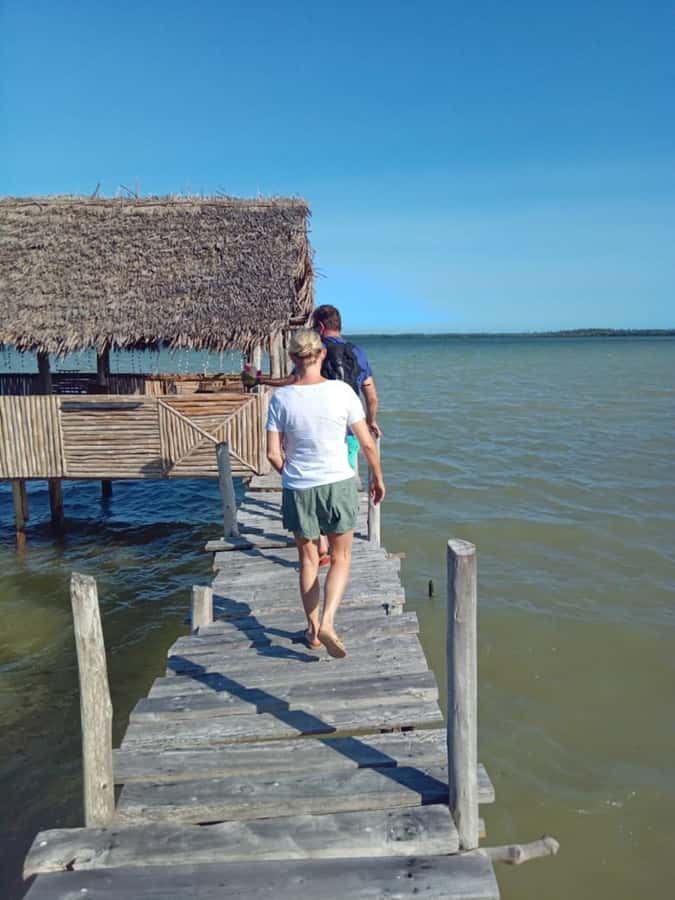
Reviewed · WATAMU MARINE PARK TRIPS
Watamu: Sunset Mangrove Canoe Tour with Coconut Drink
Sunset starts in the mud. This Watamu outing pairs a traditional canoe ride through Mida Creek with birdwatching and mudflat wildlife, then ends with a coconut drink or palm wine in a Giriama village. I like the quiet, local feel and the chance to see the mangrove from water level, rather than from a bus or busy beach. The main drawback is the transfer: getting to the remote starting point can cost more than the $20 tour.
This is a good choice if you enjoy simple outdoor adventures, local guides, and a little mud on your shoes. I also like that the guides explain how the mangroves support village life and that the canoe is moved in the traditional way, with a pole. Just confirm the meeting point, transport price, tide, and boardwalk status before paying.
In This Review
- Key points to know before you go
- What this Watamu canoe trip is really about
- Walking across the mudflats at low tide
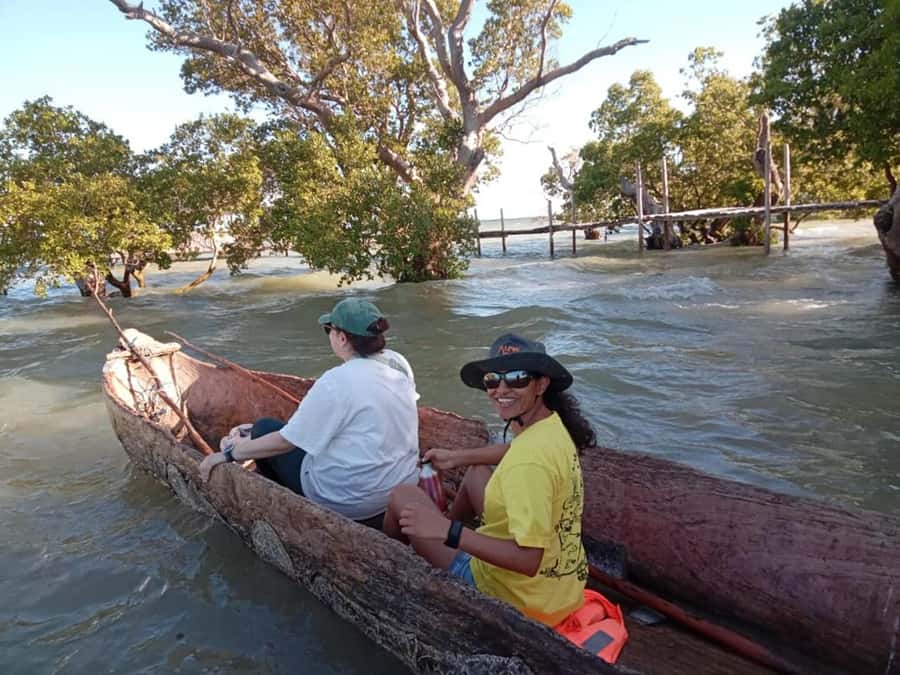
- Taking the traditional dugout canoe into Mida Creek
- Looking for mudskippers, frogfish, and oysters
- Waiting for the sunset behind Green Island
- Meeting the Giriama village after the canoe ride
- Choosing low tide or high tide
- Getting to the starting point from Watamu
- What the $20 price delivers
- Who will enjoy this outing most
- Should you book the Mida Creek sunset canoe tour?
- FAQ
- How long does the sunset mangrove canoe tour last?
- Is transportation from Watamu included?
- Can I choose low tide or high tide?
- What wildlife might I see?
- What should I bring?
- Is the boardwalk open?
Key points to know before you go
- The canoe starts after a tidal walk: At low tide, you cross exposed mudflats before reaching the water, while high tide allows a shorter walk.
- The best wildlife is close to the boat: Look for small crabs, mudskippers, frogfish, oysters on mangrove roots, and up to 65 bird species.
- Sunset timing shapes the whole outing: The canoe trip is arranged to finish with the sun dropping behind Green Island.
- The village visit adds real local context: You can have a freshly picked coconut or palm wine in a Giriama village.
- Transport is not included: Pickup can be arranged for an extra charge by car, tuk-tuk, or motorcycle.
- Check current access conditions: From February 2026, the boardwalk is under maintenance and temporarily inaccessible.
What this Watamu canoe trip is really about
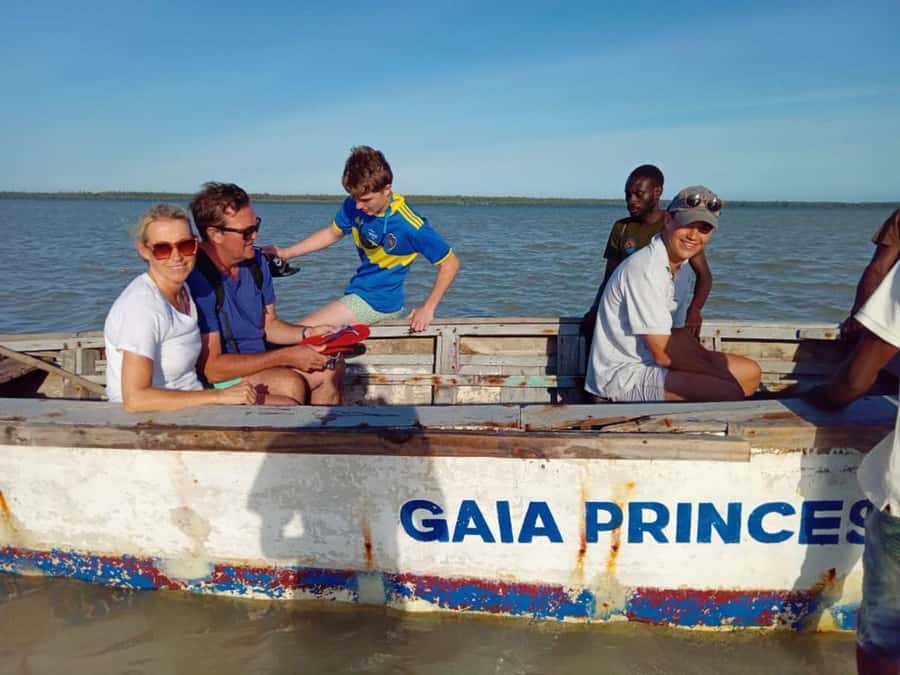
This is not a polished boat cruise with a fixed route and a snack tray. It is a slow, low-key outing built around tides, village life, and the natural rhythm of Mida Creek.
The advertised duration is 210 minutes, or three and a half hours. The experience begins with a walk, continues by traditional dugout canoe, and finishes in the village after sunset. The exact balance can change with the tide, weather, access conditions, and the pace of the group.
The price is $20 per person, which is excellent value if the full outing runs as planned. You are getting a guided nature walk, a canoe ride, wildlife watching, a sunset setting, and a village refreshment. The catch is that transport to the starting point is separate, and the starting point is far enough from Watamu that the transfer can become the costly part.
I would treat this as a community-based nature visit rather than a standard sightseeing trip. The simpler setup is part of its appeal, but it also means you should confirm the details instead of assuming every part will operate like a large commercial tour.
More Watamu marine park trips:
- Watamu Marine Park & Sudi Island Mangrove Forest Canoe Ride.With sea food lunch
★ 4.5 · 31 reviews - WATAMU: MALINDI: SARDEGNA ISLAND & MALINDI MARINE PARK
★ 4.5 · 9 reviews - Watamu: Learn Kenyan Cusine with Jonathan
★ 4.1 · 8 reviews
Walking across the mudflats at low tide
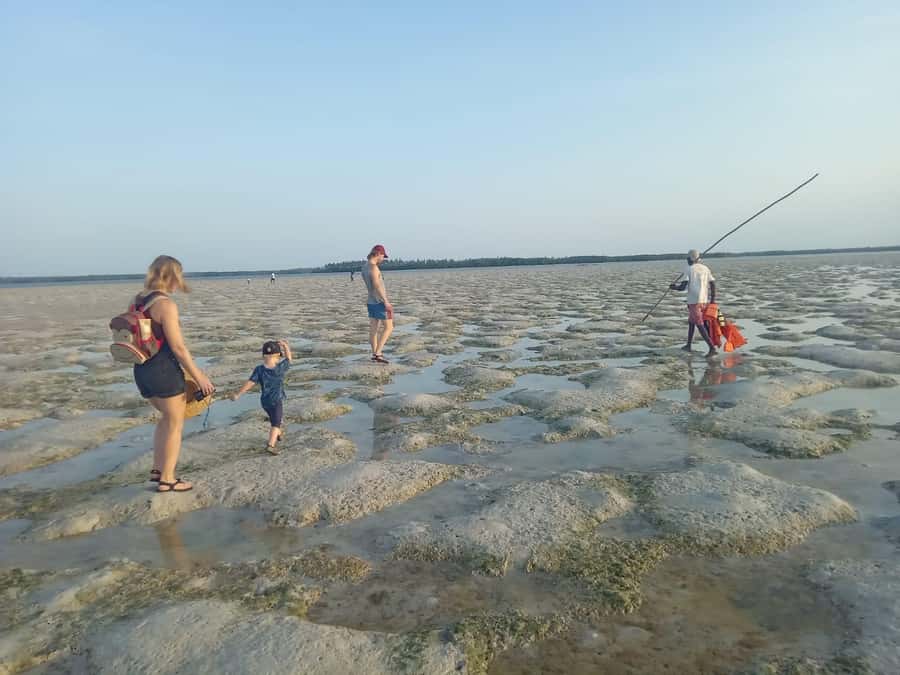
If you choose low tide, the outing begins with a longer walk across mudflats exposed by the receding water. Thousands of little crabs may scurry away from your feet, and the open tidal area takes on an unusual, almost moonlike appearance.
This walk is one of the most distinctive parts of the trip. You see the creek from ground level, notice the marks left by the tide, and get a closer look at the small creatures that live in the mud. It also gives the guide a natural chance to explain how the mangrove system works.
The drawback is clear: mudflats are muddy. You need comfortable shoes that can handle wet ground, and you should be prepared to walk before sitting in the canoe. This is not a good fit if you want to avoid uneven surfaces, mud, or a sustained walk.
The original plan includes a boardwalk through the mangrove, but access is currently affected by maintenance from February 2026. The boardwalk is temporarily inaccessible according to the latest information supplied for this activity. Ask exactly what route is available on your date, since the walk may differ from the usual description.
Taking the traditional dugout canoe into Mida Creek
After the walk, you reach the water and board a traditional dugout canoe. Local fishermen use this style of boat, and the canoe is pushed forward with a pole rather than powered by a loud motor.
That makes a real difference. You hear the water, birds, and movement of the pole instead of an engine. The slow pace also gives you time to look into the roots and channels rather than simply passing them at speed.
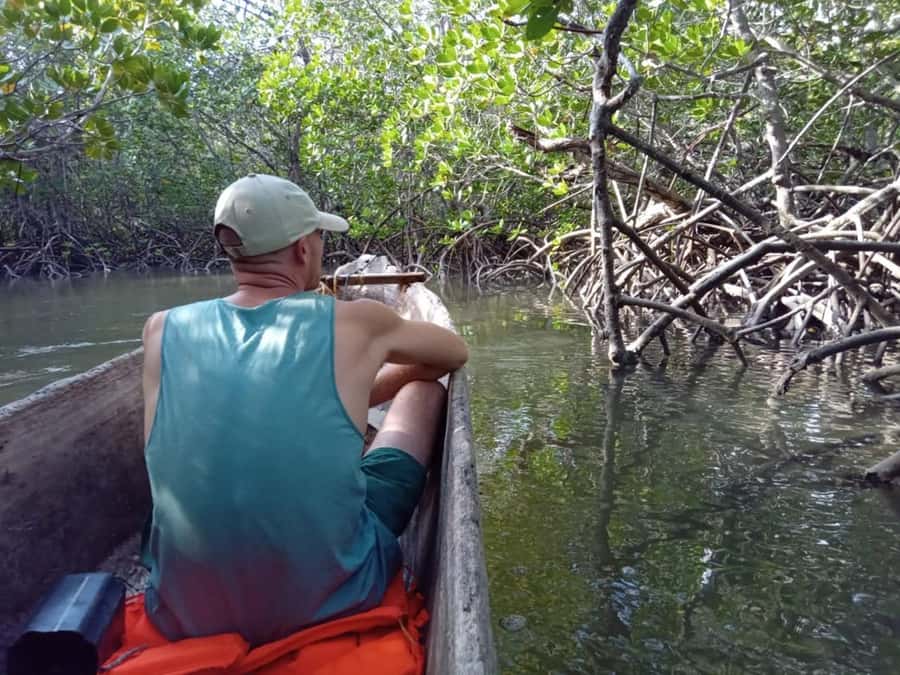
The canoe travels deeper into the mangrove forest, where narrow waterways bring you close to the trees. You can see oysters attached to the mangrove roots, an easy detail to miss from a larger boat. The roots are not just scenery. They provide shelter for small marine life and help hold the creek together.
At high tide, the canoe entry point is closer to the meeting point, so you do less walking. This is the practical choice if you have limited energy or want to spend more of your time on the water. At low tide, you trade comfort for a closer look at the mudflats and their wildlife.
The canoe itself is basic. That is the point, but it also means you should not expect cushioned seats, a large covered deck, or the stability of a modern sightseeing vessel. Wear clothes that can cope with a splash and bring only what you can keep secure.
Looking for mudskippers, frogfish, and oysters
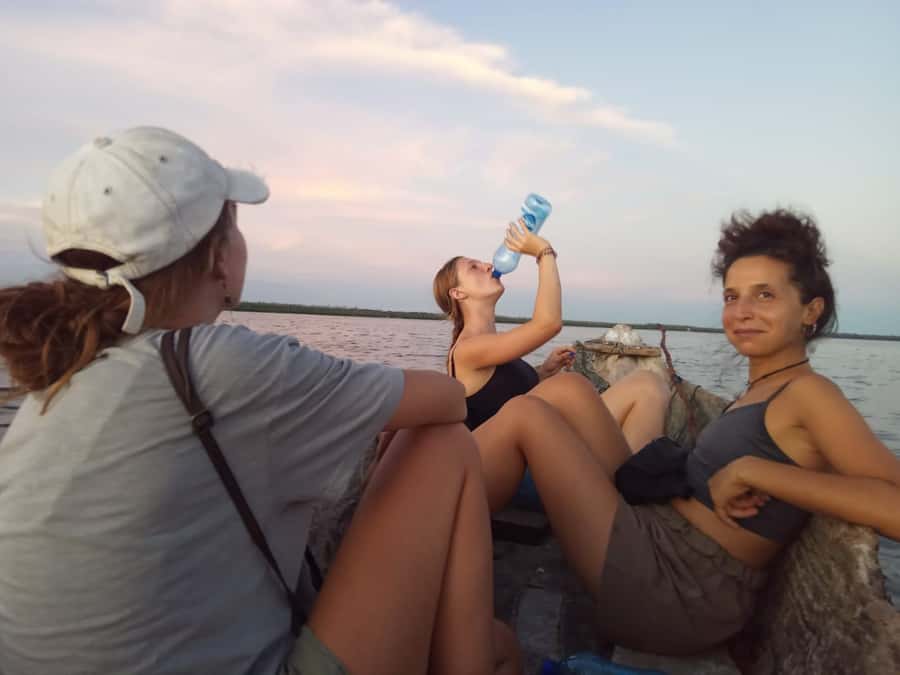
Mida Creek rewards patient observation. The wildlife is not presented in a zoo-like way, and you may not see every creature listed on every departure. Still, the setting gives you good chances to spot small animals in places where they actually live.
The most unusual sight is likely to be the mudskipper, an amphibious fish that can move across wet mud and spend time out of the water. The activity also describes frogfish, though the precise sighting depends on the tide and the guide’s ability to locate them.
Small crabs are easier to notice during the low-tide walk. Oysters cling to the mangrove roots, showing how the creek supports food sources as well as birds and fish.
Birdwatching is another major reason to come. The creek is home to 65 bird species, and the calm canoe gives you a useful platform for scanning the channels and trees. You might see flamingos close to the canoe, as one recent outing did, but sightings are never guaranteed and the number of birds can change with tide and season.
Bring binoculars if birds matter to you. A camera is also worth packing, though the late light can make photography tricky once the sun drops. Sunscreen and insect repellent are sensible in this wet environment, even during an afternoon departure.
A few more trips worth weighing up
- Diani: Sunset Canoe Tour along the River with Mangroves
★ 4.8 · 65 reviews - Diani Beach: Kongo River Sunset Experience in a canoe
★ 4.4 · 31 reviews - Diani: Sunset Cruise along Kongo River on Wooden Canoe boat
★ 4.6 · 20 reviews - Sunset Canoe Tour on a River within the Mangroves
★ 4.5 · 12 reviews
Waiting for the sunset behind Green Island
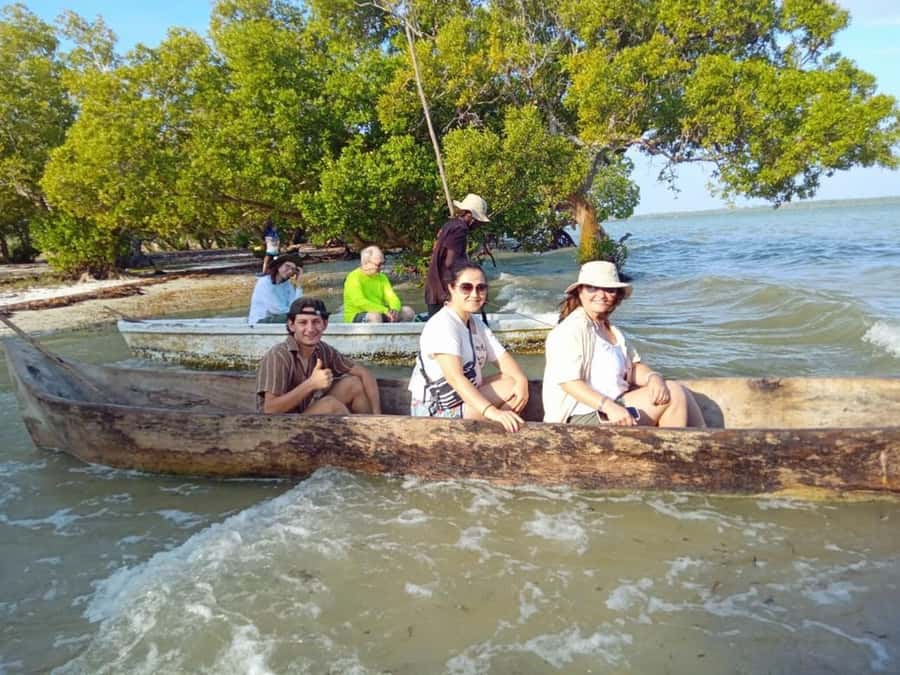
The trip is timed around sunset, and the final stretch on the water is designed to be quiet. As the sky turns pastel, light catches the small ripples around the canoe and the mangrove silhouettes become darker.
The sun is supposed to fall behind Green Island before the group heads back toward the village. This is the most scenic part of the outing, but it also depends on timing. If the canoe ride runs short or the transfer starts late, the sunset portion may not feel as generous as expected.
The standard departure is around 4:00 PM if no tide preference is given. That timing is intended to preserve the sunset, but you should still confirm the start time when booking. A late arrival can cut into the walk, wildlife viewing, or village stop.
I would bring water and keep your camera ready before the colors begin. Once the light changes, the scene can move from ordinary creek to a memorable evening view in only a few minutes.
Meeting the Giriama village after the canoe ride
After the sunset, you return to a Giriama village for a simple refreshment. Your choices are a coconut picked from a palm or a glass of palm wine.
The coconut is the safer all-purpose choice if you want a cool, nonalcoholic drink. Palm wine offers a more local taste, but the supplied information does not describe its strength or serving size, so ask the guide if you need to know.
The village stop is more than a drink break. It gives you a chance to see where the guides live and to ask about daily life around the creek. Some departures may also offer typical African food as an optional lunch, though meals are not included in the $20 price.
The strongest part of this visit is the conversation. Guides Harrison and John have been praised for explaining their village, the surrounding wildlife, and the role of mangroves. Another guide-led visit included an explanation of a project to plant younger mangroves and repopulate damaged areas.
This is the kind of stop that works best when you arrive with curiosity and respect. It is not a staged cultural show with a long list of performances. The appeal is the chance to talk, drink something local, and connect the creek’s ecology with the people who depend on it.
Choosing low tide or high tide
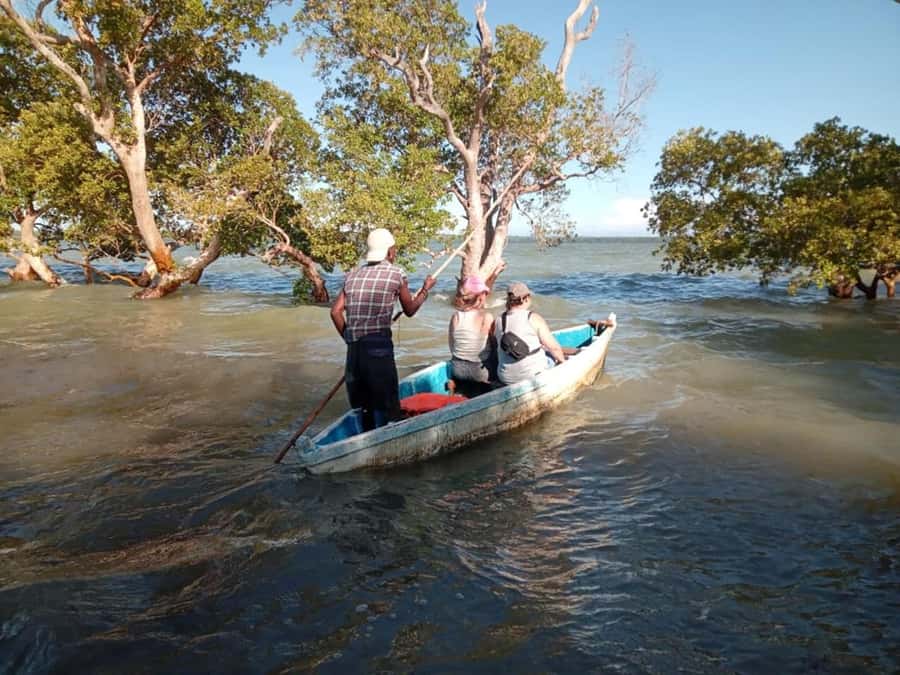
You are asked to state your preferred tide when booking. This is important because low tide and high tide create two noticeably different outings.
Choose low tide if you want:
- A longer walk across the mudflats
- Close views of crabs and tidal wildlife
- A more exposed, open setting
- A stronger sense of how the creek changes with the water
Choose high tide if you want:
- Less walking
- An easier route to the canoe
- More time on the water
- Fewer concerns about muddy footing
Neither option is automatically better. Low tide gives you more variety, but it asks more from your legs and shoes. High tide is easier and more canoe-focused, but you miss much of the exposed mudflat activity.
If you do not communicate a preference, the activity is planned for about 4:00 PM regardless of the tide. That protects the sunset timing, but it does not guarantee the specific kind of walk you may want. I would make the tide request clearly and confirm that it has been noted.
Getting to the starting point from Watamu
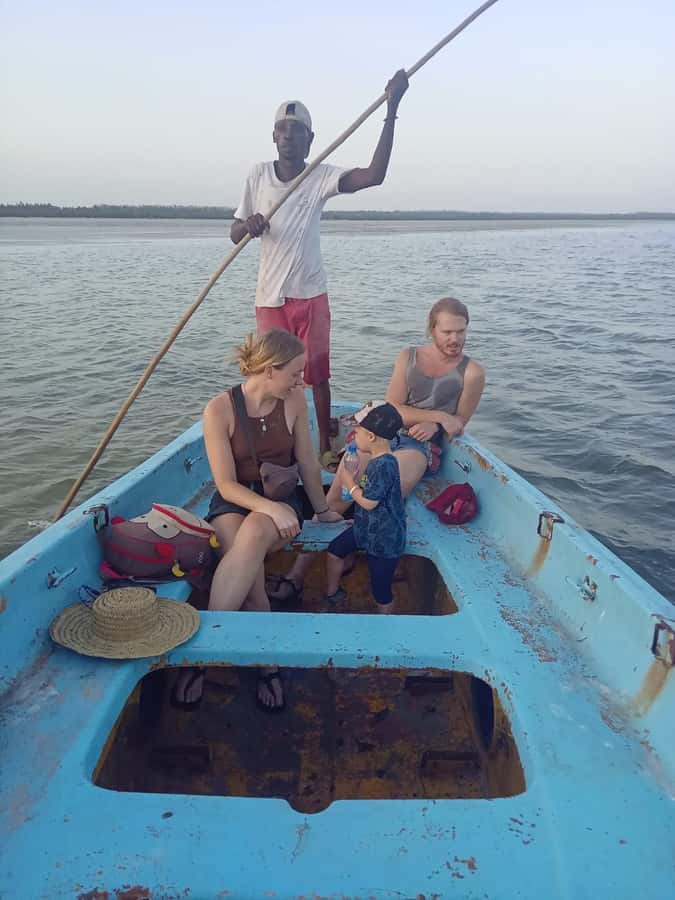
Transportation deserves careful attention. It is not included in the $20 price, though pickup can be arranged for an additional fee based on distance.
The starting point is at a small village at the far end of the bay, not at the Shark Crab restaurant area used by another Mida Creek outing. Confusing the two locations could lead to a long, inconvenient day.
Transport may be arranged by car, tuk-tuk, or motorcycle. The extra cost depends on how far you are staying from the launch point. One recent booking had a pickup problem and then faced a disagreement over additional payment after returning to the hotel. To avoid that sort of unpleasant surprise, agree on the transfer price before setting off and confirm whether it covers both directions.
You can also arrange your own tuk-tuk if that is easier, but make sure the driver knows the exact village meeting point. The location is a practical issue, not a minor footnote, because a cheap activity can become less attractive once a long transfer is added.
What the $20 price delivers
At $20 per person, the core activity offers good value. You get a guide in English or Swahili, a nature walk or approach to the canoe, a traditional boat ride, wildlife viewing, sunset time, and a coconut or palm wine at the village.
The value is strongest for people who want local contact and a simple setting. If you only want a short boat ride, you may find the transfer and walking effort hard to justify. One disappointing outing lasted about an hour and included only a brief boat trip and a few flamingos, so it is sensible to confirm the planned duration and route before departure.
The experience can also grow beyond the basic tour. Optional food and simple accommodation may be available for those who want more time in the village. Those extras are not included, so ask about the price and arrangements separately.
Free cancellation is available up to 24 hours before the activity for a full refund, and you can reserve now and pay later. Those terms help if your Watamu schedule depends on tides or weather, but they do not remove the need to check the current boardwalk situation.
Who will enjoy this outing most
I would recommend this for you if you like:
- Quiet nature trips instead of large commercial cruises
- Traditional boats and unhurried travel
- Birdwatching and small wildlife
- Local food, village conversation, and cultural context
- Sunset photography
- Flexible plans shaped by the tide
You should think twice if you have mobility impairments or dislike walking on mud. The outing includes walking and canoeing, and the low-tide route can be physically demanding.
Families with older children may appreciate the crabs, mudskippers, birds, and canoe ride, but the information supplied does not specify age limits or child facilities. Ask before booking if that matters to your group.
Bring water, sunscreen, insect repellent, a camera, and binoculars. Wear comfortable clothing and shoes that can cope with mud and water. Keep valuables protected, and do not bring more onto the canoe than you can manage easily.
Should you book the Mida Creek sunset canoe tour?
Book it if you want a modestly priced, locally guided outing with a strong sense of place. The best parts are the silent canoe, close wildlife views, pastel sunset behind Green Island, and the welcome in the Giriama village. Guides such as Harrison and John can add real value by linking the mangroves to village life and conservation work.
I would not book it blindly. Confirm the exact meeting point, round-trip transport price, tide choice, expected duration, and current boardwalk access. If those details are clear, the $20 core price is appealing. If you want a polished cruise with guaranteed wildlife, easy access, and no mud, choose a different Watamu activity.
FAQ
How long does the sunset mangrove canoe tour last?
The stated duration is 210 minutes, or three and a half hours. The exact start time depends on availability, and departures are generally planned around 4:00 PM when no tide preference is provided.
Is transportation from Watamu included?
No. Transport to the starting point is not included, but pickup can be arranged for an additional fee based on distance. Options may include a car, tuk-tuk, or motorcycle.
Can I choose low tide or high tide?
Yes. Tell the provider your preference when booking. Low tide includes a longer walk across the mudflats, while high tide allows you to reach the canoe with less walking.
What wildlife might I see?
The creek has 65 recorded bird species, and you might also see small crabs, mudskippers or frogfish, and oysters attached to mangrove roots. Wildlife sightings depend on conditions and are not guaranteed.
What should I bring?
Bring a camera, sunscreen, water, insect repellent, and binoculars. Wear comfortable clothing and shoes suitable for walking and canoeing.
Is the boardwalk open?
The boardwalk is temporarily inaccessible because of maintenance from February 2026. Confirm the current walking route with the provider before your visit, since access may affect the start of the outing.
More Evening Experiences
- 2 Days Tsavo East National Park Tour From Mombasa/Diani (1 Night)
★ 5.0 · 50 reviews - 2 Days and 1 Night Amboseli Safari from Nairobi
★ 4.0 · 29 reviews - 2 days 1 night saltlick safari from Diani/Mombasa
★ 4.8 · 28 reviews - 2 Days 1 Night Private Tour to Amboseli National park 4*4 Vehicle
★ 5.0 · 12 reviews
Just added around Kenya
- Nairobi: Giraffe Center, Elephant Orphanage and Bomas Tour★ 5.0 · 3 reviews
- Nairobi: Airport and Hotel Private Transfers.★ 4.0 · 3 reviews
- 11-Days Best of Kenya & Tanzania Big 5 Safari on a 4×4 Jeep★ 5.0 · 3 reviews
- Kitengela Anselm Hot Glass tour★ 4.5 · 3 reviews
- NAIROBI NATIONAL PARK AFTERNOON GAME DRIVE.★ 5.0 · 3 reviews
- 12-Day Tsavo west Amboseli lake Nakuru Maasai Mara safari★ 5.0 · 3 reviews
- Nairobi Down Town & Walking City Tour★ 4.8 · 3 reviews
- Private 3 Day Tsavo East Safari from Mombasa★ 5.0 · 3 reviews
Watamu Marine Park Trips, compared.
Watamu Marine Park & Sudi Island Mangrove Forest Canoe Ride.With sea food lunch
Read our review →

Day tour to Tsavo East National Park from Malindi/ Watamu
Read our review →
Blue Safari: Snorkeling at Watamu Marine Park & Seafood
Read our review →
From Kilifi, Watamu, Malindi: Tsavo East Day Safari
Read our review →Private Mombasa City Tour Watamu Diani and Malindi
Read our review →Browse the lists this tour appears in