
Reviewed · WATAMU MARINE PARK TRIPS
Watamu: Learn Kenyan Cusine with Jonathan
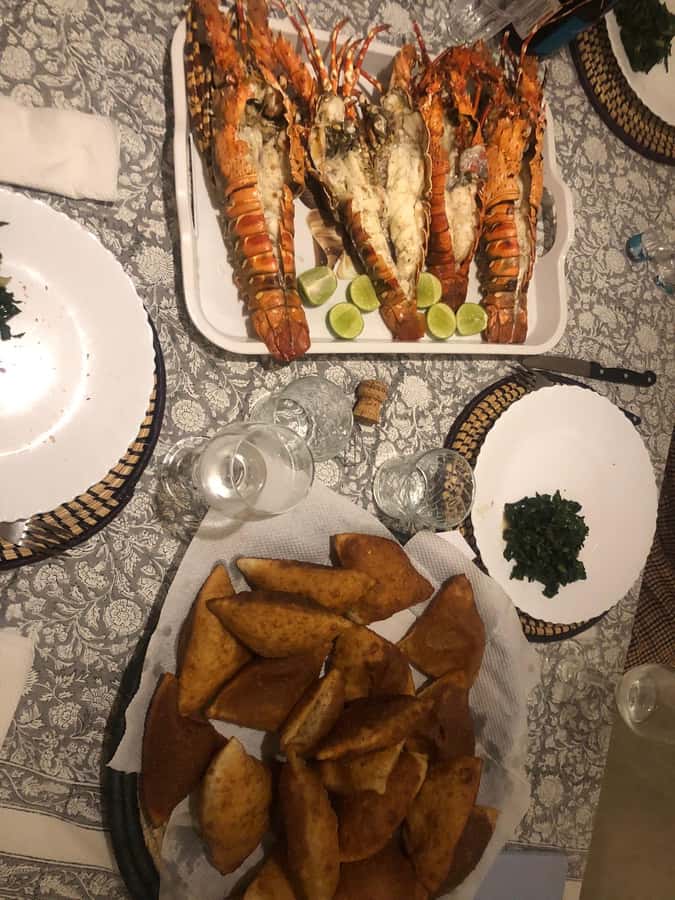
Ugali tells a story. This private class with Jonathan gives you more than a recipe lesson: you cook Kenyan staples, eat what you make, and can choose between learning in his village or at your own resort. I especially like the private format and the warm welcome Jonathan and his family have given to past participants.
I also like the practical setup. Pickup and cooking materials are included, and Jonathan speaks English, Italian, and Swahili. One thing to consider is that the class location needs arranging through WhatsApp, so you should confirm the meeting point, menu, and pickup details before the day.
In This Review
- Key Points to Know Before Booking
- Why This Cooking Class Feels Different From a Restaurant Meal
- Starting With Pickup and Your Choice of Location
- Making Ugali From Scratch
- Rolling Chapati and Preparing Samosas
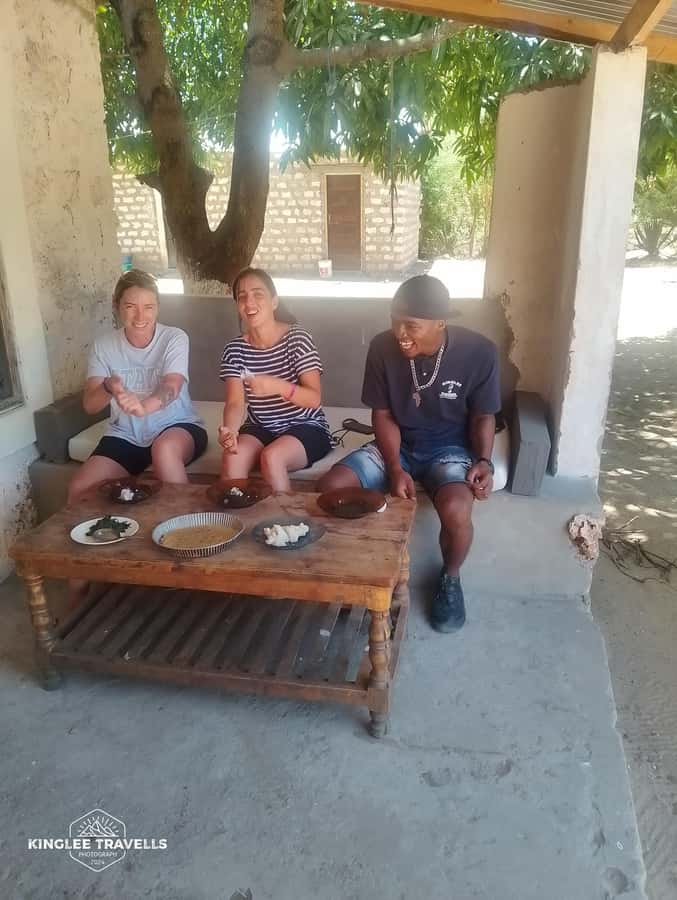
- Eating Together After the Cooking
- What $23 Really Includes
- Village Visit or Resort Lesson?
- Who Will Enjoy This Most?
- Useful Timing and Booking Advice
- Is Jonathan’s Cooking Class Worth Booking?
- FAQ
- How long does the Kenyan cooking class last?
- How much does the experience cost?
- Which Kenyan dishes will I learn to cook?
- Where does the cooking class take place?
- Is pickup included?
- What languages does the host speak?
Key Points to Know Before Booking
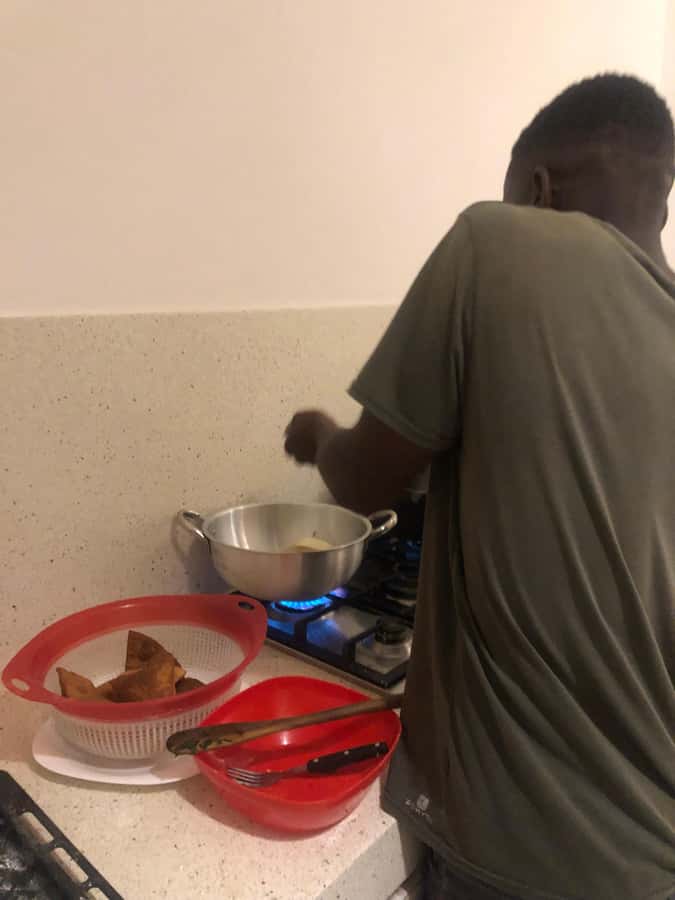
- Cook three Kenyan favorites: Learn to make ugali, chapati, and samosas, with spinach also prepared during some classes.
- Choose your setting: Go to Jonathan’s village for a local family welcome, or hold the class at your own house or resort.
- Private from start to finish: Your group has the class to itself, with space for up to 10 people.
- Pickup is included: Jonathan can collect you and take you to the village, or meet you at your preferred location.
- Good value at $23 per person: The price includes the class, cooking supplies, private transfer, and the meal you prepare.
- A highly praised personal touch: Jonathan is repeatedly described as kind, funny, patient, and welcoming, while his family adds to the sense of hospitality.
Why This Cooking Class Feels Different From a Restaurant Meal
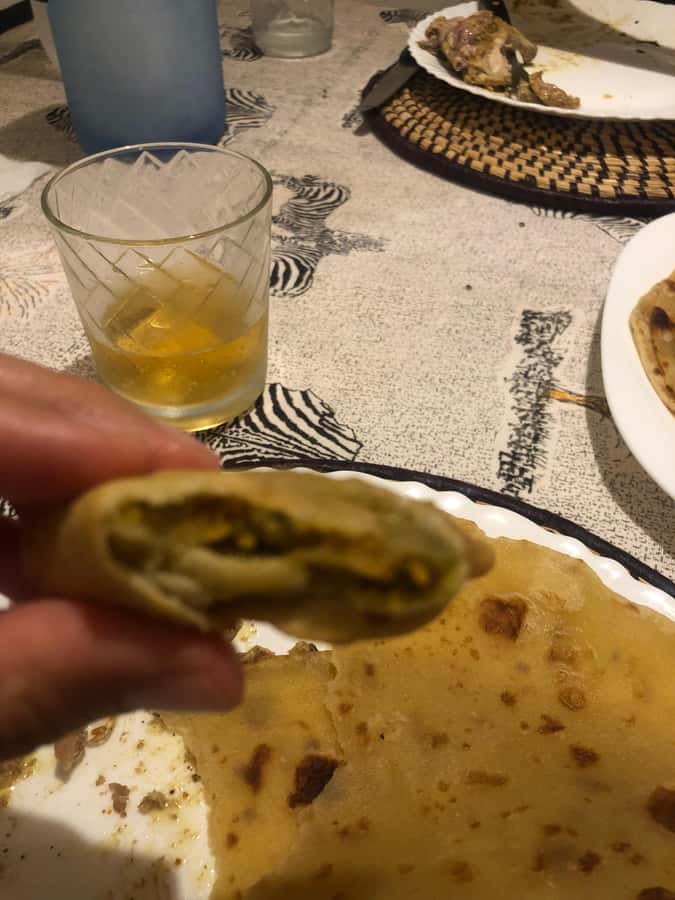
A restaurant lets you taste Kenyan food. This class lets you handle the ingredients, learn the method, and sit down to eat with the person who taught you. That simple change makes the meal more memorable.
Ugali and chapati are everyday Kenyan foods, not special-occasion dishes made only for visitors. Learning them gives you a useful look at home cooking along the Kenyan coast. Samosas add another familiar favorite to the lesson, and spinach has been part of the meal in at least some sessions.
I like this approach because the food is tied to conversation and place. You are not simply watching a chef work behind a counter. You are taking part, making mistakes if needed, and eating the result soon afterward. There is no pressure to produce restaurant-perfect food. The point is to understand how these dishes come together and enjoy the process.
The class has received an overall rating of 4.1 from eight ratings, with the written feedback strongly focused on Jonathan’s friendliness, the food, and the welcome from his family. That combination is important. A cooking class can have a good menu and still feel stiff. Here, the personal side appears to be the main reason people remember it.
More Watamu marine park trips:
- Watamu Marine Park & Sudi Island Mangrove Forest Canoe Ride.With sea food lunch
★ 4.5 · 31 reviews - WATAMU: MALINDI: SARDEGNA ISLAND & MALINDI MARINE PARK
★ 4.5 · 9 reviews - Watamu: Sunset Mangrove Canoe Tour with Coconut Drink
★ 3.6 · 8 reviews
Starting With Pickup and Your Choice of Location
The experience is designed to be flexible. Jonathan can pick you up and take you to his village, or he can come directly to your house or resort. You should state your preferred option when arranging the class through WhatsApp.
The village option is likely the better choice if you want the strongest connection to local life. It gives the class a sense of place and lets you meet Jonathan and his family in their own setting. Several comments describe the family welcome as especially warm, with one French-speaking participant saying the family made them feel like part of the household.
That does not mean the resort option is second-rate. Holding the lesson where you are staying may suit families with small children, anyone with limited mobility, or a group that wants to avoid extra movement. The activity is listed as wheelchair accessible, and a private location can also make the class easier for a mixed-age group.
There is one practical point to keep in mind: the supplied details do not give a fixed meeting point or a precise pickup schedule. Confirm the address, start time, and transport plan in advance. This is a tailor-made activity, which is useful, but it also means you should not expect the same fixed structure as a large scheduled excursion.
Making Ugali From Scratch
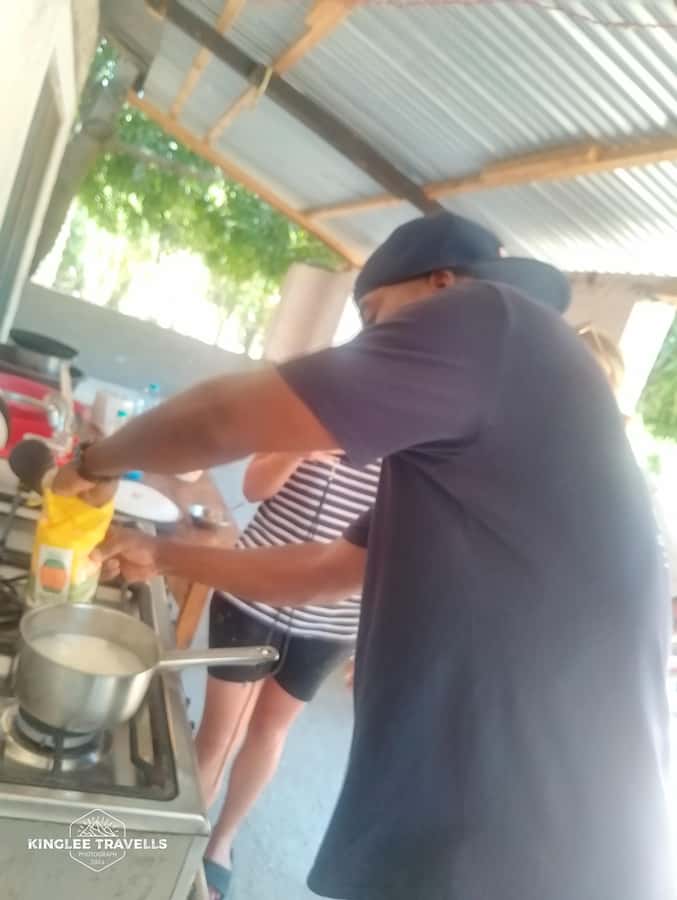
Ugali is the heart of the lesson. It is a firm maize-based staple, commonly served with vegetables, meat, or other accompaniments. The class description specifically says Jonathan teaches you to make it from scratch, so you should expect hands-on work rather than a short demonstration.
The process matters as much as the finished dish. You learn how the mixture changes as it cooks and how it reaches the thick texture that makes ugali easy to shape and eat with other food. This is the kind of cooking lesson where a few simple ingredients depend on timing and technique.
I would pay close attention during this part. Ask Jonathan about the right consistency, how to avoid lumps, and how the dish is usually served at home. The supplied details do not provide exact quantities or cooking equipment, so the best recipe notes will come from asking questions while you work.
Ugali may be unfamiliar if your usual meals are built around bread, pasta, or rice. That is part of its value. You are learning a food that says more about daily Kenyan eating than a polished tourist menu does.
Rolling Chapati and Preparing Samosas
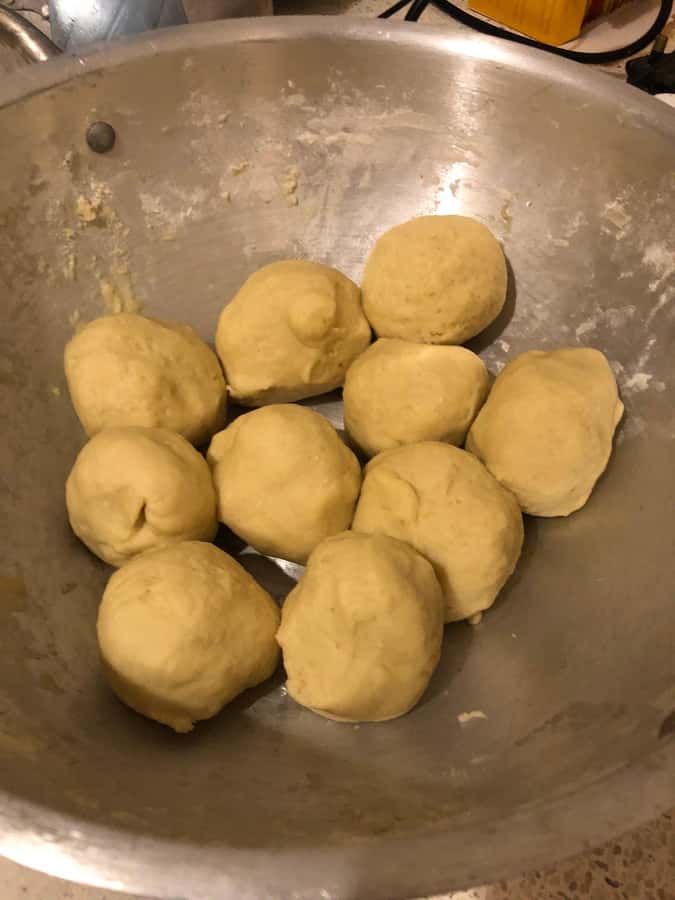
After ugali, you move on to chapati. Kenyan chapati is a soft, layered flatbread, and making it usually involves preparing dough, shaping it, and cooking it on a hot surface. The activity promises that you will make chapati yourself, not simply eat one prepared earlier.
Chapati is also a satisfying group food. People can take turns mixing, rolling, shaping, and watching the bread cook. If you are taking the class with friends or family, this part should give everyone a useful task. A private class is particularly helpful here because you can ask Jonathan to slow down or repeat a step without holding up a larger group.
Samosas are also included in the advertised menu. The available information does not spell out the filling or the exact order of preparation, so ask Jonathan what you will be making on your chosen day. Menu details can vary, and the class may be adapted to your location and group.
The written feedback gives a useful clue about the overall meal. In one class, the food included chapati, ugali, and spinach, and the participants described everything as delicious. That suggests the cooking may include a vegetable accompaniment, but you should confirm whether spinach or another side will be served when you arrange the booking.
A completely different kind of day out from Kenya:
- Nairobi National Park Half-Day Tour; Free Wi-Fi connection
★ 5.0 · 878 reviews - Nairobi: National Park & Optional Elephants & Giraffe Center
★ 4.8 · 874 reviews - NAI NAMI: Nairobi Storytelling Tour with Street Children
★ 5.0 · 792 reviews - Nairobi National Park Half-Day Game Drive
★ 4.5 · 738 reviews
Eating Together After the Cooking
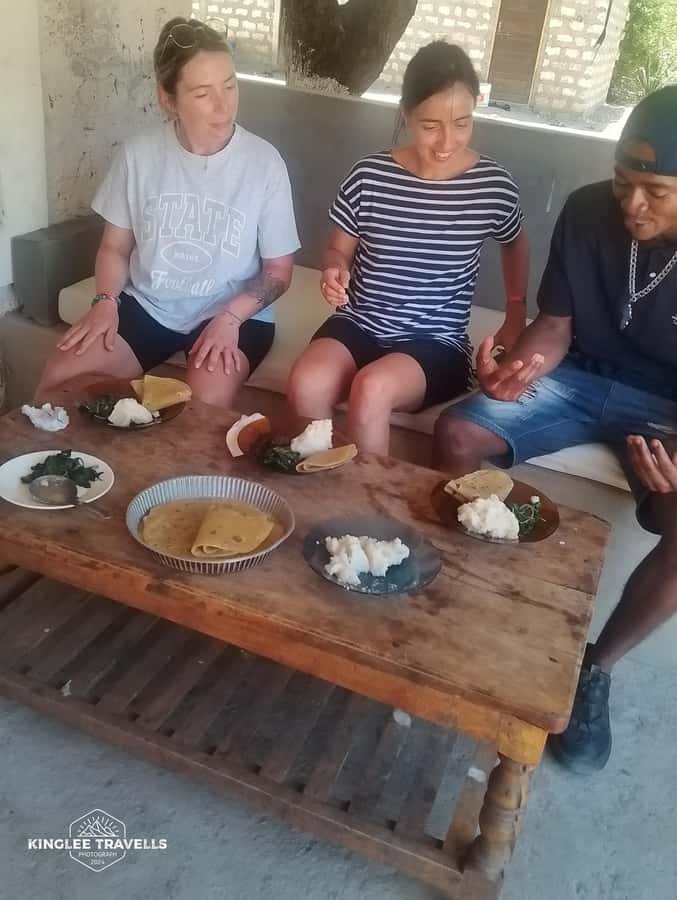
The final meal is not an afterthought. You cook the dishes, then eat together, which gives you time to enjoy the food and talk with Jonathan. This shared meal is where the class shifts from instruction to hospitality.
Several comments place the family welcome at the center of the experience. One participant described Jonathan and his family as treating the group like part of the family. Another praised his kindness and sense of humor, while another found him patient and good at teaching.
Those details matter more than a long list of ingredients. A cooking class works best when the host creates a relaxed mood. Jonathan’s reported warmth appears to help people feel comfortable asking questions, trying new tasks, and enjoying the meal even if their cooking is not perfect.
If you speak French or Italian, language should not be a major concern. Jonathan hosts in English, Italian, and Swahili, and one French-speaking participant said the language difference did not prevent a good experience. French is not listed as a host language, so do not book on the assumption that the lesson will be conducted in French, but the feedback suggests that simple communication and a friendly teaching style can carry you a long way.
What $23 Really Includes
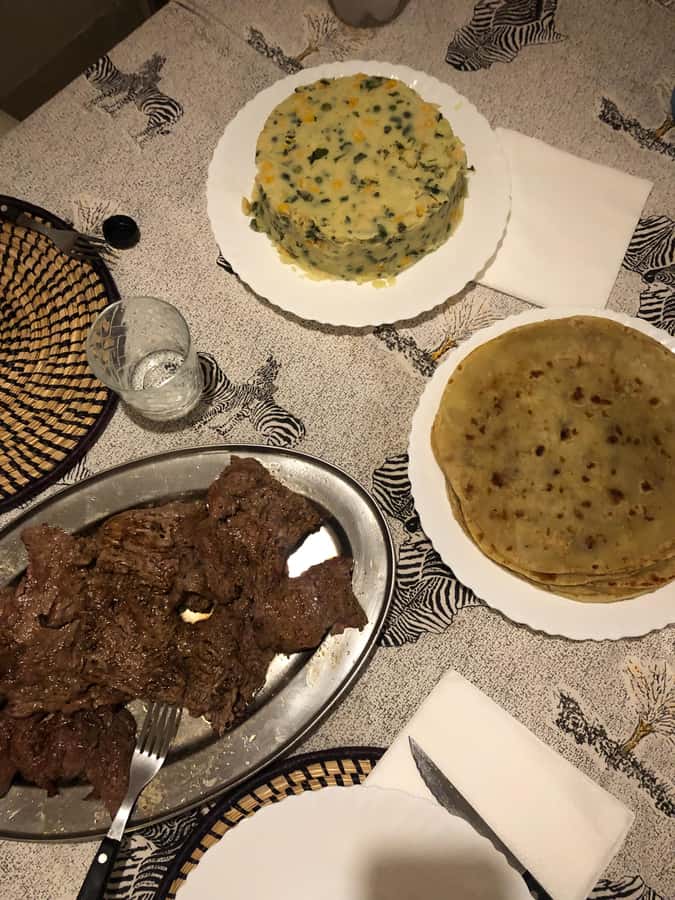
At $23 per person, this is a strong value for a private two-hour activity. The cost includes the cooking class, materials, private transfer, and pickup. You are also eating the food you help prepare, which makes the price easier to justify than a lesson that ends without a meal.
The private format is the main value point. You are not paying for a seat in a crowded demonstration. Your group can ask questions, choose the setting, and work at a comfortable pace. The group limit is 10 people, so the experience can work for a couple, a family, or a small holiday group.
That said, the price does not necessarily include every possible extra. The information supplied does not mention drinks, additional dishes, hotel fees, or special dietary substitutions. If you have allergies or avoid certain foods, raise that question before booking rather than waiting until the cooking starts.
The two-hour duration is also worth considering. It is enough time for an introduction, several cooking tasks, and a shared meal, but it is not a full-day food program. If you want a long market visit, a broad lesson in coastal cuisine, or several courses, this activity may feel limited. If you want one focused local experience that fits neatly into a Watamu holiday, the length is convenient.
Village Visit or Resort Lesson?
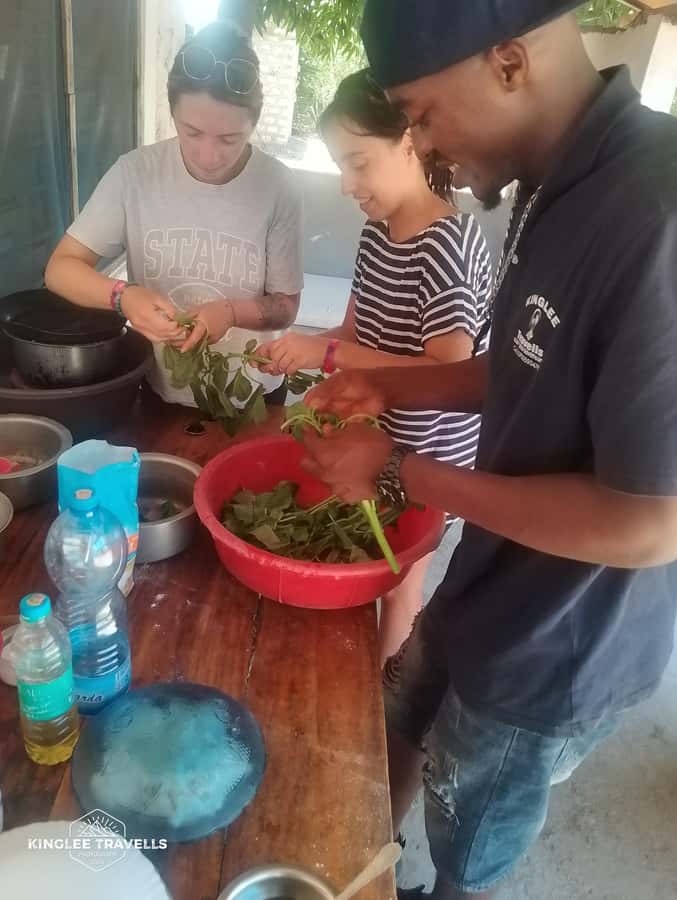
Choose the village setting if you want the social side of the experience to be as important as the food. You can expect the class to feel more personal there, especially given the repeated praise for Jonathan’s family and their welcome. This option suits couples and small groups who want a closer look at ordinary Kenyan hospitality.
Choose your resort or house if convenience matters most. You avoid a transfer after breakfast or before another activity, and you can return to your room easily after eating. This setting may also be preferable if someone in your group needs a familiar, accessible space.
There is no wrong choice. The village offers more context, while your own accommodation offers more control. Since the class is private, you can make the decision based on your group rather than fitting into a standard route.
I would ask four questions by WhatsApp before confirming:
- Where exactly will pickup take place?
- Will the class be at the village or at my accommodation?
- Which dishes and side vegetables will be prepared?
- Can the menu be adjusted for allergies or dietary needs?
The supplied information confirms that materials and private transfer are included, but it does not provide these finer details. A quick message should prevent confusion.
Who Will Enjoy This Most?
I would recommend this class to anyone who wants a personal activity rather than another sightseeing stop. It is particularly well suited to couples, families, food lovers, and small groups who enjoy eating together and meeting local people.
Children may also enjoy the hands-on nature of chapati and samosa preparation, though the information does not give a minimum age. If you are booking with children, ask Jonathan how the class can be adapted and which tasks are suitable.
This is also a good choice for people who feel that resort life can keep them at a distance from the place they are visiting. Going to the village, cooking local staples, and meeting Jonathan’s family gives you a more direct connection to Watamu.
You may want to skip it if you dislike group participation, prefer a formal chef-led demonstration, or have very specific dietary needs that cannot be accommodated. The class is about taking part, not sitting back. You should also be comfortable arranging the final details by WhatsApp.
Useful Timing and Booking Advice
The activity lasts two hours, with starting times available according to the date you choose. Since pickup and location are flexible, leave a little space around the class rather than scheduling another important activity immediately afterward.
Free cancellation is available up to 24 hours before the start for a full refund. You can also reserve now and pay later, which helps if your Watamu schedule is still changing. These terms make the activity relatively easy to fit into a holiday plan, but you should still confirm the start time and meeting place directly.
The class is private and accepts groups of up to 10 people. If your party is larger, ask before booking rather than assuming it can be expanded.
Is Jonathan’s Cooking Class Worth Booking?
Yes, for the right kind of food experience. At $23 per person, the combination of private teaching, pickup, materials, cooking, and a shared meal offers good value. The strongest reason to book is not simply the menu. It is Jonathan’s personal teaching style and the family welcome that gives the class its human warmth.
Choose the village if you want the most local setting. Choose your resort if comfort and convenience come first. Either way, confirm the menu, pickup, timing, and dietary needs by WhatsApp.
If you have two hours free in Watamu and want to do more than eat Kenyan food at a restaurant, this is an easy recommendation. You will leave with a better sense of ugali and chapati, a full stomach, and perhaps a recipe worth trying at home.
FAQ
How long does the Kenyan cooking class last?
The class lasts two hours. You should check the available start times for your chosen date.
How much does the experience cost?
The listed price is $23 per person. It includes the private cooking class, private transfer, and cooking materials.
Which Kenyan dishes will I learn to cook?
The class includes ugali, chapati, and samosas. Spinach has also been prepared as part of at least some meals, but you should confirm the exact menu when booking.
Where does the cooking class take place?
You can choose to attend at Jonathan’s village or arrange for him to come directly to your house or resort. Contact him through WhatsApp to confirm your preferred location.
Is pickup included?
Yes. Private pickup is included when you choose the village option, and the location can be arranged in advance.
What languages does the host speak?
Jonathan hosts the class in English, Italian, and Swahili. The activity is private and can accommodate groups of up to 10 people.
Just added around Kenya
- Nairobi: Giraffe Center, Elephant Orphanage and Bomas Tour★ 5.0 · 3 reviews
- Nairobi: Airport and Hotel Private Transfers.★ 4.0 · 3 reviews
- 11-Days Best of Kenya & Tanzania Big 5 Safari on a 4×4 Jeep★ 5.0 · 3 reviews
- Kitengela Anselm Hot Glass tour★ 4.5 · 3 reviews
- NAIROBI NATIONAL PARK AFTERNOON GAME DRIVE.★ 5.0 · 3 reviews
- 12-Day Tsavo west Amboseli lake Nakuru Maasai Mara safari★ 5.0 · 3 reviews
- Nairobi Down Town & Walking City Tour★ 4.8 · 3 reviews
- Private 3 Day Tsavo East Safari from Mombasa★ 5.0 · 3 reviews
Watamu Marine Park Trips, compared.

Watamu Marine Park & Sudi Island Mangrove Forest Canoe Ride.With sea food lunch
Read our review →


Day tour to Tsavo East National Park from Malindi/ Watamu
Read our review →
Blue Safari: Snorkeling at Watamu Marine Park & Seafood
Read our review →
From Kilifi, Watamu, Malindi: Tsavo East Day Safari
Read our review →Private Mombasa City Tour Watamu Diani and Malindi
Read our review →Browse the lists this tour appears in