
Reviewed · TOURS
Nairobi Storytelling Tour with Former Street Kids
Nairobi tells its stories on foot. This small-group walk pairs you with former street children who grew up in Downtown Nairobi and now work as guides. I like the personal storytelling, especially when guides such as Typhoon, King, Priest, Quick, Tsunami, or Morgan connect their childhood experiences to the streets you are seeing. I also like the social purpose: your $45 helps create paid work for young people who once had very few options.
The main consideration is that this is not a light sightseeing stroll. Poverty, street life, and survival are central to the experience, and some stories are painful. The advertised timing can also sound confusing, since the description refers to three hours while the stated duration is 150 minutes, or two and a half hours.
In This Review
- Key points before you book
- Meeting Nairobi at Witalii Lane
- What Downtown Nairobi reveals on foot
- Stories from the streets, told by people who lived them
- Why the two-person guide ratio matters
- Lunch turns the tour into a conversation
- Safety, dignity, and the right mindset
- What the $45 price buys you
- Who will appreciate this tour most
- Practical tips for a better afternoon
- FAQ
- Where does the Nairobi storytelling tour meet?
- How long does the tour last?
- Who leads the tour?
- How many people are in each group?
- Is lunch included?
- What should I bring, and what is not allowed?
- Should you book the Nairobi storytelling tour?
Key points before you book

- Former street children lead the walk: Your guide speaks from personal experience, not from a distant script.
- Downtown Nairobi is the setting: You see working city streets and less polished areas that most visitors would miss on their own.
- One guide can serve only two guests: This keeps the conversation direct and gives you room to ask personal questions.
- Lunch is part of the experience: A local meal and soft drinks are included, with food often becoming an easy time to talk more openly.
- The tour has a practical purpose: Booking gives disadvantaged young people paid guiding work and helps them support families and local children.
- Plan for a serious afternoon: You will hear hard truths, but the tone is also hopeful, warm, and often funny.
Meeting Nairobi at Witalii Lane

The tour begins in front of the Bata Shoe shop on Witalii Lane, along City Hall Way. The meeting point is opposite Kencom Bus Station in central Nairobi, a useful landmark in a part of town where a street address alone may not mean much to a first-time visitor.
There is no hotel pick-up, so you need to reach the city center yourself. Give yourself enough time to find the Bata shop and Kencom area without rushing. Bring your passport, as requested for the activity, and leave your professional camera at your accommodation because those cameras are not allowed.
The first minutes matter. Your guide is not simply introducing a route through Nairobi. He is introducing himself, his past, and the reason he now walks these streets with visitors. Guides use names such as Typhoon, Tsunami, King, Priest, Quick, Donga, Kinsman, and Morgan. These nicknames are part of the group’s character, and you may meet more than one guide during the outing.
The pairing is unusually small. The stated arrangement allows a maximum of two guests per guide, while the wider group limit is ten participants. That means you are not lost in a crowd behind a flag-waving guide. You can ask about family, school, street survival, work, language, and life after leaving the streets.
A few more trips worth weighing up
- Nairobi National Park Half-Day Tour; Free Wi-Fi connection
★ 5.0 · 878 reviews - Nairobi: National Park & Optional Elephants & Giraffe Center
★ 4.8 · 874 reviews - NAI NAMI: Nairobi Storytelling Tour with Street Children
★ 5.0 · 792 reviews
What Downtown Nairobi reveals on foot
The walk focuses on Downtown Nairobi and the city center, but the exact path can vary. Some routes have included uptown, downtown, and midtown, while others have reached areas farther from the central streets, including Mathare or Kibera connections. Do not expect a fixed checklist of famous sights. The guide chooses places that fit his story and the day’s route.
This is the value of the tour. A conventional city walk might explain buildings, dates, and public landmarks. Here, a corner, alley, market area, bus stop, or public space can become part of a personal account. The place matters because something happened there, or because it shows how children and young people have used the city to survive.
You will get a closer look at the ordinary workings of central Nairobi. The tour can show you how people move through the city, earn money, find food, and maintain relationships in difficult conditions. It is not poverty staged for a camera. The guides are taking you through places tied to their own lives, while also explaining how the city looks from the point of view of someone who once had no secure home.
That does not make the walk easy. You may see severe hardship, and the guides’ accounts can be difficult to hear. The tour works best when you listen respectfully rather than treating the streets as an unusual backdrop. Ask questions, but let the guide decide how far he wants to go into painful memories.
Stories from the streets, told by people who lived them

The heart of the experience is the guide’s life story. You learn how he came to live on the streets, how he found food and shelter, what dangers he faced, and what helped him change direction. You also hear about the continuing effort to improve life for family members, friends, and children still facing the same problems.
The guides teach some of their street skills along the way. The information provided does not spell out every activity, so the exact examples depend on your guide. The point is less about learning a trick and more about understanding the alertness, creativity, and quick decisions that street life demanded.
Typhoon is repeatedly described as a passionate storyteller who combines city information with his own experience. King, also known as Daniel, has guided people through Downtown and Mathare while talking about life before and after the streets. Priest has been praised for making visitors feel at ease, and Quick has added Swahili and Kikuyu phrases to the walk.
Morgan has also led tours with a calm, professional approach. Tsunami, Typhoon, and King have worked together on outings where several guides shared their childhood experiences. That group format can add energy and different viewpoints, although your own tour may be centered mainly on one guide.
One useful detail is that the guides do not present their past as a finished story. They also talk about goals for the future. Some use the income from their work to help street children, support a school or local association, or provide food. The tour fee is not a replacement for wider social services, but it gives the guides a direct way to earn and contribute.
Why the two-person guide ratio matters

Many city tours promise a small group and then place twenty or thirty people behind one guide. This one gives you a more personal setup. The maximum of two guests per guide means your questions do not have to compete with a busload of strangers.
That format is especially useful for a sensitive subject. You can pause and ask for context if you do not understand something. You can also listen quietly without feeling pressure to perform an emotional response in front of a large group.
Several guides may still be involved. On some outings, one person leads while colleagues remain nearby or join later. This gives the group a friendly team feel and provides extra attention in busy areas. A small group also makes it easier to move through the city without creating a large, conspicuous cluster.
The arrangement is not a guarantee that every moment will feel comfortable. Downtown is a real working city center, not a controlled attraction. You should stay close to your guide, follow instructions, and avoid wandering away to take photographs or inspect side streets.
A completely different kind of day out from Nairobi:
- Nairobi National Park Half-Day Game Drive
★ 4.5 · 738 reviews - Nairobi: Historic and Modern Highlights Walking Tour
★ 4.8 · 703 reviews - Safari Tour; Nairobi National Park
★ 4.5 · 594 reviews - 3 Days Masai Mara Group Joining
★ 5.0 · 486 reviews
Lunch turns the tour into a conversation

A local lunch and soft drinks are included in the $45 price. Food is more than a practical break here. It gives you time to sit with the guides and ask about their lives beyond the route.
This has been one of the most warmly praised parts of the experience. The meal allows the conversation to move from what happened in the past to what the guides want next. It is also a chance to try a Kenyan dish in a setting chosen by people who know the city from the inside.
Do not expect a restaurant-focused food tour. The meal supports the storytelling rather than replacing it. If you have dietary concerns, the supplied information does not specify available alternatives, so ask before booking or at the start of the tour.
Alcoholic drinks are not included. Soft drinks are provided, so you do not need to plan for refreshments during the stated 150 minutes.
Safety, dignity, and the right mindset

Safety is an important part of deciding on this walk. Several guides describe the routes as places you should not enter alone, and the guides take responsibility for keeping the small group together. Accounts of the experience describe extra colleagues watching the surroundings, guides walking people back toward their accommodation, and solo women feeling secure during the outing.
Those details are encouraging, but they are not a promise that Nairobi has no risk. You are still walking through a busy urban area with poverty and street crime concerns. Keep valuables out of sight, follow the guide’s directions, and do not treat the tour as permission to explore nearby areas independently.
The no-professional-camera rule also points to the need for care. Your phone may be useful for essential communication, but ask before taking photographs and respect anyone who does not want to be photographed. The most valuable souvenir here is what you understand, not an image of someone else’s hardship.
The ethical question is worth facing directly. A tour about former street children can become uncomfortable if visitors seek shocking scenes or treat personal pain as entertainment. This experience is strongest when you meet the guides as working professionals, listen to their choices, and recognize their present lives as much as their past.
What the $45 price buys you

At $45 per person, the cost covers 150 minutes with a personal guide, lunch, and soft drinks. The two-person guide limit gives the price more value than a standard large walking tour because you are paying for access to a real conversation, not just a route through central Nairobi.
The social value also matters. Your booking helps provide a job opportunity for disadvantaged young people. The guides describe using their work to support families and assist children who remain vulnerable. One guide has also been connected with efforts to feed street children, while other accounts mention support for a local school or children’s association.
You should not book this solely as a charitable donation. You are paying for a guided city experience, and the tour should be judged on both counts. Here, the two goals fit together well: you receive a personal introduction to Downtown Nairobi, while the guides earn money by using their own knowledge and stories.
The flexible booking terms help if your Nairobi plans are unsettled. You can reserve and pay later, and cancellation is free up to 24 hours before the activity for a full refund. The tour is in English, and hotel transport is not included, so your main extra cost may be getting to and from central Nairobi.
Who will appreciate this tour most

I would choose this outing if you want to understand Nairobi through its people rather than simply collect landmark photographs. It suits solo visitors, couples, and families with older children who can listen respectfully to serious subjects.
It is particularly useful at the start of a Nairobi stay. A guide can help you understand the difference between the city center you see from a taxi and the city experienced by people who work, sleep, eat, and survive there. You may also pick up a few Swahili or Kikuyu phrases along the way.
This is not the best choice if you want a relaxed sightseeing loop with polished monuments and little emotional weight. It is also a poor fit if you dislike walking through crowded urban areas, feel uncomfortable discussing poverty, or expect a tightly fixed list of stops.
The 150-minute length is manageable, but the subject can make the afternoon feel full. Leave space afterward to think about what you heard rather than rushing straight into another major activity.
Practical tips for a better afternoon
- Wear comfortable shoes suitable for city walking.
- Bring your passport and leave professional camera equipment behind.
- Keep your group small and stay with the guide.
- Ask before photographing people or places.
- Listen first, then ask thoughtful questions.
- Treat lunch as part of the conversation, not just a meal.
- If you hope to visit Mathare, Kibera, or another area beyond central Nairobi, ask whether that is part of your planned route.
- Plan for 150 minutes, not the longer three-hour wording used in the description.
- Keep an open mind, but do not expect the guides to make every story comfortable.
FAQ
Where does the Nairobi storytelling tour meet?
Meet your guide in front of the Bata Shoe shop on Witalii Lane along City Hall Way, opposite Kencom Bus Station in Nairobi city center.
How long does the tour last?
The stated duration is 150 minutes, or two and a half hours. The description also uses three-hour wording, so plan your schedule around the confirmed 150-minute duration shown for the activity.
Who leads the tour?
The guides are former street children who grew up in Nairobi. Guides named in the experience include Morgan, Typhoon, Tsunami, King, Priest, Quick, Donga, Kinsman, and others.
How many people are in each group?
The wider group is limited to ten participants. Each personal guide can lead a maximum of two guests.
Is lunch included?
Yes. A local lunch and soft drinks are included. Alcoholic beverages are not included.
What should I bring, and what is not allowed?
Bring your passport. Professional cameras are not allowed. Hotel pick-up is also not included, so you need to make your own way to the central Nairobi meeting point.
Should you book the Nairobi storytelling tour?
Book it if you want an honest, personal look at Downtown Nairobi and are ready to hear difficult stories with respect. The strongest part is the direct link between place and memory: Typhoon, King, Priest, Quick, Morgan, Tsunami, and the other guides are not describing street life from a textbook. They are explaining what it meant to them.
The small guide ratio, included meal, and social purpose make $45 a fair price for a two-and-a-half-hour experience. I would choose it for a first or second day in Nairobi, especially if you want help seeing beyond the usual visitor route.
Skip it if you want easy sightseeing, a predictable itinerary, or a photo-led tour. This is a serious walk with warmth, humor, sadness, and hope. For the right visitor, it offers something rare: a view of Nairobi shaped by people who once survived its streets and are now helping others find a different path.
Just added around Nairobi
- Nairobi: Airport and Hotel Private Transfers.★ 4.0 · 3 reviews
- Nairobi: Giraffe Center, Elephant Orphanage and Bomas Tour★ 5.0 · 3 reviews
- 11-Days Best of Kenya & Tanzania Big 5 Safari on a 4×4 Jeep★ 5.0 · 3 reviews
- Kitengela Anselm Hot Glass tour★ 4.5 · 3 reviews
- NAIROBI NATIONAL PARK AFTERNOON GAME DRIVE.★ 5.0 · 3 reviews
- 12-Day Tsavo west Amboseli lake Nakuru Maasai Mara safari★ 5.0 · 3 reviews
- Nairobi Down Town & Walking City Tour★ 4.8 · 3 reviews
- Carnivore Resturant Dinner Experience★ 4.0 · 3 reviews
Tours, compared.

Nairobi National Park Half-Day Tour; Free Wi-Fi connection
Read our review →
NAI NAMI: Nairobi Storytelling Tour with Street Children
Read our review →


Elephant Orphanage and Giraffe Center Tour with Options
Read our review →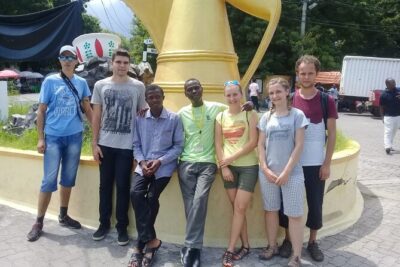
Walking Tour Through Old Town Mombasa and Fort Jesus
Read our review →
Day Tour to Amboseli National Park & Maasai Village
Read our review →