Reviewed · NAIROBI TOURS
Maasai Magic – A Day Which You Will Never Forget
Culture is best learned face to face. The Maasai Magic day tour takes you from Nairobi into the rural Maasai heartland, where you spend time with an actual Maasai family rather than simply watching a staged performance. I especially like the small group limit of 10 people and the chance to learn directly from Daniel, Rispa, and their family. I also like that lunch, refreshments, and round-trip transport are included, so the $275.20 price is easier to judge. The main consideration is time: seven hours is enough for a meaningful visit, but not enough to cover every part of Maasai life.
This is not a quick stop at a craft market or a short dance show. You help with activities, hear personal stories, learn about cattle and medicinal plants, and take part in the construction of a manyatta, a traditional Maasai homestead. The experience is best for you if you want personal contact and cultural context after, or instead of, a wildlife safari. It may feel too structured if you prefer to explore entirely on your own.
In This Review
- Key points before you book
- Leaving Nairobi for the Maasai heartland
- Ngong Hills and the meaning of land
- Meeting Daniel, Rispa, and Emmanuel
- Song, shuka cloth, and manyatta building
- Lunch, refreshments, and the value of the price
- What the day feels like in bad weather
- Who will get the most from Maasai Magic
- Practical details that affect your choice
- Should you book this Maasai cultural tour?
- FAQ
- Where does the Maasai Magic tour start?
- What time does the tour start?
- How long does the experience last?
- Is hotel pickup available?
- What is included in the price?
- How many people can join the tour?
- Who will I meet during the visit?
- Can I use a mobile ticket?
- What is the cancellation policy?
Key points before you book
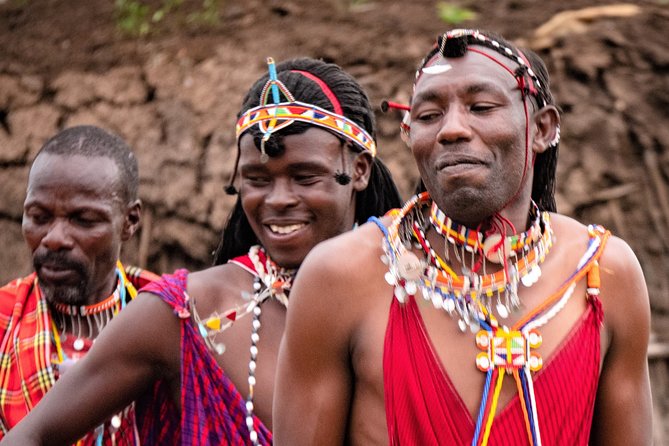
- A family visit, not just a performance: Daniel, Rispa, and Emmanuel welcome you into their home and share their own stories and daily life.
- Ngong Hills marks the change from city to countryside: The drive takes you toward the Maasai heartland, roughly an hour outside Nairobi according to the tour description and visitor accounts.
- You learn by helping: Herding cattle, studying native herbs, wearing a Maasai shuka, and assisting with a manyatta give the day a hands-on quality.
- The group stays small: A maximum of 10 people allows more room for questions and personal conversation.
- Lunch and refreshments are included: You do not need to budget for surprise add-ons during the day.
- Weather can affect the outing: Rain has occurred, and the tour team has supplied gumboots when conditions called for them.
Leaving Nairobi for the Maasai heartland
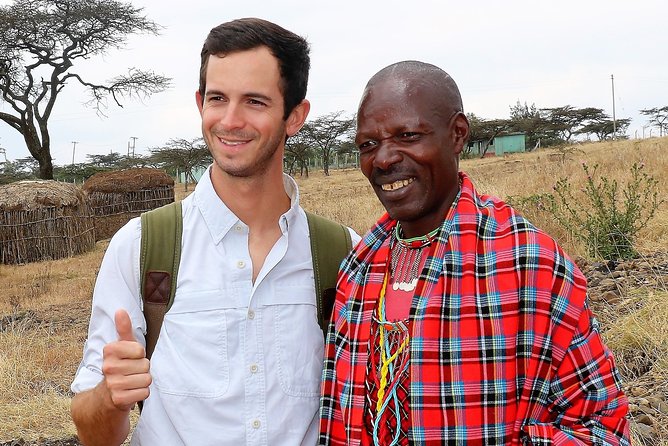
The day begins at 9:30 a.m. from Kenya Comfort Suites, at the junction of Jakaya Kikwete and Ralph Bunche Roads in Nairobi’s Milimani area. Pickup is offered, which is useful if you are staying at a Nairobi hotel and do not want to arrange a separate taxi across town.
Once you leave the city, the purpose of the outing becomes clear. This is not a safari drive in search of wildlife. You are heading into a rural area to learn how Maasai families relate to land, water, animals, and one another.
The drive is an important part of the experience. It gives you time to shift from the pace of Nairobi to a setting where cattle, open land, and natural resources shape daily decisions. The journey is described as taking about an hour to reach the family, though total driving time can vary with traffic and road conditions.
You may be accompanied by guides such as Carol, Colin, or Solomon, depending on the arrangement for your visit. The guides help explain the work of the organization behind the tour and provide context on the community visit. That explanation matters because it gives you a clearer picture of how the day fits into longer-term work with Maasai families.
A few more trips worth weighing up
- Nairobi National Park Half-Day Tour; Free Wi-Fi connection
★ 5.0 · 878 reviews - Nairobi: National Park & Optional Elephants & Giraffe Center
★ 4.8 · 874 reviews - NAI NAMI: Nairobi Storytelling Tour with Street Children
★ 5.0 · 792 reviews
Ngong Hills and the meaning of land
The first major setting is Ngong Hills. Here, a Maasai elder explains how the community manages its land and why natural resources carry such weight in Maasai life.
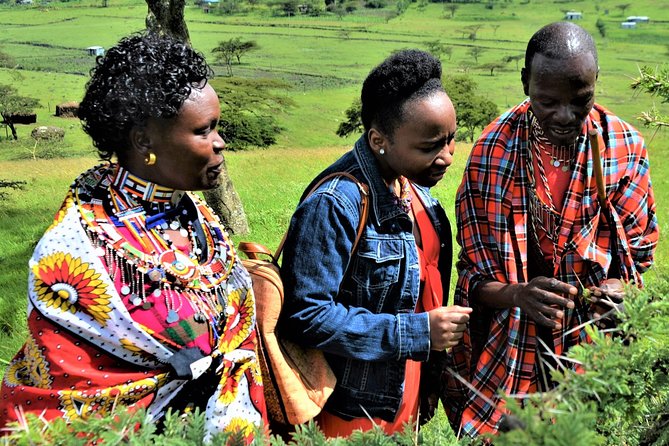
You learn about tribal values, native herbs used for medicinal remedies, and the importance of land and water. These topics may sound broad at first, but the visit connects them to practical life. Water is not simply a scenic feature, and land is not just empty space between Nairobi and the next stop. Both are resources that support families and cattle.
Cattle receive special attention because they are described as the Maasai’s most sacred and treasured possession. You may help herd them, which gives you a direct way to understand their place in the community. This is more useful than hearing a guide recite a list of customs. You see how an animal can be tied to family identity, work, status, and spiritual values.
I would pay close attention during this part of the day. The information about herbs, water, and cattle helps you understand later activities at the village. It also gives you something to think about when you encounter simplified images of Maasai culture elsewhere in Kenya.
Meeting Daniel, Rispa, and Emmanuel
The heart of the day is the visit with a Maasai family. Daniel and Rispa, along with their son Emmanuel, have welcomed people into their home and shared stories about their culture, traditions, and family life.
The family visit gives the tour its personal quality. You are not only being told what Maasai people believe. You have a chance to ask questions, hear individual experiences, and explain something about your own background. One visitor from Australia found that the family was as interested in that person’s life as the visitor was in theirs.
That exchange is worth keeping in mind. The best approach is not to treat the family as a display. Come ready to listen, but also ready for an ordinary human conversation. You may hear stories that challenge your assumptions, especially around family structure, tradition, and the pressures faced by Maasai women.
Emmanuel has explained cultural practices during the visit, while Daniel has shared details of family life. One especially striking fact shared during the day is that Daniel has 50 siblings. Details like this make the visit memorable because they show the scale and complexity of family relationships in a way that a general cultural talk cannot.
The family members are also involved in efforts to create a brighter future for their communities. Your payment supports the work of One Horizon Africa, the organization running the experience, and the visit itself connects you with that wider effort. Still, I would judge the tour first by the quality of the cultural exchange, not only by its charitable purpose. You are paying for an organized experience, transport, food, and the time of the guides and hosts.
Song, shuka cloth, and manyatta building
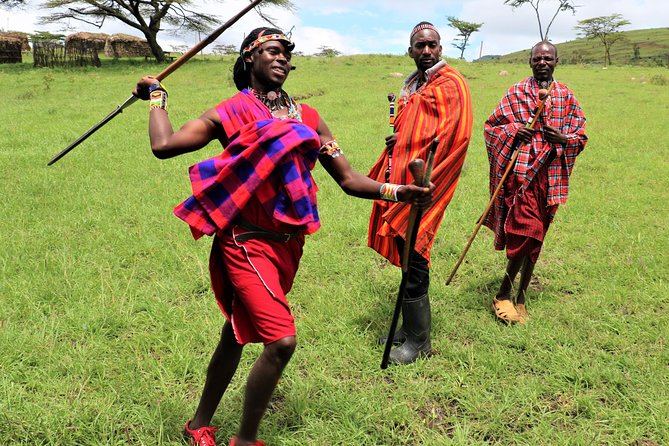
At the village, you receive a warm welcome with song and dance. This is one of the more public and celebratory parts of the day, but it is followed by activities that require more participation from you.
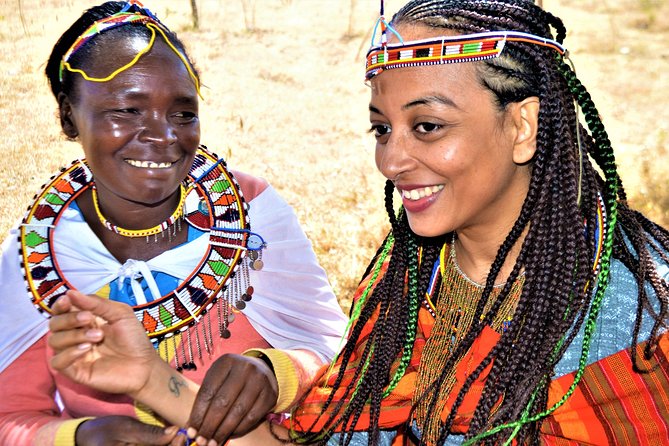
The wife of a village elder may dress you in a traditional Maasai shuka, sometimes described as an African blanket. This is a simple but memorable way to learn about clothing and presentation. If you take part, treat it as an invitation into the family’s welcome rather than a costume opportunity. The difference is one of attitude, and it affects how respectful the exchange feels.
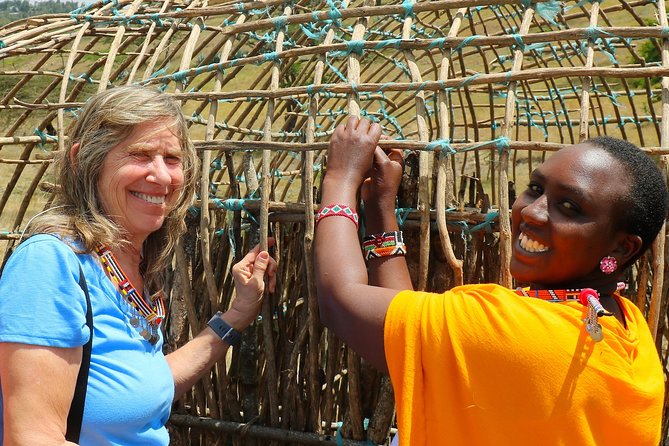
You are also invited to help the women construct a new manyatta. This gives you a practical look at how a traditional homestead is made. You do not merely hear that Maasai families build their homes in a particular way. You are asked to lend a hand and learn the skills involved.
This may be the most useful activity for anyone who wants more than photographs or a short talk. Building work naturally leads to questions about family roles, materials, shelter, and daily needs. It also reminds you that culture is not frozen in a museum. It is connected to work.
The tour description does not specify how long you spend on each activity, so you should expect the exact rhythm to vary. The seven-hour day must include transport, the welcome, the elder’s explanations, family time, activities, lunch, and the return to Nairobi.
A completely different kind of day out from Nairobi:
- Nairobi National Park Half-Day Game Drive
★ 4.5 · 738 reviews - Nairobi: Historic and Modern Highlights Walking Tour
★ 4.8 · 703 reviews - Safari Tour; Nairobi National Park
★ 4.5 · 594 reviews - 3 Days Masai Mara Group Joining
★ 5.0 · 486 reviews
Lunch, refreshments, and the value of the price
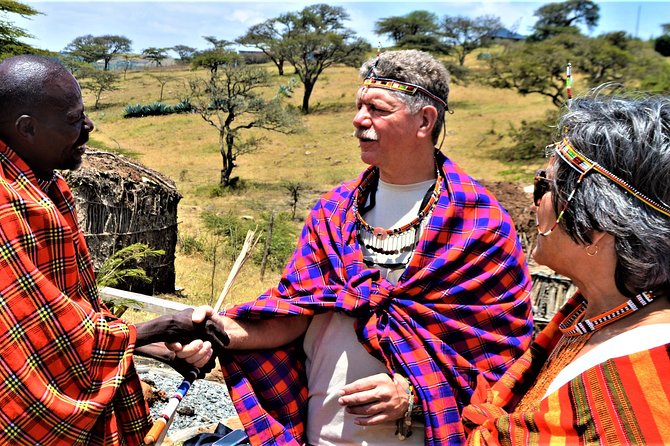
At $275.20 per person, this is not a budget outing. The cost makes more sense when you look at what is bundled into the day: hotel pickup and drop-off, a small group, guides, the family visit, lunch, and refreshments.
You are also paying for access to a personal setting that would be difficult to arrange independently. Finding a family willing to host visitors, arranging transport into the rural area, and handling the cultural introduction would take time and local connections. The tour packages those pieces into one day.
Lunch is included, which removes one common worry on a long excursion. Refreshments are included as well. That does not make the tour cheap, but it makes the final cost more predictable.
I would compare this price with your own priorities. If you want the lowest-cost way to see rural Kenya, this is not the obvious choice. If you have already seen wildlife on safari and want a direct connection with Kenyan people, the price can be reasonable for a private-feeling cultural day with a group capped at 10.
The small group matters here. With 10 people or fewer, you have a better chance to ask questions and take part without standing behind a crowd. The experience remains organized, but it is less likely to feel like a large bus excursion.
What the day feels like in bad weather
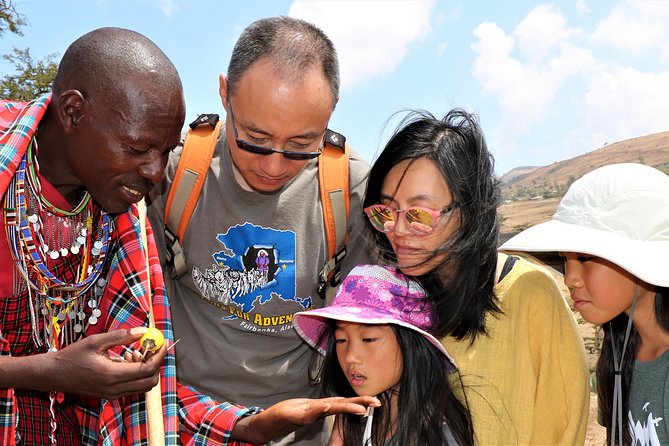
Rain can affect rural activities. One account describes a rainy outing, with the tour team having thought ahead and brought gumboots for the participants.
That detail tells you something practical about the operation: conditions are not treated as a reason to abandon the day. Still, you should be ready for weather to change the pace or comfort of the visit. Wear clothing that can handle dirt or rain, and choose shoes you can walk and work in. Gumboots have been provided on at least some wet days, but the available information does not promise them for every departure.
The weather also makes the day less polished in a good way. This is a visit to a working rural community, not a climate-controlled attraction. You should expect the setting and activities to respond to real conditions.
Who will get the most from Maasai Magic
I would choose this tour if you want to:
- Meet a Maasai family in a personal setting
- Learn how land, water, cattle, herbs, and family traditions connect
- Take part in activities instead of only watching
- Add a human and cultural side to a Nairobi or safari itinerary
- Have transport, food, and refreshments handled in advance
- Travel with a small group rather than a large coach party
Families, couples, and solo visitors can all fit the experience. The information says most people can participate, and service animals are allowed. The activities may suit you if you are comfortable with a day that includes walking, outdoor conditions, and hands-on work.
I would be more cautious if you want a tightly timed sightseeing schedule or a short excursion with many different stops. The tour centers on one community and one family. Its strength is personal contact, not a long list of attractions.
It is also worth managing your expectations. You will learn about Maasai culture, but one family cannot represent every Maasai community or every modern Maasai experience. Listen to Daniel, Rispa, Emmanuel, and the elder as individuals. Their stories are valuable precisely because they are personal.
Practical details that affect your choice
The advertised duration is about seven hours, with a 9:30 a.m. start. Pickup is offered, and the listed meeting point is Kenya Comfort Suites in Nairobi’s Milimani area.
Confirmation arrives at booking. The experience accepts mobile tickets, which is convenient if you are moving between hotels or tours and do not want to print paperwork.
The maximum group size is 10 people. Most people can participate, and service animals are allowed. The cancellation policy is flexible if your plans change: you can receive a full refund by canceling at least 24 hours before the start time. Changes or cancellations inside that 24-hour window are not accepted for a refund.
The tour is often booked well ahead, with an average booking lead time of 105 days. That suggests you should reserve early if this experience is important to your Nairobi plans, especially if you want a particular date.
Should you book this Maasai cultural tour?
I would book Maasai Magic if you want a thoughtful cultural experience with real time for conversation. The strongest parts are the visit with Daniel, Rispa, and Emmanuel, the elder’s explanation of land and cattle, and the chance to help with a manyatta rather than simply watch a presentation.
The price is high, but the package includes transport, lunch, refreshments, a small group, and an organized introduction to a family and community. That is fair value for you if personal connection matters more than collecting a long list of sights.
Skip it if you are looking only for a quick photo stop, a low-cost outing, or a broad survey of Kenya in one day. Book it if you want to slow down, listen carefully, and leave Nairobi with a better understanding of the people whose culture is often reduced to a few familiar images.
FAQ
Where does the Maasai Magic tour start?
The listed meeting point is Kenya Comfort Suites at the junction of Jakaya Kikwete and Ralph Bunche Roads in the Milimani area of Nairobi.
What time does the tour start?
The scheduled start time is 9:30 a.m.
How long does the experience last?
The tour lasts approximately seven hours.
Is hotel pickup available?
Yes. Pickup and drop-off at your Nairobi hotel are offered.
What is included in the price?
The price includes the cultural experience, round-trip transfer, lunch, and refreshments.
How many people can join the tour?
The group has a maximum of 10 participants.
Who will I meet during the visit?
You may meet the Maasai family of Daniel, Rispa, and Emmanuel, as well as a village elder and other community members.
Can I use a mobile ticket?
Yes. The experience accepts mobile tickets.
What is the cancellation policy?
You can cancel at least 24 hours before the start time for a full refund. Cancellations or changes made less than 24 hours before the start time are not accepted for a refund.
Just added around Nairobi
- Nairobi: Giraffe Center, Elephant Orphanage and Bomas Tour★ 5.0 · 3 reviews
- Nairobi: Airport and Hotel Private Transfers.★ 4.0 · 3 reviews
- Kitengela Anselm Hot Glass tour★ 4.5 · 3 reviews
- 11-Days Best of Kenya & Tanzania Big 5 Safari on a 4×4 Jeep★ 5.0 · 3 reviews
- 12-Day Tsavo west Amboseli lake Nakuru Maasai Mara safari★ 5.0 · 3 reviews
- NAIROBI NATIONAL PARK AFTERNOON GAME DRIVE.★ 5.0 · 3 reviews
- Nairobi Down Town & Walking City Tour★ 4.8 · 3 reviews
- Carnivore Resturant Dinner Experience★ 4.0 · 3 reviews
Nairobi Tours, compared.

Nairobi National Park Half-Day Tour; Free Wi-Fi connection
Read our review →
National Park & Optional Elephants & Giraffe Center
Read our review →
NAI NAMI: Nairobi Storytelling Tour with Street Children
Read our review →