Reviewed · NAIROBI TOURS
From Nairobi: Masai Tribe Village Visit
Meet the people behind the famous red cloth. This Nairobi day trip gives you a direct look at Maasai daily life, with time to see food preparation, beadwork, animal care, and village traditions. I like the chance to learn in local homes rather than only hearing a guide recite facts, and I especially like that the visit includes hands-on lessons such as milking goats and making necklaces. The main caution is that the village visit may last only one or two hours, even though the full outing is advertised as an eight-hour trip.
The activity costs $52 per person, including hotel pickup, transport, a driver-guide, and the village visit. That can be fair value if you want an easy cultural outing from Nairobi, but ask clearly about the separate community entry fee, listed as $30 per person here. Communication from the driver can also vary, so I would confirm the route, timing, and inclusions before leaving your hotel.
In This Review
- Key points to know before you go
- Leaving Nairobi for central Kenya
- Entering a Maasai village
- Watching food preparation and cooking
- Beadwork, necklaces, and wristbands
- Learning to milk goats and care for animals
- Singing, jumping, and the public face of Maasai culture
- What the $52 price really covers
- Timing, communication, and realistic expectations
- Who will enjoy this Maasai visit?
- Should you book this experience?
- FAQ
- Where does the Maasai village visit take place?
- What is included in the $52 price?
- Is the community entry fee included?
- Are food and drinks included?
- What can I learn at the village?
- Will I see Maasai singing and jumping?
- Can I buy souvenirs?
- What should I bring?
- Can I cancel for a full refund?
Key points to know before you go
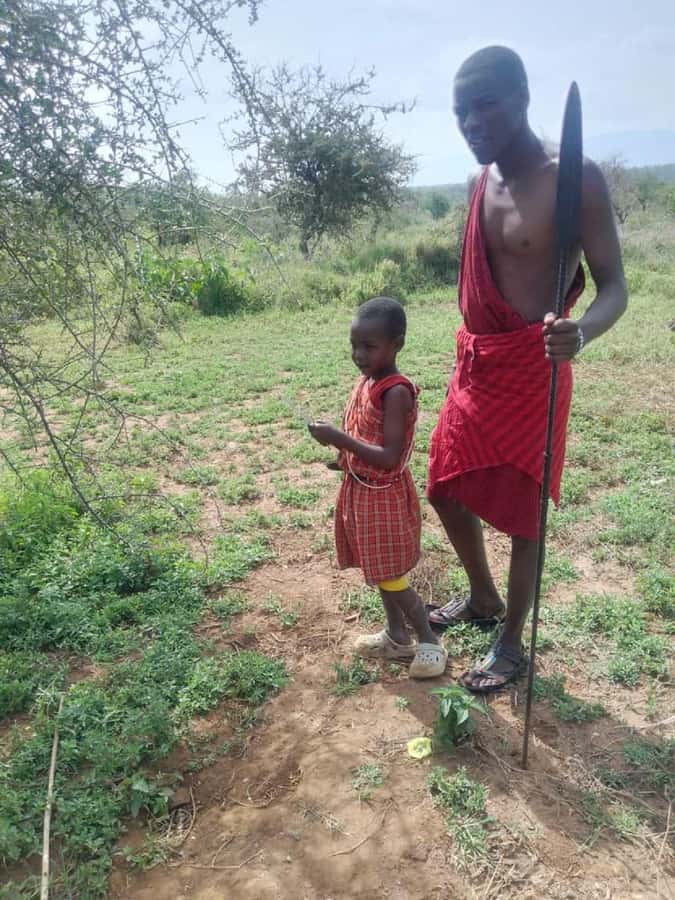
- Meet Maasai community members at their homes: The visit focuses on ordinary household skills, food preparation, beadwork, and animal care.
- Expect a cultural demonstration, not a long village stay: The main visit may take about one to two hours, despite the roughly eight-hour day.
- Budget an extra $30 entry fee: Food, drinks, souvenirs, and the community fee are not included in the $52 price.
- Look for the singing and jumping ceremony: Young Maasai men and women may perform traditional singing and jumping, though the exact program can vary.
- Bring your passport or ID card: This is specifically required information for the outing.
- Use the beadwork as a meaningful souvenir: Necklaces and wristbands made by Maasai women are available to buy, and purchases can support the community.
Leaving Nairobi for central Kenya
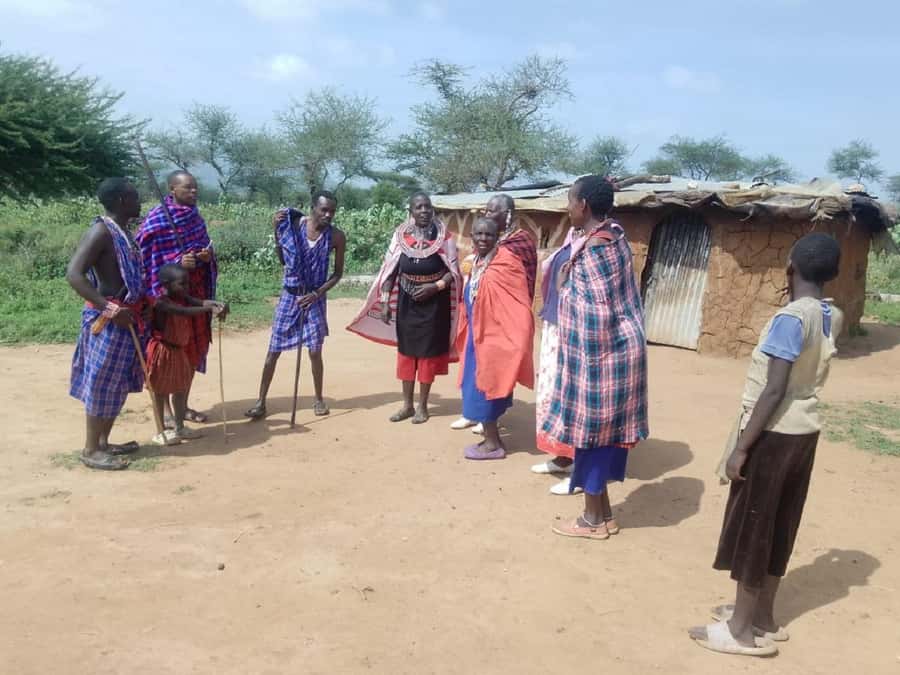
The day begins with hotel pickup in Nairobi and transport in an air-conditioned vehicle. The trip is offered by Day2day Tours and Safaris Ltd, with a driver-guide and service in English, Swahili, or French.
The drive is part of the experience, but it is also where the tour can feel less polished. You may need to ask for the guide’s name, the expected drive time, and the name of the community you are visiting. One poor experience involved a driver who offered little introduction, making the first part of the trip feel more like a taxi ride than a guided excursion.
I would handle this simply. At pickup, ask three questions:
- What is the name of today’s Maasai community?
- How long will the drive take?
- How much time will we have in the village?
Those questions help you get your bearings fast and give the driver a clear chance to explain the plan. A friendly, communicative guide can make a major difference here, since the road journey and cultural background are part of what you are paying for.
The itinerary includes a stop for coffee and lunch. Lunch is at your own expense, as are drinks. The supplied details do not name the restaurant or give a fixed lunch time, so keep some Kenyan shillings available and ask the guide where the stop will be made.
A few more trips worth weighing up
- Nairobi National Park Half-Day Tour; Free Wi-Fi connection
★ 5.0 · 878 reviews - Nairobi: National Park & Optional Elephants & Giraffe Center
★ 4.8 · 874 reviews - NAI NAMI: Nairobi Storytelling Tour with Street Children
★ 5.0 · 792 reviews
Entering a Maasai village
The most valuable part of the outing is the chance to meet Maasai people in their local homes. This gives the visit a more personal feel than a museum display, since the subjects are not only objects or old customs. You are shown skills and routines that remain connected to community life.
The Maasai are an East African people who mainly live in southern Kenya and northern Tanzania. They speak the Maasai language, and their traditional way of life has long been tied to cattle, goats, and other livestock. Their movement into the region dates to the 16th and 17th centuries, and their skill as pastoralists helped them thrive across the grasslands of the Rift Valley.
You will also hear about the older role of Maasai warriors. Between roughly 1500 and 1800, East African societies were made up of many separate communities, and control of grazing territory could lead to conflict. The Maasai needed broad areas for their animals, and their warriors became known for endurance, height, striking red hair, and success in warfare.
That history should be treated as background, not as the whole story. The visit is most useful when it helps you see the Maasai as a living community with present-day choices, family life, work, and traditions, rather than as a frozen image of warriors in red clothing.
The Maasai Mara takes its name from the people who still live in this part of East Africa. You are not visiting the game reserve on this trip, but knowing that connection gives the name familiar from safari brochures a clearer meaning.
Watching food preparation and cooking
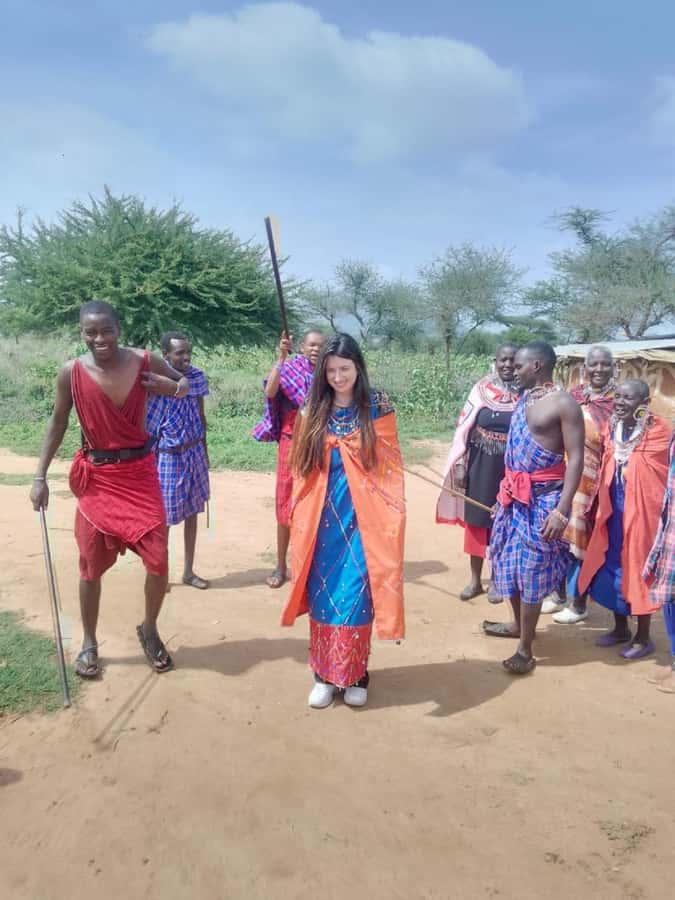
A central part of the visit is a look at how Maasai women prepare meals. You may see food being handled and cooked using methods passed through generations, with the guide or community members explaining the work as they go.
This section can be brief, so it helps to stay curious and ask practical questions. Ask what ingredients are being used, who normally prepares meals, and how the work fits into the wider household. The supplied information does not specify a particular dish or cooking method, so avoid arriving with the expectation of one fixed demonstration.
I like this part because it moves the visit away from performance and toward daily routine. Cooking is a useful window into any culture. It shows what people eat, how labor is shared, and which tasks are considered important. If you are respectful and attentive, even a short demonstration can teach you more than a long speech.
Do not assume that every part of the visit will be staged for photographs. The strongest moments may be the quieter explanations, especially when community members describe their own work. Ask before taking close-up pictures, and remember that the people you meet are hosts, not scenery.
Beadwork, necklaces, and wristbands
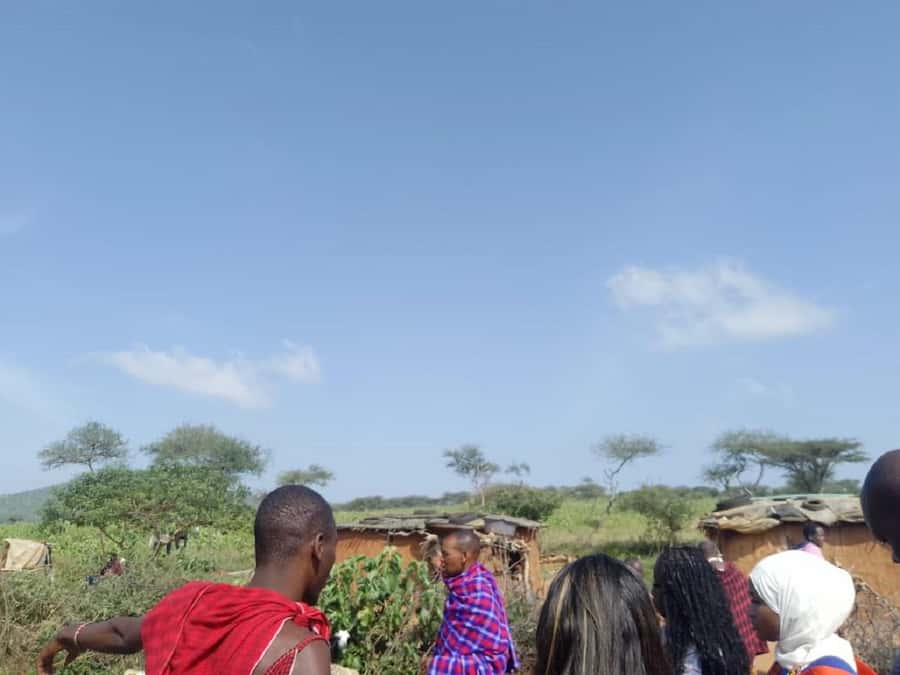
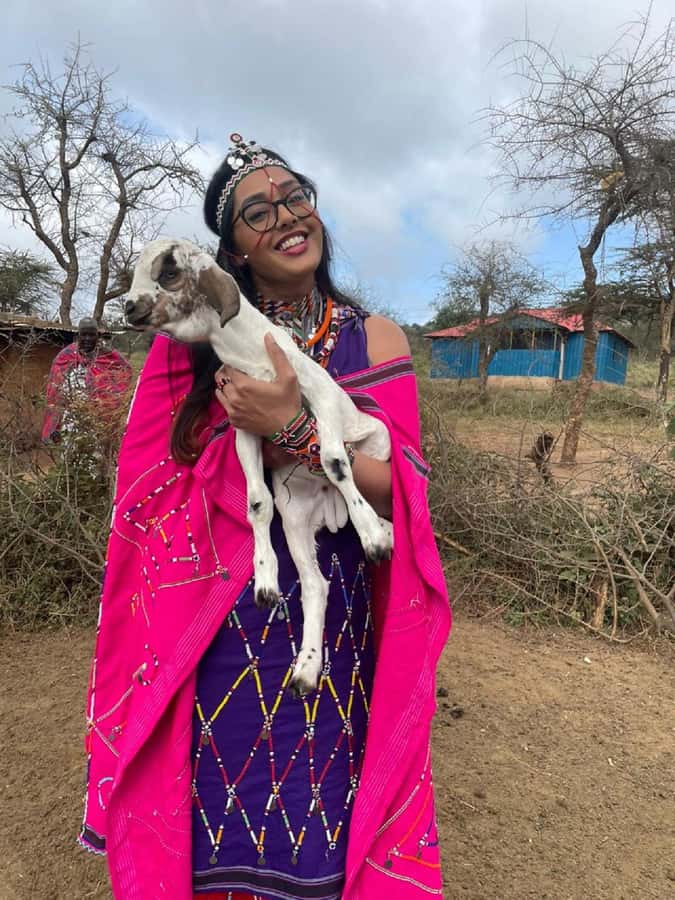
Maasai women are expected to demonstrate beadwork, including the making of necklaces and wristbands. The pieces are colorful, practical souvenirs, but the value goes beyond decoration. Buying directly from the makers gives you something connected to the people you met and can provide support to the community.
One useful tip is to bring Kenyan shillings if you hope to buy beadwork. A purchase is optional, and it is separate from the tour price. You do not need to buy anything to take part, but setting aside some local currency gives you a choice when you see the items.
I would ask about the meaning of colors, patterns, and styles. The information provided does not identify a fixed symbolism for every item, so let the makers explain their work rather than relying on a general guidebook version. That approach makes the exchange more personal and avoids treating all Maasai communities as identical.
The activity is also a good reminder that a village visit involves an economic relationship. The $30 community fee should be explained clearly, and purchases should be handled openly. If you are unsure who receives a payment, ask the driver or local host directly and politely.
A completely different kind of day out from Nairobi:
- Nairobi National Park Half-Day Game Drive
★ 4.5 · 738 reviews - Nairobi: Historic and Modern Highlights Walking Tour
★ 4.8 · 703 reviews - Safari Tour; Nairobi National Park
★ 4.5 · 594 reviews - 3 Days Masai Mara Group Joining
★ 5.0 · 486 reviews
Learning to milk goats and care for animals
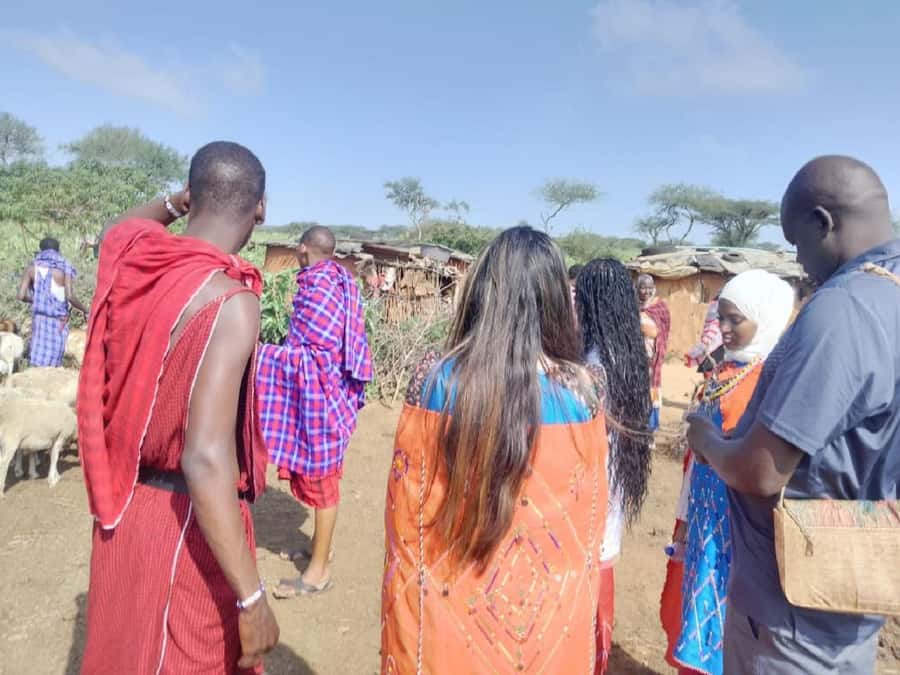
The tour includes a chance to learn how to milk goats. For many people, this is the most memorable hands-on activity because it connects the cultural story to the animals that support Maasai life.
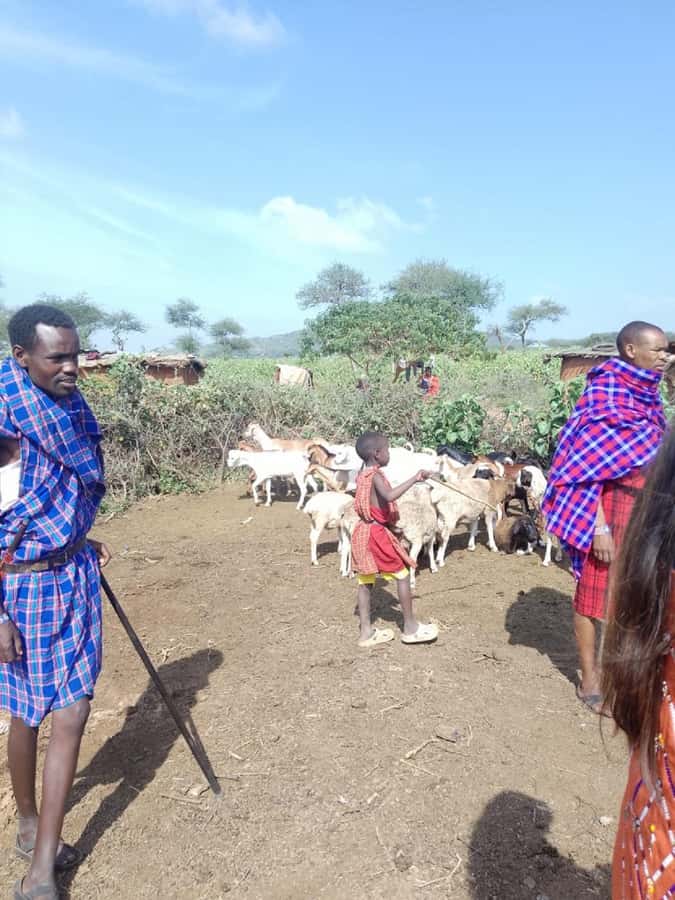
The Maasai are famed as pastoralists, with cattle holding a major place in their history and identity. The visit also refers to milking goats, giving you a more grounded look at the work of caring for livestock. The details do not promise that you will milk cattle, so keep your expectations focused on goats and on whatever the local hosts are able to demonstrate that day.
You may find that the lesson is short and informal. That is not necessarily a weakness. Animal care is work, not a theme-park show, and a brief demonstration can still help you understand how practical skills are learned and shared.
Follow instructions closely. Ask before touching an animal, and do not turn the activity into a rushed photo opportunity. A respectful attitude will improve the experience for you and for the people hosting the visit.
Singing, jumping, and the public face of Maasai culture

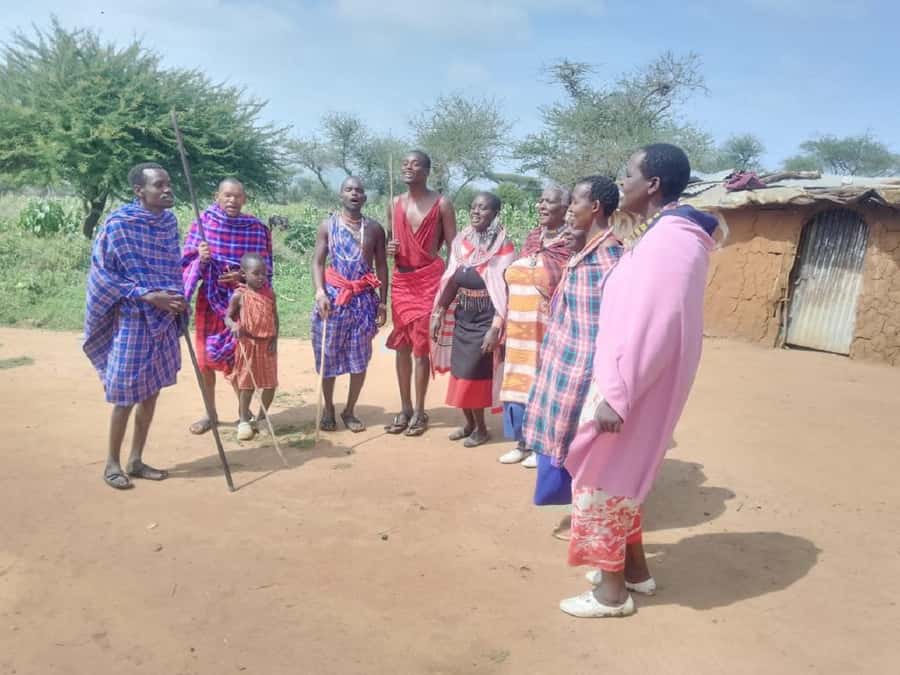
The highlights describe a performance in which young Maasai men and women jump as they sing. This is the part many people picture before booking, and it can be a lively introduction to a well-known Maasai tradition.
At the same time, I would not treat the jumping as the entire point of the visit. One disappointing outing included less of this performance than expected, with the visitor spending only about one or two hours at the village. Programs can vary, and the description does not guarantee the length or exact format of the singing.
If this ceremony matters most to you, ask the driver at the start of the day whether it is planned. That small question may prevent a mismatch between your expectations and the actual program. The activity should be judged on the full mix of cooking, beadwork, animal care, conversation, and performance, not on one photo-friendly moment.
The young men and women are presenting part of Maasai culture for visitors, so watch with interest but avoid reducing the community to a spectacle. The best approach is to enjoy the singing while also making time for questions and ordinary conversation.
What the $52 price really covers
At $52 per person, the cost is reasonable for a private or small-group-style day outing if the hotel transport is useful to you. Pickup and drop-off can save you the trouble of arranging a separate taxi, and the air-conditioned vehicle matters during a full day on the road.
The price includes:
- Hotel pickup and drop-off
- Transportation in an air-conditioned vehicle
- A driver-guide
- The Maasai village experience
- Time for lunch, with lunch paid separately
The price does not include the $30 community entry fee, food, drinks, or souvenir photos. The phrase souvenir photos can be confusing because the activity also offers Maasai-made accessories. Do not assume a photographer will take pictures for you and then sell the images. The available purchase may instead refer to necklaces, wristbands, or other handmade items.
There is also a fee discrepancy worth checking. One account refers to a $20 admission amount, while the current details state $30 per person. I would confirm the exact fee before departure and ask for a clear explanation of how it is paid. One person was uncomfortable because the driver collected the admission money rather than the payment being made directly inside the village. That does not prove anything improper, but the process should be transparent.
With the extra fee, lunch, drinks, and perhaps beadwork, your final cost will be noticeably higher than the headline price. I still think it can be good value for someone who wants a simple cultural day from Nairobi, provided the guiding is active and the village time is not rushed.
Timing, communication, and realistic expectations
The outing is presented as an eight-hour experience, but the village portion may be only one or two hours. The rest of the day includes pickup, driving, a coffee stop, lunch, and the return journey.
That timing is not automatically a problem. Central Kenya is a large area, and the value may partly come from having transport arranged. But if your goal is several hours of conversation and hands-on learning, this may feel thin.
The driver-guide is the key variable. Some experiences have had friendly, attentive guides who explained the culture and helped the day run well. Others have suffered from weak introductions and little information during the drive. Since no individual guide names are provided, you cannot choose a particular guide in advance.
I would judge the tour as a better fit for flexible visitors than for people who need a tightly narrated itinerary. Ask questions, request updates, and confirm the stops. A quiet guide may simply need prompting, while a poor communicator can leave you feeling disconnected from the trip.
Who will enjoy this Maasai visit?
I would recommend it most strongly to you if:
- You are staying in Nairobi and want a cultural outing beyond the city.
- You enjoy meeting local people and asking questions.
- You are interested in food preparation, beadwork, and livestock care.
- You want a guided experience with hotel transport included.
- You are comfortable with a visit that may be fairly short.
- You want to buy handmade jewelry directly from Maasai women.
Families and first-time visitors to Kenya may appreciate the simple format. You do not need specialist knowledge, and the activities offer clear points of contact with Maasai life.
I would be more cautious if you expect a long village tour, a detailed lecture during the drive, or a guaranteed jumping ceremony. The activity is also not ideal if you dislike extra fees that are not included in the headline cost.
Bring your passport or ID card. Wear practical clothing for a village visit, though the supplied details do not set a dress code. Most important, bring patience and a few prepared questions. Ask about family life, livestock, beadwork, food, and how traditions are maintained today.
Should you book this experience?
Book it if you want an accessible introduction to Maasai culture from Nairobi and you value direct contact over a polished, highly scripted show. The warmest parts of the experience are the personal meetings, the beadwork, the cooking demonstration, and the chance to learn about goats and pastoral life.
Before paying, confirm three things: the current $30 entry fee, the expected village time, and whether the singing and jumping ceremony is included that day. If the provider gives clear answers and you are happy with a one to two-hour community visit inside a longer day, the $52 base price can make sense.
If you want a deep cultural program with extensive discussion, you may find this too basic. I would choose it for a first taste of Maasai life, not as a full study of the community. The cancellation policy allows a full refund when you cancel at least 24 hours ahead, and reserve-now, pay-later booking can help if your Nairobi plans are still moving.
FAQ
Where does the Maasai village visit take place?
The experience takes place in central Kenya, with transport from Nairobi.
What is included in the $52 price?
The price includes hotel pickup and drop-off, an English, Swahili, or French-speaking driver-guide, transport in an air-conditioned vehicle, the Maasai village experience, and time for lunch.
Is the community entry fee included?
No. The current information lists a separate entry fee of $30 per person.
Are food and drinks included?
No. Food and drinks are paid for separately. The day includes a stop for coffee and lunch.
What can I learn at the village?
You can learn about Maasai culture, watch women prepare food, see beadwork such as necklaces and wristbands, learn to milk goats, and hear stories about community traditions.
Will I see Maasai singing and jumping?
The highlights include singing and jumping by young Maasai men and women. The exact length and format of the performance may vary, so confirm with the driver on the day.
Can I buy souvenirs?
Yes. Maasai-made accessories, including necklaces and wristbands, are available to purchase. Souvenir purchases are not included in the tour price.
What should I bring?
Bring your passport or ID card. You should also plan for the separate entry fee, lunch, drinks, and any souvenirs you wish to buy.
Can I cancel for a full refund?
Yes. You can cancel up to 24 hours in advance for a full refund. You can also reserve the experience and pay later, which keeps your plans flexible.
Just added around Nairobi
- Nairobi: Giraffe Center, Elephant Orphanage and Bomas Tour★ 5.0 · 3 reviews
- Nairobi: Airport and Hotel Private Transfers.★ 4.0 · 3 reviews
- Kitengela Anselm Hot Glass tour★ 4.5 · 3 reviews
- 11-Days Best of Kenya & Tanzania Big 5 Safari on a 4×4 Jeep★ 5.0 · 3 reviews
- 12-Day Tsavo west Amboseli lake Nakuru Maasai Mara safari★ 5.0 · 3 reviews
- NAIROBI NATIONAL PARK AFTERNOON GAME DRIVE.★ 5.0 · 3 reviews
- Nairobi Down Town & Walking City Tour★ 4.8 · 3 reviews
- Carnivore Resturant Dinner Experience★ 4.0 · 3 reviews
Nairobi Tours, compared.

Nairobi National Park Half-Day Tour; Free Wi-Fi connection
Read our review →
National Park & Optional Elephants & Giraffe Center
Read our review →
NAI NAMI: Nairobi Storytelling Tour with Street Children
Read our review →