Reviewed · PRIVATE
Ultimate 12 Days Private Safari Tour in Kenya and Tanzania
Africa rewards patience. This private safari links Kenya and Tanzania through some of East Africa’s best-known wildlife areas, from Ol Pejeta’s rhino country to the wide plains of the Serengeti and the elephant country of Amboseli. I especially like the private vehicle and flexible planning, which let your group shape the pace around wildlife, comfort, and budget.
I also like the range of experiences beyond standard game drives: a boat ride on Lake Naivasha, a guided walk on Crescent Island, Thompson’s Falls, a crater visit at Ngorongoro, and views of Mount Kilimanjaro. The main drawback is the busy schedule. You cover long distances and cross an international border, so this is better for an energetic group than for anyone seeking a slow, lodge-based holiday.
In This Review
- The safari at a glance
- Why this Kenya and Tanzania route works
- Day 1: Nairobi to Ol Pejeta and the first rhinos
- Day 2: A full day in Ol Pejeta
- Day 3: Thompson’s Falls, Lake Naivasha, and walking on Crescent Island
- Day 4: Into the Masai Mara
- Day 5: The Masai Mara deserves an early start
- Day 6: Crossing from Kenya into the Serengeti
- Day 7: Full-day exploration in the Serengeti
- Day 8: Ngorongoro Crater from floor to rim
- Day 9: Karatu and Lake Manyara
- Days 10 and 11: Border formalities and Mount Kilimanjaro views at Amboseli
- Day 12: One last drive and the return toward Nairobi
- What the $17,780 price means
- Who should book this safari?
- Should you book it?
- FAQ
- Where does the safari begin?
- What time does the safari start?
- Is this a private tour?
- How long does the safari last?
- Which countries does the route visit?
- Which parks and reserves are included?
- Is the Great Migration included?
- Is Hell’s Gate National Park included?
- Can the accommodation be customized?
- Is cancellation free?
The safari at a glance
- Two countries, six major wildlife areas: Visit Ol Pejeta, Lake Naivasha, Masai Mara, Serengeti, Ngorongoro, Lake Manyara, and Amboseli.
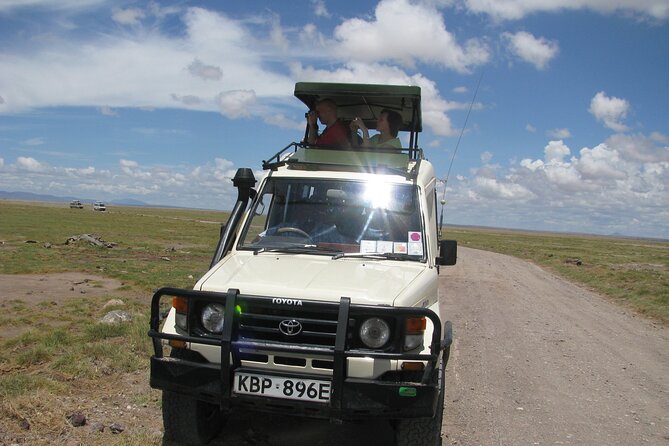
- A genuinely private format: Only your group takes part, with a driver-guide assigned to your party.
- Strong guide feedback: George, Vincent, Joshua, Ben, Peter, Barickiel, and Tuma are among the guides praised for spotting animals and explaining what you see.
- Big Five potential: The route gives you a realistic chance to see lion, leopard, elephant, buffalo, and rhino, though wildlife is never guaranteed.
- Migration timing matters: July through October is the stated migration season in the Masai Mara, but animal movements change from year to year.
- Price reflects a tailored trip: At $17,780 per person, this is a major investment, so accommodation standards, inclusions, and the final custom plan deserve careful confirmation.
Why this Kenya and Tanzania route works
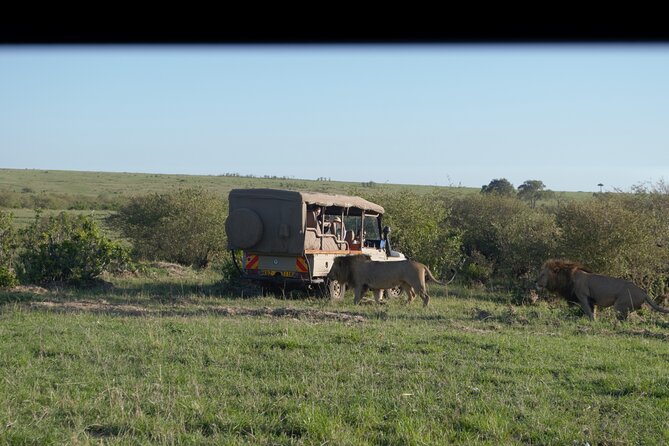
The appeal here is variety. Ol Pejeta gives you conservation and endangered rhinos. The Masai Mara and Serengeti provide huge open plains and predator sightings. Ngorongoro offers a compact crater setting where many animals can be found in one day. Amboseli brings a different mood, with elephants, swamps, dry lake beds, and Mount Kilimanjaro in the distance.
I like that the trip does not treat safari as only a hunt for the Big Five. Lake Naivasha adds water and birdlife. Crescent Island offers a chance to walk among grazers. Thompson’s Falls breaks up the drive with a scenic stop, and the market near Karatu adds a small taste of daily life outside the parks.
The route is also built for a private group. You can discuss the balance between morning and afternoon drives, full-day outings, rest time, and optional activities. That flexibility matters when six people have different energy levels, camera interests, or expectations.
Still, twelve days is not a long time for this much ground. You will spend several days in a safari vehicle, often leaving early and moving between parks. The reward is breadth. The cost is that no single reserve receives as much time as it would on a slower itinerary.
More safaris:
- Safari Tour; Nairobi National Park
★ 4.5 · 594 reviews - Half-Day Nairobi National Park Safari from Nairobi with Free Pickup
★ 4.5 · 264 reviews - 5 Days Masai Mara, Lake Nakuru & Naivasha Budget Joining Safari
★ 5.0 · 229 reviews
Day 1: Nairobi to Ol Pejeta and the first rhinos
Pickup is scheduled from a Nairobi-area hotel, residence, or airport at about 7:30 am, while the stated meeting point at Jomo Kenyatta International Airport gives a 6:00 am start time. Confirm the exact pickup hour before you travel, especially if you are arriving that morning.
The drive to Ol Pejeta covers about 220 kilometers and takes roughly four hours. You pass through Kenya’s central highlands, with possible stops near coffee and tea plantations. This is a useful opening day because you begin seeing rural Kenya before reaching the conservancy.
After lunch, you take your first game drive. Ol Pejeta is especially important for rhino conservation, and the endangered species enclosure is a central feature. The conservancy also has lions, other big cats, African wild dogs, Grevy’s zebras, rescued chimpanzees, and the possibility of seeing the Big Five.
The first afternoon may feel packed after the road journey, but it gives you an immediate wildlife start. I would keep expectations sensible. The animals are free-ranging, and the quality of the drive depends on timing, guide skill, and simple luck.
Day 2: A full day in Ol Pejeta
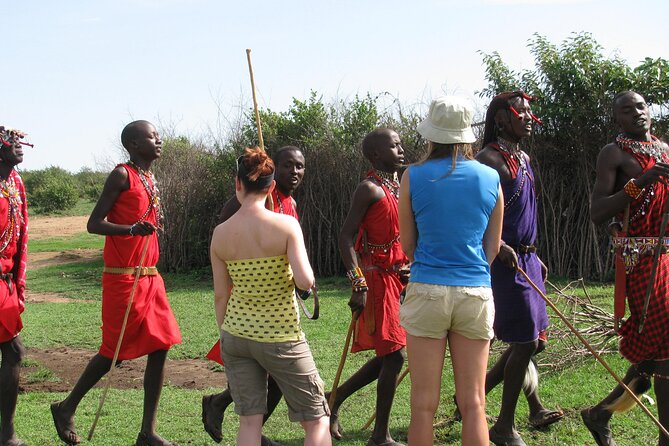
This is one of the itinerary’s best pacing decisions. A full day in Ol Pejeta means you are not simply arriving, sleeping, and leaving. You can take private game drives at different times and spend more time looking for species that were missed on the first afternoon.
The conservancy is broad enough to offer several types of scenery and wildlife encounters. Lions are a major draw, while rhinos and Grevy’s zebras add species you may not see as easily elsewhere on the route. The chimpanzee sanctuary also gives the day a conservation angle that many standard safari circuits lack.
Ask your guide how the day will be divided. Morning and afternoon drives may leave more time for lunch and rest. A full-day drive can increase time in the reserve, but it also means a long stretch in the vehicle. The private format makes it easier to choose the option that suits your group.
Day 3: Thompson’s Falls, Lake Naivasha, and walking on Crescent Island
An early drive gives you one more chance at Ol Pejeta before the route turns south toward Lake Naivasha. The drive through the Rift Valley is scenic, and Thompson’s Falls provides a clear break from the road. At 74 meters, the waterfall is an impressive stop even if your main reason for coming is wildlife.
Lake Naivasha changes the pace. The afternoon boat safari is easygoing compared with a game drive, and you may pass hippos and a wide range of birdlife along the water and shoreline. Antelope, zebra, buffalo, eland, and impala may be visible near the lake.
The guided walk at Crescent Island is a particularly appealing feature. You can see impala, gazelle, and other grazers on foot, which gives you a different sense of scale and sound than viewing animals from a vehicle. This is not the place to expect a predator chase. Its value is the close, quiet look at grazing animals.
An optional visit to Hell’s Gate National Park is available for an extra $35 per person. Since the day already includes a long drive, boat ride, and walking safari, I would add it only if your group has the energy and wants more active scenery.
A few more trips worth weighing up
- Nairobi National Park Half-Day Tour; Free Wi-Fi connection
★ 5.0 · 878 reviews - Nairobi: National Park & Optional Elephants & Giraffe Center
★ 4.8 · 874 reviews - NAI NAMI: Nairobi Storytelling Tour with Street Children
★ 5.0 · 792 reviews - Nairobi National Park Half-Day Game Drive
★ 4.5 · 738 reviews
Day 4: Into the Masai Mara
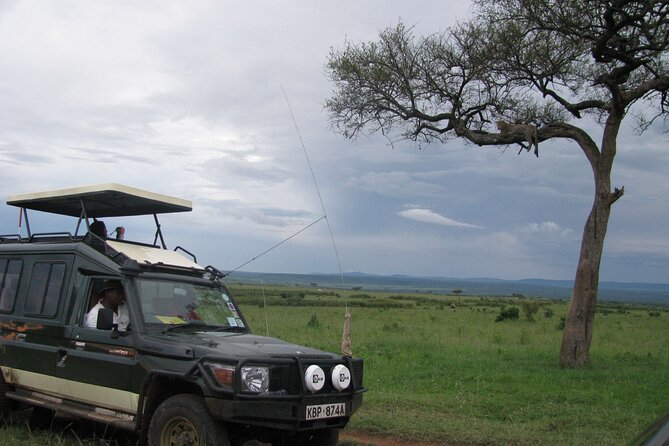
After breakfast, you head toward the Masai Mara through the Great Rift Valley and Masai country. The route introduces wide views and changing elevations before you reach the reserve for an afternoon game drive.
The Masai Mara is famous for its lion sightings, open grasslands, acacia trees, elephants, giraffes, ostriches, warthogs, and buffalo. The afternoon light can be especially good for photography, but the arrival drive may leave limited time before sunset.
The Mara is also linked with the Great Migration, most commonly associated with July through October. If your dates fall in that period, you may see large movements of wildebeest and perhaps a river crossing. Do not treat a crossing as guaranteed. The animals move according to rain, grass, and instinct, not a sightseeing timetable.
Day 5: The Masai Mara deserves an early start
This is the day to rise before breakfast. Early drives offer cooler conditions and the chance to see tracks, predators, and grazers becoming active. The acacia-dotted plains are at their most atmospheric in the morning, when the light is soft and the reserve feels fresh.
The plan allows unlimited game drives, so you can choose between morning and afternoon outings or a longer full-day drive. I favor discussing this with your guide rather than assuming more hours always mean a better day. A full day can help if you are keen on wildlife photography, while two shorter drives give you a break.
The Mara is one of the strongest parts of the Kenya section. It combines scenery with frequent wildlife possibilities, particularly lions. Your guide’s ability to read tracks and communicate with other vehicles can make a real difference. George and Ben are names repeatedly associated with the Kenya portion, while Peter has also been praised for guiding this route.
Day 6: Crossing from Kenya into the Serengeti
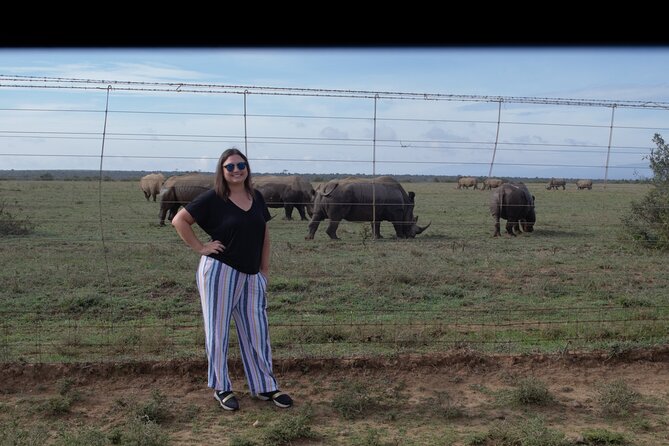
The move from the Masai Mara to the Serengeti is the trip’s biggest logistical transition. The two ecosystems are closely connected, but the border crossing still adds paperwork and travel time. Ask in advance how the handover between the Kenya and Tanzania guiding teams will work.
The Serengeti is often described as an extension of the Mara, and the wildlife connection is clear. An afternoon game drive gives you a first look at Tanzania’s side of the plains. Optional balloon flights and guided nature or bird walks are also noted, though you should confirm availability, cost, and scheduling before counting on them.
This is a demanding day. You should expect less uninterrupted game viewing than on a full day inside one park. The payoff is entering one of Africa’s great wildlife regions without giving up the Kenya portion of the trip.
Day 7: Full-day exploration in the Serengeti
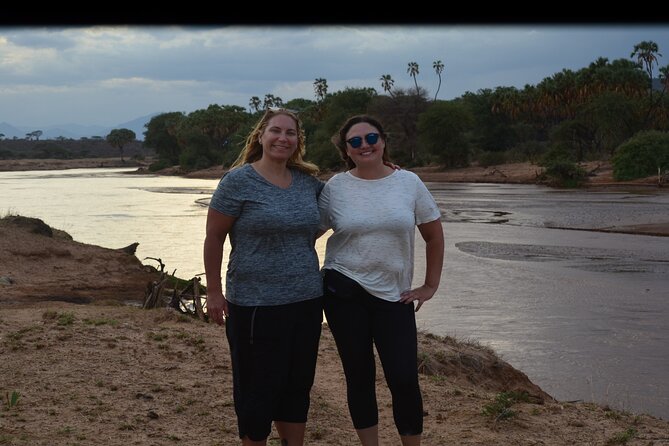
A full day in the Serengeti gives the route room to breathe. You can choose morning and afternoon drives or spend the day out with a picnic lunch, depending on the group’s preference.
Lion, cheetah, zebra, giraffe, Thomson’s gazelle, Grant’s gazelle, eland, impala, klipspringer, hippo, and warthog are among the species listed for the park. Some lions have radio transmitter collars, which may help guides track their movements.
Serengeti distances can feel vast. One sighting may be excellent but far from the next, so patience matters. I would judge this day by the quality of time spent watching animal behavior, not by trying to collect a certain number of species.
Tanzania guides named in the feedback include Vincent, Joshua, and Tuma. Vincent and Joshua received especially strong praise for their game-drive work. Since Kenya and Tanzania may use different guides, confirm who will accompany you in each country.
Day 8: Ngorongoro Crater from floor to rim
You leave the Serengeti for the Ngorongoro Conservation Area and descend to the crater floor for game viewing. The crater is a striking natural setting, and its enclosed geography can make it easier to see several types of wildlife during a single outing.
A picnic lunch on the crater floor keeps the day inside the conservation area, followed by an ascent to the crater rim for the overnight stay. The rim is noted for sunrise and sunset views, so this is one of the trip’s most scenic overnight locations.
The day involves a major change in elevation and another long period in the vehicle. The crater experience is concentrated and dramatic, but it can also feel busy compared with the open Serengeti. Your guide can help you decide how long to spend at individual sightings.
Day 9: Karatu and Lake Manyara
After breakfast, the route continues to Lake Manyara, with a stop at the local market in Karatu. The market adds a human element to a trip otherwise dominated by protected areas and wildlife.
Lake Manyara is known for birds and for the possibility of seeing tree-climbing lions. The word possibility matters. Wildlife behavior cannot be scheduled, but the park gives you a different setting from the Mara and Serengeti, with water, woodland, and varied bird habitats.
This is a shorter wildlife chapter before the route returns to Kenya. If your priority is predators, you may wish this park had more time. If you enjoy birds and changing scenery, it helps prevent the safari from becoming a series of similar grassland drives.
Days 10 and 11: Border formalities and Mount Kilimanjaro views at Amboseli
Day 10 includes the return to Kenya through the Namanga border town, with immigration formalities before continuing to Amboseli National Park. Border days can be tiring, so keep your expectations for the afternoon drive flexible.
Amboseli has a distinct character. Its dry lake bed, open savannah, and green swamps support elephants, buffalo, giraffes, zebras, lions, cheetahs, hyenas, jackals, warthogs, baboons, vervet monkeys, and many bird species. The park is associated with more than 600 bird species in the supplied information.
The main visual prize is Mount Kilimanjaro. Clouds often hide the mountain, but early morning may bring clear views of its snow-covered summit. Observation Hill is easy to climb and offers a broad view over the park.
Day 11 is reserved for extensive game viewing. I would plan an early drive, then use the flexible private setup to decide if another outing is worthwhile later. Amboseli’s elephants and mountain views make it a fitting final full day, though the route has already demanded plenty of driving.
Day 12: One last drive and the return toward Nairobi
The final day begins with an early pre-breakfast game drive, followed by an additional drive in Amboseli. This is a smart use of the last morning because predators and grazers may still be active before the heat rises.
The schedule identifies Nairobi as the final stop, but it does not spell out the exact transfer time or final drop-off arrangement. Confirm this before booking flights or connecting plans. Do not place an international departure too close to the end of the safari unless the operator gives you a precise transfer plan.
What the $17,780 price means
At $17,780 per person, this is a high-cost safari. The value depends heavily on what accommodation, park fees, meals, border arrangements, vehicle, internal logistics, and guide services are included in your customized proposal.
The private format is the main value argument. You are not sharing the vehicle with strangers, and your group can request accommodation suited to its budget and preferences. That matters for families, couples traveling with friends, and groups of retirees who want a more controlled pace.
The price also buys a complex cross-border plan covering two countries and several major parks. Still, I would request a written cost breakdown. The tour information says accommodation can be adjusted, which means the actual comfort level may vary. Confirm whether optional activities, such as Hell’s Gate or a balloon safari, cost extra.
Who should book this safari?
I would recommend it to groups that want a broad first look at Kenya and Tanzania and are happy to trade slow travel for variety. It is especially suitable for families and friends who want a private vehicle, flexible game-drive choices, and one organizer handling the route.
It may not suit you if you dislike long road transfers, early starts, or changing accommodations. A slower safari focused only on the Masai Mara, Serengeti, and Ngorongoro could offer more time in each place.
The operator has a 4.9 rating from 60 reviews, with 98 percent recommending the experience. The most consistent praise centers on guide quality and smooth organization. If guide choice matters to you, ask whether George or Ben can lead the Kenya section and whether Vincent, Joshua, or Tuma is available in Tanzania. Availability is not promised, so get the answer in writing.
Free cancellation is available up to 24 hours before the stated start time. Changes or cancellations inside that window are not accepted for a refund.
Should you book it?
Book this safari if your priority is maximum regional variety in twelve days, private travel, and a strong chance to see major wildlife habitats in both countries. The route includes excellent highlights, especially Ol Pejeta, the Masai Mara, Serengeti, Ngorongoro, and Amboseli.
Before paying, confirm the accommodation level, exact airport transfer plan, border arrangements, optional costs, and assigned guides. If those details match your expectations, this is a powerful and well-rounded East African safari. If you prefer fewer long drives and more time at each camp, choose a shorter route with fewer parks.
FAQ
Where does the safari begin?
The listed meeting point is Jomo Kenyatta International Airport in Embakasi, Nairobi, Kenya.
What time does the safari start?
The stated start time is 6:00 am, although the day one pickup instructions also mention a 7:30 am pickup from Nairobi-area hotels, residences, or the airport. Confirm the exact pickup time with the operator.
Is this a private tour?
Yes. Only your group participates in the private tour or activity.
How long does the safari last?
The safari lasts approximately 12 days.
Which countries does the route visit?
The itinerary covers Kenya and Tanzania.
Which parks and reserves are included?
The route includes Ol Pejeta Conservancy, Masai Mara National Reserve, Serengeti National Park, Ngorongoro Conservation Area, Lake Manyara, and Amboseli National Park. It also includes Lake Naivasha and a stop at Thompson’s Falls.
Is the Great Migration included?
The Masai Mara section takes place in an area associated with the Great Migration. The stated migration season is July through October, but a specific crossing or animal movement is not guaranteed.
Is Hell’s Gate National Park included?
Hell’s Gate is an optional activity in Naivasha and costs an additional $35 per person.
Can the accommodation be customized?
Yes. Accommodation can be tailored to your group’s budget and needs.
Is cancellation free?
You can cancel up to 24 hours before the experience start time for a full refund. Cancellations or changes made less than 24 hours before the start time are not accepted for a refund.
Just added around Nairobi
- Nairobi: Giraffe Center, Elephant Orphanage and Bomas Tour★ 5.0 · 3 reviews
- Nairobi: Airport and Hotel Private Transfers.★ 4.0 · 3 reviews
- Kitengela Anselm Hot Glass tour★ 4.5 · 3 reviews
- 11-Days Best of Kenya & Tanzania Big 5 Safari on a 4×4 Jeep★ 5.0 · 3 reviews
- 12-Day Tsavo west Amboseli lake Nakuru Maasai Mara safari★ 5.0 · 3 reviews
- NAIROBI NATIONAL PARK AFTERNOON GAME DRIVE.★ 5.0 · 3 reviews
- Nairobi Down Town & Walking City Tour★ 4.8 · 3 reviews
- Carnivore Resturant Dinner Experience★ 4.0 · 3 reviews
Private, compared.
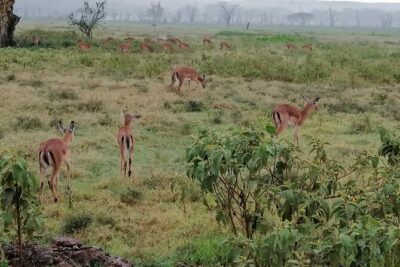
Hell’s Gate National Park Private Bike Tour from Nairobi
Read our review →
Kisite Park Private Cruise with Breakfast and Lunch
Read our review →
3 days Masai Mara on Private 4×4 Land Cruiser
Read our review →
Masai Mara 3 Day Safari | Private 4WD Jeep Tour
Read our review →
Lake Nakuru, Naivasha & Masai Mara 4 Days Private Jeep Safari
Read our review →
Private Hiking Day Trip to Mt. Longonot from Nairobi
Read our review →