
Reviewed · GIRAFFE CENTRE VISITS
Giraffe Center and Karen Blixen Museum Tour from Nairobi
Giraffes, literature, and local craft make a fine Nairobi morning. I like this tour because it joins a close encounter with Rothschild giraffes to a visit inside Karen Blixen’s former home, then adds Kazuri Beads for a look at Kenyan handiwork. Personal pickup and drop-off within Nairobi keep the day simple, and entry fees and transport are included. The main drawback is that it packs three stops into a half-day, so you should expect a brisk pace rather than a long, leisurely visit at each place.
I also like the guide-led format. At the Giraffe Center, one guide explained the different giraffe species and helped the visit move along without queues. Patrick, one of the guides, was praised for keeping the day smooth and friendly. One practical note: a change of driver halfway through caused some confusion for one person, so confirm who is handling your transport if the vehicle or driver changes.
In This Review
- Key points at a glance
- Why these three Nairobi stops work together
- Meeting the Rothschild giraffes at the Giraffe Center
- Inside Karen Blixen’s former home
- Seeing the work at Kazuri Beads Factory
- How the guide and transport shape the day
- Food, timing, and what to bring
- Who will get the most from this tour?
- Is $85 per person a fair price?
- Booking flexibility and language choices
- Should you book the Giraffe Center and Karen Blixen tour?
- FAQ
- What does the tour include?
- What is not included?
- How much does the tour cost?
- How long does the tour last?
- Which places does the tour visit?
- Can I feed the giraffes?
- What is special about Kazuri Beads Factory?
- Which guide languages are available?
- Can I cancel or pay later?
Key points at a glance
- Feed Rothschild giraffes up close: The Giraffe Center gives you a direct encounter with these tall, gentle animals and includes conservation information.
- See Karen Blixen’s former home: The museum connects the house and grounds with Blixen’s life and her book Out of Africa.
- Watch beads take shape: Kazuri Beads Factory shows how ceramic beads and pottery are made, with a chance to try bead crafting yourself.
- Enjoy door-to-door convenience: Pickup and drop-off within Nairobi, transport, and entrance fees are included.
- Choose a language that suits you: Tours are offered in English, French, German, and Spanish.
- Plan around a quick half-day: Food and drinks are not included, and the schedule leaves little room for lingering.
Why these three Nairobi stops work together
Nairobi can give you wildlife, colonial-era history, and modern Kenyan craft in a single morning. That combination is the real strength here. You are not spending the whole outing in one museum or one animal park. Instead, each stop offers a different way to understand the city.
The Giraffe Center brings you close to living wildlife. The Karen Blixen Museum gives you a window into Kenya’s colonial past through the home of a famous Danish author. Kazuri Beads adds a present-day creative business built around handmade work and a women’s cooperative.
I find this mix useful if you have limited time in Nairobi. It gives you three clear impressions of the city without requiring a full-day commitment. The trade-off is depth. You will see the highlights, but this is not the right choice if you want hours at each site or a slow, unplanned morning.
The tour costs $85 per person. That price makes more sense if you value the convenience of private or guided transport, the included entry fees, and a coordinated visit to three places. If you already have a car, driver, or local guide, you may prefer to arrange the stops separately. For a first Nairobi outing, though, the bundled format can save time and reduce the work of planning routes between sites.
More Karen Blixen tours:
- Day tour to Giraffe Center and Karen Blixen Museum
★ 4.5 · 168 reviews - Nairobi National Park,Giraffe Centre, Karen Blixen Museum.
★ 5.0 · 127 reviews - 1 Day Tour Nairobi National Park,Giraffe Center&Karen Blixen
★ 5.0 · 48 reviews
Meeting the Rothschild giraffes at the Giraffe Center
The Giraffe Center is the emotional high point for many people. You get close to Rothschild giraffes and can hand-feed them, turning a standard wildlife stop into a direct and memorable encounter.
The feeding experience is simple but special. You stand near the giraffes, offer food, and watch their long necks bend down toward you. Their size is impressive at close range, yet the moment feels calm rather than intimidating. You also receive information about giraffe conservation, which gives the encounter more meaning than a quick photograph.
Your guide can add useful context. One guide explained the differences between giraffe species, helping turn the visit into more than a photo stop. That is worth noting because the value of the Giraffe Center depends partly on the explanation around the animals. Without guidance, you may simply see tall giraffes and move on. With a good guide, you begin to notice their markings, body shape, and conservation concerns.
The no-queue assistance is another practical plus. A guide can help you get oriented quickly and accompany you through the first part of the visit. That matters on a half-day outing, where delays at the first stop can shorten every stop after it.
You should still keep expectations sensible. This is a managed wildlife encounter, not a safari drive through open bush. You are visiting a conservation center with a structured way to meet the giraffes. If your main goal is to see a wide range of wild animals in their natural setting, you need a separate safari experience. If you want a close, easy introduction to one of Kenya’s best-known animals, this stop fits well.
I would put the Giraffe Center first, as this tour does. It starts the day with the most hands-on activity and gives you a strong reason to be ready on time.
Inside Karen Blixen’s former home
The Karen Blixen Museum shifts the mood from wildlife to personal story. The house was once home to Karen Blixen, the Danish writer associated with Out of Africa. The visit explores her life and the colonial period in Kenya through the rooms, setting, and stories connected with the property.
You should expect a historical house visit rather than a large national museum. Its appeal comes from the link between place and author. Standing in the home where Blixen lived helps connect the setting of her writing with the wider story of colonial Kenya.
A guide is especially useful here. You can look at rooms and objects on your own, but a guided explanation helps sort out the personal details from the larger historical picture. The museum also gives you a chance to think about the colonial past in a more grounded way, through one household and one estate rather than only through dates and broad political events.
The stop has limits. Karen Blixen’s story is only one part of Kenya’s past, and the museum naturally reflects her point of view. You should treat it as an introduction, not a complete account of Kenyan history. The tour works best when you appreciate the literary connection while also keeping the colonial setting in mind.
For readers who know Out of Africa, the visit may carry extra meaning. If you have not read the book or seen its film adaptation, the guide can still help you understand why the house matters. Either way, this is the quieter section of the morning, a useful contrast to the lively giraffe encounter.
Seeing the work at Kazuri Beads Factory
Kazuri Beads Factory adds a hands-on cultural stop. The business is known for ceramic beads and pottery, and it operates as a women’s cooperative. You can watch the artistic process, learn how the pieces are made, and try creating beads yourself.
This part gives the tour a practical connection to local production. You are not only looking at finished souvenirs in a shop. You get to see the making process and understand that the colorful objects require skilled, repeated handwork.
The chance to try bead crafting is a welcome touch. It helps you appreciate the care behind the finished pieces, even if your own attempt is less polished. This is the sort of activity that works for families, couples, and anyone who prefers doing something to simply walking through exhibits.
Kazuri also gives you a chance to take home a useful reminder of Nairobi. Because the beads and pottery are made locally through the cooperative, a purchase can feel more connected to the place than a generic souvenir. Still, buying is optional. The cultural value of the stop should not depend on spending extra money.
The factory visit may feel shorter than a dedicated craft workshop. The tour has two other major stops, so you should not expect an all-day studio course. Think of it as a guided introduction to ceramic bead production with a small creative activity included.
More Giraffe Centre visits:
- Nairobi: National Park & Optional Elephants & Giraffe Center
★ 4.8 · 874 reviews - Elephant Orphanage and Giraffe Center Tour with Options
★ 4.5 · 457 reviews - Nairobi National Park, Elephant Orphanage and Giraffe Centre
★ 4.6 · 365 reviews - Tour: Giraffe Center and Nairobi National Park
★ 5.0 · 299 reviews
How the guide and transport shape the day
The tour includes pickup and drop-off within Nairobi, which is one of its strongest practical features. Nairobi traffic and unfamiliar roads can make a three-stop morning harder to manage on your own. Having transportation arranged allows you to focus on the visits instead of negotiating every transfer.
The guide-led format also helps at the entrances. At the Giraffe Center, a guide accompanied the group right away and helped avoid queues. That kind of support may sound minor, but it can protect your limited half-day.
The guide quality matters. Patrick was described as friendly and effective at keeping the day moving. Another guide provided useful information about giraffe species. These details suggest that the best part of the service is not only driving between places, but also having someone explain what you are seeing.
There is one point to clarify before setting off. A driver change during the outing caused confusion for one person. If your driver changes, ask who your main guide is, which vehicle you should use, and who will handle the final drop-off. Clear communication should solve the problem, but it is better to ask early than spend part of the morning wondering who is in charge.
Transport is included, but the supplied details do not specify the vehicle type, exact pickup time, group size, or precise duration beyond half a day. I would confirm those points when booking, especially if you have a tight schedule, a flight, or another Nairobi activity afterward.
Food, timing, and what to bring
Food and drinks are not included, so plan around that. The tour is only a half-day, but you may still want water or a snack before pickup. Since the schedule includes three stops, it is sensible to eat before the tour or arrange your own refreshments.
The order of visits gives the morning a clear rhythm:
- Start with the Giraffe Center for hand-feeding and conservation information.
- Continue to the Karen Blixen Museum for the colonial-era and literary story.
- Finish at Kazuri Beads Factory for bead making, pottery, and the cooperative’s work.
That sequence moves from wildlife to history to craft. It also means the day begins with the most active encounter and ends with shopping or making. You should arrive ready to move on when asked, since extra time at one stop may reduce time at the next.
Comfortable clothing makes sense, though the tour information does not specify a dress code or special equipment. Bring a phone or camera if you want photos, but keep your attention on the animals and the explanations too. The close giraffe encounter is easy to remember without turning the whole visit into a photography session.
Who will get the most from this tour?
I would recommend this outing to a first-time Nairobi visitor who wants a broad introduction without committing to a full day. It suits you especially well if you want wildlife, culture, and history in one package.
Families may like the balance. Children can feed giraffes and try bead crafting, while adults get the museum and colonial context. Couples and solo visitors who prefer an organized morning will also appreciate the pickup, guide, and included entrances.
The tour is a good match if you:
- Have only half a day in Nairobi.
- Want a close giraffe encounter rather than a full safari.
- Have an interest in Karen Blixen or Out of Africa.
- Like handmade goods and short creative activities.
- Prefer transport and entry fees arranged in advance.
- Need guiding in English, French, German, or Spanish.
I would look for another option if you want a slow museum visit, a long craft workshop, or a broader safari with several animal species. The three-stop format is efficient, but efficiency always means some limits on free time.
Is $85 per person a fair price?
At $85 per person, the value rests on convenience. You are paying for transport, pickup and drop-off within Nairobi, all entrance fees, and guided visits to the Giraffe Center and Karen Blixen Museum. The Kazuri Beads stop adds a third experience without requiring you to arrange another transfer.
For someone staying in Nairobi without a vehicle, that package can be worthwhile. You avoid figuring out how to connect three attractions and reduce the risk of losing time between them. The guide’s role also adds value, particularly at the giraffe center and museum.
The price is less compelling if you already have transport and plan to visit only one or two places. In that case, an independently arranged visit may give you more control over timing. You should also remember that food and drinks are extra.
I see this as a convenience-focused tour, not a budget attraction ticket. You pay for a coordinated morning and a guide who helps turn separate stops into one coherent outing.
Booking flexibility and language choices
The tour accepts reserve-now, pay-later bookings, which can help if your Nairobi plans are still taking shape. You can also cancel up to 24 hours in advance for a full refund, according to the provided booking terms. Check the exact conditions at the time you reserve, since policies can change.
Guiding is available in English, French, German, and Spanish. Choose the language that lets you follow the historical and conservation explanations most easily. The guide’s commentary is an important part of the day, so language fit matters more here than it would on a simple transfer.
The experience is provided by Gracilie Ventures. The overall rating is 4.8 out of 5 from four ratings, with especially strong praise for friendly service, smooth organization, and useful giraffe information. The small number of ratings means I would treat that score as encouraging rather than conclusive.
Should you book the Giraffe Center and Karen Blixen tour?
Book it if you want an organized half-day that covers three very different sides of Nairobi. The hand-feeding at the Giraffe Center, the personal story at Karen Blixen’s home, and the bead-making visit at Kazuri create a varied morning with little planning required from you.
I would book this most readily for a first visit, a family outing, or a short stay in Nairobi. Ask about pickup timing, group size, and the driver arrangement before you go, and remember to budget for your own food and drinks.
Skip it if you want a full safari, a long museum session, or complete control over how long you stay at each stop. For everyone else, $85 is a reasonable price for a guided introduction to Nairobi’s wildlife, colonial past, and handmade craft scene.
FAQ
What does the tour include?
The tour includes pickup and drop-off within Nairobi, transportation, all entry fees, and guided visits to the Giraffe Center and Karen Blixen Museum.
What is not included?
Food and drinks are not included in the tour price.
How much does the tour cost?
The listed price is $85 per person.
How long does the tour last?
It is described as a half-day tour.
Which places does the tour visit?
The tour visits the Giraffe Center, the Karen Blixen Museum, and the Kazuri Beads Factory.
Can I feed the giraffes?
Yes. The Giraffe Center visit includes the chance to hand-feed Rothschild giraffes.
What is special about Kazuri Beads Factory?
Kazuri is a women’s cooperative known for ceramic beads and pottery. You can watch the craft process and try making beads yourself.
Which guide languages are available?
Guiding is available in English, French, German, and Spanish.
Can I cancel or pay later?
You can reserve and pay later, with no payment required at booking. Cancellation up to 24 hours in advance is listed as eligible for a full refund.
More Museums
- Giraffe Center and Karen Blixen Museum Tour from Nairobi
★ 4.6 · 43 reviews - Nairobi National Park, Giraffe Center & Karen Blixen Museum
★ 4.5 · 42 reviews - Karen Blixen Museum & Giraffe Centre Half day tour
★ 5.0 · 10 reviews - Nairobi 3 Museums and Bomas of Kenya day tour.
★ 5.0 · 10 reviews
Just added around Nairobi
- Nairobi: Giraffe Center, Elephant Orphanage and Bomas Tour★ 5.0 · 3 reviews
- Nairobi: Airport and Hotel Private Transfers.★ 4.0 · 3 reviews
- Kitengela Anselm Hot Glass tour★ 4.5 · 3 reviews
- 11-Days Best of Kenya & Tanzania Big 5 Safari on a 4×4 Jeep★ 5.0 · 3 reviews
- 12-Day Tsavo west Amboseli lake Nakuru Maasai Mara safari★ 5.0 · 3 reviews
- NAIROBI NATIONAL PARK AFTERNOON GAME DRIVE.★ 5.0 · 3 reviews
- Nairobi Down Town & Walking City Tour★ 4.8 · 3 reviews
- Carnivore Resturant Dinner Experience★ 4.0 · 3 reviews
Giraffe Centre Visits, compared.

National Park & Optional Elephants & Giraffe Center
Read our review →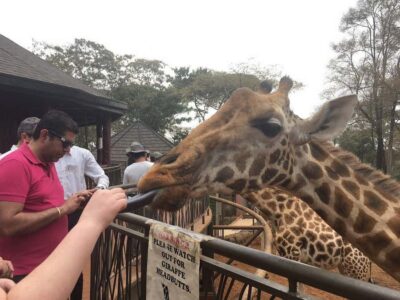
Elephant Orphanage and Giraffe Center Tour with Options
Read our review →
Nairobi National Park, Elephant Orphanage and Giraffe Centre
Read our review →
Tour: Giraffe Center and Nairobi National Park
Read our review →



Day tour to Giraffe Center and Karen Blixen Museum
Read our review →Browse the lists this tour appears in