
Reviewed · GIRAFFE CENTRE VISITS
Elephant Orphanage, Giraffe Center & Bomas of Kenya Day Tour
Nairobi packs a lot into one day. This private tour links four very different experiences: Rothschild giraffe conservation, orphaned elephant care, women-led beadmaking, and Kenyan music and dance at Bomas of Kenya. I like the hotel pickup and private transport, which save you from arranging separate rides across the city. I also like the chance to hear local context from your driver between stops.
The main consideration is timing. The elephant session runs from 11 a.m. to noon, so your pickup time matters. The $125 price covers transport, bottled water, and entry to three attractions, but the Sheldrick Wildlife Trust conservation park fee and lunch are extra. That leaves you with a useful, full day, but not an all-inclusive one.
In This Review
- Key points to know before booking
- A Nairobi day built around conservation and culture
- Meeting Rothschild giraffes at the Giraffe Centre
- The 11 a.m. elephant session at Sheldrick Wildlife Trust
- Seeing beadmaking at KOBE TOUGH
- Lunch before an afternoon at Bomas of Kenya
- Traditional dances and homesteads at Bomas of Kenya
- What the private format changes
- Is $125 a fair price?
- Who should book this Nairobi day tour?
- Final decision: book it for variety and easy transport
- FAQ
- Where does this tour take place?
- How long does the tour last?
- Is hotel pickup included?
- Is this a private tour?
- What time does the elephant session take place?
- Is lunch included?
- Are attraction admission fees included?
- Can I pay statutory fees in cash at the gate?
- Is bottled water provided?
- What is the cancellation policy?
Key points to know before booking
- The elephant visit has a fixed 11 a.m. to noon session, so ask for a pickup time that gets you there comfortably.
- The giraffe platform brings you eye-to-eye with the animals, with a conservation talk and guided supervision.
- Bomas of Kenya gives you three hours for dances, homesteads, and cultural interpretation, not just a quick performance.
- KOBE TOUGH beads supports single mothers, and you can watch the work move from raw materials to finished pieces.
- This is a private tour, so only your group participates and the day can be handled at your pace within the scheduled stops.
- The $125 fee excludes lunch and the Sheldrick conservation fee, and statutory payments use the online E-citizen system rather than cash at the gate.
A Nairobi day built around conservation and culture
This experience works because it gives you four different ways to understand Kenya. You begin with living wildlife, move into hands-on conservation, see a social enterprise at work, and finish with music, dance, and traditional homesteads.
That mix is more useful than spending a whole day at one attraction. You see animals, but you also learn how conservation is organized and how cultural traditions are presented to the public. The stops are spread across Nairobi, so private transport matters. Without it, coordinating the timing could become the day’s main challenge.
The tour lasts about seven hours. That is long enough to feel substantial, though you should expect a busy schedule rather than a slow, open-ended outing. Your driver provides local insight while taking you between the locations, and bottled drinking water is included.
The tour is especially suited to first-time visitors, families, and anyone with one free day in Nairobi. It also works well if you want a clear plan and do not want to negotiate several taxi rides. If you prefer lingering for hours at one place, the fixed elephant session and the number of stops may feel a little tight.
More Bomas of Kenya shows:
- Giraffe Centre, Elephant Orphanage, and Bomas of Kenya Day Tour from Nairobi
★ 4.5 · 96 reviews - Half-Day Cultural Tour to Bomas of Kenya in Nairobi
★ 4.5 · 23 reviews - Half-day tour Bomas of Kenya with Pick-up
★ 5.0 · 19 reviews
Meeting Rothschild giraffes at the Giraffe Centre
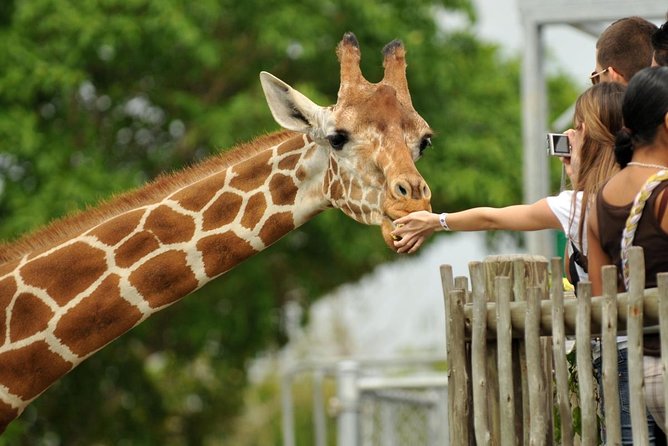
The day begins at the Giraffe Centre, where the focus is the endangered Rothschild giraffe subspecies. The visit is not simply a quick animal sighting. You learn about conservation work and see the animals from a raised observation platform that places you close to their eye level.
That platform is the key feature. It lets you appreciate the giraffes from above without crowding them at ground level. Under professional supervision, you can watch their movements and take photographs while keeping the encounter controlled.
Allow about one hour here. The center also has a large auditorium, where you can listen to talks about giraffe conservation and the work carried out in different parts of Kenya. That talk adds needed context. A giraffe is easy to admire, but the conservation story explains why protecting a particular subspecies requires organized breeding, education, and habitat work.
I like the way this stop combines an appealing animal encounter with a clear conservation message. You are not just being brought somewhere scenic for a photo. You are shown why the animals matter and what the center is trying to protect.
The drawback is simple: one hour passes quickly. If you want a long talk, extensive photos, and plenty of time at the platform, you may need to keep an eye on the clock. Since the elephant session has a fixed start time, your visit cannot expand much beyond its planned slot.
The 11 a.m. elephant session at Sheldrick Wildlife Trust
The next stop is the Sheldrick Wildlife Trust, where an experienced guide and keeper explain elephant conservation in Kenya. The public session takes place daily from 11 a.m. to noon, making this the most time-sensitive part of the day.
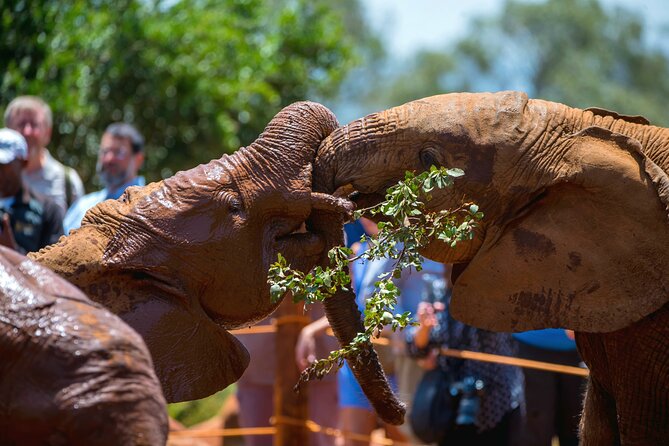
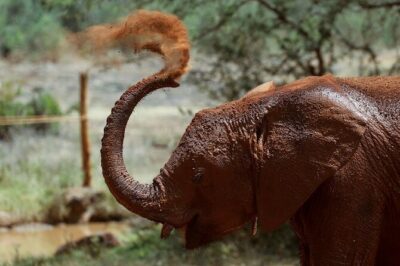
You see baby elephants being cared for as they drink bottled milk, play, and settle into sandbaths. In the heat, you may also see them cool off with mudbaths. Those details make the visit memorable, but the real value is the explanation of how an orphaned elephant receives care and why sanctuaries like this are needed.
Photography is part of the visit, though the main point is observation and learning. You can watch the young elephants interact while the keepers describe the work behind their care. The session gives you a direct look at the daily routines involved in helping orphaned animals.
You also have the option to adopt and sponsor one of the orphaned elephants. That is a useful choice if you want your visit to continue beyond the hour itself. The adoption option gives you a personal connection to the conservation program, though it is an additional decision rather than part of the $125 tour price.
Plan this stop carefully. Ask your provider to confirm your hotel pickup time and the route order, since arriving late could mean missing a large part of the only scheduled session. This is one reason private transport is valuable. Your driver can manage the transfer between locations more directly than a shared coach making several unrelated pickups.
The elephant visit is also the part most likely to attract families. Children can see the animals drinking, playing, and bathing, while adults get a clearer sense of the work involved in elephant conservation. Still, you should prepare young children for a guided session with a set schedule rather than an informal animal encounter.
One practical note matters here: the conservation park fee is not included. The tour includes admission to the elephant orphanage in its stated inclusions, but the separate Sheldrick Wildlife Trust conservation park fee is listed as an extra. Confirm the current amount before you go, and remember that statutory fees are paid through the online E-citizen platform. No cash is accepted at the gate.
Seeing beadmaking at KOBE TOUGH
After the wildlife stops, the tour changes direction at KOBE TOUGH beads and leather. This is a pottery and beadmaking company known for producing decorative beads, and the visit shows the process from beginning to end.
The stop lasts about 30 minutes, so expect an introduction rather than a long workshop. You are shown how the products are made and can see the stages that turn basic materials into finished beadwork. That behind-the-scenes view gives the stop more purpose than a standard shop visit.
The center also has a strong community role. It employs single mothers from a poor neighborhood, helping them earn money to support their families. In that sense, the bead center connects tourism with women’s economic opportunity. You are seeing a product, but you are also seeing how a local enterprise supports households.
I like this stop because it adds a human side to the day. The giraffe and elephant visits focus on conservation. KOBE TOUGH shifts attention to work, craft, and household income. Together, the stops show different ways an attraction can serve a wider community.
The short duration may be a drawback if you want to ask many questions or spend time choosing items. The schedule allows only about half an hour before lunch and Bomas of Kenya. You have the option of being driven to lunch at your preference, but lunch is not included, so budget separately and discuss the plan with your driver.
More elephant orphanage visits:
- Elephant Orphanage and Giraffe Center Tour with Options
★ 4.5 · 457 reviews - Nairobi National Park, Elephant Orphanage and Giraffe Centre
★ 4.6 · 365 reviews - From Nairobi: Elephant Orphanage and Giraffe Center Day Trip
★ 4.5 · 235 reviews - Elephant Orphanage & Giraffe Centre Tour
★ 4.5 · 225 reviews
Lunch before an afternoon at Bomas of Kenya
Lunch is handled flexibly, which is helpful if you already have a preferred place or dietary needs. It is also one of the day’s extra costs, since lunch is available for purchase rather than included.
Because the tour has already included two major wildlife stops and the bead center, lunch is your main chance to pause. Use it to ask about the afternoon program and confirm how much time remains before the Bomas performances. A private tour gives your group more control here, but the overall seven-hour schedule still sets limits.
Do not mistake the flexible lunch option for unlimited free time. Bomas of Kenya is planned for about three hours, and the day works best when you keep the meal practical. If you linger too long, you may cut into the cultural visit, which is the longest stop of the tour.
Traditional dances and homesteads at Bomas of Kenya
Bomas of Kenya is the grand finale and the longest part of the day. The center preserves, maintains, and promotes cultural values from Kenya’s 53 ethnic communities. You experience this through traditional folklore dances, music, warrior performances, and visits to different homesteads.
The daily program includes a selection of more than 30 traditional dances from different ethnic groups. The Samburu and Maasai warrior performances are among the most impressive parts of the program. You may also have the chance to dance with the performers, an engaging touch that turns the event from a seat-only show into something more participatory.
The dances are entertaining, but try to watch for the differences in movement, dress, rhythm, and presentation. The performance gives you a broad introduction to cultures that would be difficult to encounter separately during a short stay in Nairobi.
The homesteads add another layer. You see representations of traditional domestic life and learn how different communities organized their homes and daily routines. This is not the same as visiting a living rural community, and you should understand it as a cultural presentation and preservation project. Even so, it gives you useful visual context after the dance program.
Three hours is a sensible amount of time. You have room for performances and the homestead displays without racing through the grounds. It is also a long sitting and viewing period after a busy morning, so families may want to pace themselves.
I like placing Bomas last. The morning is built around individual animals and conservation programs. The afternoon broadens the focus to people, customs, and artistic expression. It gives the day a clear shape, rather than leaving you with four unrelated attractions.
What the private format changes
This is a private activity, so only your group participates. That matters in Nairobi, where the locations are dispersed and traffic can affect the day. You have private transport, hotel pickup and drop-off, and bottled water included.
Your driver also provides personalized insights while you move between stops. The quality of that local commentary can shape the experience, so it is worth asking questions as you go. The available feedback specifically praises a guide named Victor, with the elephant presentation and Bomas performances receiving strong approval. If Victor is available for your date, you may wish to request him, though the supplied details do not promise a particular guide.
A private tour does not mean every part is private. The elephant conservation session has its own daily schedule, and Bomas follows its performance program. What you gain is control over transfers, pickup, and the general flow of your group, not a private giraffe platform or a private dance performance.
The mobile ticket is convenient, and confirmation is received at booking. Most people can participate, according to the provided tour information. No separate accessibility details are supplied, so ask the provider directly if someone in your group has specific mobility or support needs.
Is $125 a fair price?
At $125 per person, this is not the cheapest way to see one Nairobi attraction. It becomes more reasonable when you count what is bundled: hotel pickup and drop-off, private transport, bottled water, entry to the Giraffe Centre, entry to the elephant orphanage, and entry to Bomas of Kenya.
You are also paying for coordination. The tour links attractions that are not presented as one single site, and the elephant session requires careful timing. For a first visit, that planning help can be worth as much as the vehicle itself.
The value is weaker if you want only one wildlife stop or if you are happy arranging local transport on your own. It is stronger for a small group that can share the private vehicle and for anyone with just one day available.
Remember the added costs. Lunch is not included. Tips and gratuities are not included. The Sheldrick Wildlife Trust conservation park fee is extra, and statutory fees must be paid online through E-citizen. The tour offers group discounts, but the exact reduction is not stated, so ask before booking if you are traveling with several people.
Free cancellation is available up to 24 hours before the experience start time. Within 24 hours, the payment is not refunded, and changes are not accepted. Since the elephant session is fixed, it is wise to settle your date and pickup details early.
Who should book this Nairobi day tour?
I would choose this tour if you want a broad introduction to Nairobi without spending time arranging separate admissions and rides. It is a good fit for first-time visitors, families, couples, and small groups who want wildlife and culture in the same day.
It also suits you if conservation matters. The giraffe stop explains protection work, the elephant visit shows hands-on care, and the bead center connects tourism to employment for single mothers. The final cultural program then gives you a wider view of Kenyan identity.
You may want another option if your main goal is a slow wildlife day, a safari outside the city, or extended shopping time. The schedule is full, and the elephant stop cannot be shifted freely. You should also think twice if extra fees and lunch costs would make the final price uncomfortable.
Final decision: book it for variety and easy transport
Book this tour if you want to see giraffes, baby elephants, beadwork, and Kenyan cultural performances in one organized day. The strongest features are the private transport, the clear conservation focus, and the three-hour Bomas visit, where you get more than a quick dance show.
Before paying, confirm the pickup time, the separate Sheldrick conservation fee, the lunch plan, and whether Victor will be your guide. If those details suit you, the tour offers a practical way to cover several of Nairobi’s major experiences without leaving the city.
FAQ
Where does this tour take place?
The tour takes place in Nairobi, Kenya, and visits the Giraffe Centre, Sheldrick Wildlife Trust, KOBE TOUGH beads and leather, and Bomas of Kenya.
How long does the tour last?
The experience lasts approximately seven hours.
Is hotel pickup included?
Yes. Pickup and drop-off are included, with transportation provided in a private vehicle.
Is this a private tour?
Yes. Only your group participates in the activity.
What time does the elephant session take place?
The guided elephant session takes place daily from 11 a.m. to noon.
Is lunch included?
No. Lunch is available for purchase, and you can choose where to be driven for lunch.
Are attraction admission fees included?
Admission to the elephant orphanage, Giraffe Centre, and Bomas of Kenya is included. The Sheldrick Wildlife Trust conservation park fee is listed separately.
Can I pay statutory fees in cash at the gate?
No. Statutory fees must be paid online through the E-citizen platform, and cash is not accepted at the gate.
Is bottled water provided?
Yes. Private transport and bottled drinking water are included.
What is the cancellation policy?
You can cancel at least 24 hours before the start time for a full refund. Cancellations or changes made within 24 hours are not refunded or accepted.
More Giraffe Centre Visits
- Nairobi: National Park & Optional Elephants & Giraffe Center
★ 4.8 · 874 reviews - Tour: Giraffe Center and Nairobi National Park
★ 5.0 · 299 reviews - Nairobi national park and Giraffe center
★ 5.0 · 171 reviews - Day tour to Giraffe Center and Karen Blixen Museum
★ 4.5 · 168 reviews
Just added around Nairobi
- Nairobi: Giraffe Center, Elephant Orphanage and Bomas Tour★ 5.0 · 3 reviews
- Nairobi: Airport and Hotel Private Transfers.★ 4.0 · 3 reviews
- Kitengela Anselm Hot Glass tour★ 4.5 · 3 reviews
- 11-Days Best of Kenya & Tanzania Big 5 Safari on a 4×4 Jeep★ 5.0 · 3 reviews
- 12-Day Tsavo west Amboseli lake Nakuru Maasai Mara safari★ 5.0 · 3 reviews
- NAIROBI NATIONAL PARK AFTERNOON GAME DRIVE.★ 5.0 · 3 reviews
- Nairobi Down Town & Walking City Tour★ 4.8 · 3 reviews
- Carnivore Resturant Dinner Experience★ 4.0 · 3 reviews
Giraffe Centre Visits, compared.
National Park & Optional Elephants & Giraffe Center
Read our review →
Elephant Orphanage and Giraffe Center Tour with Options
Read our review →
Nairobi National Park, Elephant Orphanage and Giraffe Centre
Read our review →
Tour: Giraffe Center and Nairobi National Park
Read our review →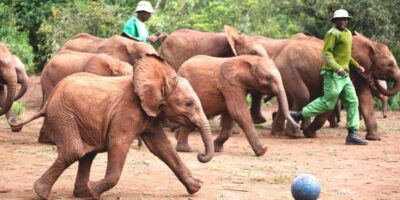
Day tour to Giraffe Center and Karen Blixen Museum
Read our review →Browse the lists this tour appears in