
Reviewed · CYCLING TOURS
Diani Beach: Village tour on a bike with hotel pick-up
Get beyond Diani’s beach resorts. This four-hour bike tour takes you into Ukunda and nearby villages, where you can visit a market, school, mangrove area, traditional healer, and local home. I like the close view of daily life, and I like that the bicycle brings you into the community more directly than a car. The chance to cook, handle cashew nuts, climb a coconut palm, and talk with residents gives the outing real character.
The main thing to consider is the riding itself. Some roads are hilly and bumpy, and even the electric bikes still require effort. You will also encounter requests for small donations at some stops, especially the school and village visits. These are optional, but it is wise to know about them before you go.
In This Review
- Key points at a glance
- Why this bike tour feels different from a beach excursion
- Starting at Diani Bazaar with a safety briefing
- Ukunda by bicycle: a closer view of local streets
- The local market, where Diani shops for food
- A public primary school and a thoughtful way to help
- Village life with cooking, cashew nuts, and coconut climbing
- The traditional herbalist and local healing knowledge
- Mangroves and the value of a conservation stop
- How safe and strenuous is the ride?
- What the $64 price covers
- Who should book this Diani village ride?
- Should you book it?
- FAQ
- How long does the Diani village bike tour last?
- Is hotel pickup included?
- What places does the tour visit?
- Is bicycle rental included in the price?
- Is the tour suitable for beginners?
- What should I bring?
- Is the school or village donation required?
- What language is the guide?
Key points at a glance
- Ride beyond the resort strip: Pedal through Ukunda and local villages instead of seeing Diani only from a vehicle.
- Meet the coconut climber: Visit a local family, learn about coconut work, and try climbing a palm tree.
- See everyday institutions: The market and public primary school offer a useful look at ordinary community life.
- Visit a traditional herbalist: The bush doctor explains local healing methods and the role of plant-based treatment.
- Guides keep the ride reassuring: Groups may have more than one guide, with Hamisi, Justino, and Herbert praised for friendly, steady support.
- Pack a snack and school supplies: Snacks are not included, and school materials can be more useful than sweets.
Why this bike tour feels different from a beach excursion
Diani is famous for its white sand and warm Indian Ocean water, but the resort area shows only one part of coastal Kenya. This tour shifts your attention inland, toward Ukunda, village roads, market stalls, schools, homes, and mangrove conservation.
I like the pace of a bicycle here. You can stop quickly for a photo, greet people along the way, and notice details that would pass by in a car. The route is not presented as a formal history tour. Instead, it gives you a guided look at how people work, study, cook, trade, and use traditional medicine.
The word authentic gets used too freely in tourism, so keep your expectations sensible. This is still a planned visitor experience, with arranged stops and a guide. But the places included are far less polished than a hotel or standard sightseeing attraction, and the tour gives you direct contact with community life.
The activity costs $64 per person and lasts about four hours. That is not the cheapest way to see the area, but the price covers hotel transport, bike rental, safety equipment, bottled water, a guide, market access, and the herbalist visit. If you want a short cultural outing with transport already handled, the package offers reasonable value.
A few more trips worth weighing up
- Day Trip: Hell’s Gate Bike Ride & Lake Naivasha Boat Ride
★ 4.4 · 251 reviews - Hell’s Gate National Park Private Bike Tour from Nairobi
★ 5.0 · 192 reviews - Half-Day Scenic Bike Tour
★ 5.0 · 75 reviews
Starting at Diani Bazaar with a safety briefing
Pickup is available from any accommodation in Diani Beach. You should wait in the hotel lobby about 10 minutes before the agreed time and tell your concierge that someone is coming for you. The operator communicates with you to arrange the pickup, so keep your phone available before the tour.
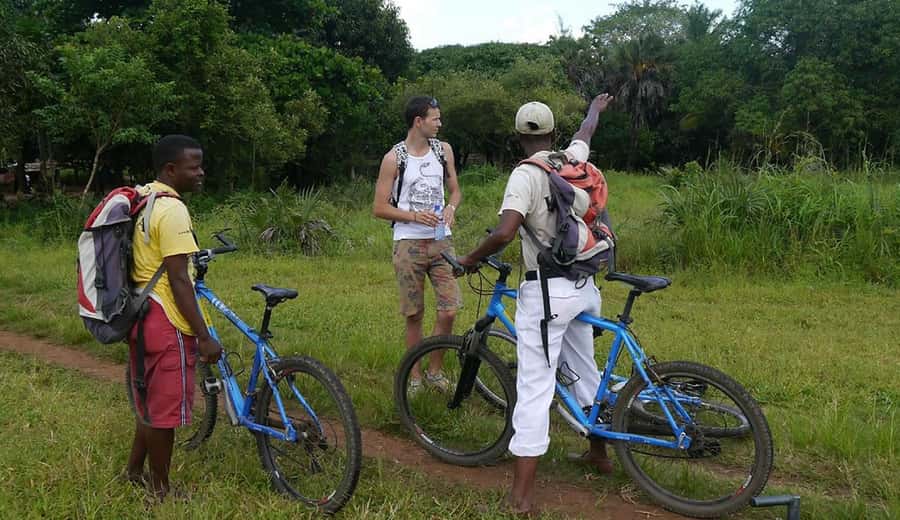
The tour begins at Diani Bazaar with a safety briefing of about 20 minutes. This is useful because the ride is not confined to a private cycle path. You will use Diani streets and village roads, and guides accompany the group to help you ride safely.
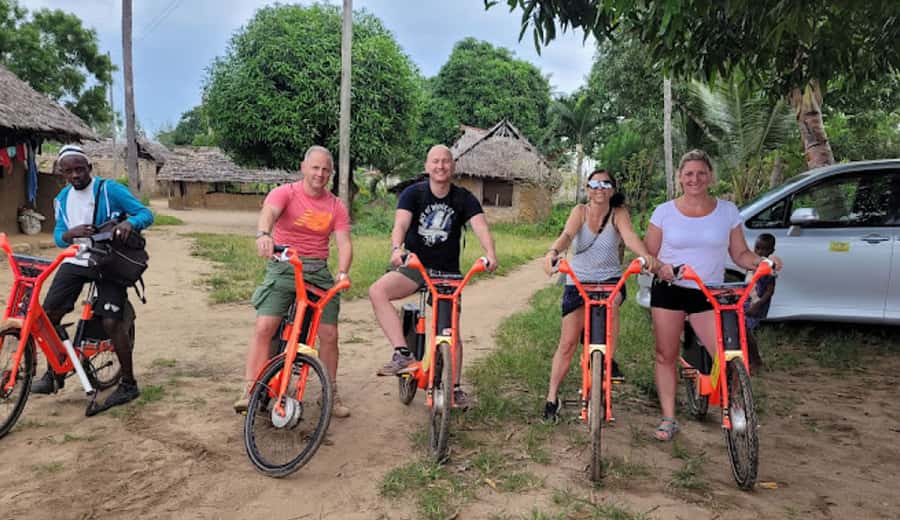
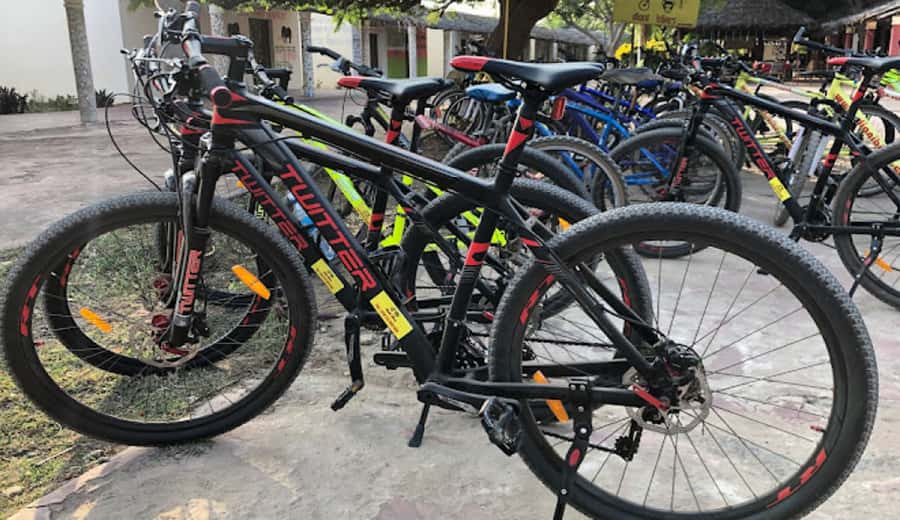
The bicycles can include electric bikes, which make the route more manageable, especially on the hills. Do not mistake that for an effortless outing. One person found the e-bike helpful but still felt the physical work, and the rougher sections added to the challenge.
Wear comfortable clothes and closed, comfortable shoes. Light clothing suits the warm coastal climate, but practical shoes matter more than stylish beach sandals. Bring a small snack, since food is not included. Bottled water is supplied, while other drinks are not.
Ukunda by bicycle: a closer view of local streets
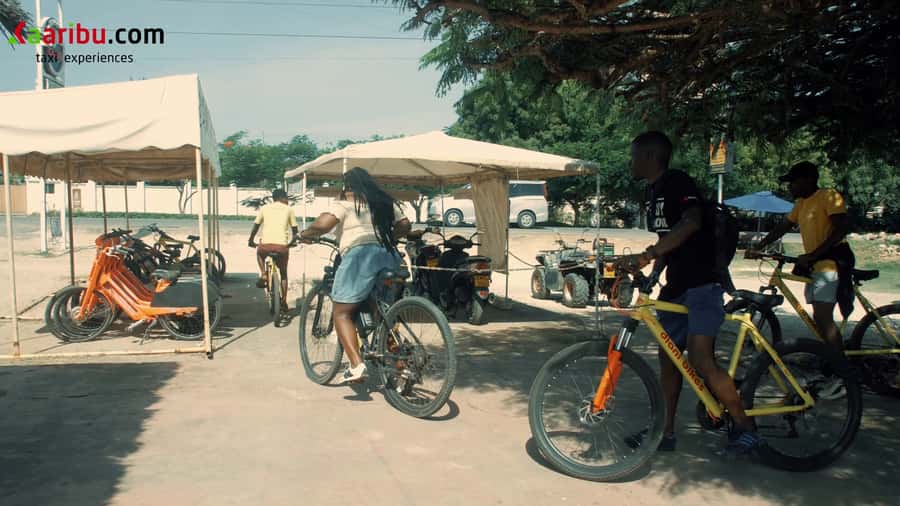
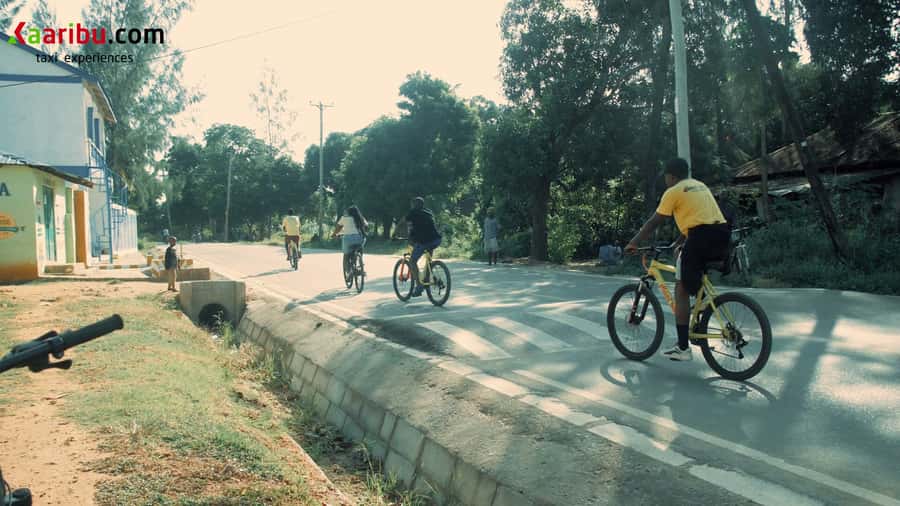
The Ukunda portion includes a guided ride, sightseeing, and a photo stop lasting roughly 30 minutes. This is where the tour begins to feel less like a transfer between attractions and more like a moving visit through the area.
From a bicycle, you stay closer to street life. You can pause when something catches your eye, take photographs, and ask questions while the guide explains what you are seeing. The guides are there throughout the ride, which is important on roads that can be uneven or slightly hilly.
The tour suits people who like active sightseeing but do not want a full-day cycling challenge. Four hours is long enough to see several places without taking over your entire day in Diani. Still, if you rarely cycle or have trouble with hills, be honest about your fitness before booking.
The guide team is one of the strongest parts of the experience. Hamisi and Justino have led small groups, while Herbert has been praised for staying close, relaxed, and helpful. A group of seven had three guides, which gave riders a strong sense of support. Group size and guide numbers can vary, but the arrangement suggests that safety receives serious attention.
The local market, where Diani shops for food
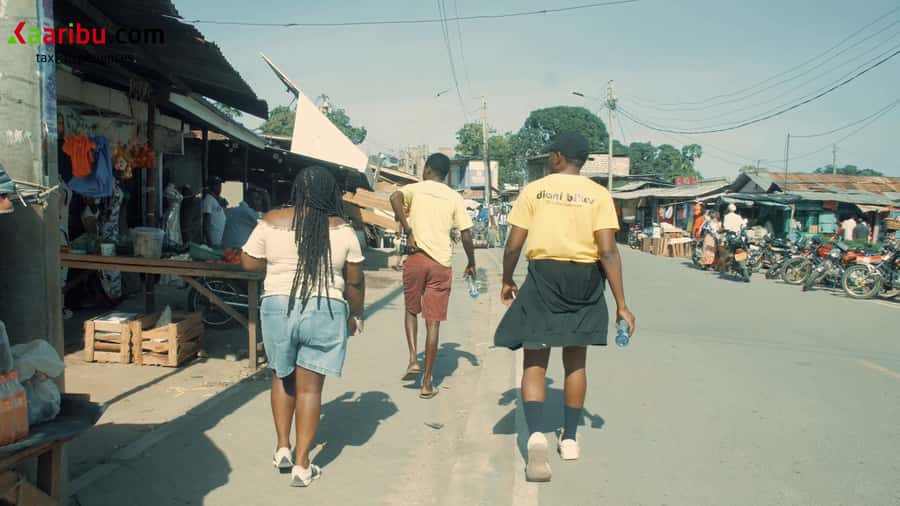
A market visit gives you a practical look at local trade. This is a grocery market where you can see how local sellers operate and what people buy for everyday cooking.
The market is visited partly on foot, allowing you to slow down and look around. That matters because a bicycle ride through a market would miss the details. You can ask your guide about the produce, the way stalls work, and the daily routines behind the shopping.
This stop may feel less comfortable than a tourist market. There is no promise of tidy displays, souvenir shopping, or a carefully staged presentation. That is exactly why it can be useful. You get a better sense of ordinary commerce instead of a place designed mainly for visitors.
Take photographs only when appropriate and follow your guide’s advice. A friendly, respectful approach works best. The goal is to observe and learn, not turn the market into a photo set.
A completely different kind of day out from Diani Beach:
- PILLI PIPA DHOW, the genuine product, snorkeling tour to Kisite Marine Park
★ 4.5 · 217 reviews - Full-Day Special Wasini Island Tour with Snorkeling and Lunch
★ 4.5 · 184 reviews - Full Day Dolphin Watching with Snorkeling in Wasini
★ 5.0 · 88 reviews - Diani Beach: Glass Boat Cruise to Robinson Island
★ 4.6 · 69 reviews
A public primary school and a thoughtful way to help

The school visit is one of the most moving parts of the route. You visit a public primary school attended by children from the local area and see some of the work being done by teachers.
The school can be a powerful stop because it connects the tour to everyday family life. You are not simply looking at buildings or scenery. You are seeing where local children spend their school days and learning about an important part of the community.
If you want to bring something, school supplies are a better choice than sweets. Items such as basic classroom materials may be more useful to the school than candy. The tour information does not specify a required donation, and any contribution should be voluntary.
You should also be ready for a different standard of facilities than you might see at home. That contrast can be eye-opening, but it is important to approach the visit with respect. Listen to your guide, avoid treating children as photo props, and remember that this is a functioning school, not a performance.
Village life with cooking, cashew nuts, and coconut climbing
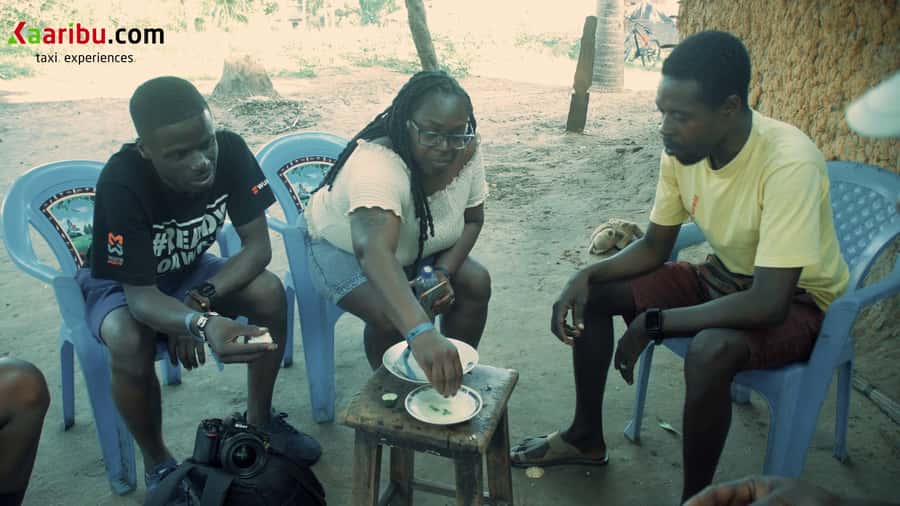
The village stop brings the most hands-on activity. You may see how cashew nuts are prepared, help cook local food, and try to climb a coconut palm with local residents.
A visit to a local home can make the tour feel personal. One route includes time with a coconut worker and his wife, who welcomed visitors warmly and showed them how they live. Another small group shared a meal with a local family at the end of the tour. The exact order and details can vary, but the village section is clearly designed around conversation and participation.
The coconut climbing is fun, though you should treat it as optional. You do not need to prove anything by reaching the top. Palm climbing can be physically demanding, and the tour is not suitable for people with mobility impairments or pregnant women.
Cooking and cashew preparation also help explain local work in a way a short roadside photo cannot. You are learning through your hands, not just listening to a talk. Keep in mind that some village stops may invite a small donation. You can politely decline if you do not wish to give.
The traditional herbalist and local healing knowledge
The visit to the traditional doctor, also described as a bush doctor or herbalist, offers a look at healing practices rooted in local plants and custom.
The herbalist explains traditional treatment methods and the uses of natural remedies. This is a cultural presentation, not a substitute for medical care. You should listen with curiosity while keeping a clear distinction between learning about traditional medicine and accepting medical advice.
For many people, this will be the most unusual stop. It adds another layer to the tour because it shows how local knowledge is passed on and used. It also gives you a chance to ask thoughtful questions about plants, treatments, and community beliefs.
As with the village and school visits, approach the herbalist respectfully. The visit is included in the tour price, so you are not paying an extra entry fee. Small donations may still be requested at stops, but they are not compulsory.
Mangroves and the value of a conservation stop
The route also passes around a mangrove forest and includes a look at mangrove conservation efforts. This section connects the tour to the coastal environment without turning the experience into a nature expedition.
Mangroves matter because they form part of the coastal ecosystem and support conservation work. The available information does not promise wildlife sightings or a long forest walk, so do not book this as a dedicated nature tour. Think of it as one part of a wider cultural and community route.
The mangrove area also gives the ride a change of rhythm. After streets, market stalls, and village homes, the conservation stop offers a quieter setting and a chance to take photographs. Your guide can provide context about the local efforts taking place there.
How safe and strenuous is the ride?
The activity is described as safe for riding along Diani streets, with adequate guides. The guide team stays with the group and helps riders manage the route. This support is especially useful if you are not used to cycling in unfamiliar surroundings.
That said, safe does not mean flat or effortless. The roads can be hilly, and some sections are bumpy. An electric bike may reduce the strain, but you still pedal and remain exposed to the heat and road conditions.
I would choose this tour if you are comfortable on a bicycle and enjoy active sightseeing. I would skip it if you have limited mobility, are pregnant, or strongly dislike uneven roads. Comfortable shoes and clothes are essential, and a small snack will make the four-hour outing easier.
The tour is not aimed at speed. The stops, conversations, and short walks matter more than covering a large distance. If you think of it as a cultural ride with breaks, rather than a cycling workout, you will have the right expectations.
What the $64 price covers
At $64 per person, the experience sits in the mid-range for a half-day activity. The real value comes from the number of services bundled together.
You receive hotel pickup and drop-off within Diani, a rented bicycle, safety gear, bottled water, a guide, the village tour, the market visit, and entry to the traditional herbalist. You are also paying for coordination between several community stops, which would be difficult to arrange independently during a short holiday.
Food and extra drinks are not included. Bring a snack rather than assuming lunch will appear. A village meal may be part of the experience in some arrangements, but it is not listed as a guaranteed inclusion, so do not book expecting a full meal.
The value is strongest for you if you want personal contact and a guided route rather than a simple transfer to a single attraction. If you only want to see Diani’s beach, the price will not make sense. If you want to understand more about the area beyond the resort gates, it is easier to justify.
Free cancellation is available up to 24 hours before the activity for a full refund, and you can reserve now and pay later. Starting times depend on availability, so check the schedule before committing to other plans.
Who should book this Diani village ride?
I would recommend it to curious, reasonably active visitors who want a direct look at local life. Couples, small groups, and families with older children may enjoy the mix of cycling, food preparation, school and market visits, and short cultural stops.
It is particularly good for someone who has already spent time on the beach and wants a different side of Diani. The bicycle keeps you close to the action, while the guide makes the route easier to understand and safer to manage.
It may not suit you if you want a quiet, private luxury outing. You may encounter uneven roads, requests for donations, and a busy sequence of stops. The community visits also require patience and respect. This is not a polished stage show, and that is part of its appeal.
The tour is listed with English guiding, while the activity details also mention local English, German, and French-speaking guides. English is the confirmed live-guide language, so ask about German or French support when arranging pickup if that matters to you.
Should you book it?
Book this tour if you want Diani to be more than a beach stop. The strongest reasons are the friendly guide support, the chance to visit places with no tourist crowd, and the direct contact offered at the school, village home, market, mangrove area, and herbalist.
Go with a snack, comfortable shoes, modest expectations, and perhaps useful school supplies. Be ready for a few hills, rough roads, and optional donation requests. With those details understood, the four-hour ride offers a thoughtful and active way to see everyday coastal Kenya.
FAQ
How long does the Diani village bike tour last?
The tour lasts about four hours, including the ride, guided stops, and visits around Ukunda and the local villages.
Is hotel pickup included?
Yes. Hotel pickup and drop-off are included for accommodation in Diani Beach. You should wait in the hotel lobby 10 minutes before the scheduled pickup time.
What places does the tour visit?
The route includes Diani Bazaar, Ukunda, a local market, a public primary school, a village, a traditional herbalist, and a mangrove forest conservation area.
Is bicycle rental included in the price?
Yes. Bicycle rental and safety gear are included. Electric bikes may be available, but the ride can still involve some physical effort.
Is the tour suitable for beginners?
The tour includes guides and a safety briefing, and riding along Diani streets is described as safe. Some roads are hilly and bumpy, so you should be comfortable riding a bicycle.
What should I bring?
Bring comfortable clothes, comfortable shoes, and a snack. Bottled water is included, but snacks and other drinks are not.
Is the school or village donation required?
No. Small donations may be requested at some stops, but they are optional. School supplies may be more useful than sweets if you want to bring something for the school.
What language is the guide?
The live guide is listed as English-speaking. The activity information also mentions local English, German, and French-speaking guides, so ask about language availability when arranging your pickup.
Just added around Diani Beach
- Overnight Safari to Tsavo East with Pick Up From Mombasa★ 5.0 · 3 reviews
- Mombasa: Snorkeling, Dolphin watching, seafood lunch.★ 4.5 · 3 reviews
- 1 Day Red Elephant Safari starting from Diani beach.★ 5.0 · 3 reviews
- Kaya Kinondo Sacred Forest Guided Tour★ 4.4 · 3 reviews
- Mombasa City Tour – Fort Jesus, Old Town, Spice Town & Craft★ 5.0 · 3 reviews
- 4-Day Safari to Tsavo and Amboseli from Diani Beach★ 5.0 · 3 reviews
- Diani: Wasini Island Dolphin Watching and Snorkeling Tour★ 4.2 · 3 reviews
- (2 Days, 1 Night) Day & Night Game Drive Tsavo East National Park★ 5.0 · 3 reviews
Cycling Tours, compared.

Day Trip: Hell’s Gate Bike Ride & Lake Naivasha Boat Ride
Read our review →
Hell’s Gate National Park Private Bike Tour from Nairobi
Read our review →
Bike Tour at Hell’s Gate National Park, Boat Ride at L. Naivasha
Read our review →
1 Day Bike Tour to Hell’s Gate And Lake Naivasha
Read our review →
ATV/Quad Bike Wildlife Safari with Transfers & meal
Read our review →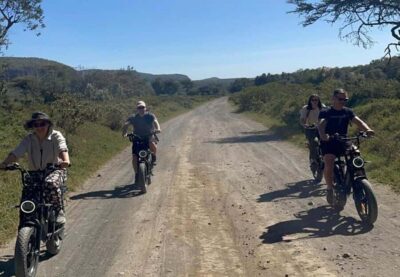
Browse the lists this tour appears in