
Reviewed · FORT JESUS TOURS
Visit to Fort Jesus and the Old Town of Mombasa
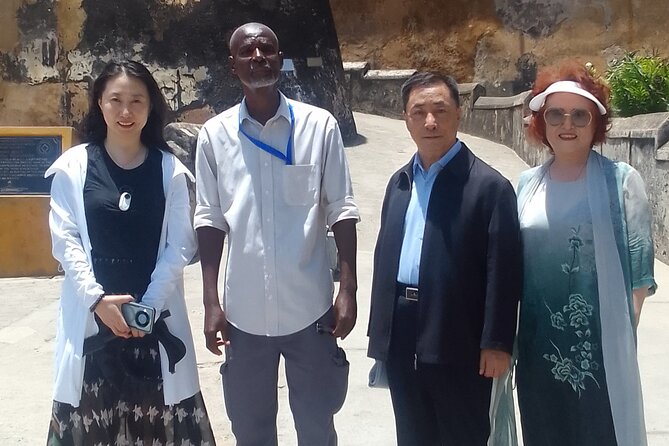
History here comes with street noise. This three-to-four-hour Mombasa tour links Fort Jesus with Old Town lanes, the old port, a spice market, a Hindu temple, and the famous elephant tusks. I like the small-group format, capped at 10 people, and I like the guide, Omar Juma, whose calm storytelling, fluent English, and French helped turn a basic sightseeing walk into a fuller look at Kenyan history and daily life. The main drawback is that the Fort Jesus entrance fee is extra, and the heat, narrow streets, and walking make this a poor choice for young children.
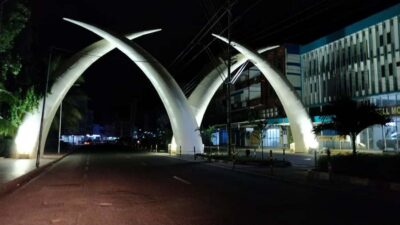
You meet at 9 a.m. outside Fort Jesus Museum and finish near Pembe Za Ndovu, the four elephant tusks on Moi Avenue. Tuk tuk transport is included, though much of the experience takes place on foot. At $40 per person, the tour offers good value if you want context and company, but less so if you only need a quick photo stop at the city’s best-known landmarks.
In This Review
- Key points at a glance
- Why this Mombasa tour works
- Fort Jesus: a stone opening chapter
- Old Town lanes and the view toward the old port
- Mackinnon Market and the everyday side of Mombasa
- Shri Cutch Satsang Swaminarayan Temple
- Pembe Mbili and the famous elephant tusks
- Omar Juma’s guiding style
- What $40 really buys you
- Practical advice for a smoother morning
- Who should book this experience?
- FAQ
- How long does the Fort Jesus and Old Town tour last?
- What time does the tour start?
- Where does the tour begin?
- Where does the tour end?
- Is the Fort Jesus entrance fee included?
- Is transportation included?
- How many people can join the tour?
Key points at a glance
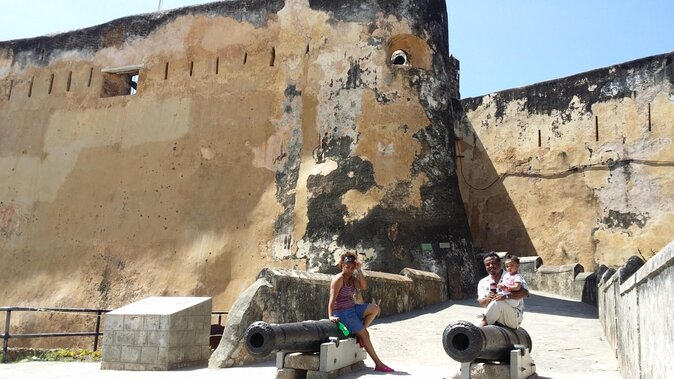
- Fort Jesus begins the story: Learn how the Portuguese built this coastal stronghold in 1593 before entering the museum.
- Old Town is explored on foot: Narrow lanes reveal Swahili culture, Arab-style architecture, and views toward the old port.
- Mackinnon Market adds local color: Legumes, fruit, and spices make this a more grounded stop than a simple monument tour.
- Omar Juma is a major strength: His English and French, patient manner, and broad grasp of Kenyan history suit curious visitors.
- The route includes several faiths and eras: A Hindu temple, Portuguese fort, British-built market, and colonial landmarks show Mombasa’s layered identity.
- The tour ends at the elephant tusks: Pembe Mbili and the tusks provide a clear finish on Moi Avenue, opposite Uhuru Gardens.
Why this Mombasa tour works
Mombasa can feel confusing at first. The island’s major sights are close together, but the lanes of Old Town twist around courtyards, shops, homes, mosques, and old buildings. A guide gives you a thread to follow.
This tour is especially useful if you want more than a photograph of Fort Jesus. Omar Juma has been praised for explaining both the city’s past and present, including local customs, social life, and the different outside influences that shaped Mombasa. He is also described as polite, funny, patient, and easy to understand. That combination matters: a guide who knows dates but cannot connect them to modern life gives you only half a tour.
The small maximum group size is another plus. Ten people is still large enough to share questions and small enough for the guide to hear you in a market or narrow street. Several people who spent around three and a half hours with Omar appreciated that he adjusted the pace instead of rushing from one stop to the next.
I would still set realistic expectations. This is not a private car tour with long stops at every landmark. It is a compact city walk with tuk tuk transport included, and the schedule gives roughly 30 to 40 minutes to each main stop. You will see a lot, but Fort Jesus deserves more time if you want to study every gallery and courtyard.
More Fort Jesus tours:
- Walking Tour Through Old Town Mombasa and Fort Jesus
★ 5.0 · 393 reviews - Mombasa: Tusks, Fort Jesus, Old Town, Beach and City Tour
★ 4.7 · 137 reviews - Fort Jesus Museum Walking Tour in Mombasa
★ 5.0 · 25 reviews
Fort Jesus: a stone opening chapter
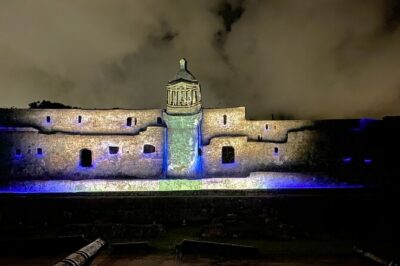
The tour starts at Fort Jesus Museum, built by the Portuguese in 1593. The fort is the anchor of the experience, and its position near the water helps explain why Mombasa mattered to competing powers along the East African coast.
You receive a brief introduction before exploring. The admission ticket is not included, so you need to pay the stated fee of KSH 1,200 separately. At the time of the tour information provided here, the visit is allocated about 40 minutes.
That time is enough for an overview. You can expect the guide to explain the fort’s purpose, the Portuguese presence, and the wider story of Mombasa before taking you farther into the Old Town. Omar’s strength is making the site understandable rather than simply reciting a list of dates. His explanations have also covered Kenyan traditions and present-day life, which gives the fort a human setting.
The limitation is simple: 40 minutes passes quickly. If you are fascinated by military architecture, museum displays, or the fort’s changing control over the centuries, you may want to arrange extra time before or after the tour. The stated route does not promise a long independent museum visit.
For most people, though, a guided introduction is a sensible way to begin. You get the basic framework first, then see how the city around the fort grew from trade, religion, migration, and colonial rule.
Old Town lanes and the view toward the old port
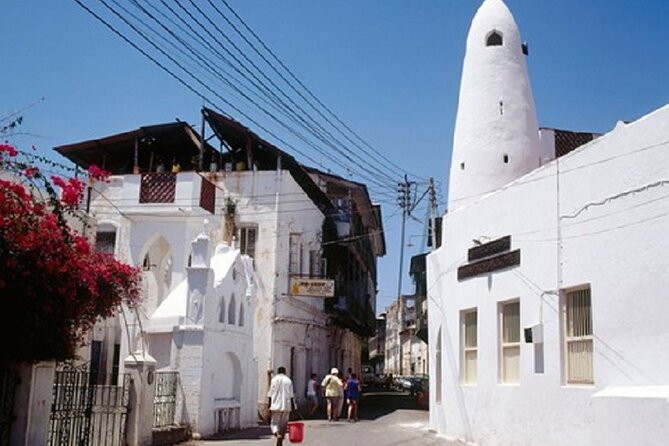
From Fort Jesus, the walking portion moves through Old Town. This is where the tour becomes less about a single monument and more about Mombasa as a living place.
The narrow streets bring you close to Swahili culture and Arab-influenced architecture. The guide also points out the old historic port. That matters because Mombasa’s story is tied to the sea, not just to its fort. Looking toward the port helps connect the city’s buildings with trade routes and the movement of people and goods.
I like this part because it gives you a view of ordinary surroundings rather than keeping you inside formal attractions. Omar has been praised for showing the parts of town where people live and for explaining current society alongside earlier events. He is also said to know the small passages well, a practical advantage in a district where it is easy to lose your bearings.
Allow about 40 minutes for Old Town. That is enough for a focused introduction, but not enough to examine every lane or building. The route may feel quick if you want a slow photography walk. It is better suited to someone who wants a guided orientation and useful background.
The streets can also be busy and warm. Wear comfortable shoes, carry water, and listen closely when the guide suggests shade or a pause. Omar has been particularly attentive to those needs, including finding shade and allowing time for drinks.
Mackinnon Market and the everyday side of Mombasa
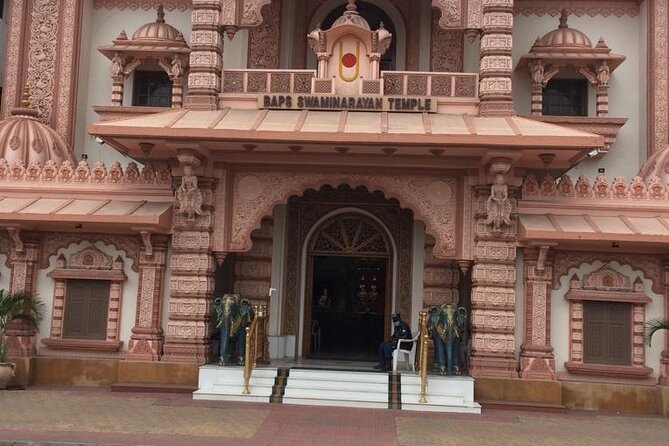
Mackinnon Market receives about 35 minutes on the route. It was built by the English in 1914 and is described as one of the most colorful and lively places in the city.
Here you can expect to see legumes, fruits, and spices. Those details may sound modest, but markets often explain a city better than a grand building. They show what people buy, sell, cook, and carry home. The market also shifts the focus from imperial landmarks to daily commerce.
This is a good place to keep your eyes open and your camera ready, while remembering that it is a working market rather than a stage set for visitors. You might find the pace and noise more demanding than the museum or temple. The guide’s role is valuable here because he can give the displays local meaning and help you move through the area without treating it as a backdrop.
The market may also be a welcome change after the fort and Old Town architecture. You are not just looking at the past. You are seeing a part of Mombasa’s present.
A few more trips worth weighing up
- Mombasa: Kisite Park Private Cruise with Breakfast and Lunch
★ 4.7 · 181 reviews - Mombasa City Tour
★ 5.0 · 170 reviews - Half-Day Scenic Bike Tour
★ 5.0 · 75 reviews - 2 Days Tsavo East National Park Tour From Mombasa/Diani (1 Night)
★ 5.0 · 50 reviews
Shri Cutch Satsang Swaminarayan Temple
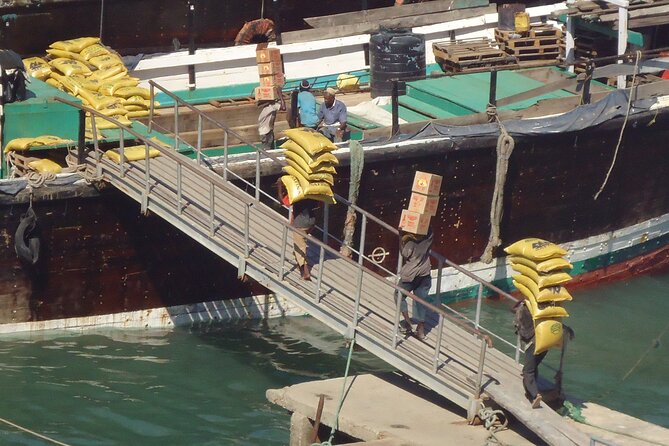
The route includes a 35-minute visit to Shri Cutch Satsang Swaminarayan Temple, a Hindu temple in Mombasa. This stop widens the story beyond Portuguese and British influence.
Its place on the tour is important because Mombasa cannot be reduced to one culture or one faith. The fort reflects Portuguese military power, Old Town shows Swahili and Arab architectural influence, and the temple adds another strand to the city’s religious and social life.
The available details do not specify whether a formal interior tour, ceremony, or special access is included. Think of this as a guided visit to an important Mombasa landmark, with the guide explaining its place in the city.
You should follow local instructions about behavior and photography. The 35-minute slot gives you time to look around and ask questions without making the temple the entire focus of the morning.
Pembe Mbili and the famous elephant tusks
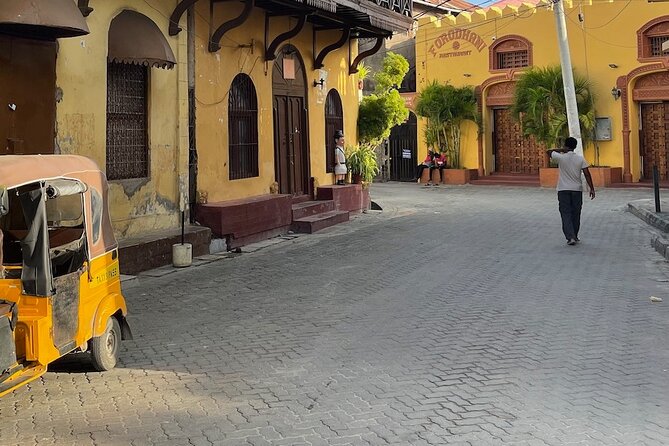
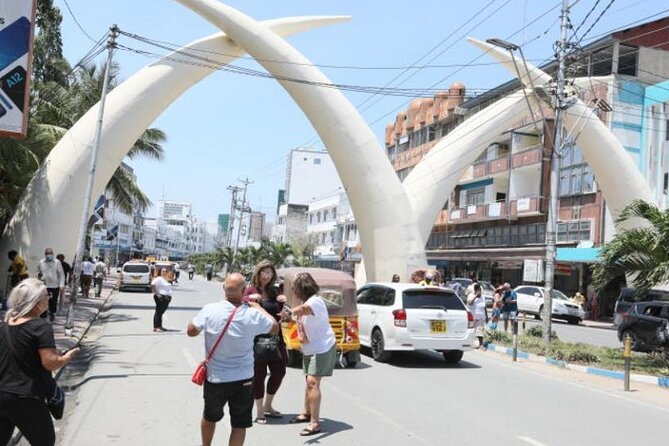
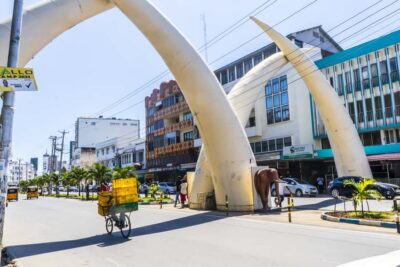
Pembe Mbili is listed as a historical landmark and receives about 30 minutes. The tour then ends at Pembe Za Ndovu, also known as the Four Elephant Tusks, on Moi Avenue opposite Uhuru Gardens.
The tusks were erected in 1952 for the arrival of the Queen of England. They are among Mombasa’s most recognizable public symbols and make a practical meeting point at the end of the route.
This final stop works well because it closes the tour with a landmark that is easy to recognize and photograph. It also brings the story into the colonial period after you have seen the Portuguese fort, Swahili Old Town, the market, and the Hindu temple.
There is a small point to clarify before booking. The supplied route names both Pembe Mbili and the four elephant tusks, but the descriptions do not fully explain how these two references relate to one another. Ask Omar at the start how the final stops will be handled if the distinction matters to you.
Omar Juma’s guiding style
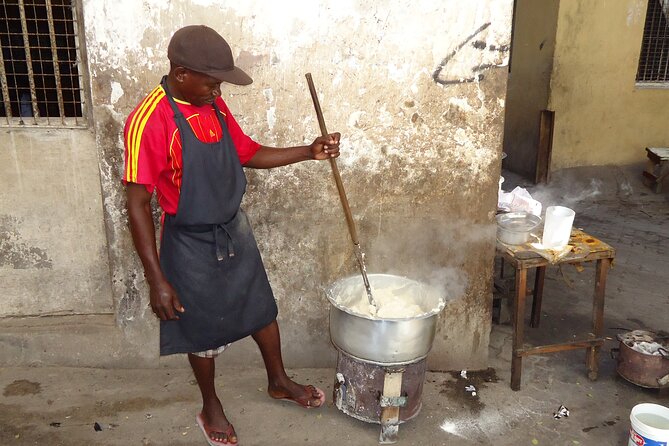
The guide can make or break a history walk, and Omar Juma appears to be the central strength here. He is described as fluent in English and French, with a gentle manner and a good sense of humor. He has also been praised for taking questions seriously, explaining the city at a comfortable pace, and adapting the route to individual interests.
That flexibility is useful. One person asked to see additional places, and Omar accommodated the request. Another appreciated that he took photographs during the outing. These details suggest a guide who pays attention to the person in front of him rather than delivering the same rushed speech every time.
Solo women may also appreciate the reports of his polite, respectful manner. Families with older children could find the French language support helpful, although the experience is officially not recommended for children. I would follow that guidance, especially because the tour involves walking, markets, heat, and historical discussion rather than child-focused entertainment.
Omar’s background in both English and French is a real advantage for mixed-language groups. If you have detailed questions about Kenyan history, Mombasa society, or local customs, this is the kind of tour where asking questions should improve the experience.
What $40 really buys you
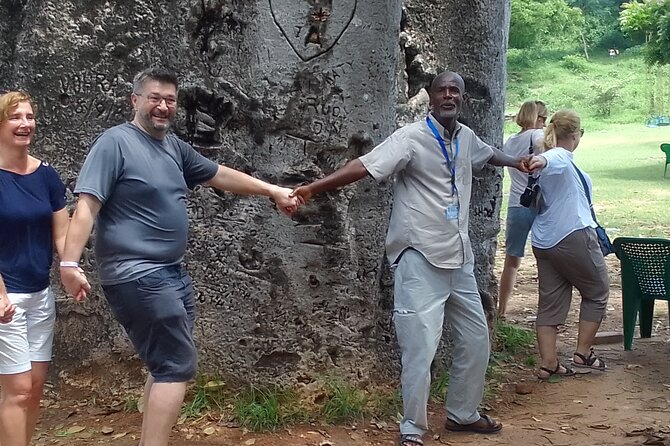
At $40 per person, the price is fair if you value interpretation. You receive guide fees and tuk tuk transportation, plus a structured route through several central sights. The extra Fort Jesus charge of KSH 1,200 should be included in your mental budget.
The value is strongest for a first visit to Mombasa. You get a broad introduction in one morning, and you do not need to work out how Fort Jesus, Old Town, Mackinnon Market, the temple, and Moi Avenue fit together.
The value is weaker if you prefer to explore alone or spend a long time in museums. A self-guided visit could cost less, though you would give up Omar’s explanations, local orientation, language skills, and help with pacing.
Booking around five weeks ahead may be wise because the experience averages 36 days between booking and the tour date. The group limit is 10, and popular dates can fill before a short-notice visit is possible.
Practical advice for a smoother morning
Meet at Fort Jesus Museum, Fort Jesus, Nkurumah Road, at 9 a.m. The endpoint is near Pembe Za Ndovu on Moi Avenue, opposite Uhuru Gardens. Since the tour ends away from the starting point, plan your onward transport from the tusks rather than assuming you will return to Fort Jesus.
Wear walking shoes and bring water. The route has narrow streets and market areas, and you may prefer clothing that feels comfortable in warm weather. Omar has been attentive to shade and drinks, but you should still prepare for the conditions.
Admission to Fort Jesus costs KSH 1,200 and is not included. Other listed stops have no admission fee. The tour is near public transportation, and most people can participate, but the provider does not recommend it for children.
Free cancellation is available if you cancel at least 24 hours before the local start time. Cancellations or changes inside that 24-hour window are not refunded or accepted.
Who should book this experience?
I would choose this tour if you want a compact introduction to Mombasa with a guide who can connect buildings to people and events. It suits first-time visitors, history fans, solo visitors who prefer local guidance, and anyone who wants English or French explanations.
I would also choose it if you like asking questions. Omar’s patient, conversational approach seems better suited to curious people than to those who want a silent transfer between photo stops.
You may want something else if you dislike walking, need a child-focused outing, or want several hours inside Fort Jesus alone. The tour covers a lot in three to four hours, so its strength is breadth and interpretation rather than long, detailed visits at every stop.
FAQ
How long does the Fort Jesus and Old Town tour last?
The experience lasts approximately three to four hours.
What time does the tour start?
The stated start time is 9 a.m.
Where does the tour begin?
The tour begins at Fort Jesus Museum on Nkurumah Road in Mombasa.
Where does the tour end?
It ends at Pembe Za Ndovu, the Four Elephant Tusks on Moi Avenue, opposite Uhuru Gardens.
Is the Fort Jesus entrance fee included?
No. Admission to Fort Jesus is listed separately at KSH 1,200.
Is transportation included?
Yes. Tuk tuk transportation and the guide fee are included.
How many people can join the tour?
The experience allows a maximum of 10 people.
Just added around Mombasa
- 3 Days Private Tour of Mombasa★ 4.5 · 3 reviews
- Mombasa: Wasini Dolphin Tour★ 3.2 · 3 reviews
- 1-Day Tsavo East Safari From Mombasa★ 5.0 · 3 reviews
- 2 Days Salt Lick Safari Tour★ 4.5 · 3 reviews
- Mombasa: Discovery Day Tour and Haller Park★ 4.1 · 3 reviews
- Private Tour of Tsavo East National Park from Mombasa★ 5.0 · 3 reviews
- Mombasa: Historical Guided city tour. Old town, Fort Jesus★ 4.2 · 3 reviews
- Airport Transfers to Watamu and Malindi★ 3.5 · 3 reviews
Fort Jesus Tours, compared.
Walking Tour Through Old Town Mombasa and Fort Jesus
Read our review →
Tusks, Fort Jesus, Old Town, Beach and City Tour
Read our review →
Private City Tour with Fort Jesus & Haller Park
Read our review →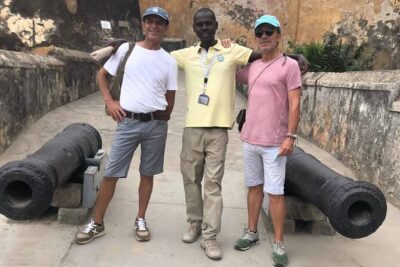
Mombasa Half-Day City Tour with Fort Jesus and Haller Park
Read our review →
Mombasa City Tour: Fort Jesus Museum, Old Town & Haller Park
Read our review →Browse the lists this tour appears in